By US standards, most of the hotels we stayed in would be classified as luxury resorts – and at about 1/4 the price. In general they were on stunning grounds and many were restored 17th century haciendas and compounds. Many had original architecture, wood, doors and most had updated, modern amenities. Those that didn’t well, how about a fireplace in the room and a hot water bottle in the bed while you ate dinner?
Even the refugios/huts that were high on the mountains were adequate. Running water and hot showers were sometime lacking but what the heck, we are supposed to smell like climbers!
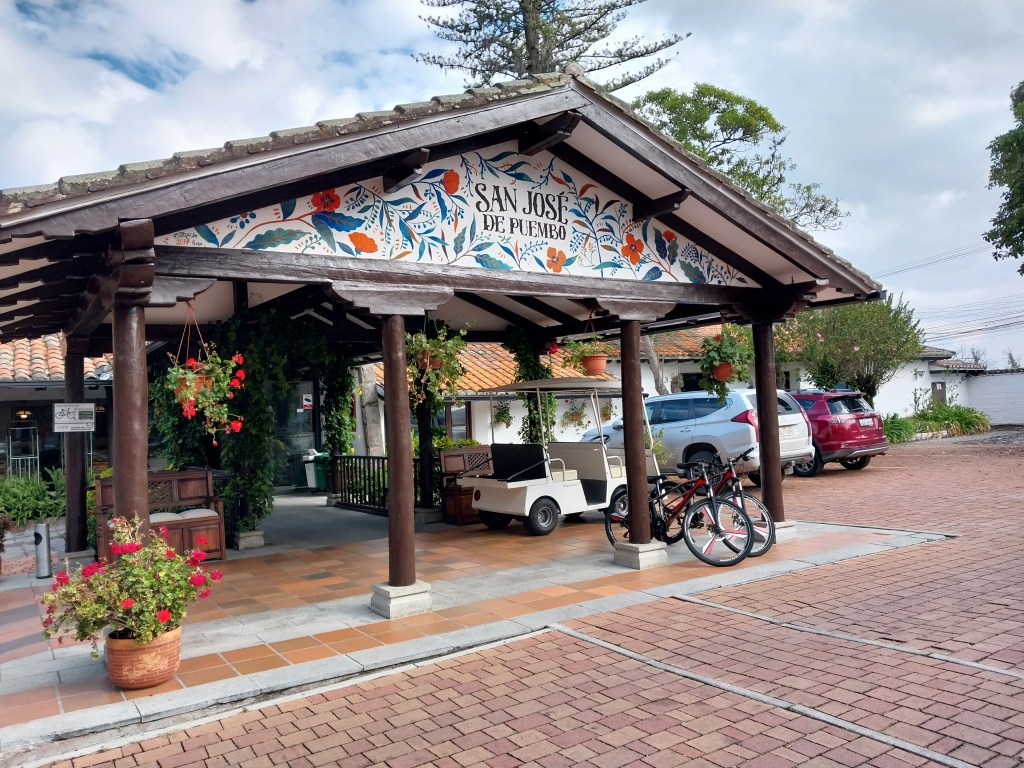
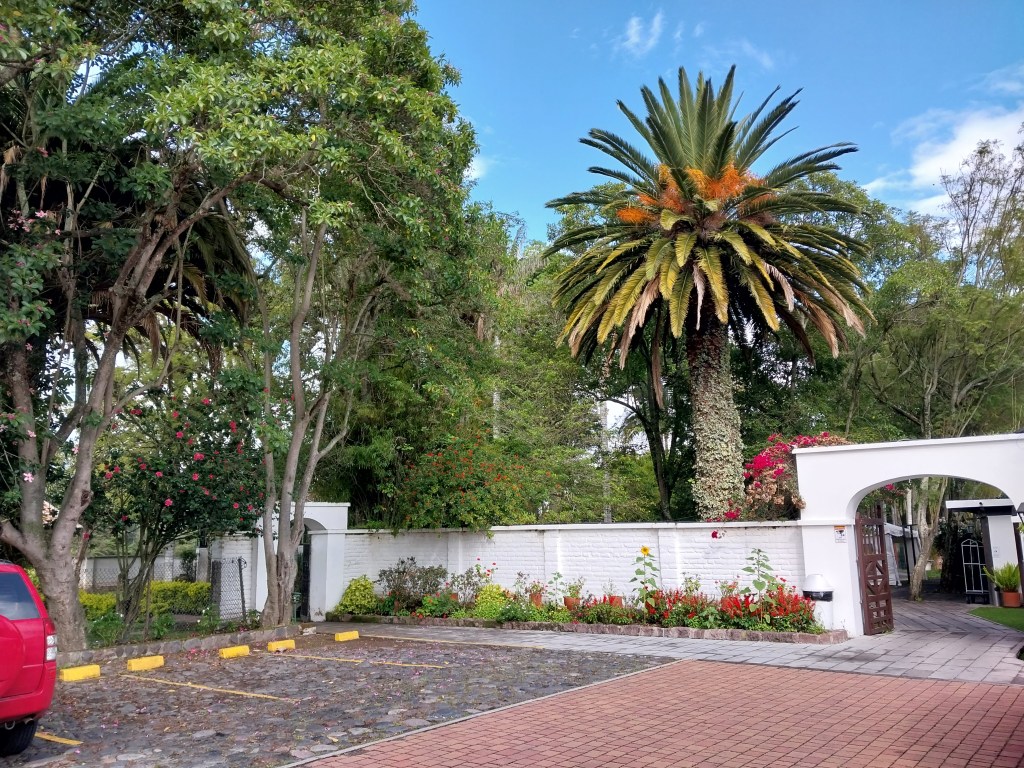
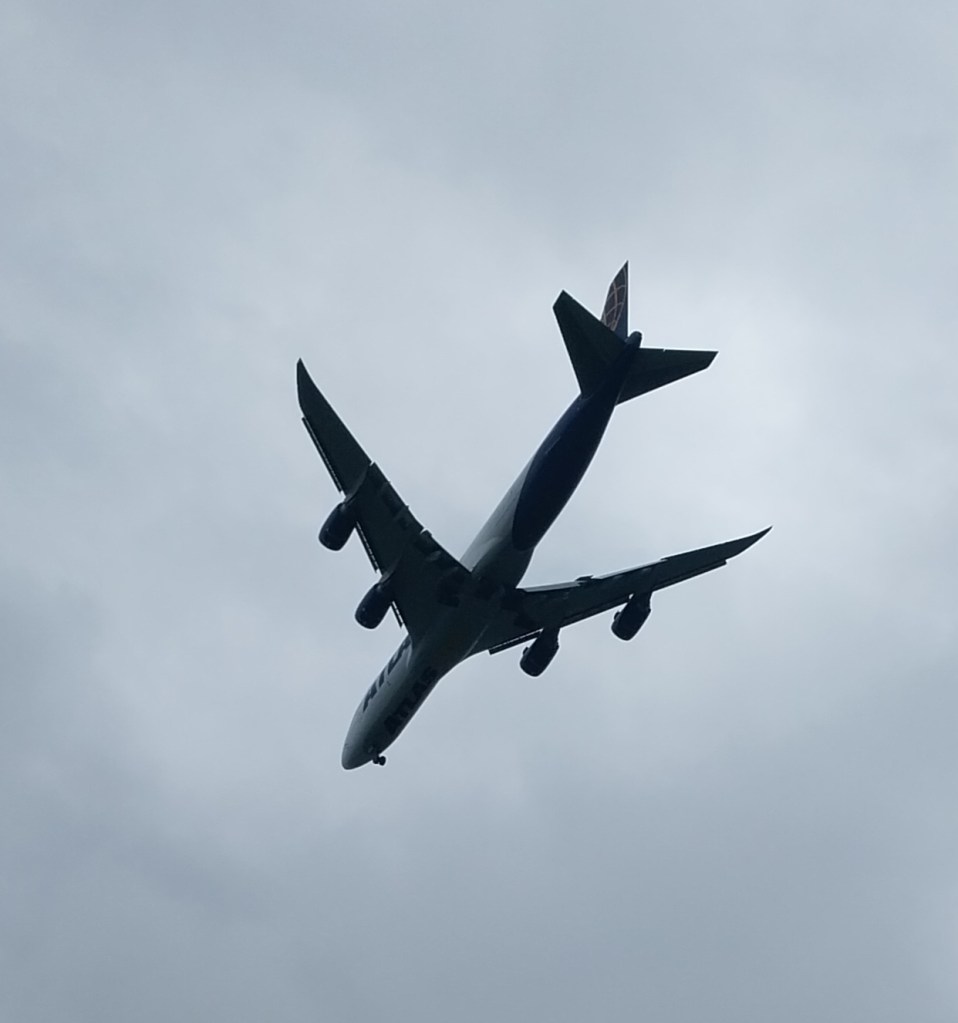
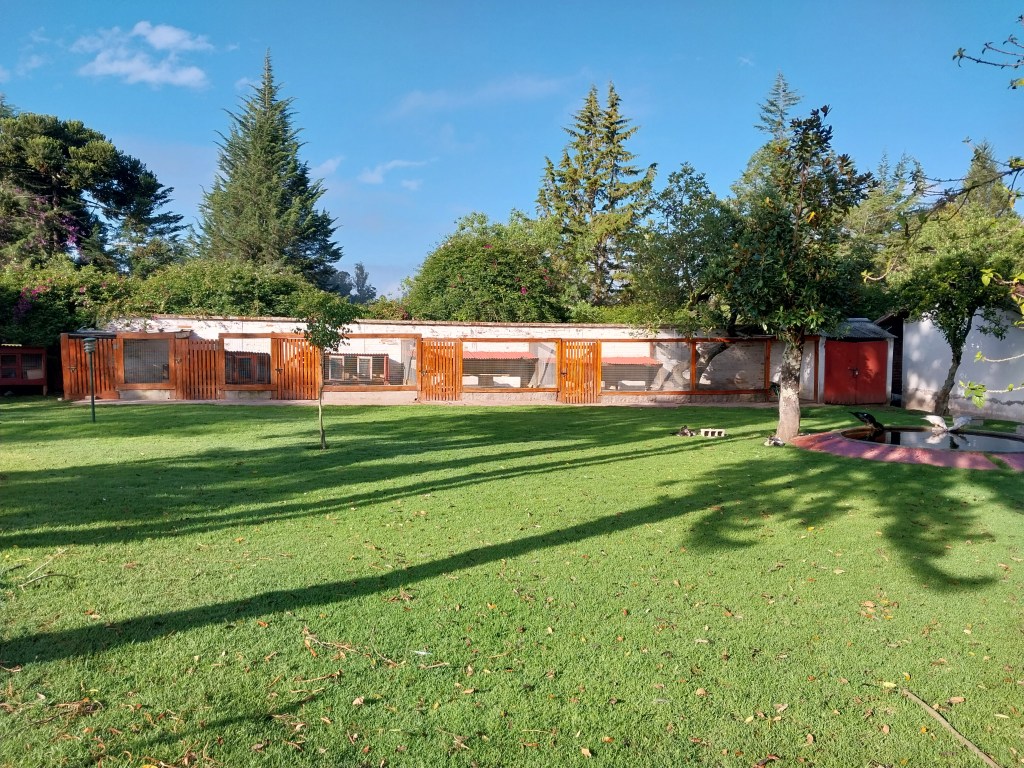
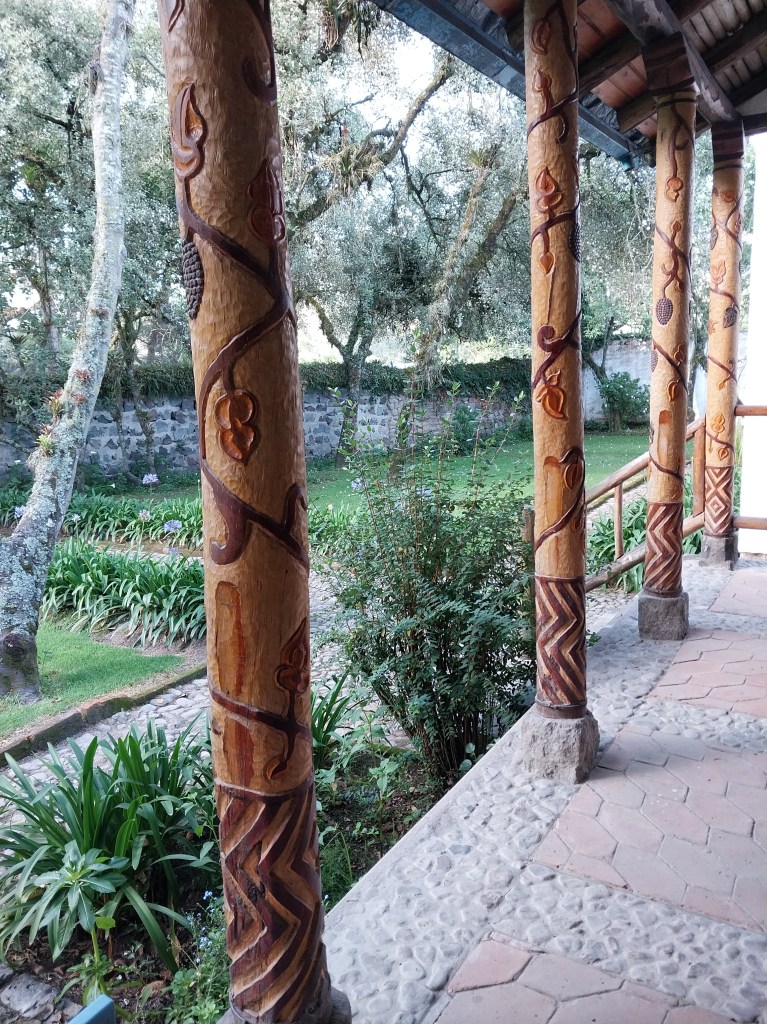
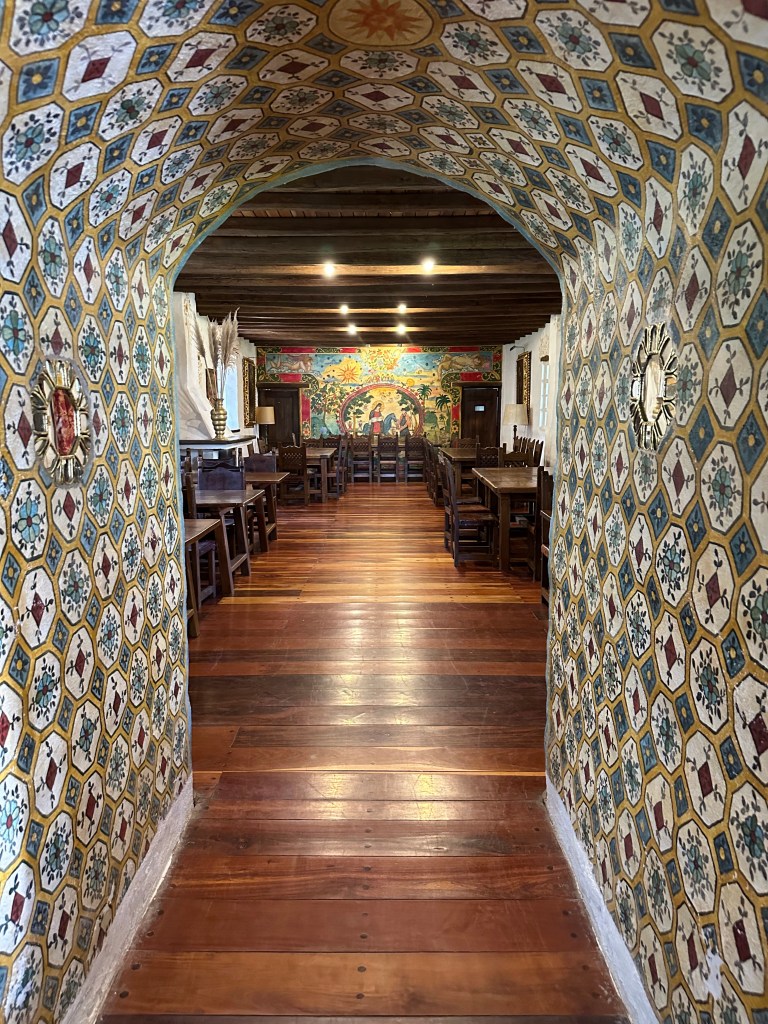
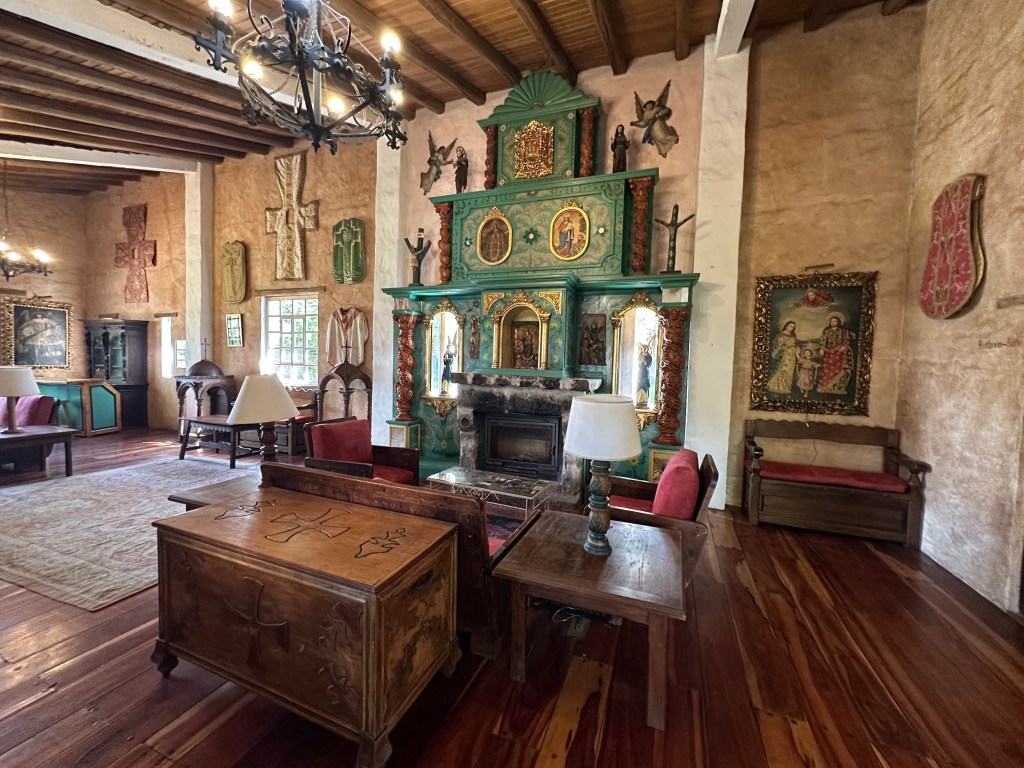
The first hotel we stayed in was the San Jose de Puembo. The hotel’s main house, part of the former Hacienda San José de Puembo, dates back to the 17th century and features fascinating architecture with adobe walls, columns made of capulí, lamps made from wagon wheels and beautiful colonial paintings. They have a huge, modern gym, multiple pools and beautiful gardens, as well as a petting zoo for the kids. They are located directly under the flight path so it did get a little loud, at times!
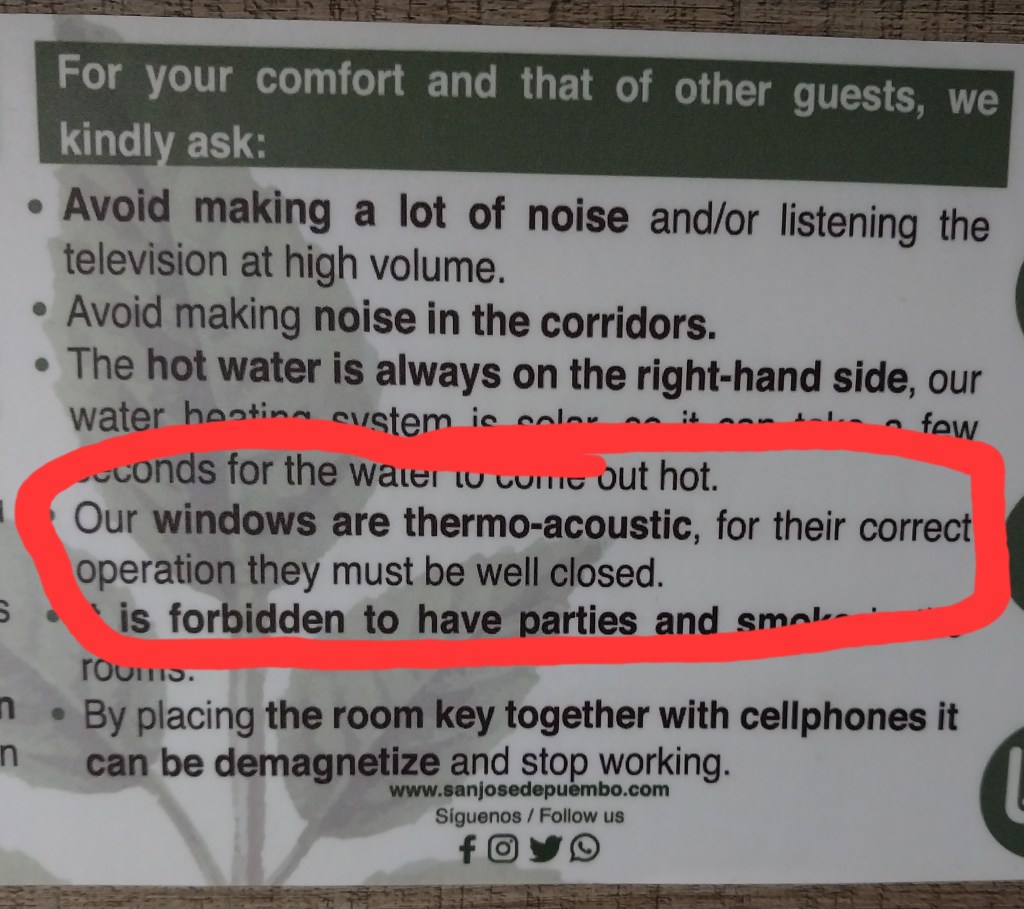
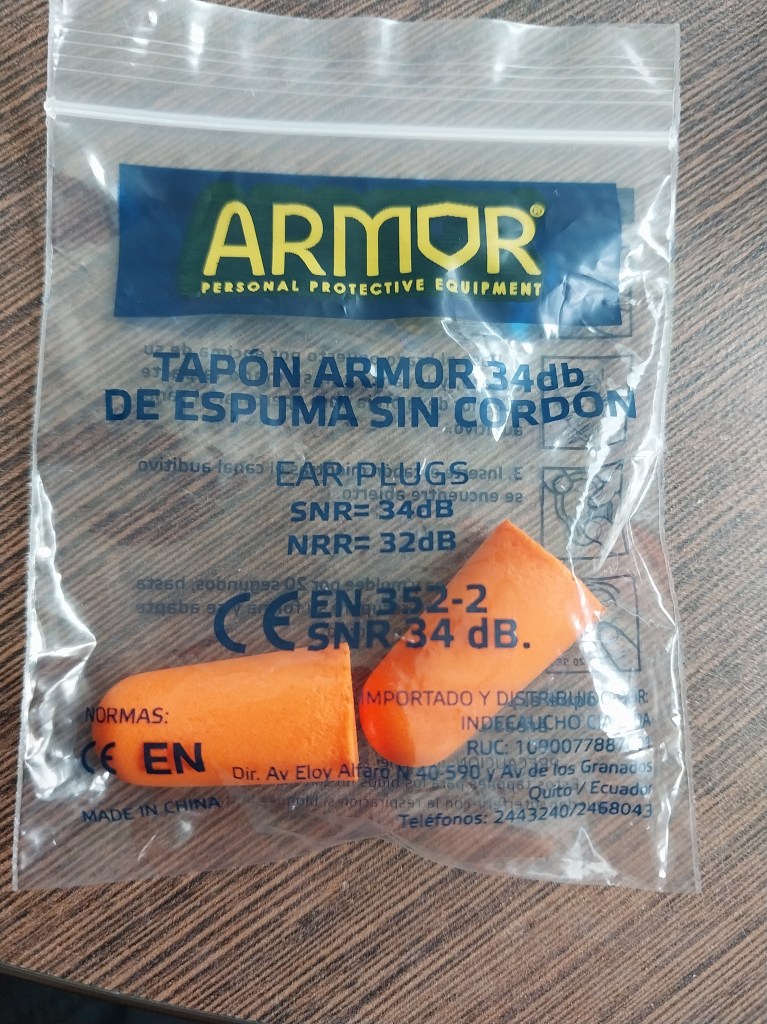
San Jose de PuemboFront entryThe airplanes started coming in around 5:30 in the morning – I was already up so no big deal!Free earplugs in the vanity kit.No wonder they made such a big deal about earplugs and closing your room windows tightly.
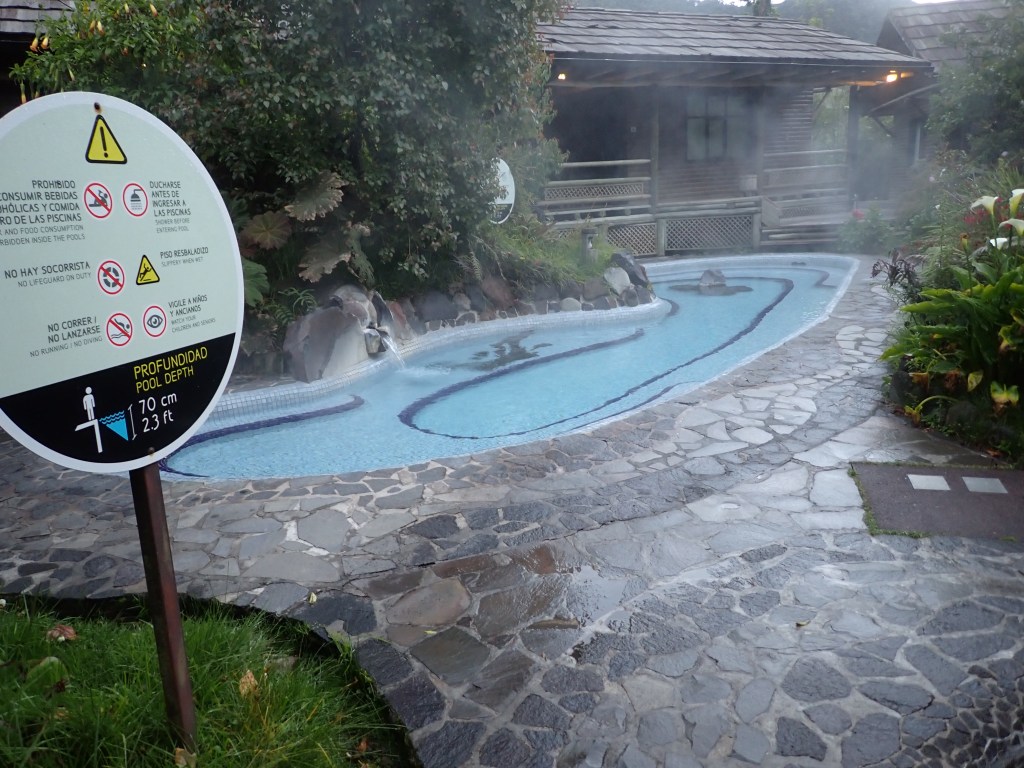
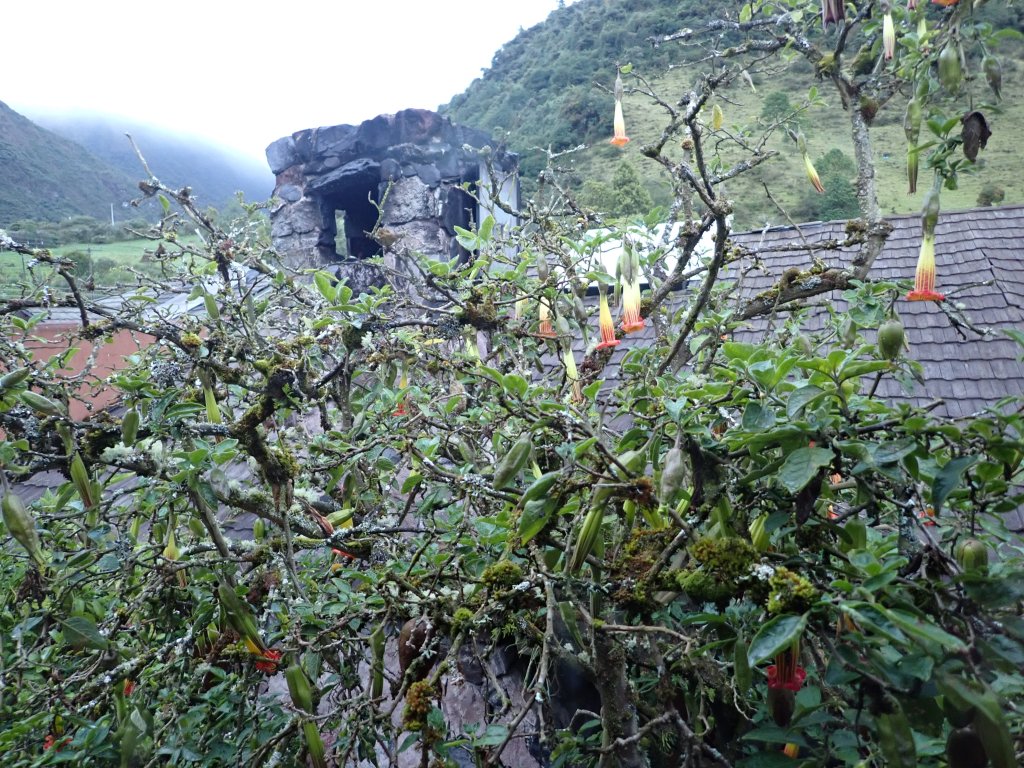
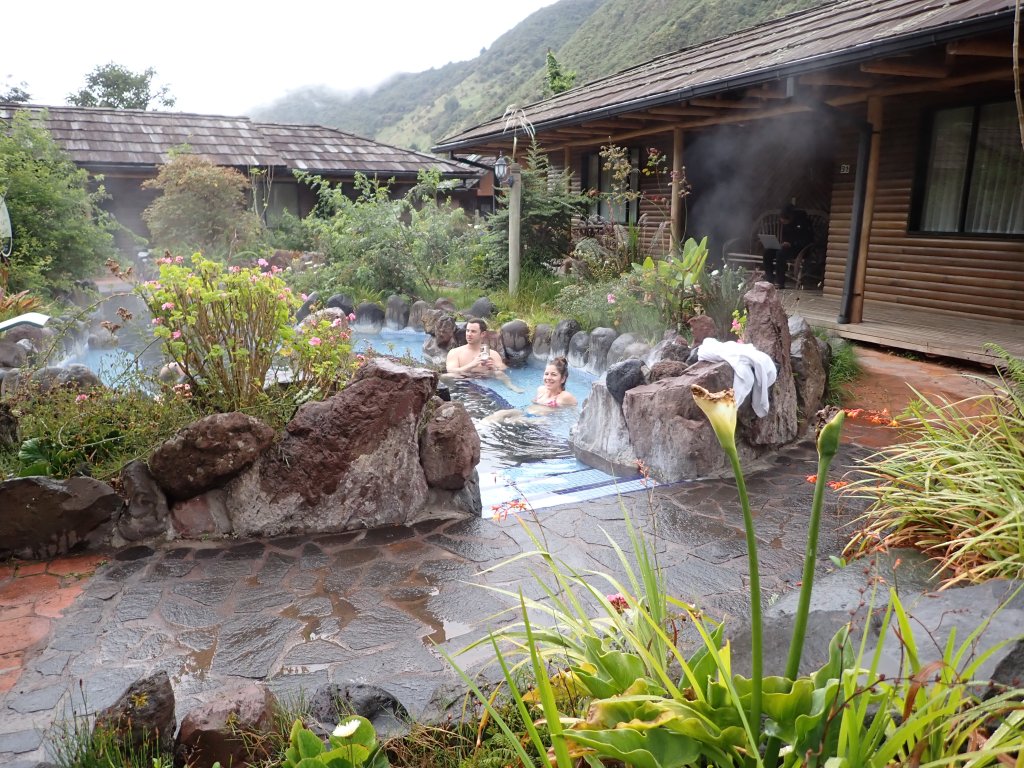
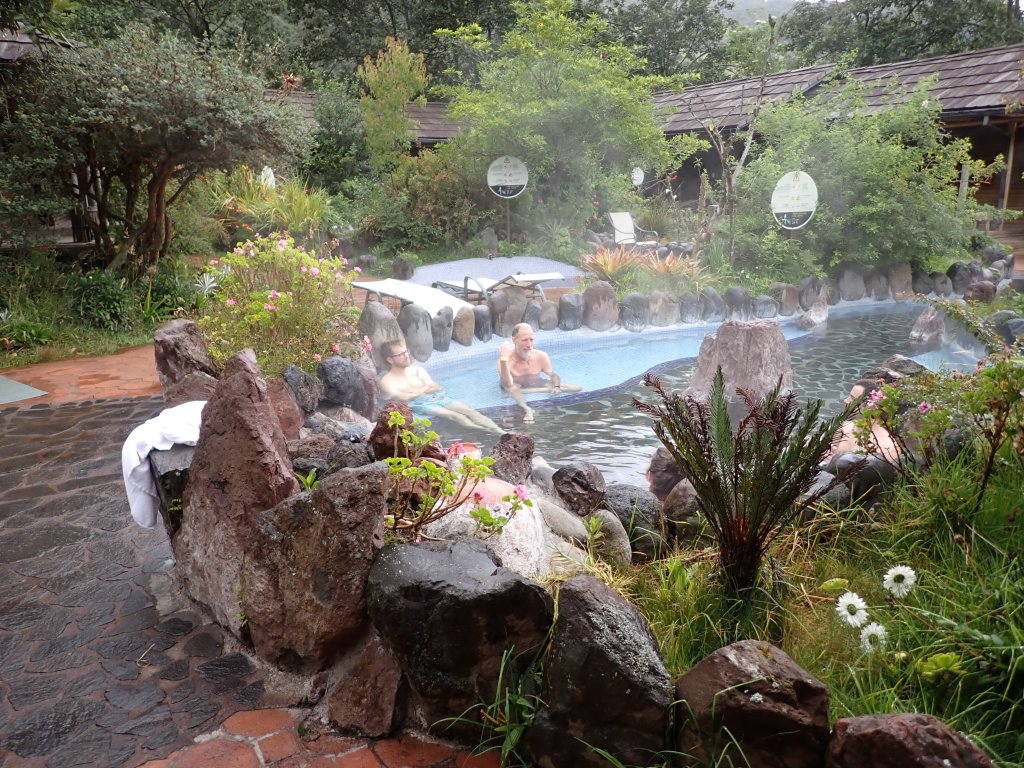
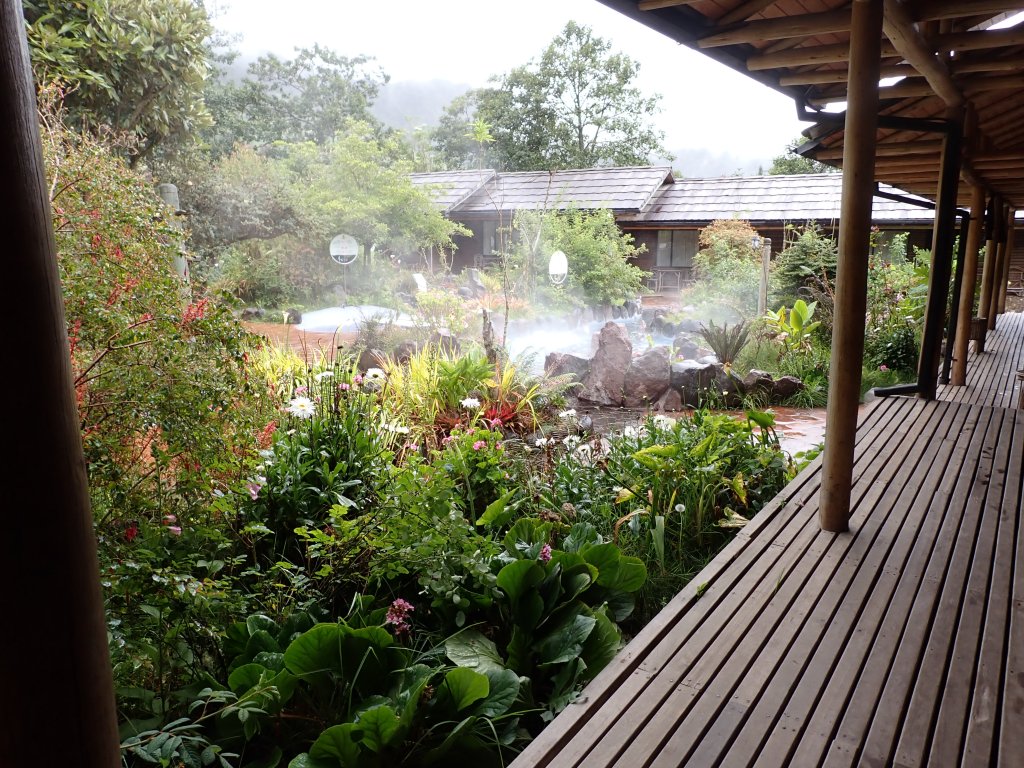
The second hotel we stayed at was a hot springs resort – Termas de Papallacta and there were hot springs right outside the door of the room and the grounds were stunning. We stayed there for two nights – certainly could have stayed there longer!
Early morning at 6:30am – had the pool to myself!Flowers and fruit everywhere.comfortable, even in the drizzle.Enjoying a soak after the Pasochoa acclimatization hike.
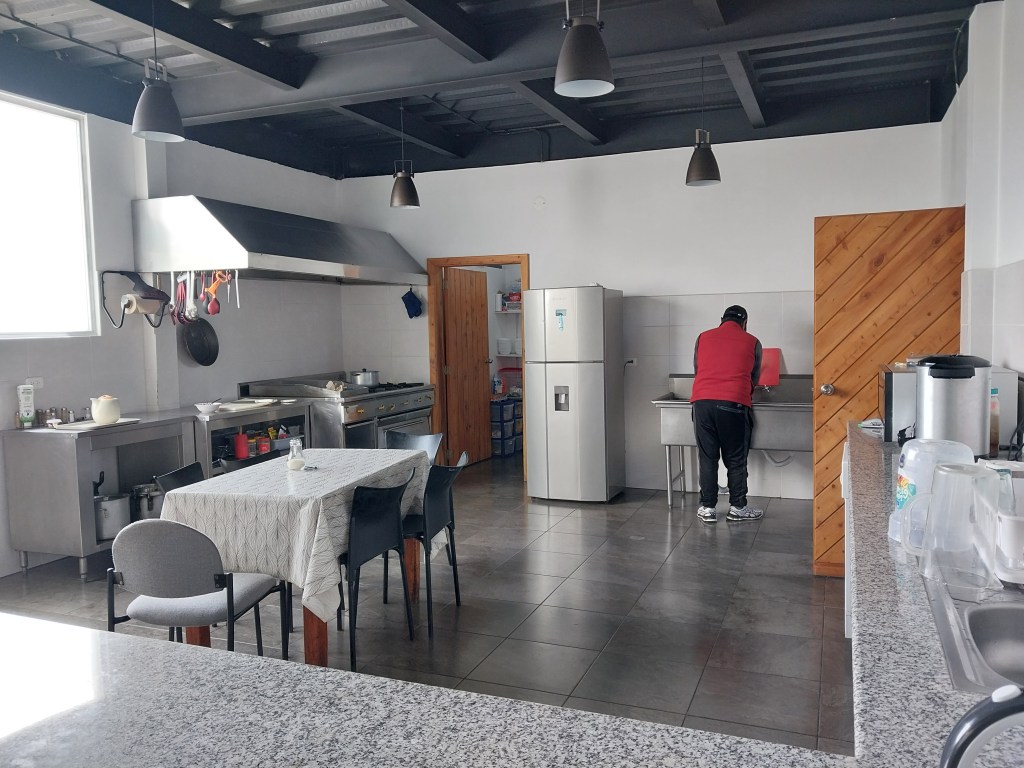
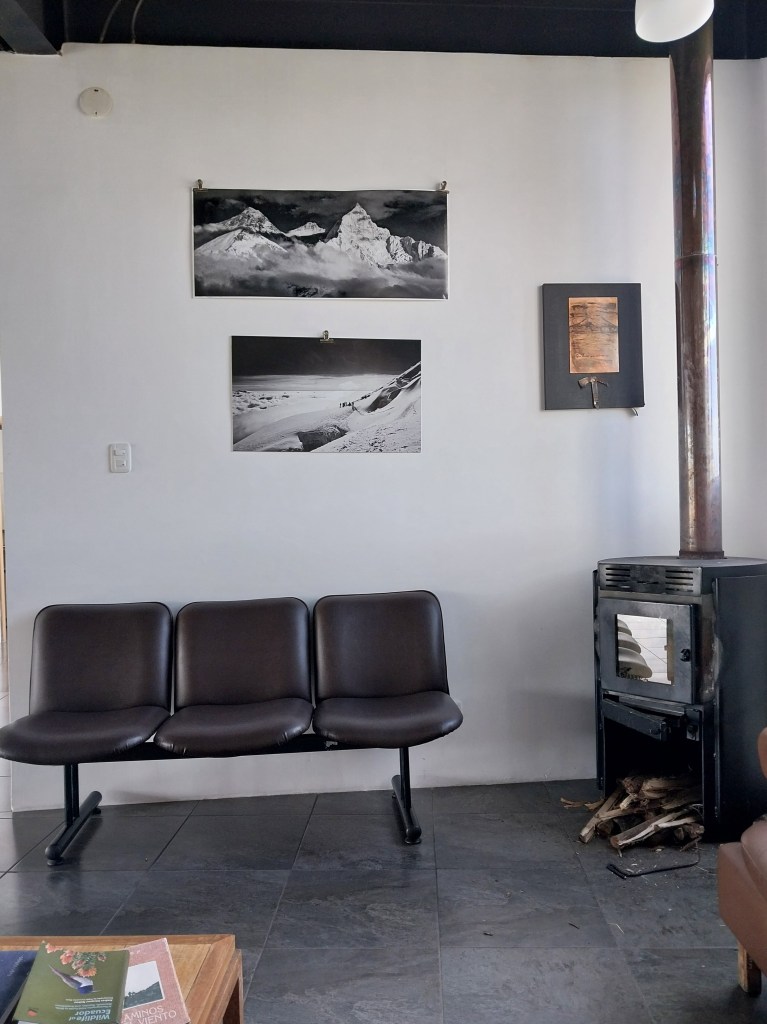
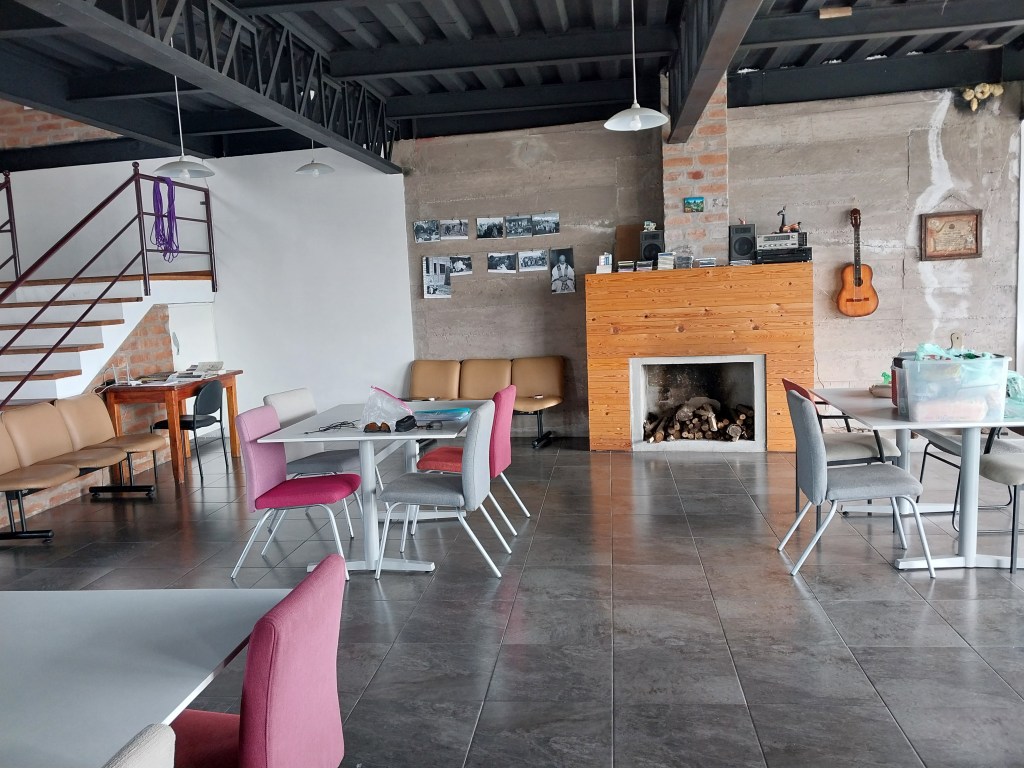
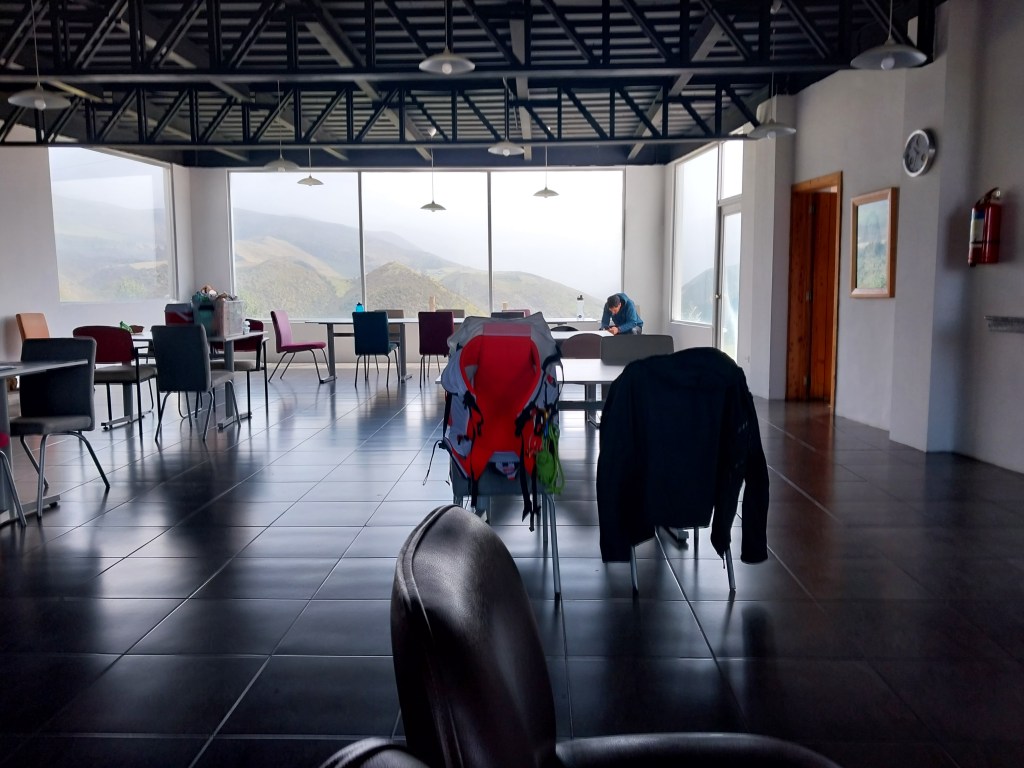
The next lodging was at the Yanacocha Lodge. This was a fairly new lodge with a beautiful, huge kitchen, dining area and a spacious bunk area where we all slept. There were occasional views of Cayambe, our first objective.
The sleeping quarters are on the left hand side.Clean, modern kitchenLounge/Dining areaDining room with massive windows that have a view of Cayambe.First, decent view of Cayambe from the lodge. After many days of rains and storms, we were excited to see the clearing skies.
We then moved up to the Cayambe Hut (15,280′) for our summit attempt on Cayambe. Again, we all slept on bunk beds in a “dorm room” type setting but the hut itself was clean and cozy.
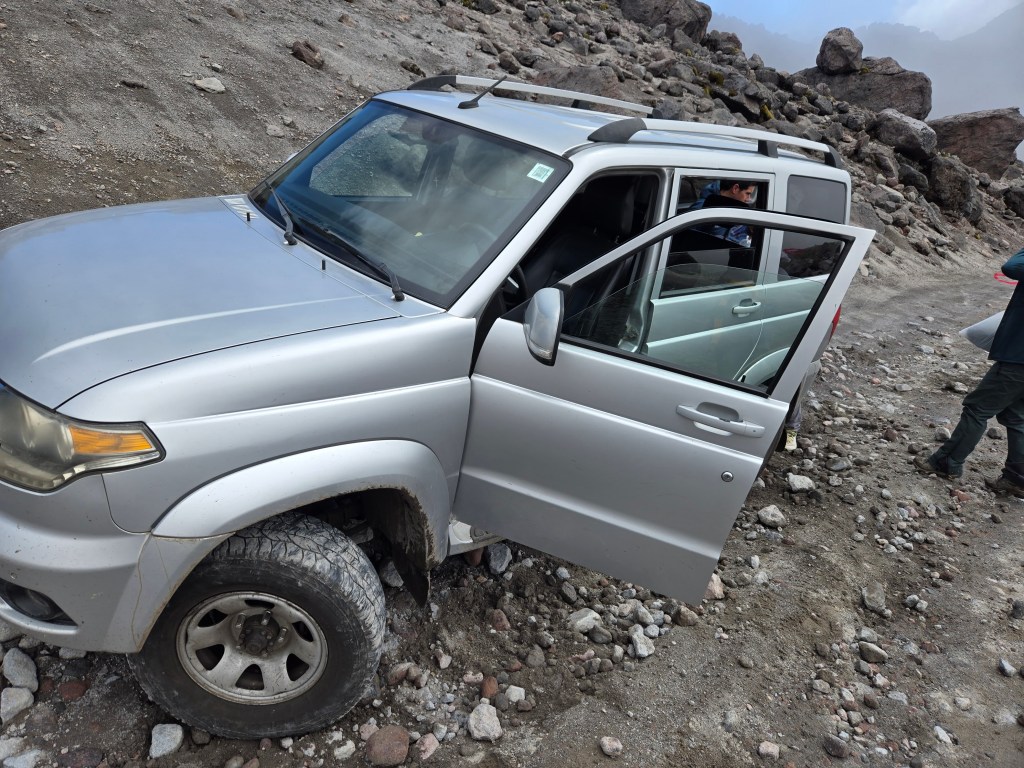
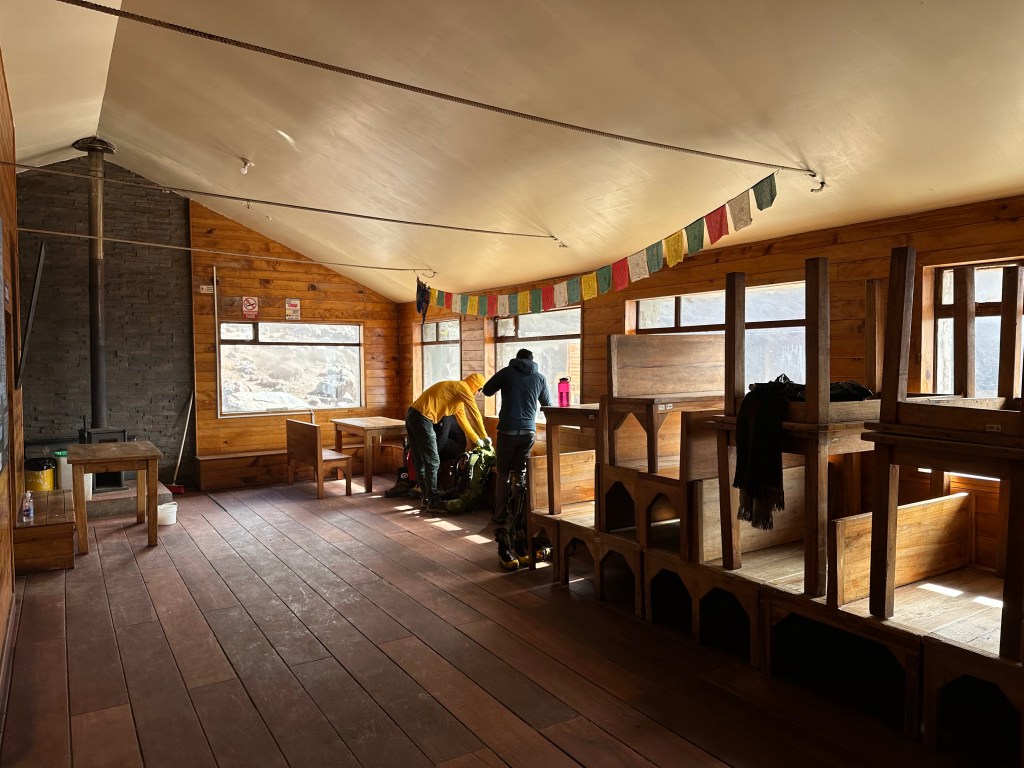
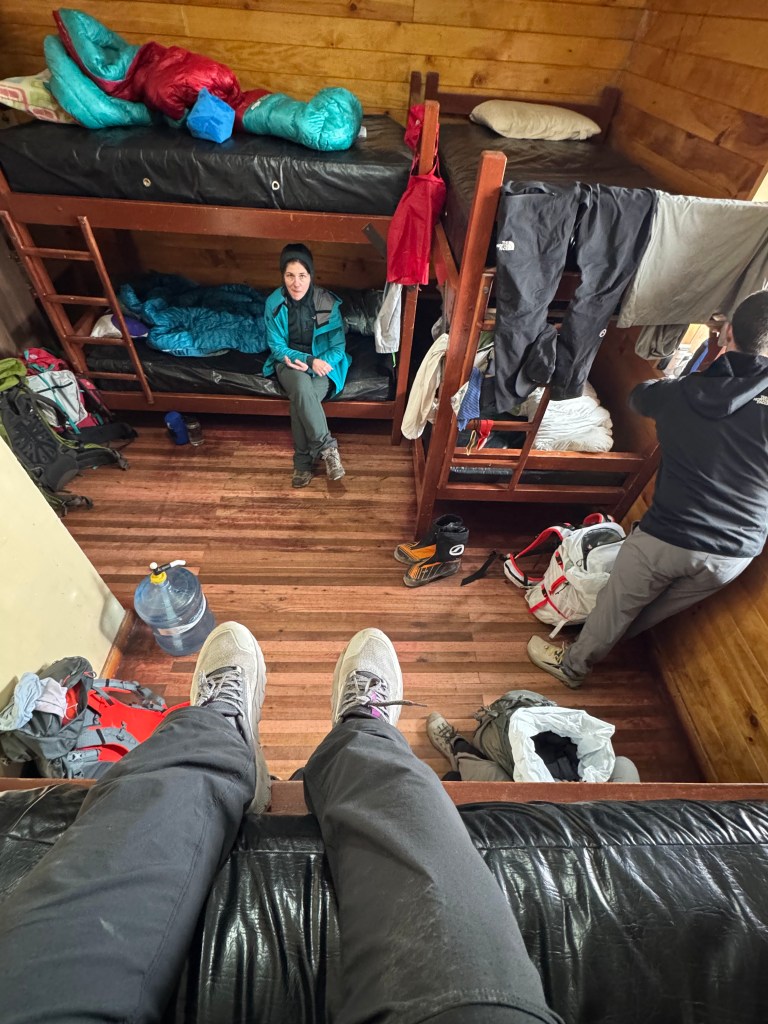
Broken tie rod on one of the vehicles we used to drive to the Cayambe Hut. The road was not passable for our luxury bus!Dining area of the Cayambe HutSleeping quarters in the Cayambe Hut. Once we moved up on the mountains, we stayed in huts/refugios that were similar to the ones I had stayed in when climbing in Bolivia and the Alps.
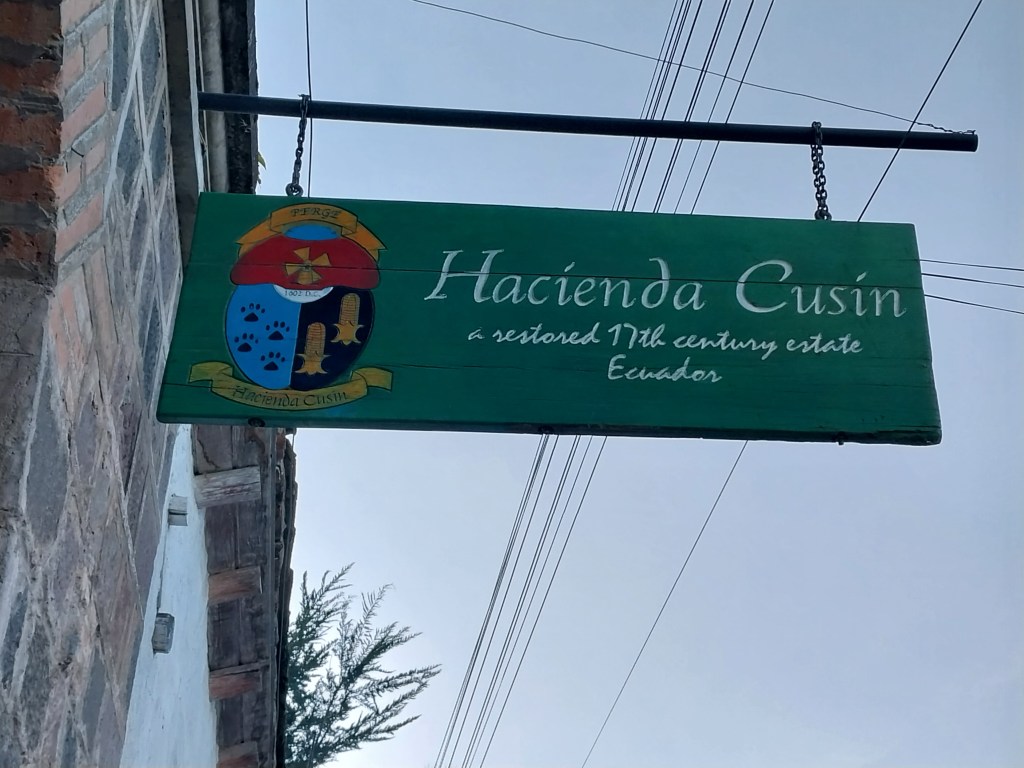
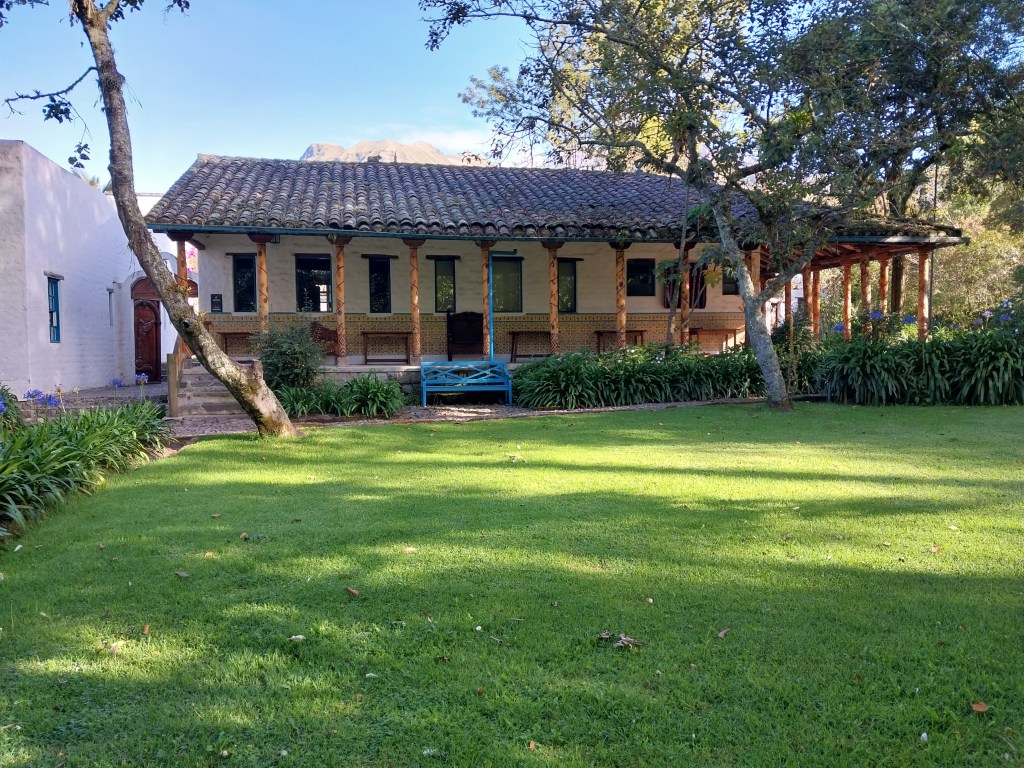
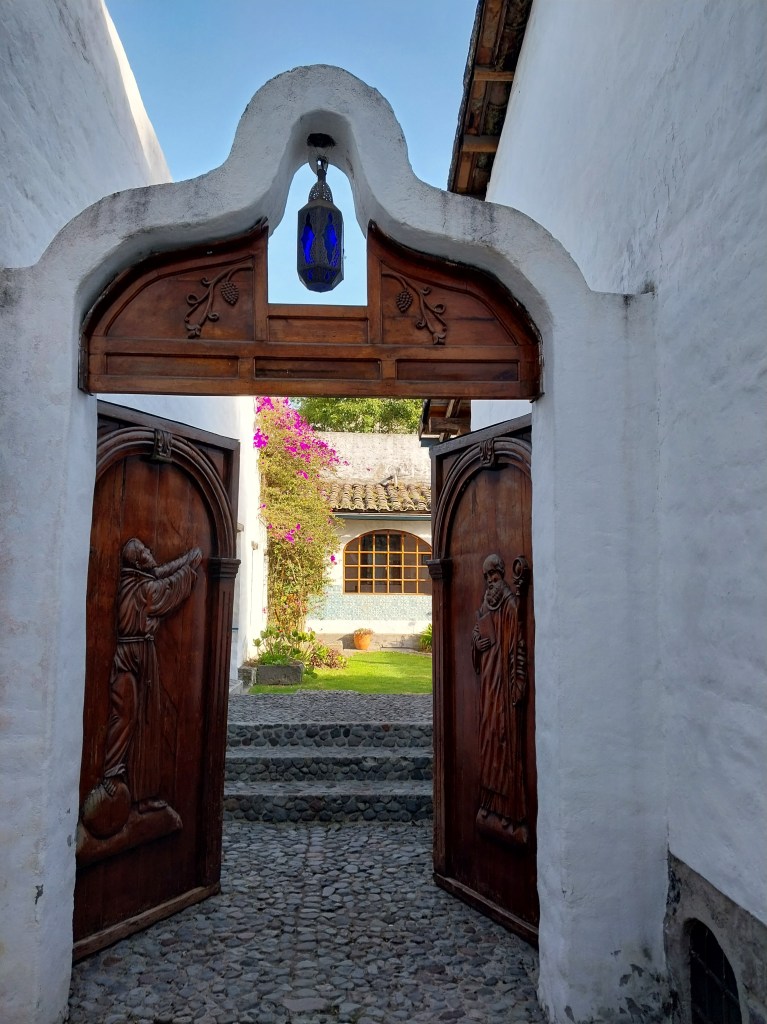
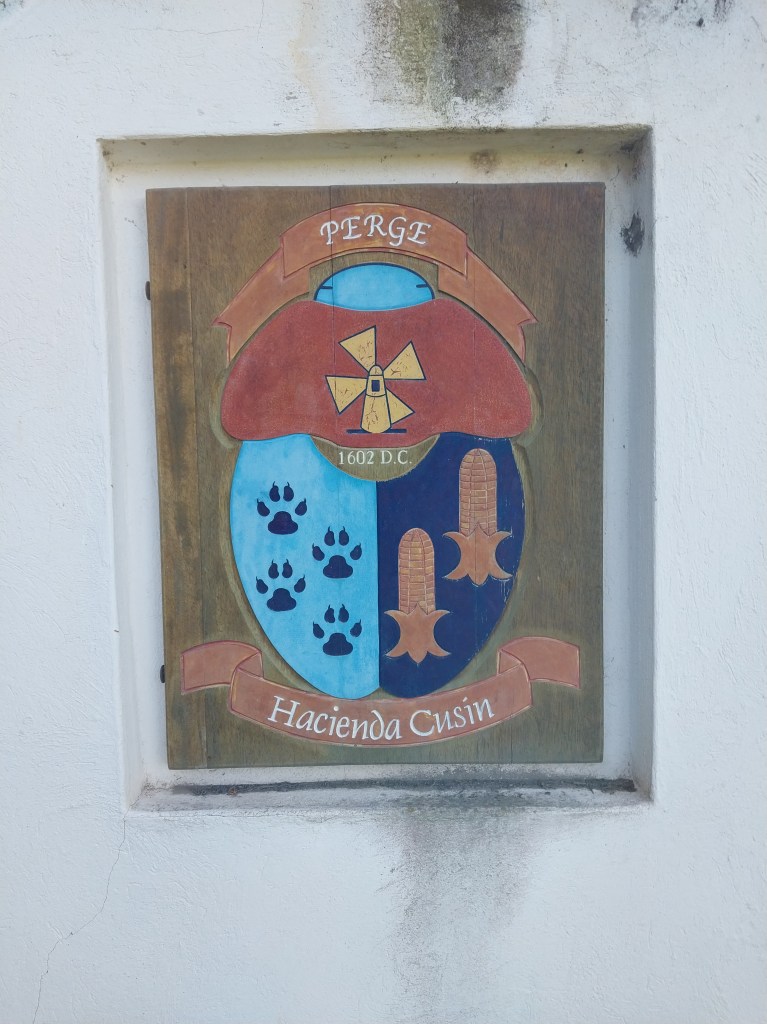
We then stayed in the Hacienda Cusin which was a restored 17th century hacienda near the town of Otovalo. This was a huge property/compound with expansive gardens, stables and is a favorite of David’s.
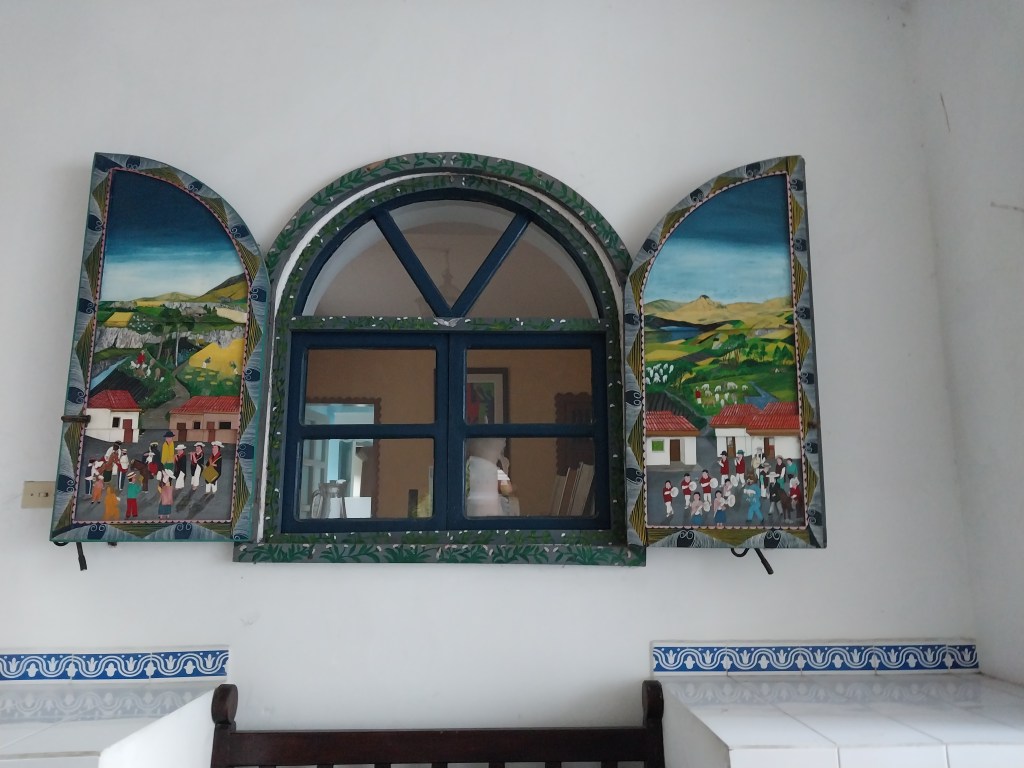
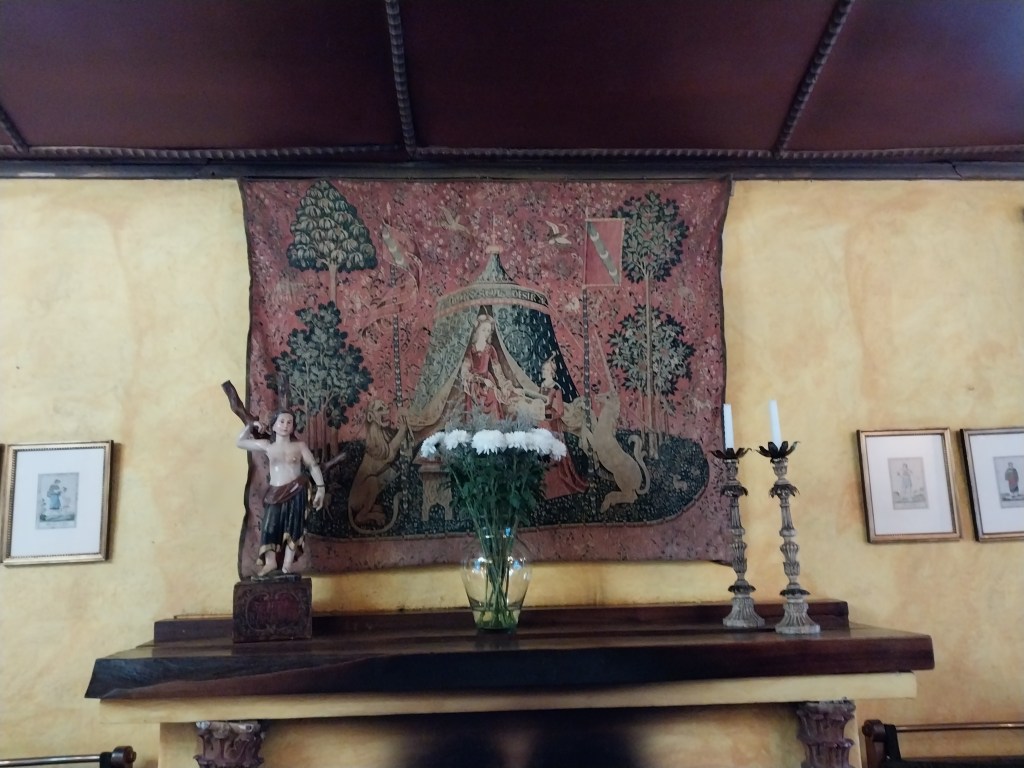
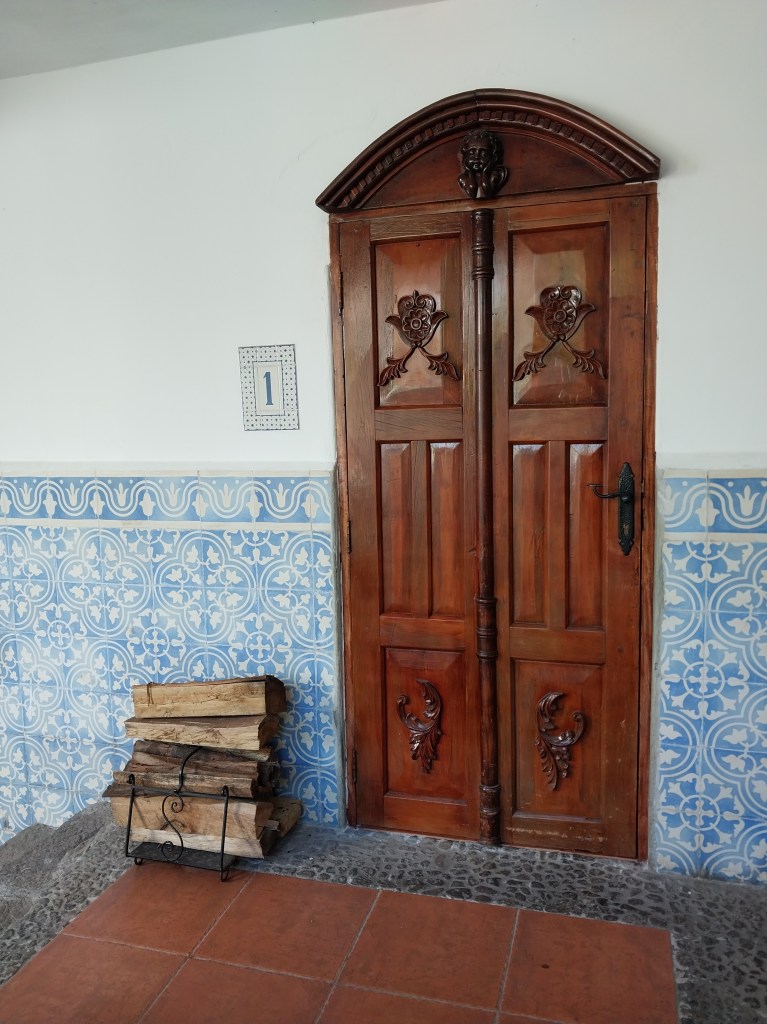
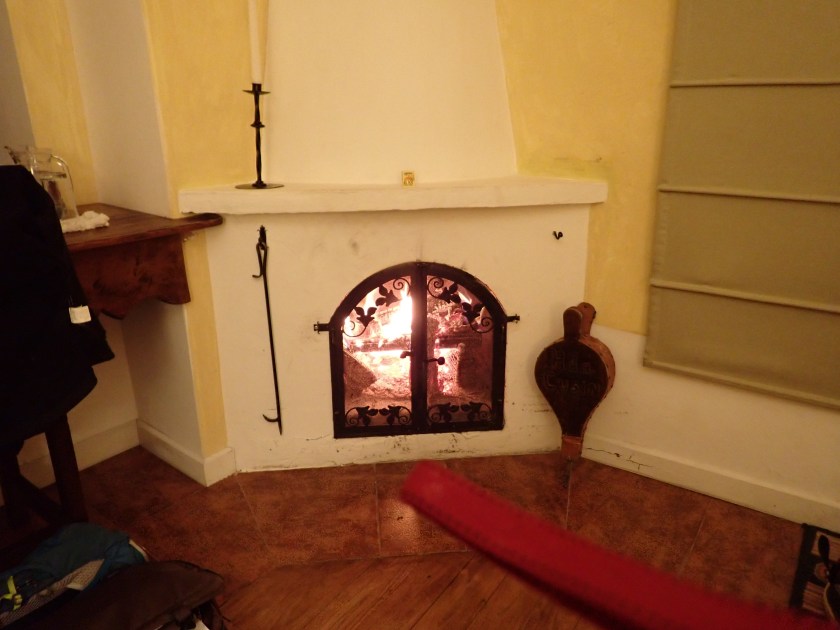
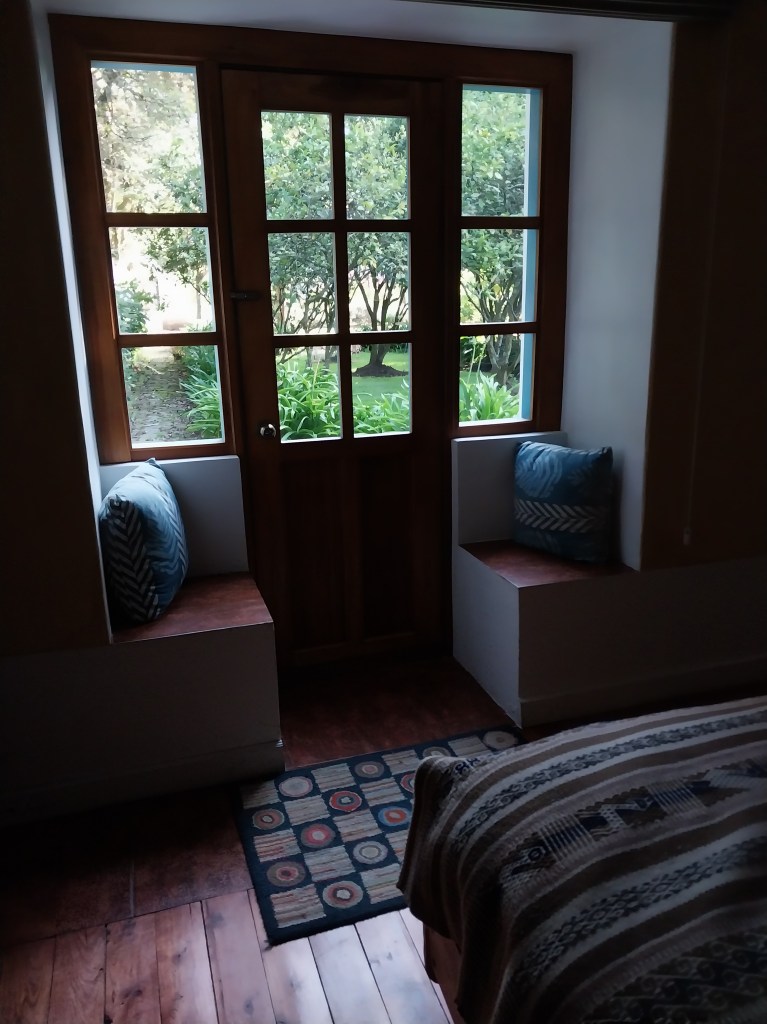
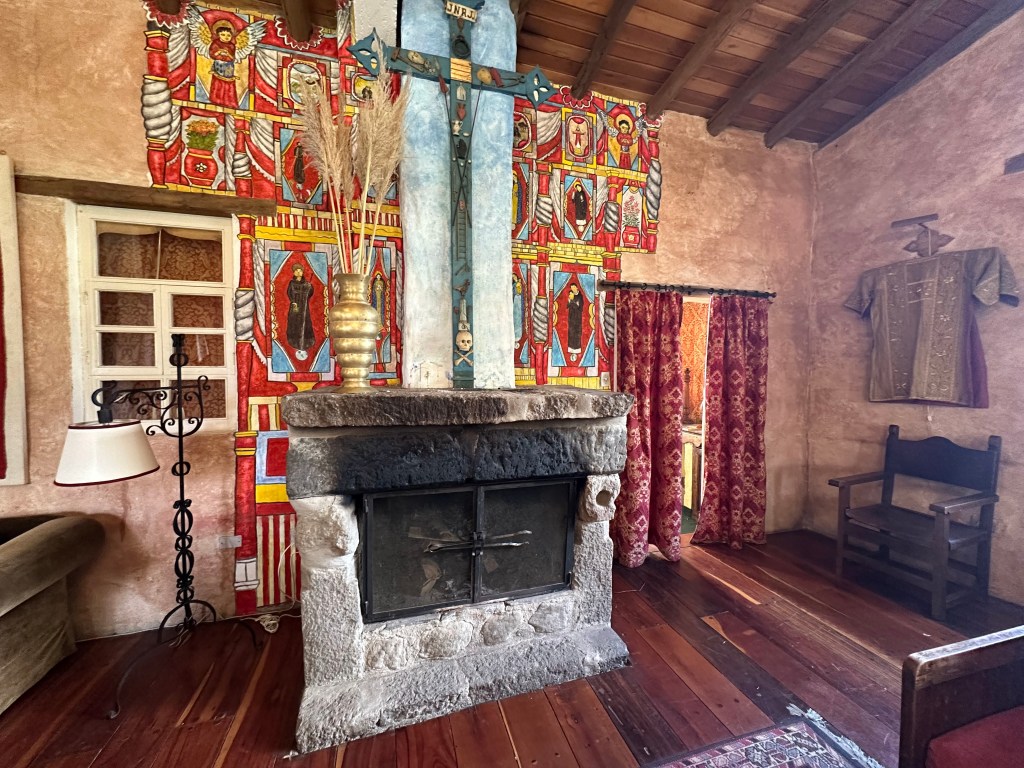
This was a huge, gated estate surrounded with high walls.These were the ornate shutters that were outside my room.Front entrance to my room.This was the fireplace in my room. Lit and roaring when I returned from dinner, as well as a huge hot water bottle in the bed!My room had a little sitting area and it opened to one of the gardens.
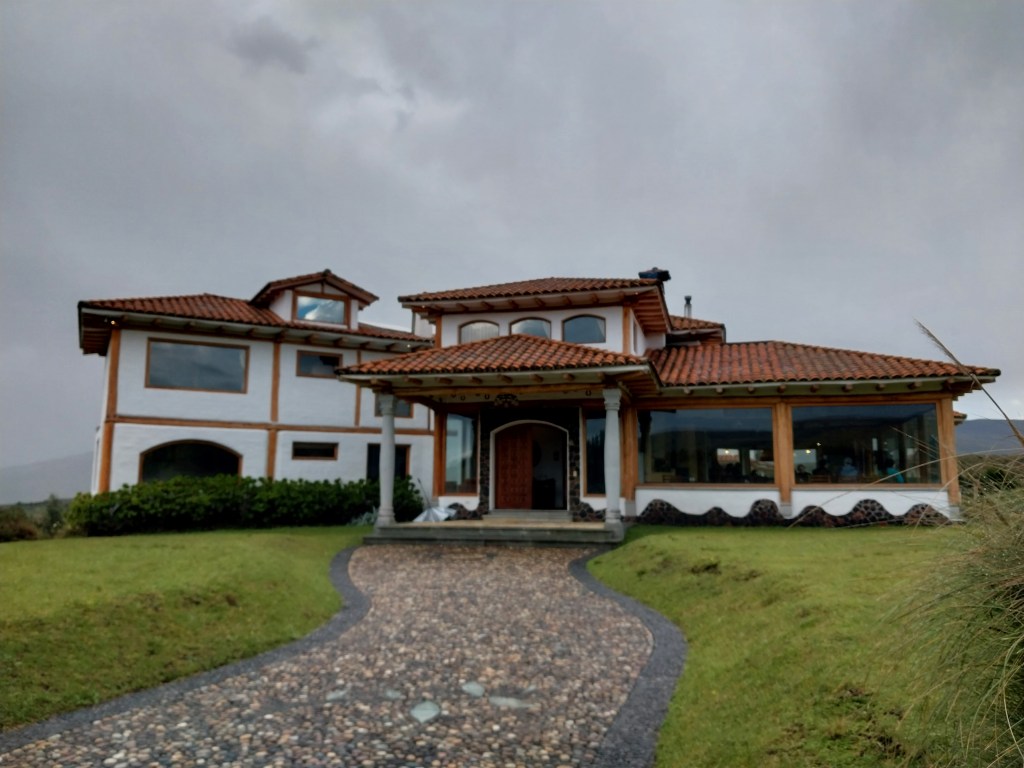
We then drove towards the Cotopaxi region and stayed one night in the Hacienda los Mortinios. Another stunning property!
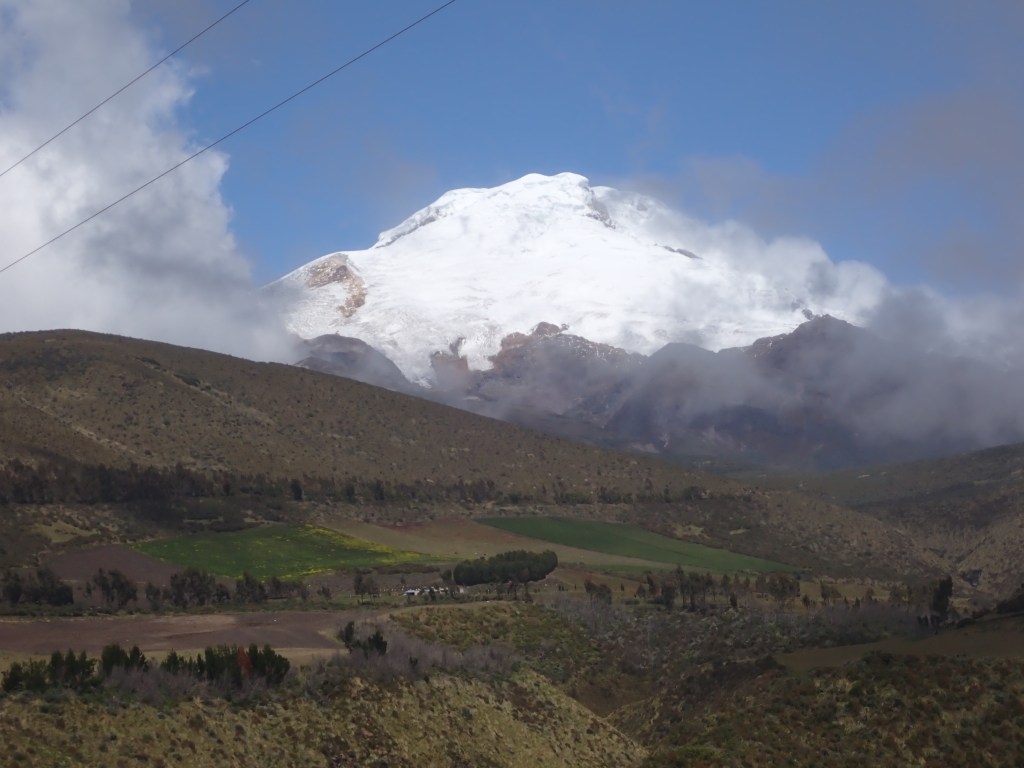
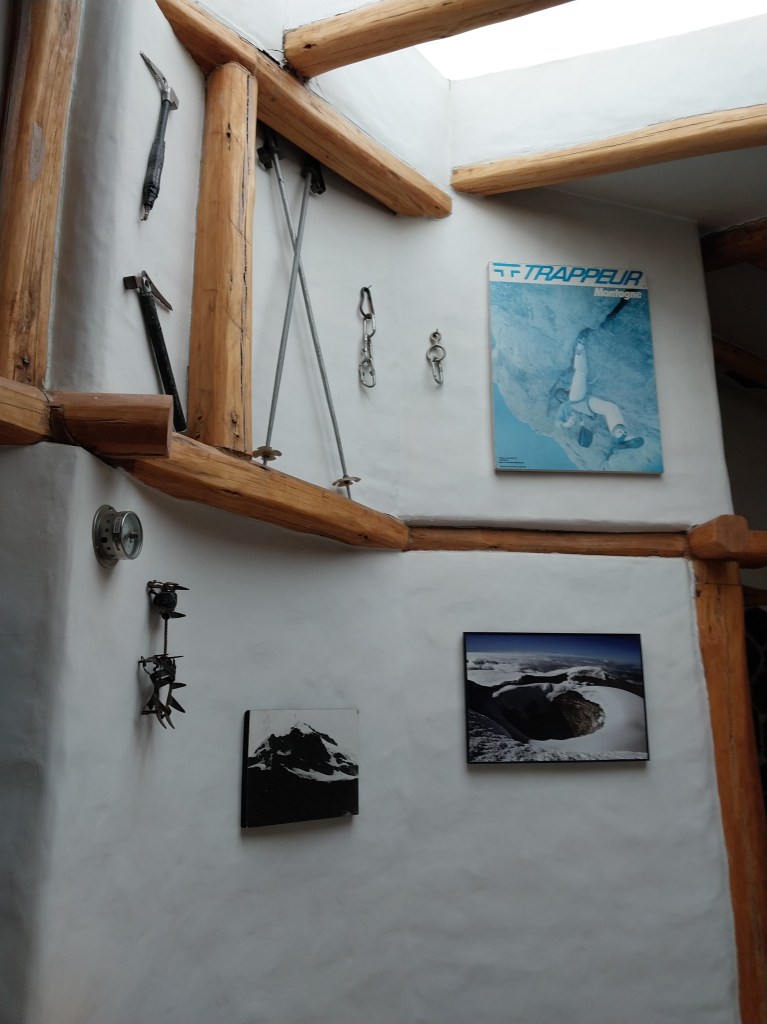
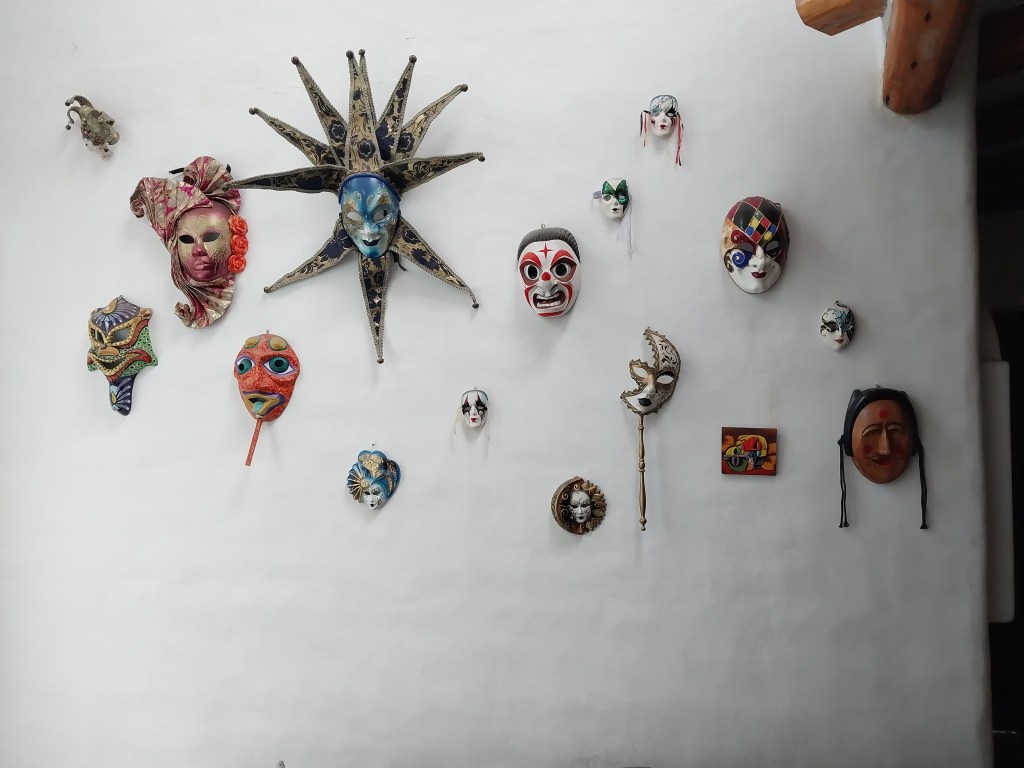
Nice room with huge windows.Beautiful bathroom although my hopes for a hot shower were dashed to pieces! All show, no go!Upstairs climbing display. We saw that a lot of the hotels/resorts we stayed in catered to climbers and trekkers.Never asked the significance of these masks but they were colorful!Sunrise – in the middle of the photo on the horizon, is Cayambe, the volcano that we had climbed two days prior.Hacienda los Mortinios with Pasochoa in the background, which we had climbed as an acclimatization hike.Afternoon showers slowly passed by and we were given a great view of our next objective, Cotopaxi (19,347′.)
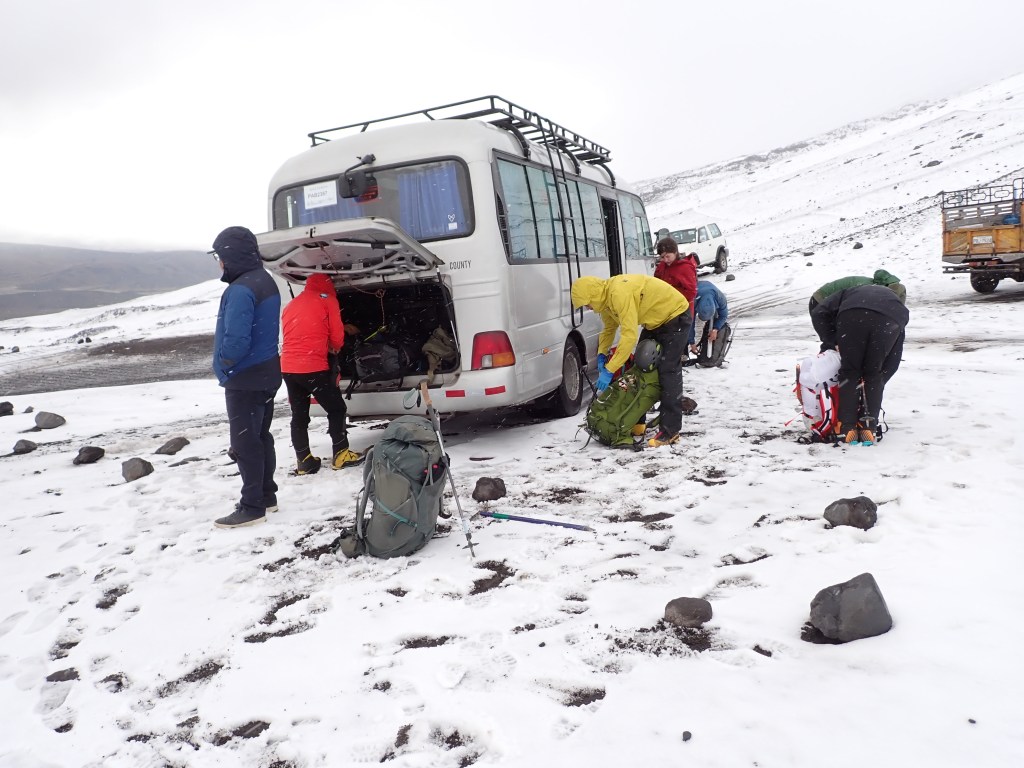
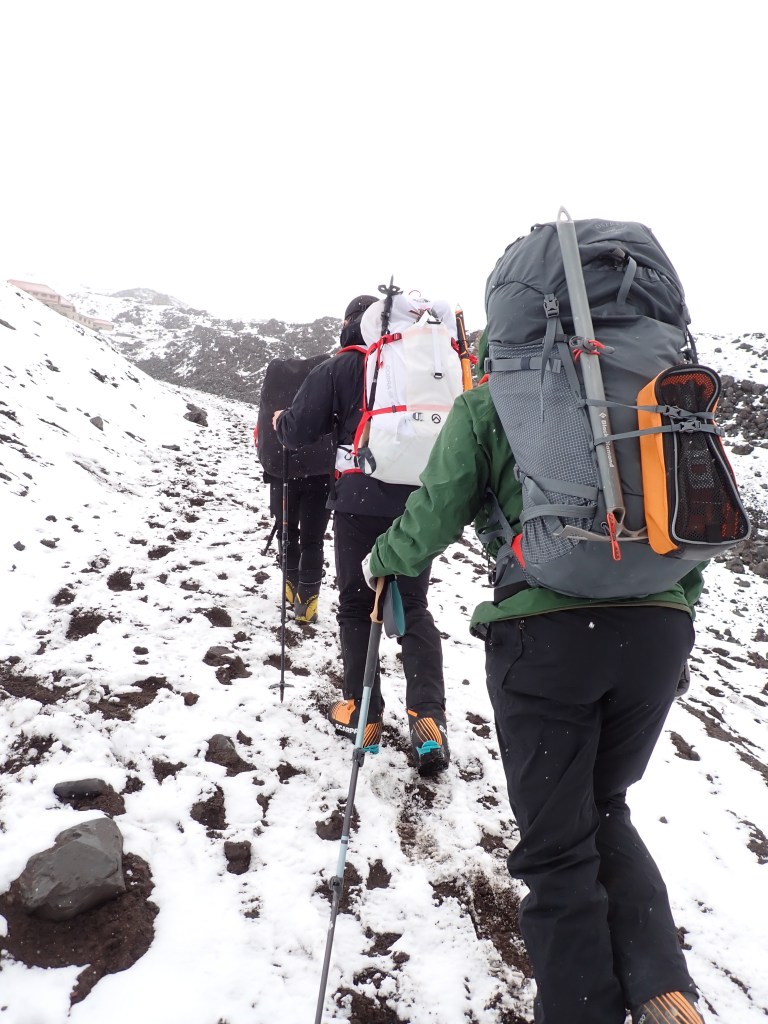
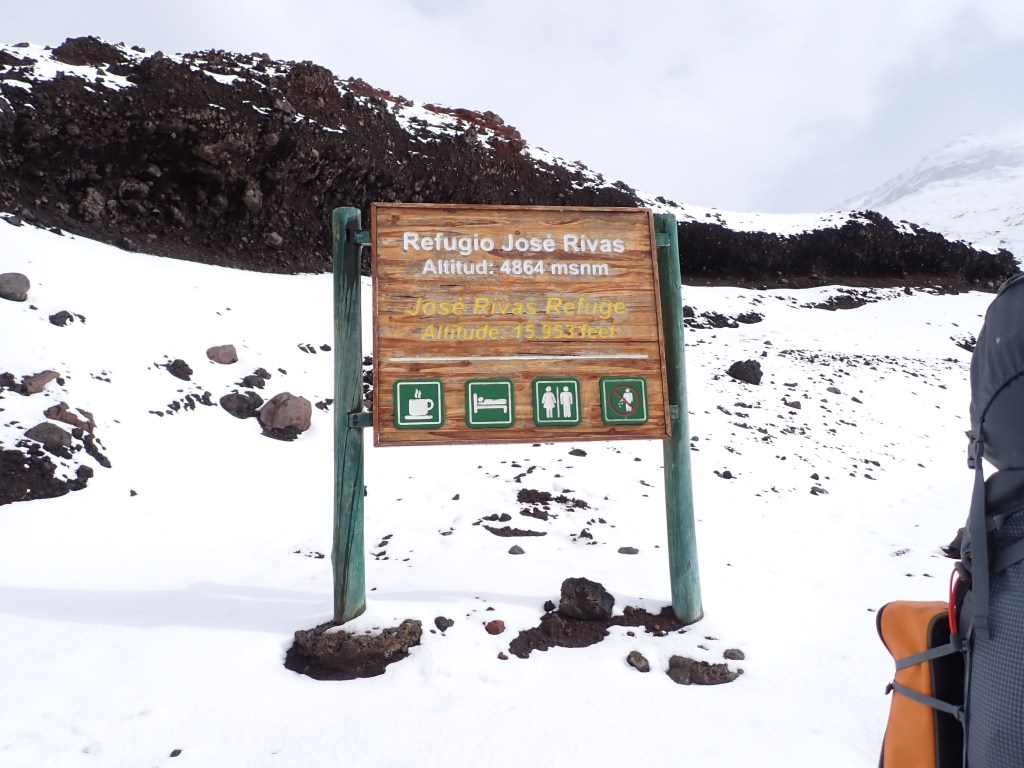
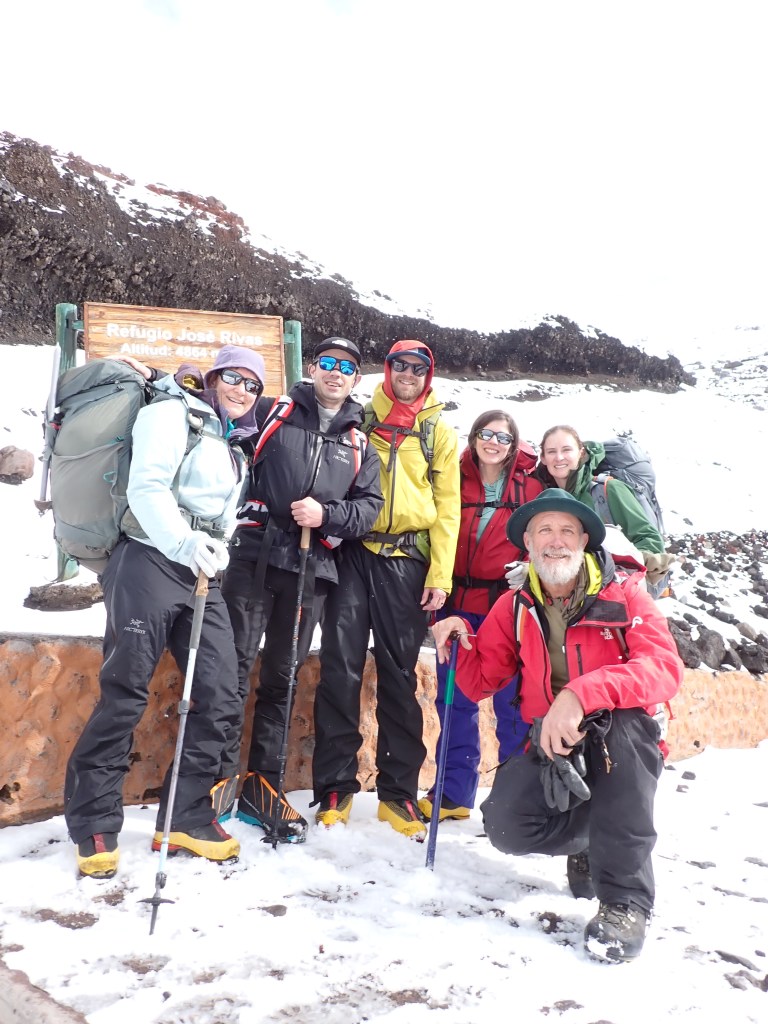
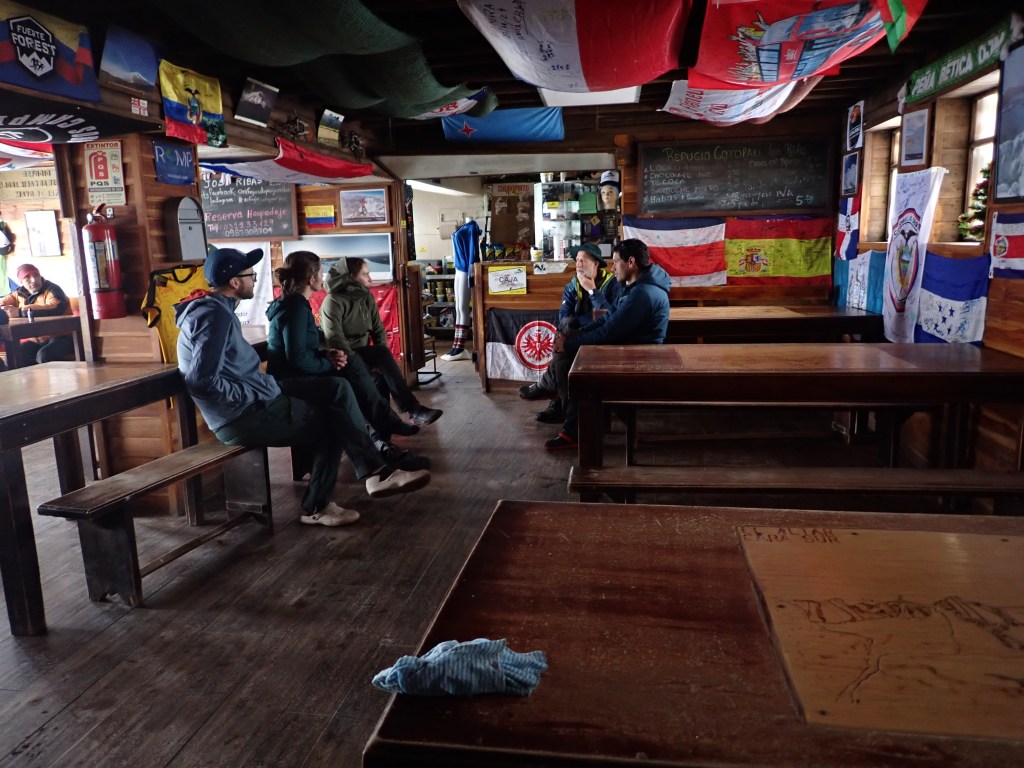
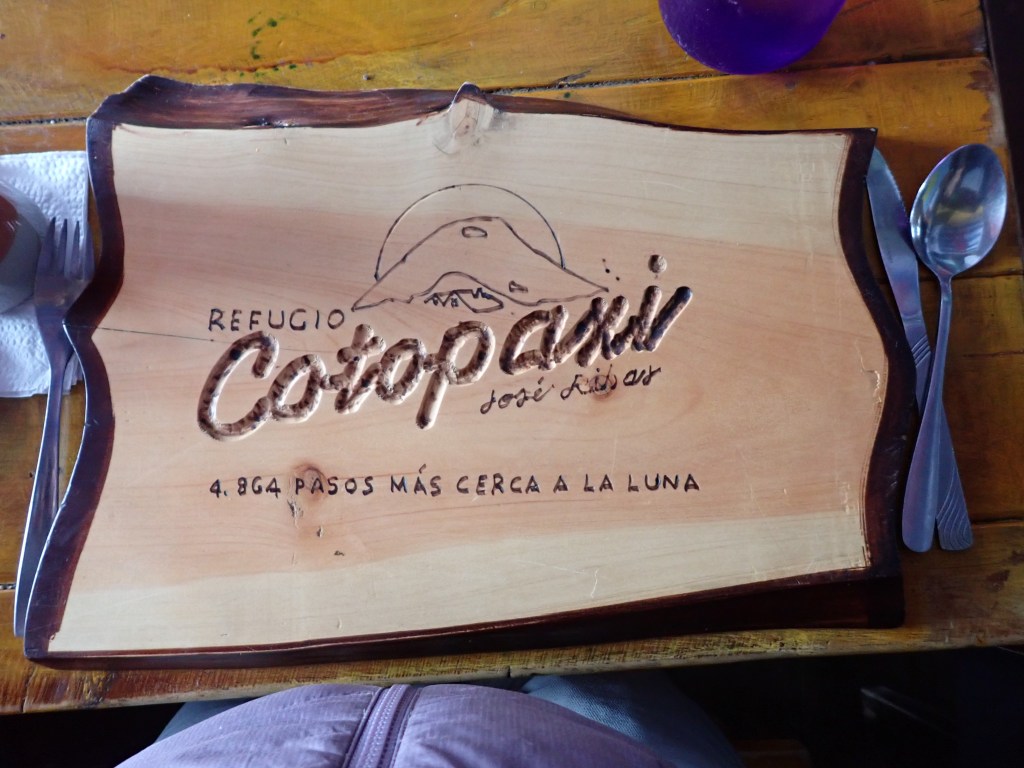
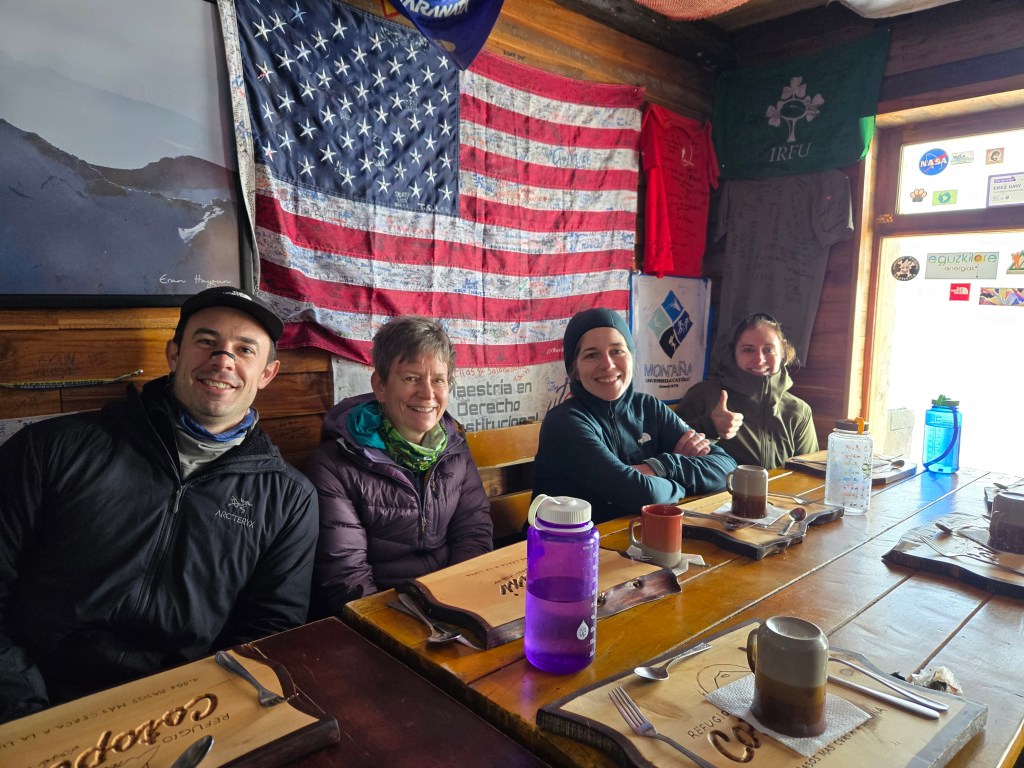
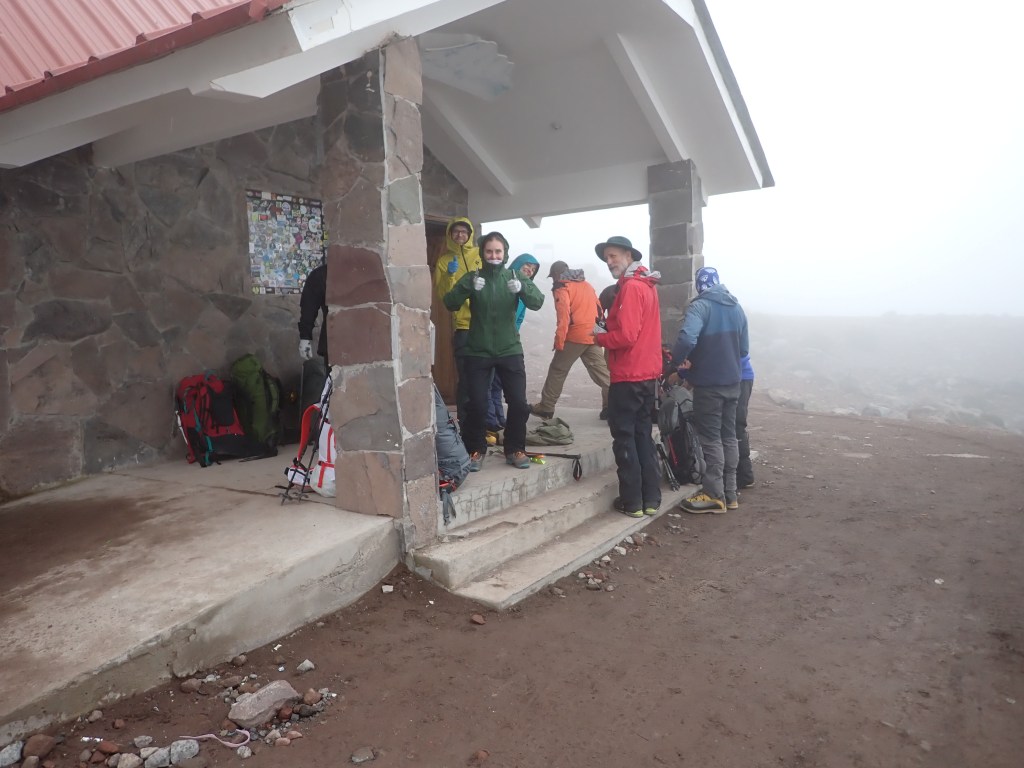
The next day we drove to Cotopaxi National Park and had about an hour hike up to the Jose Rivas Refuge (15,900′) where we again stayed in bunks in preparation for our summit attempt. This, although Day 11 in our itinerary, was the first time that we ended up in a hut where there were other climbers. Sort of loud so was glad I had the earplugs!
Dropped off at the parking lot – about an hour up to the hut.Hiking up to the Jose Rivas Refugio – it is the tan structure on the upper left – took us about an hour with all of our gear – OOF.Sun was in and out that day – caught glimpses of Cotopaxi but only for a moment.Made it to the hut!Team meetingWooden placemats at every seat!Anxiously awaiting another meal, HAHA!
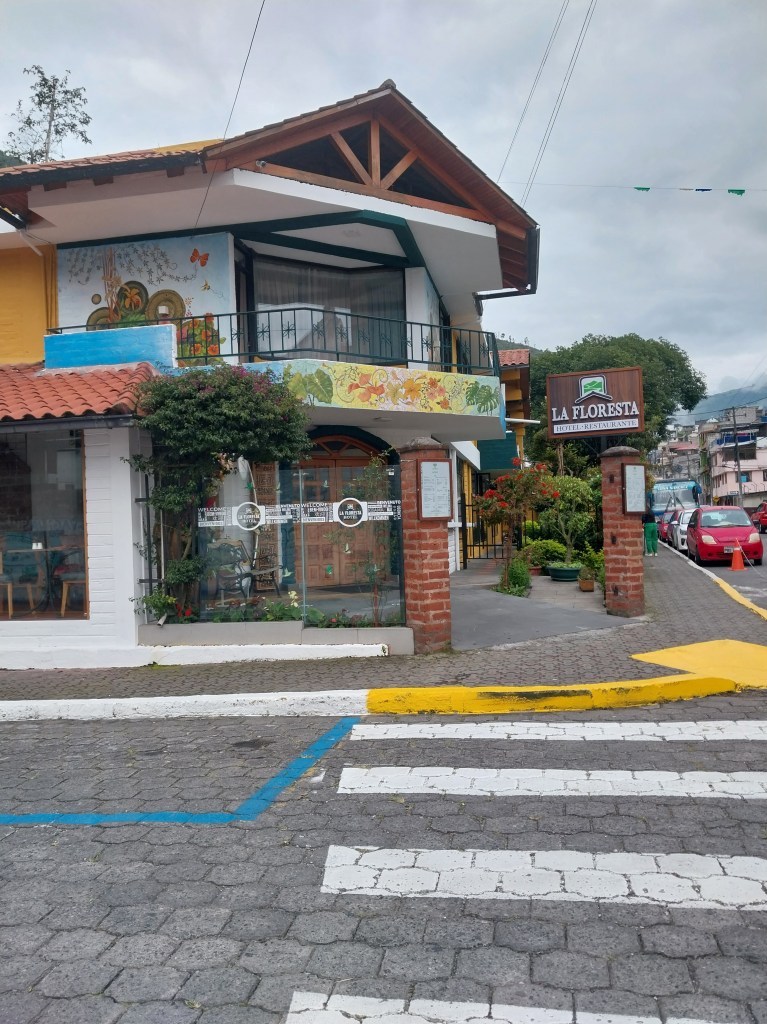
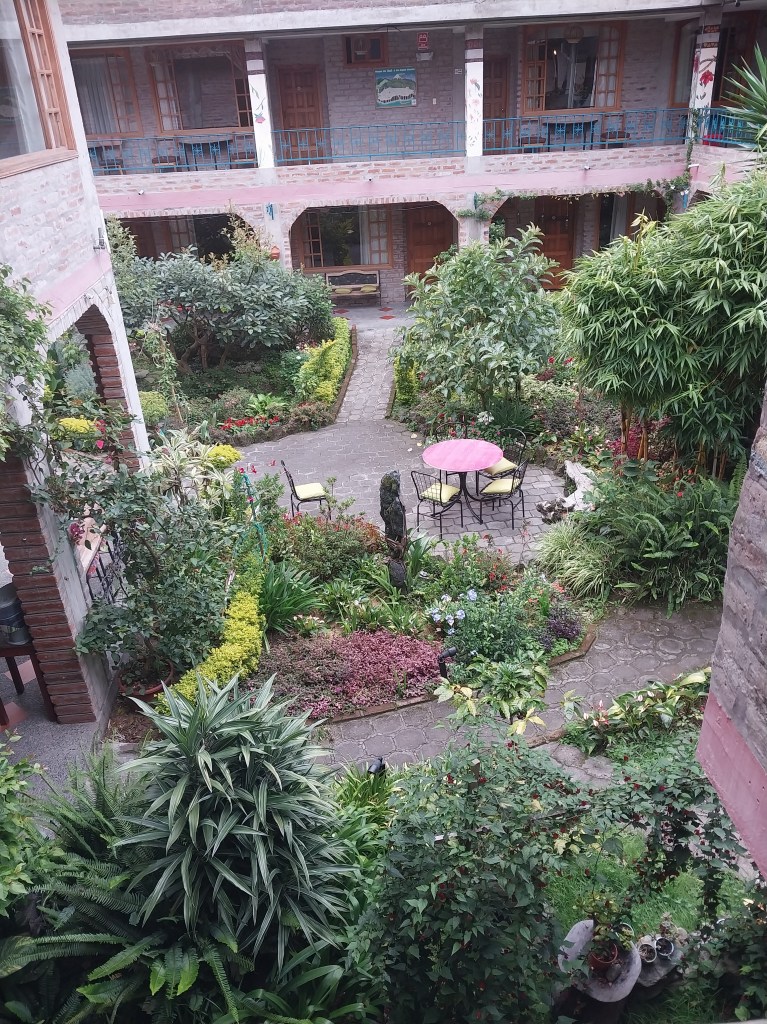
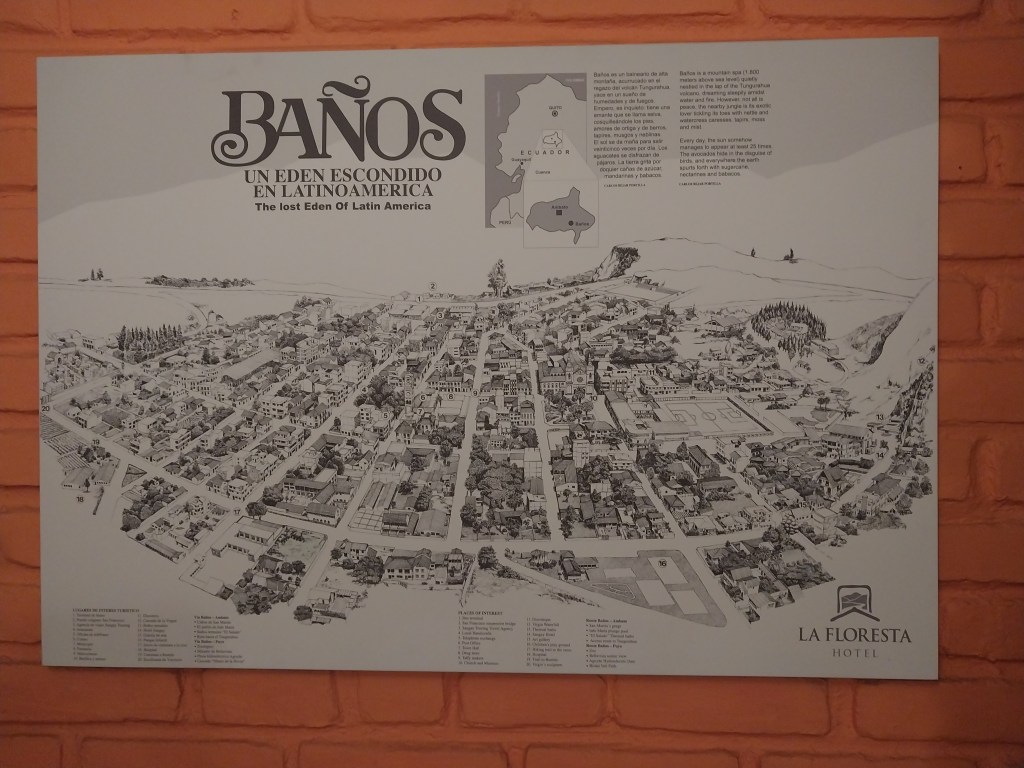
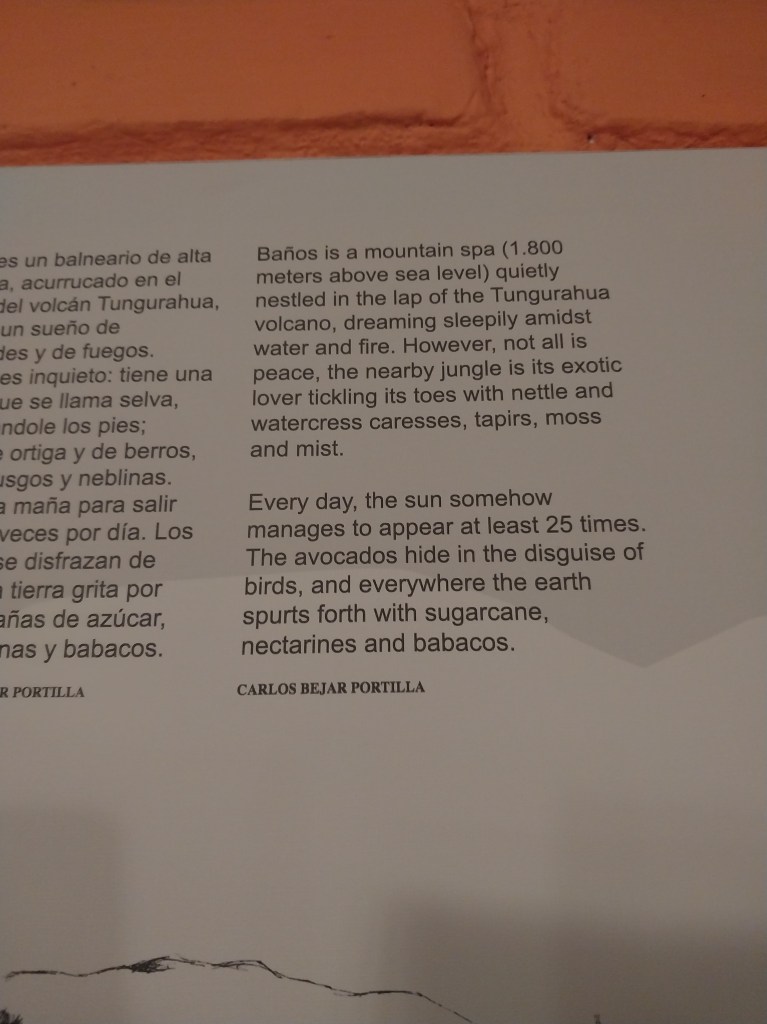
After the Cotopaxi summit, there was a slight change to our itinerary – we ended up going down to the town of Banos at an elevation of approx 6,000′ for two days. This was in an effort to help us replenish our depleted oxygen stores. We stayed at the La Floresta Hotel and enjoyed two days in Banos.
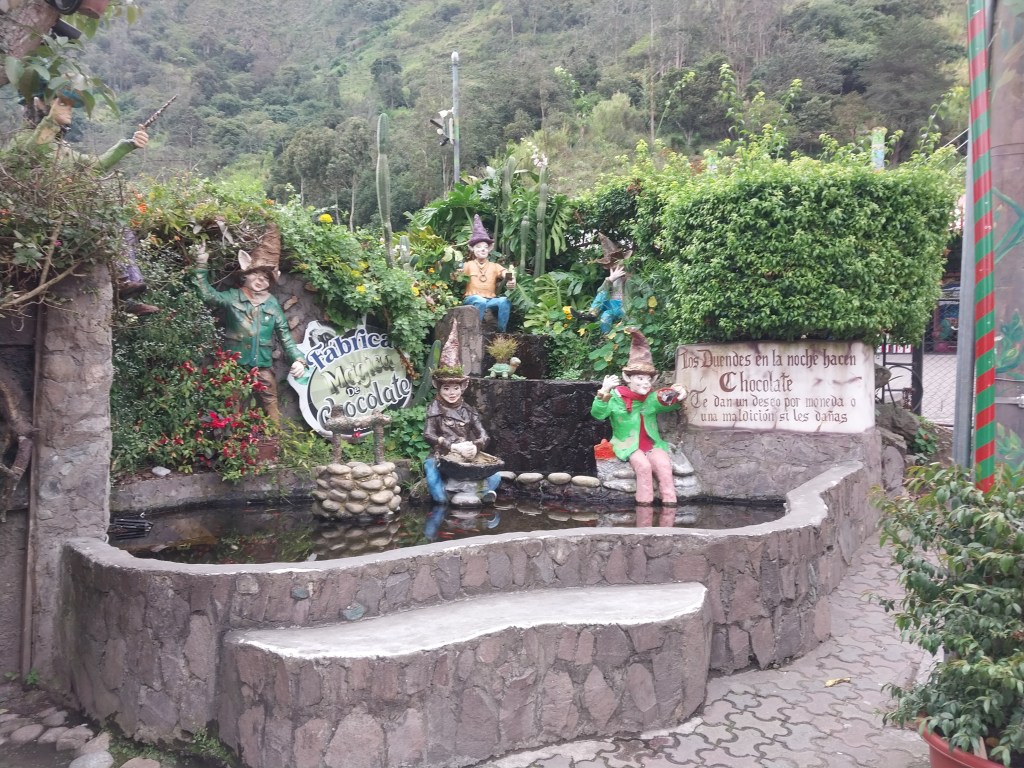
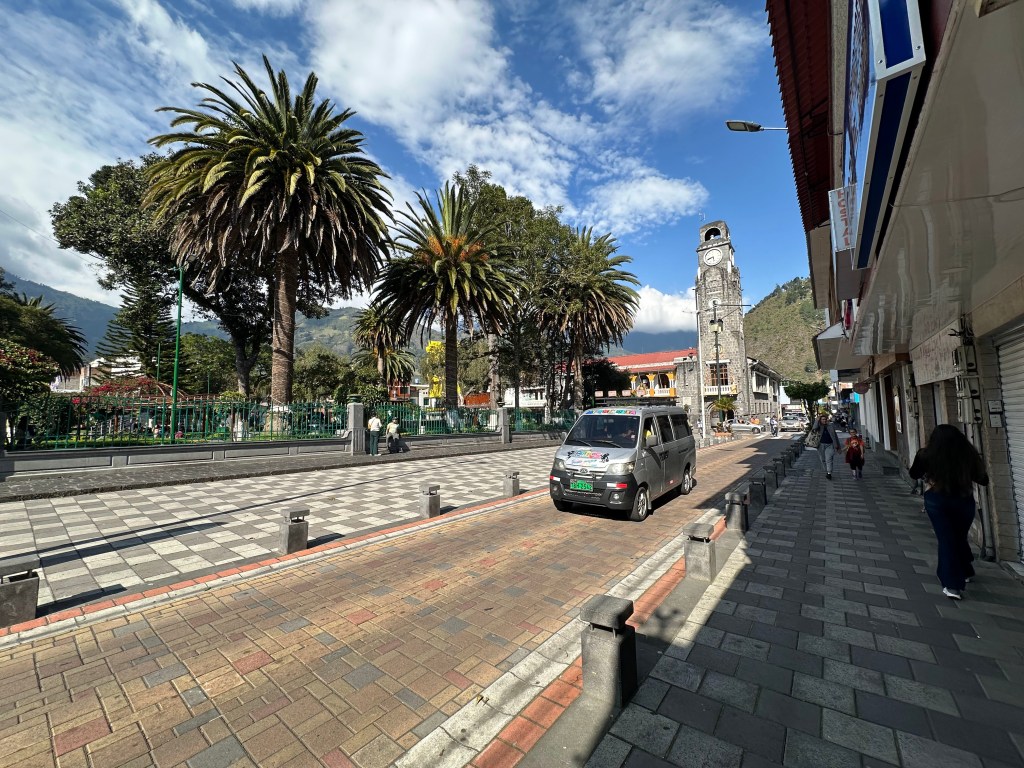
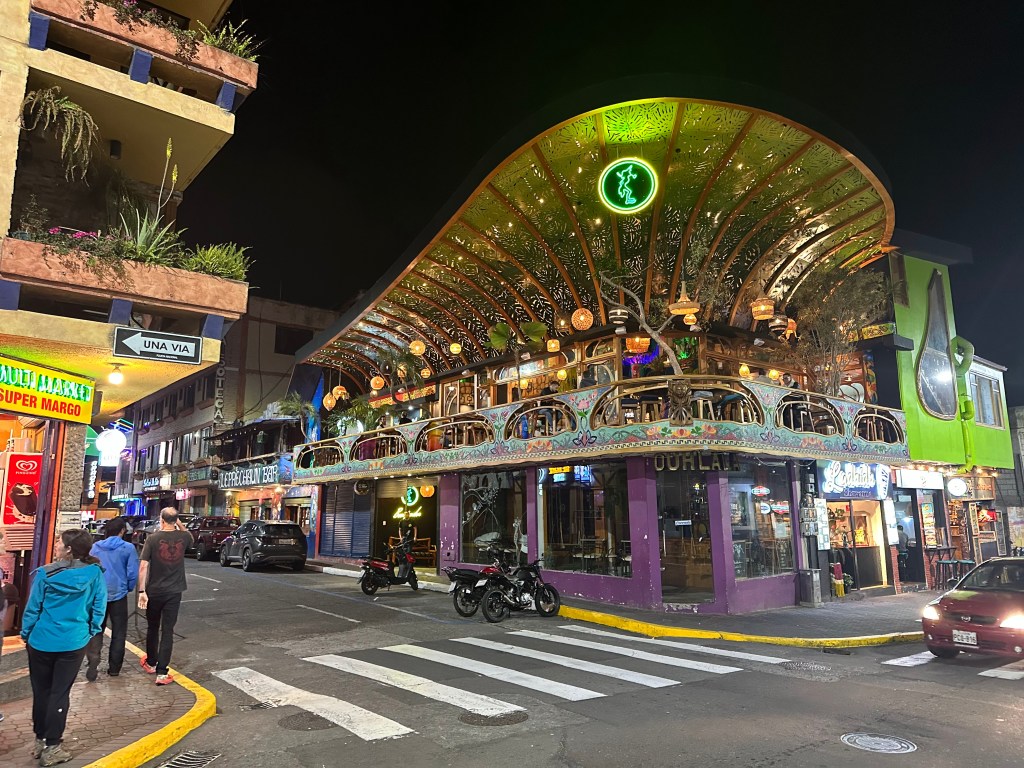
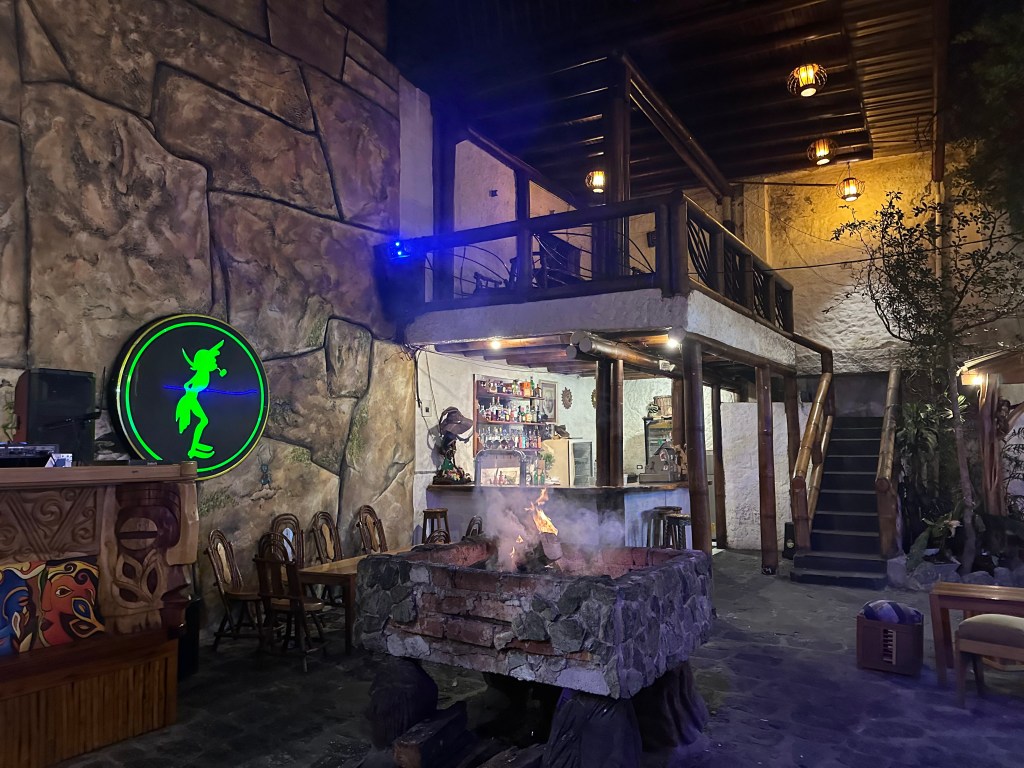
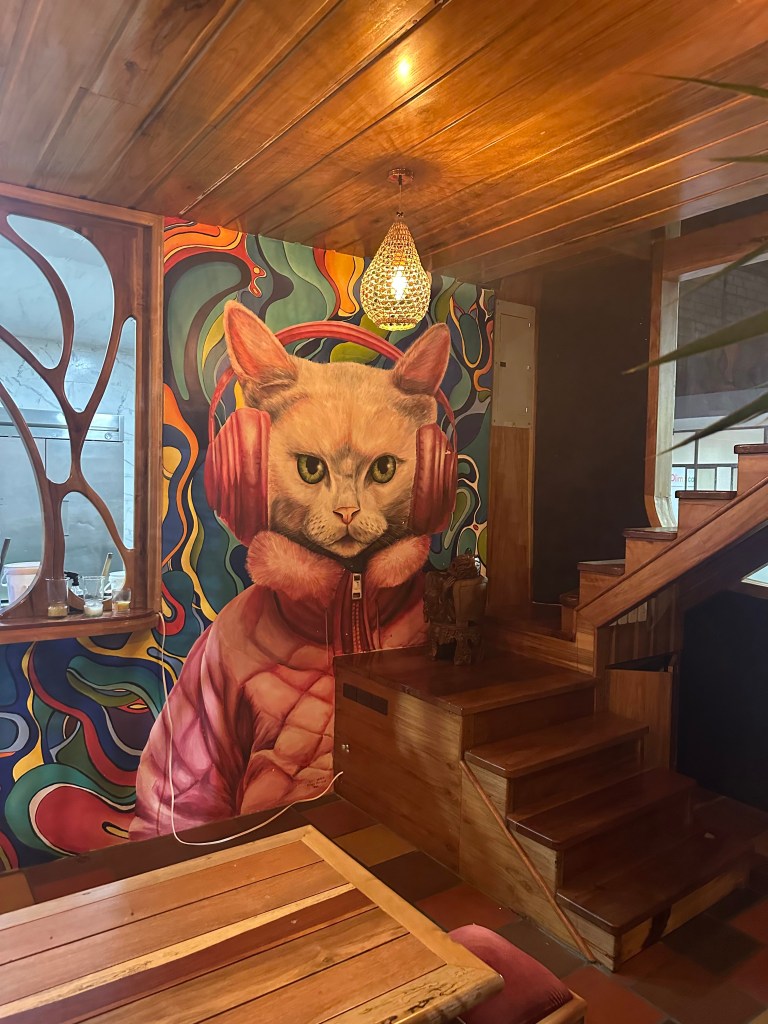
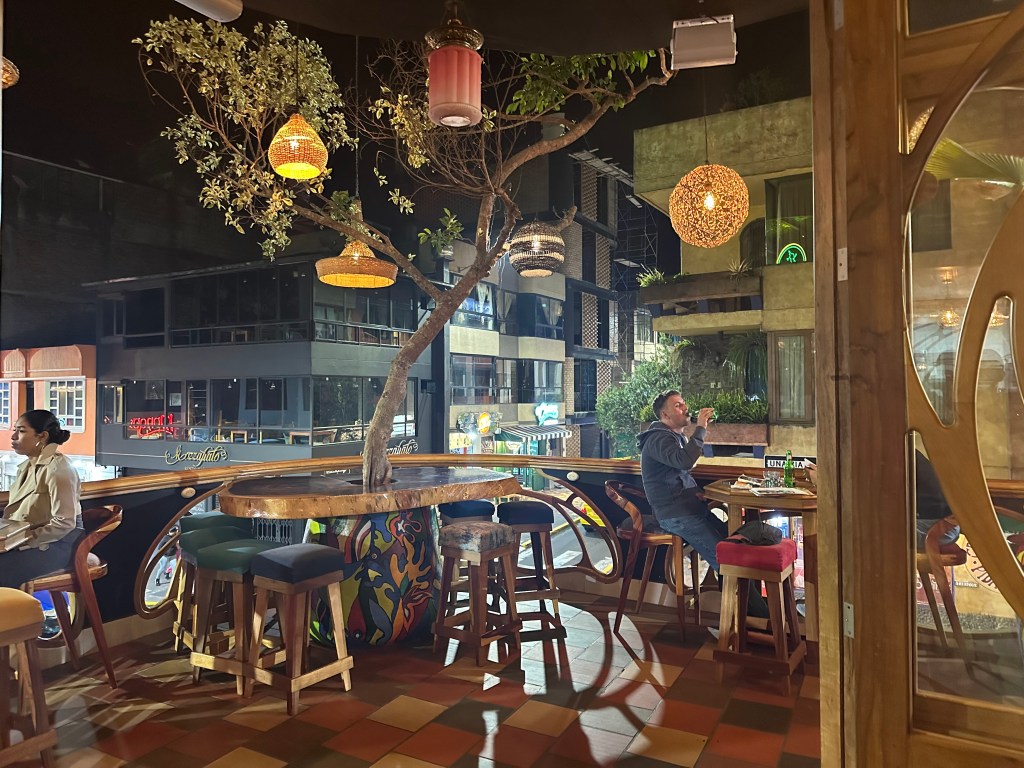
Banos was a town that catered to tourists and families – a lot of amusement park-like attractions, nice downtown area and crazy nightlife.Beautiful courtyard full of fragrant flowers and hummingbirds.Up the hill from the hotel was a chocolate factory. We initially had thought about getting a tour but found out that it was really not much more than a building specifically set up fro Instagram photos.No clue what this says.One of the town squares in BanosThe Leprechaun BarWe just took a stroll through this massive building. Obviously a nightlife staple in Banos. None of us were drinking during this trip (as we were climbing) so there was no much to do here but look!Hello KittyIt looked like a fun place for me to be – maybe 40 years ago!
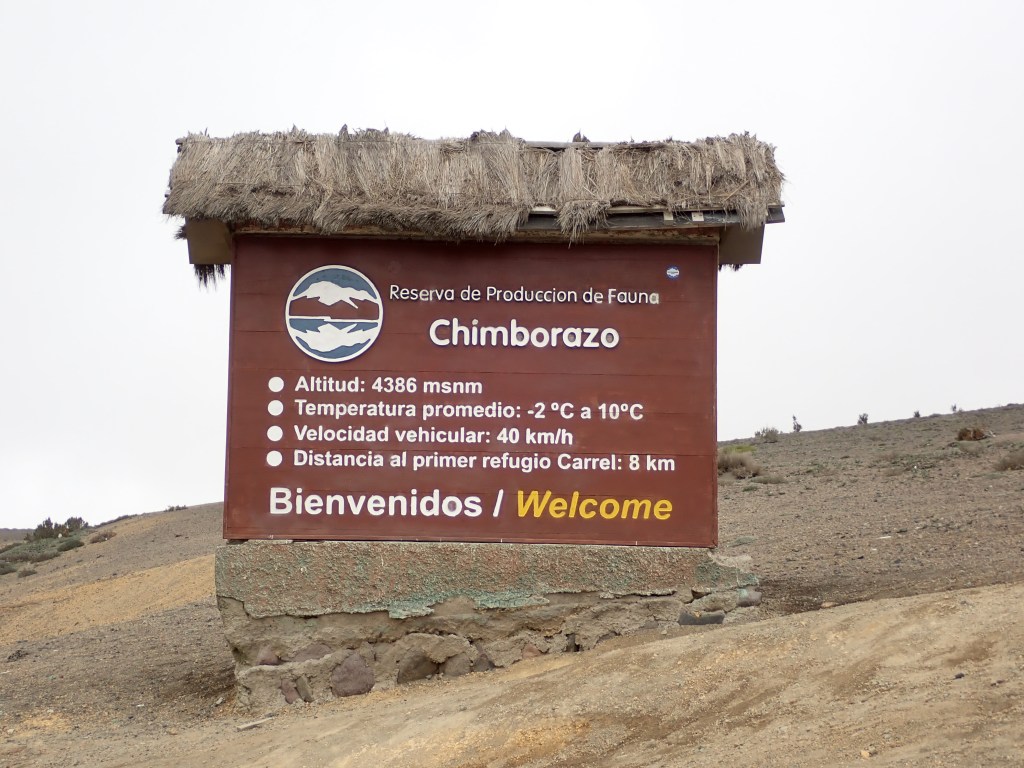
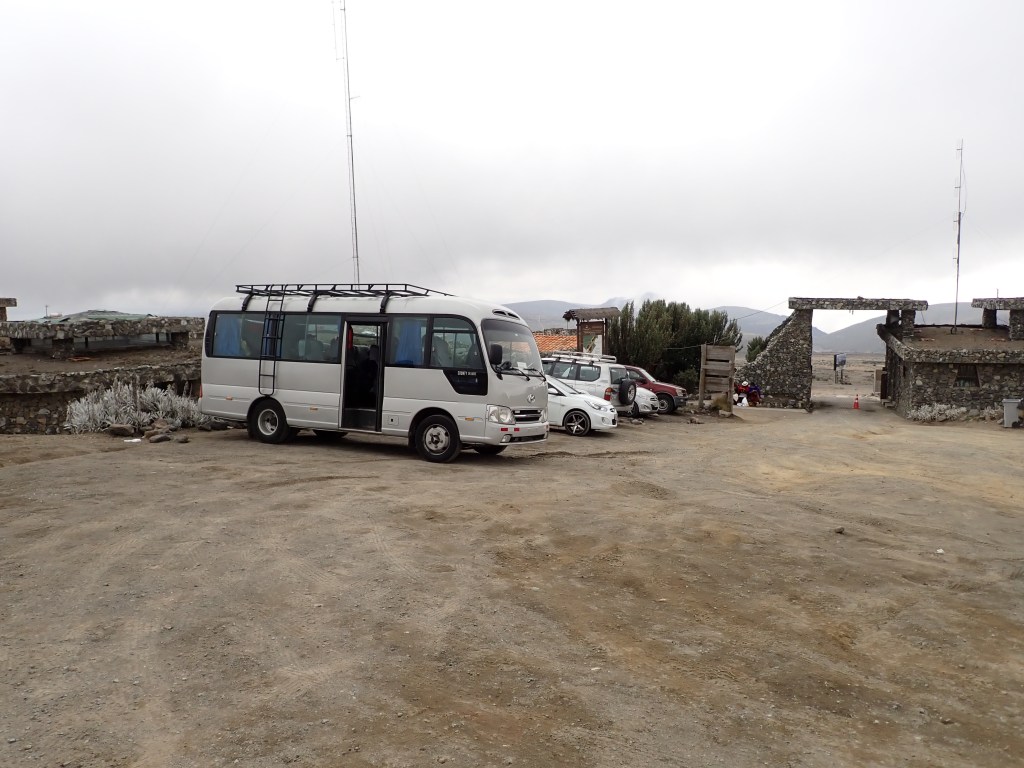
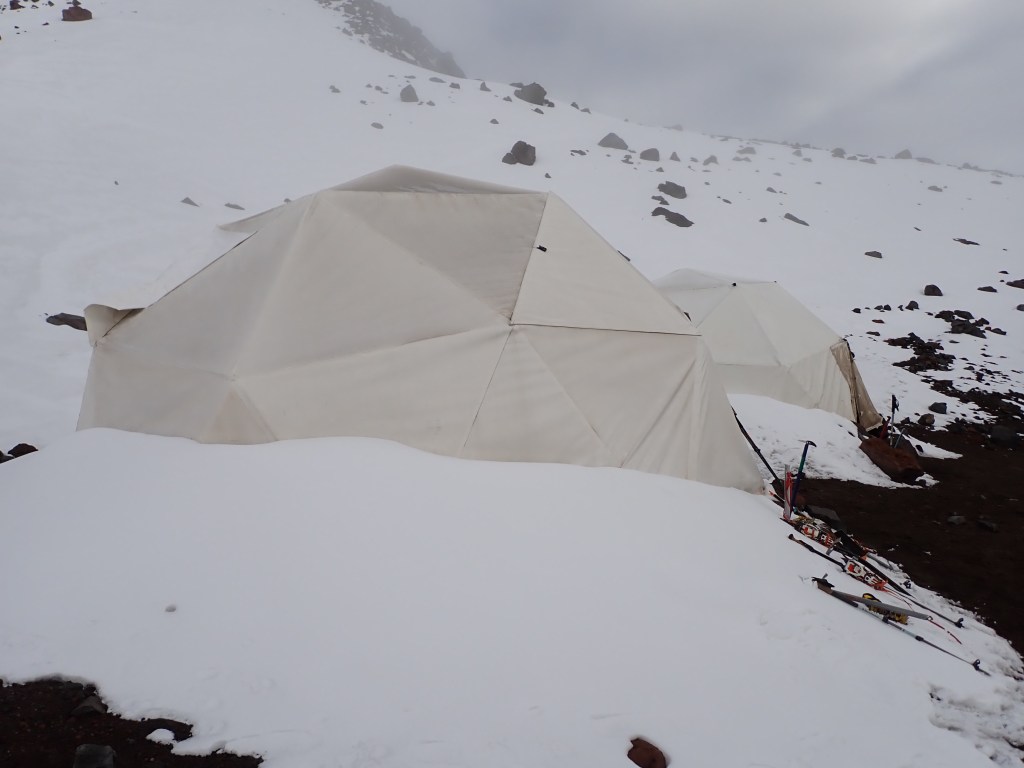
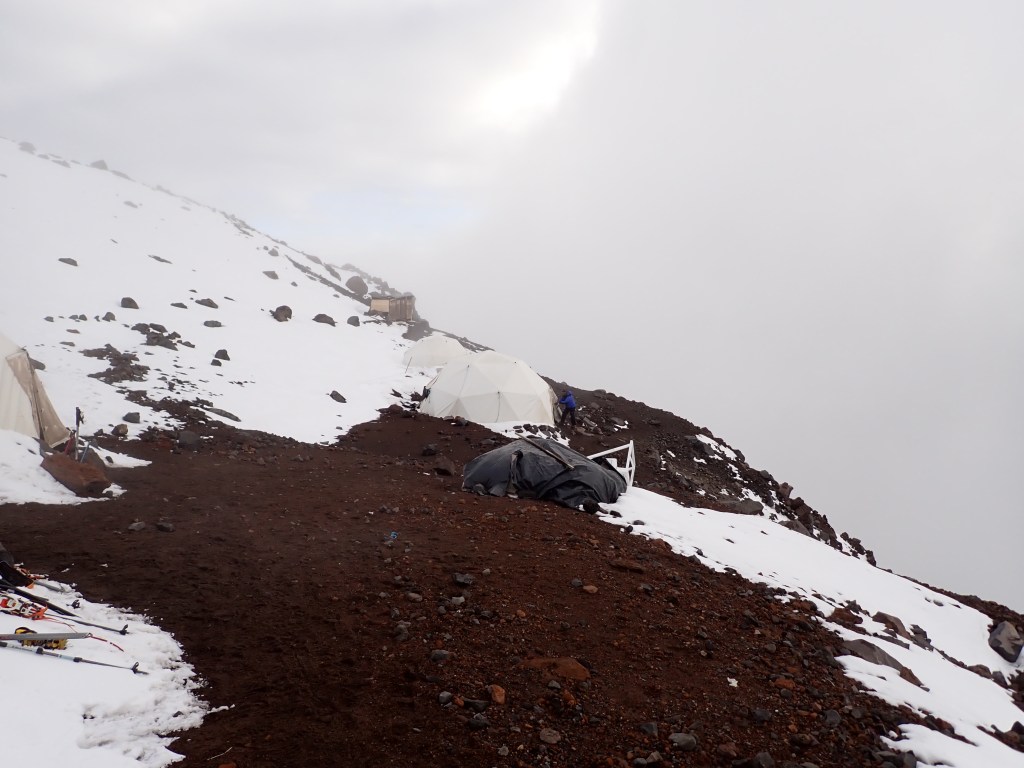
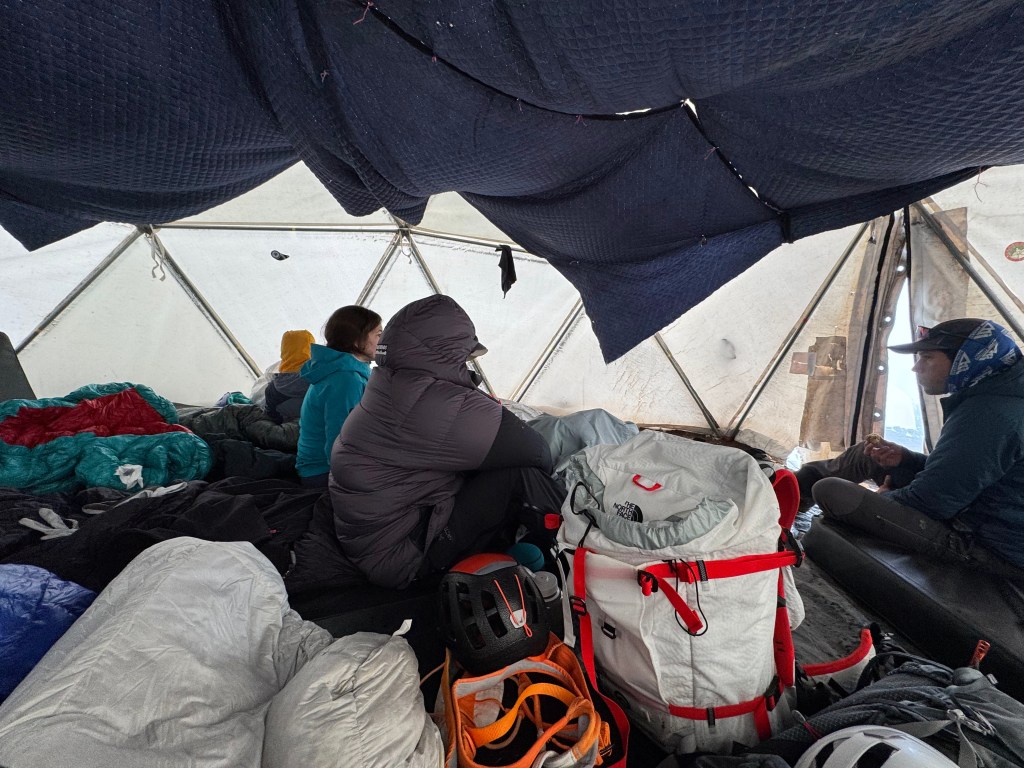
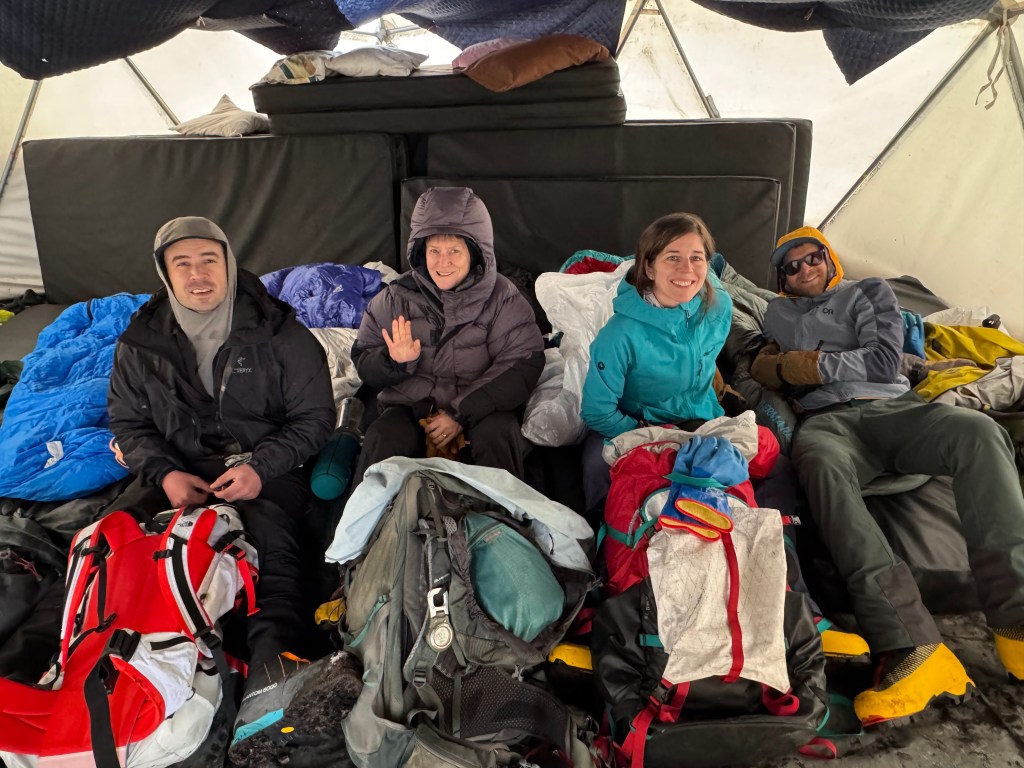
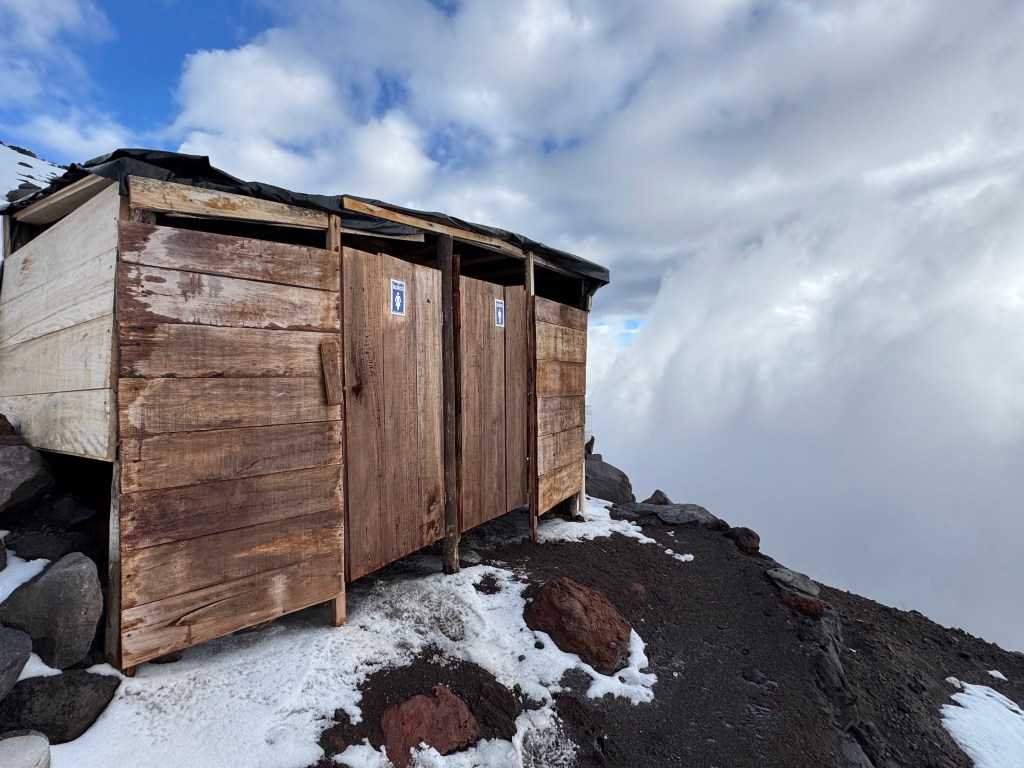
After our brief recuperation at Banos, we headed up to Chimborazo. This time, after being dropped off at the parking lot, we ended up climbing 2 hours and about 2,000′ – again with our full packs to high camp – Stubel High Camp at 17,380′. Probably the most basic of camps, it consisted of several large sleeping tents, a cook tent and a toilet buidling.
Our bus – checking us in at the main gate.Drop-off spot prior to hiking up to high camp.High Camp sleeping tentClimber heading into the dining tent with the wooden toilet facilities on the ridge above.Cookie time in the sleeping tent!Nice and cozyAll the wood for the restrooms, stoves for cooking, fuel, etc., had to be carried up by porters. No road to this camp!
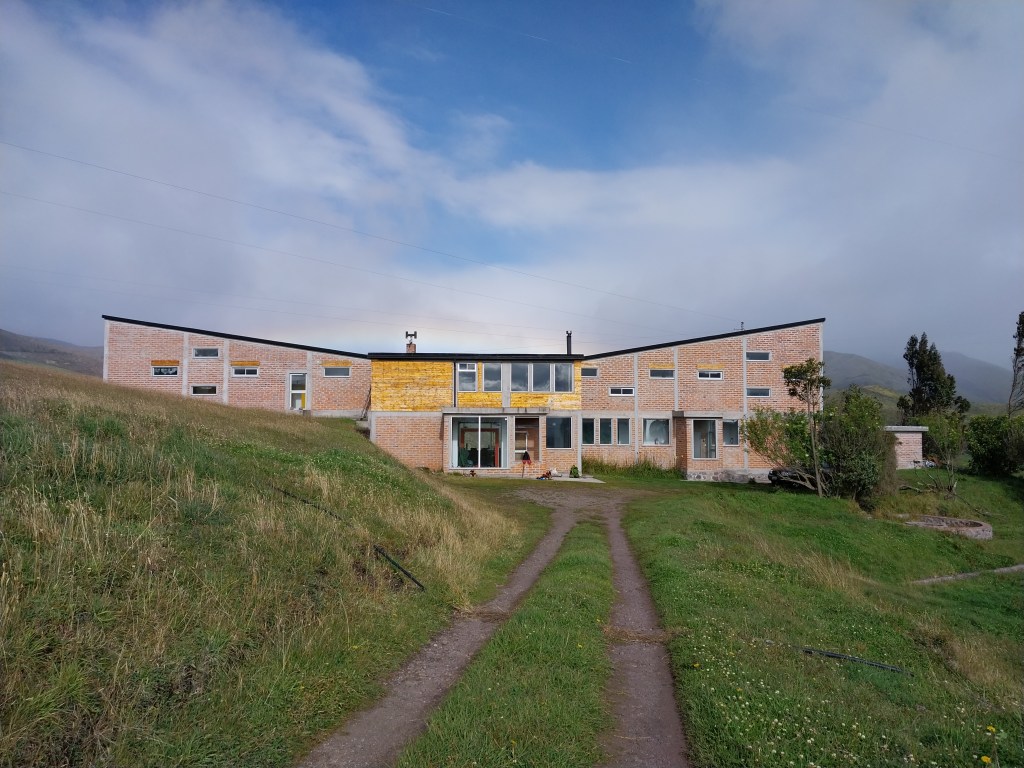
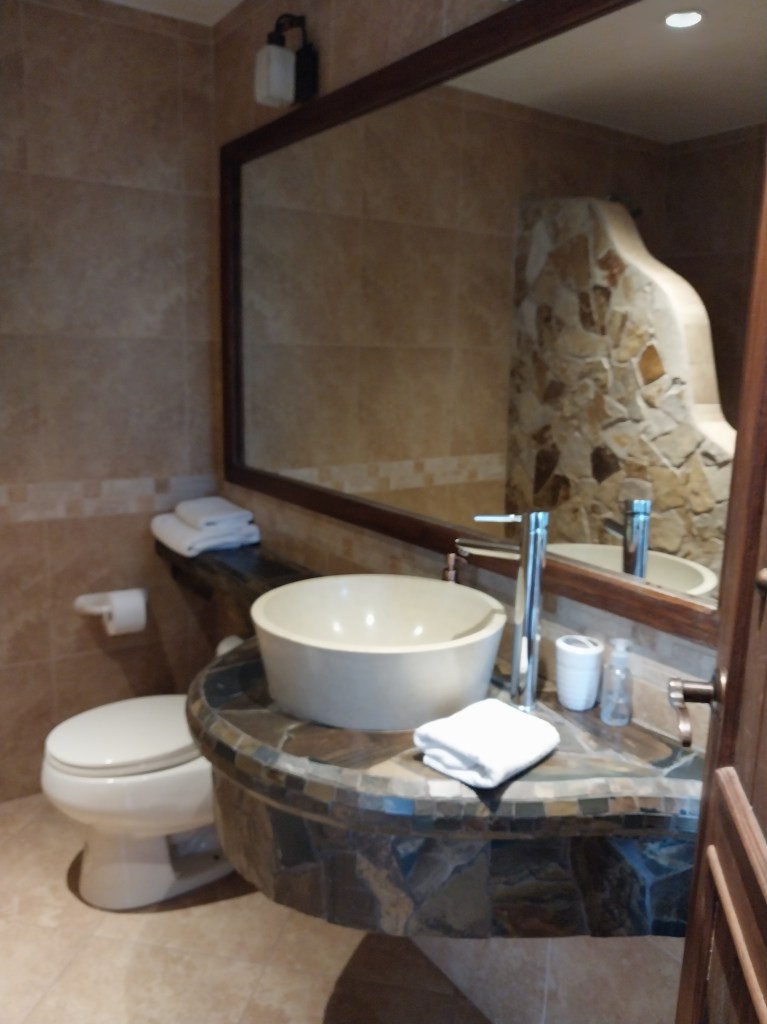
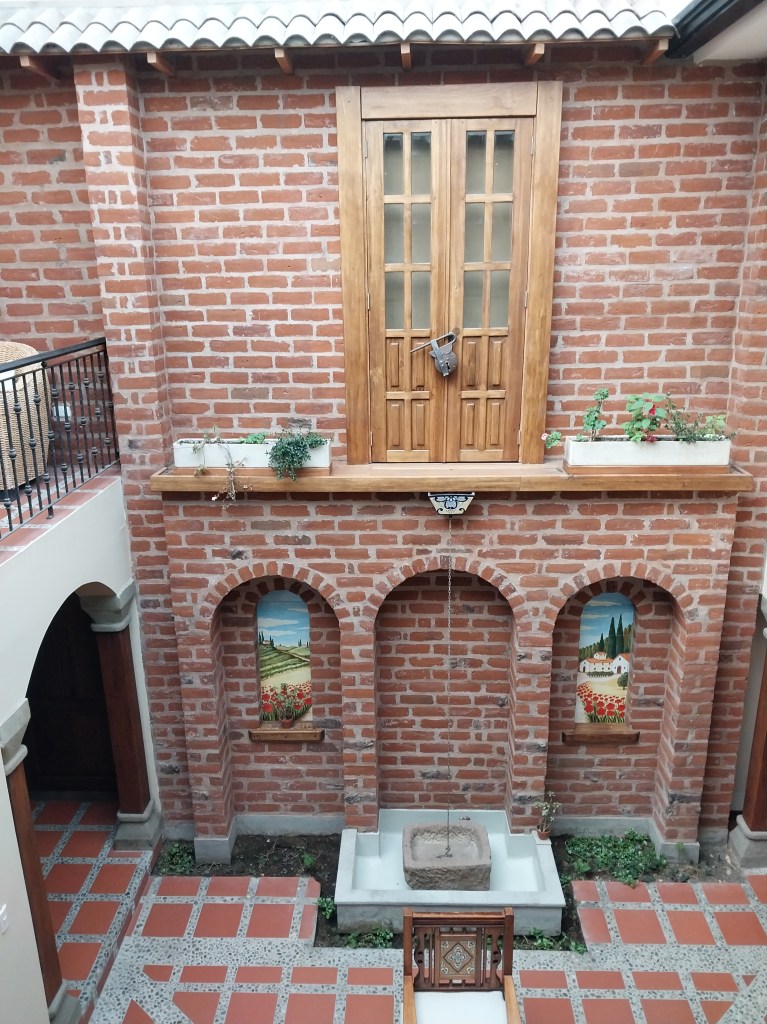
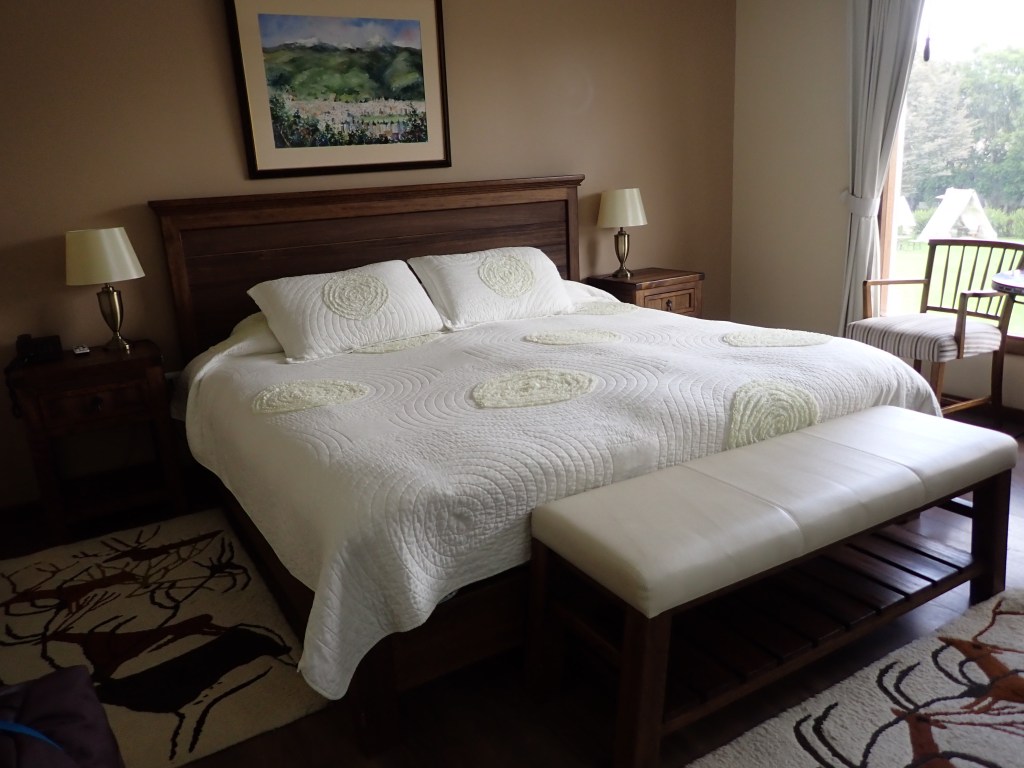
The last resort that we stayed at before heading back to the San Jose de Puembo was the Abraspungo Hostelry. Another beautiful facility, modern bathroom and a HOT shower – yay!
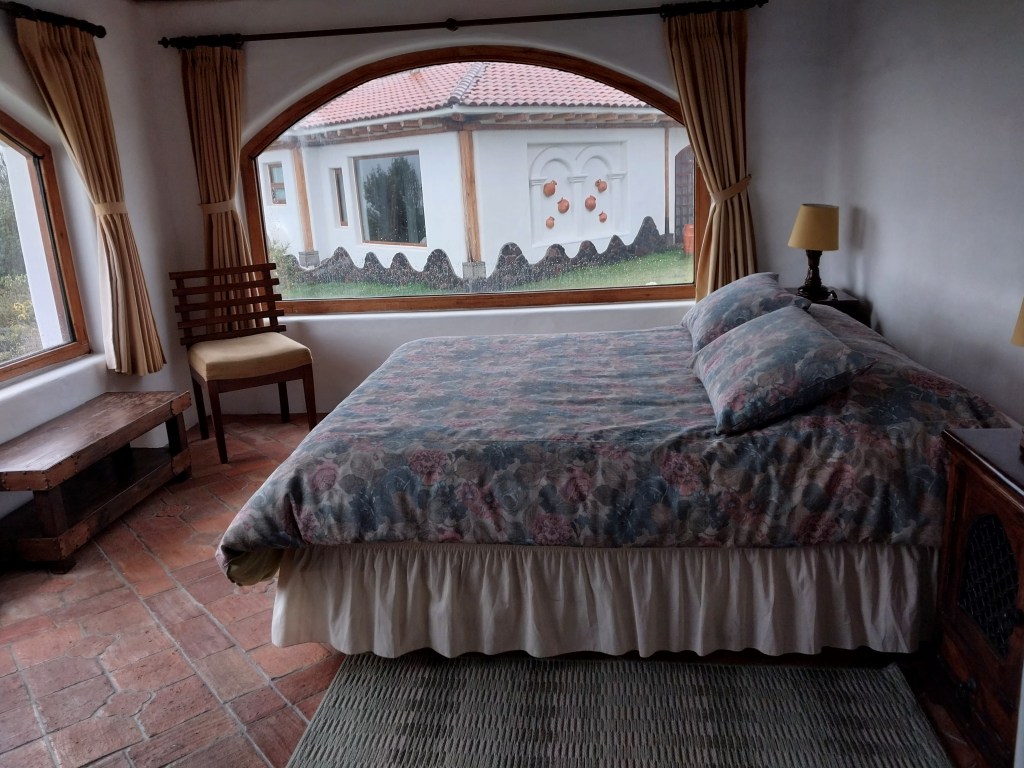
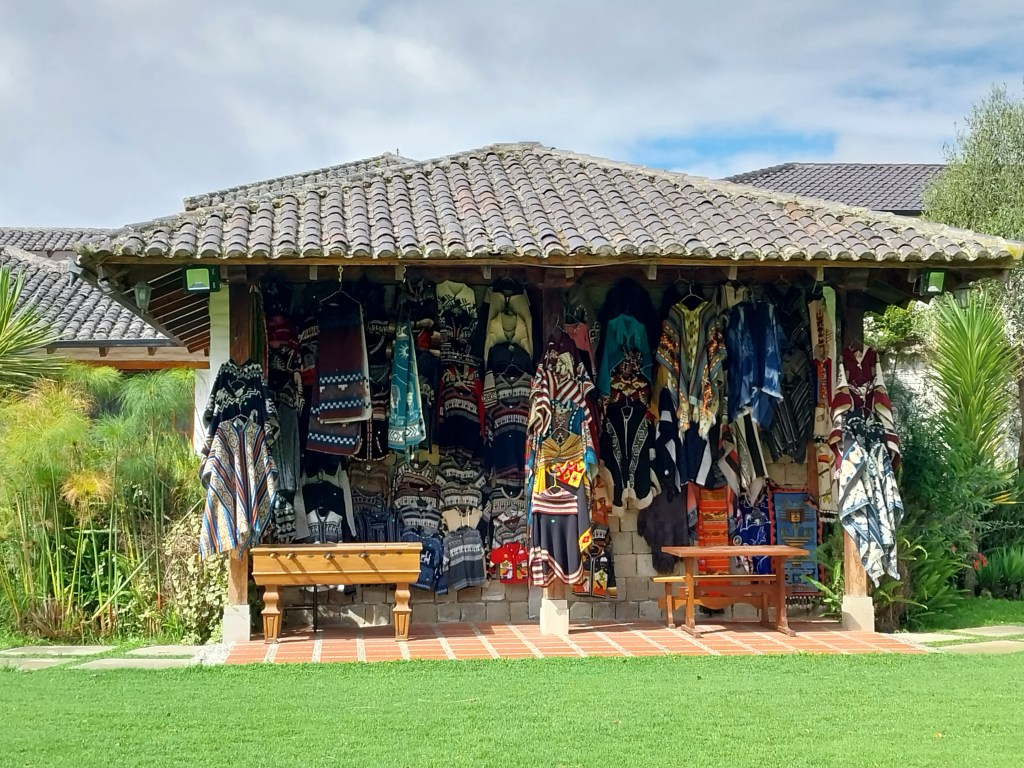
Local handicrafts for sale.Inner courtyard with mock facade.Beautiful room with a great view of the gardens.
 Joel and Alison's Excellent Adventures