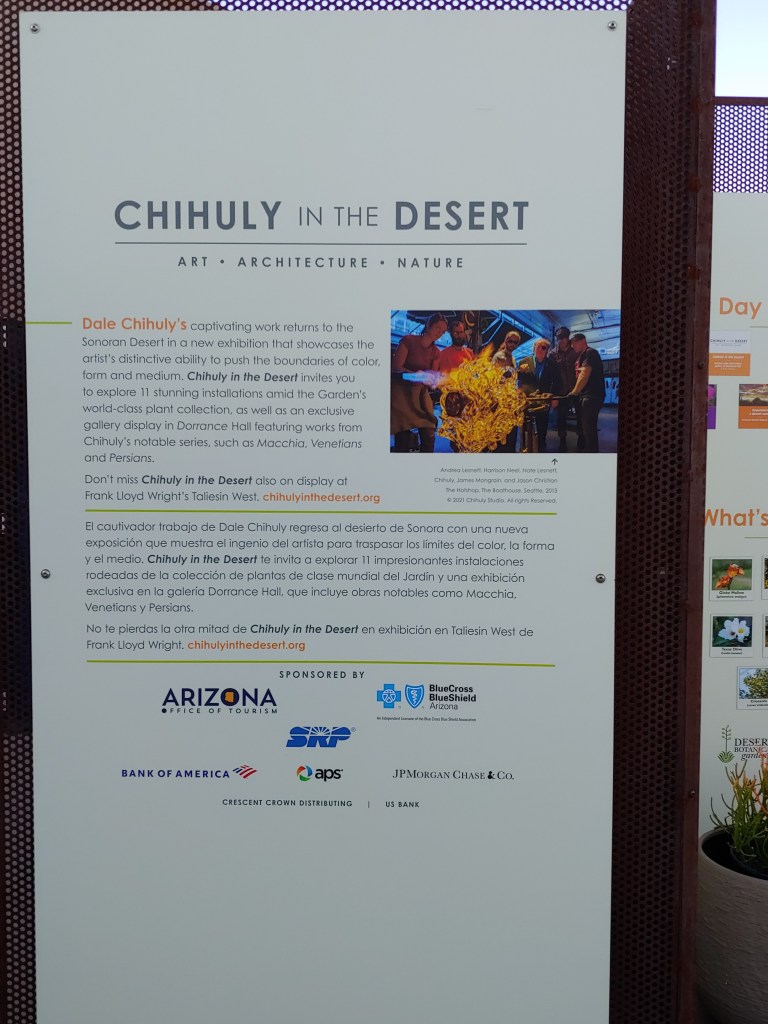
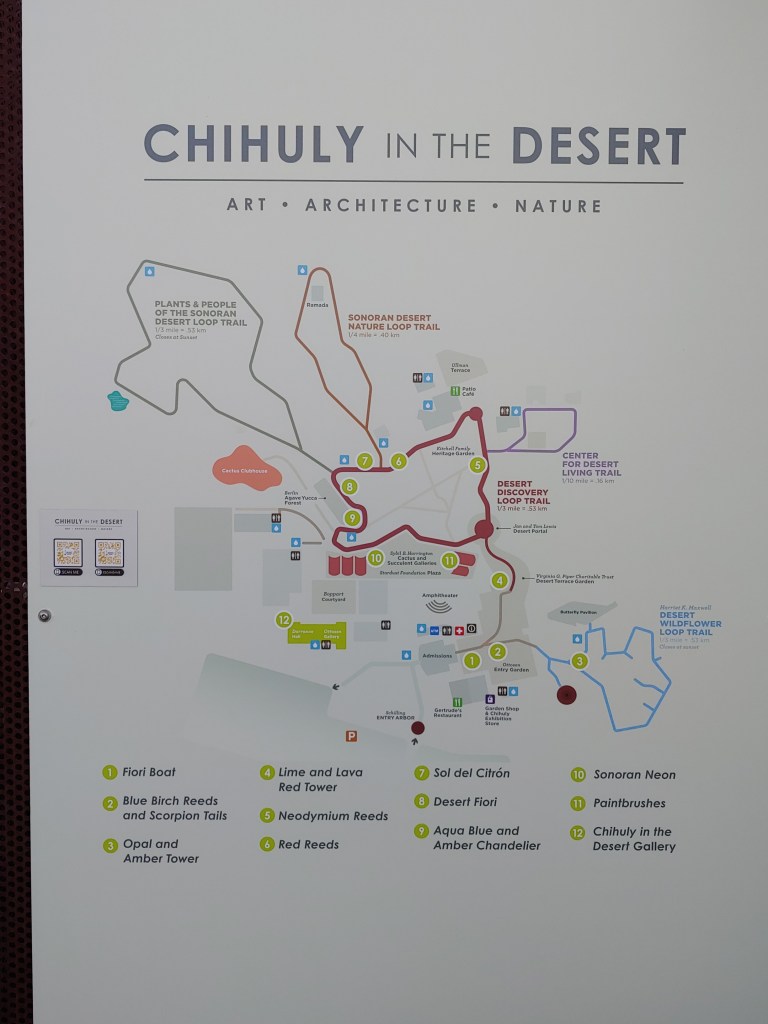
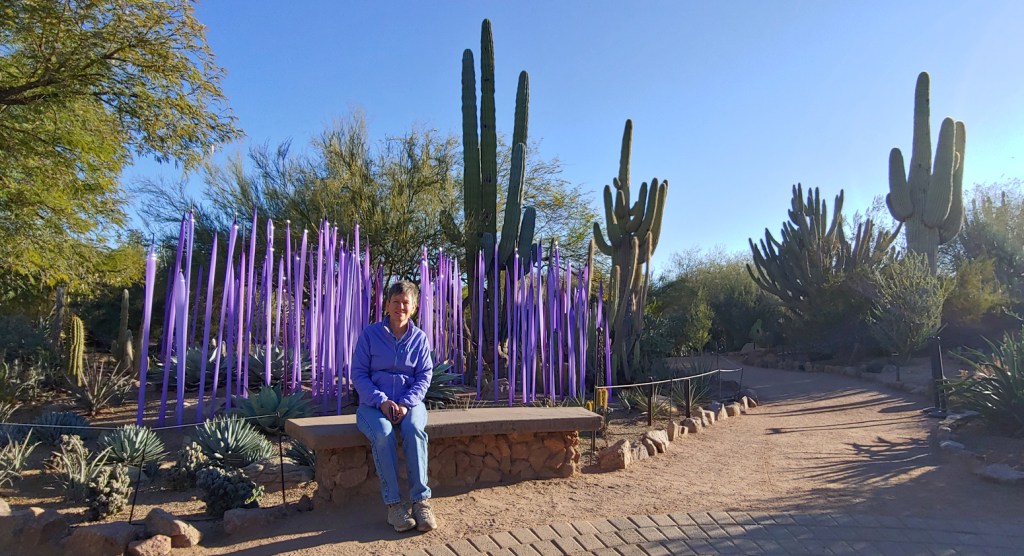
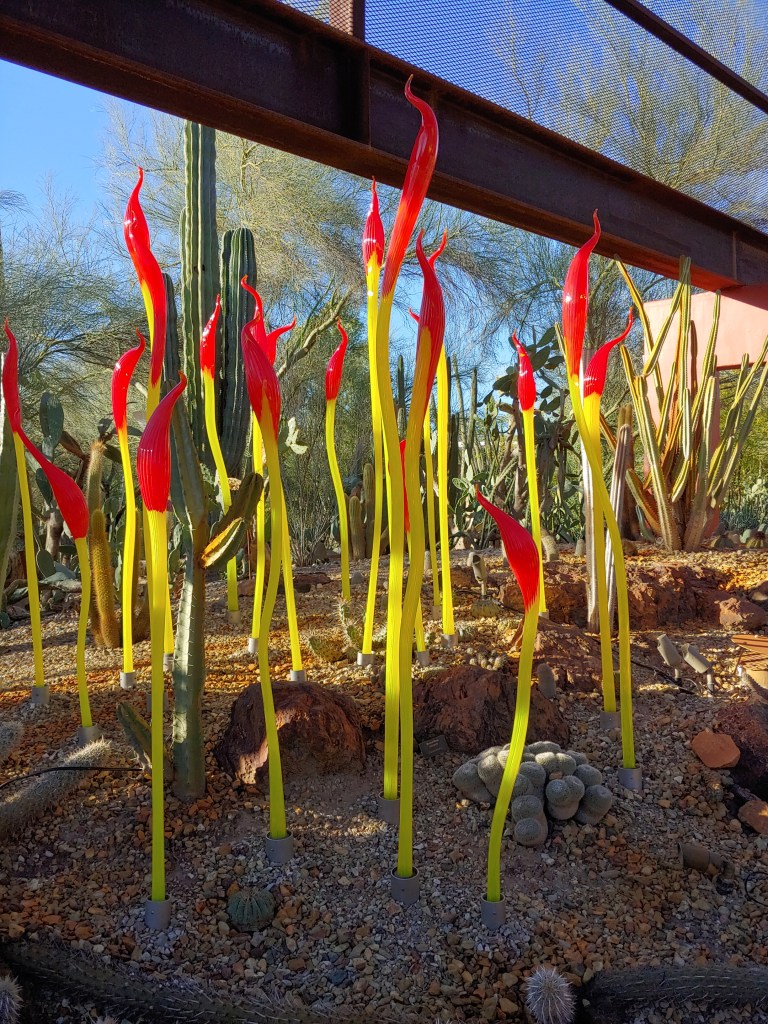
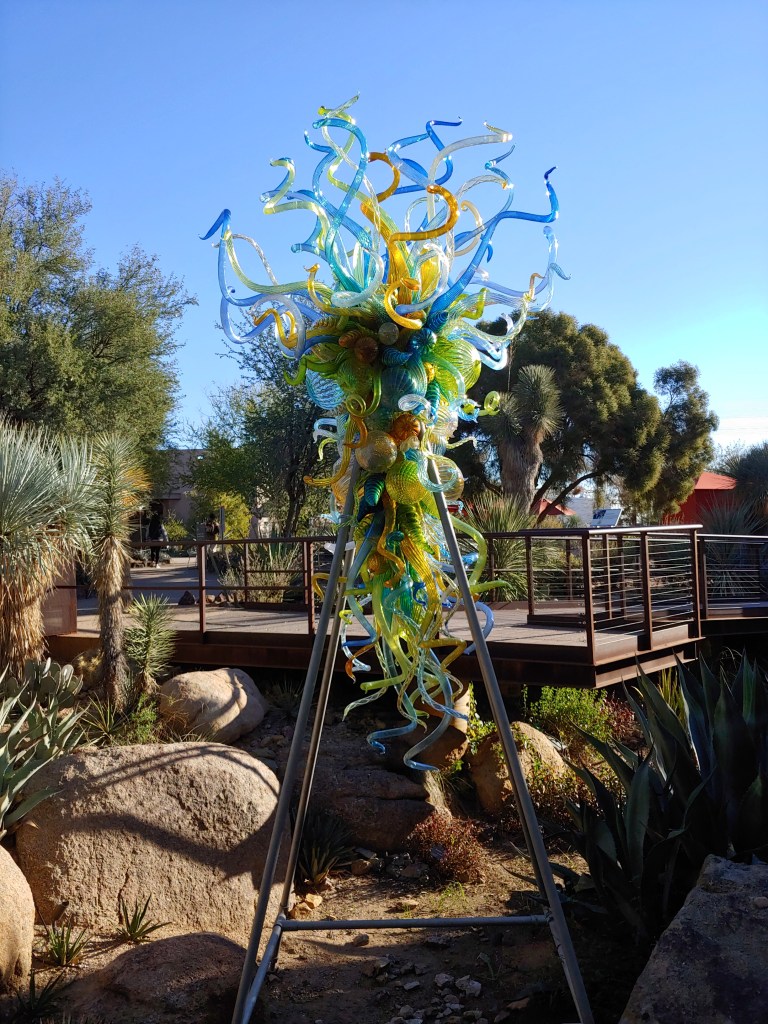
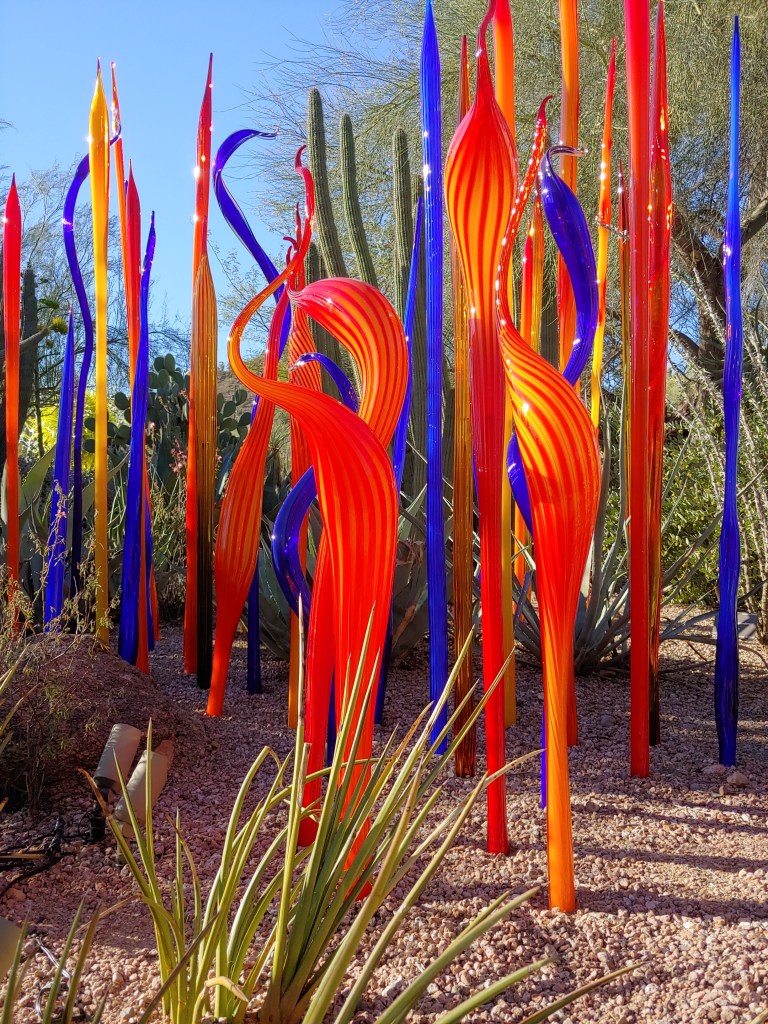
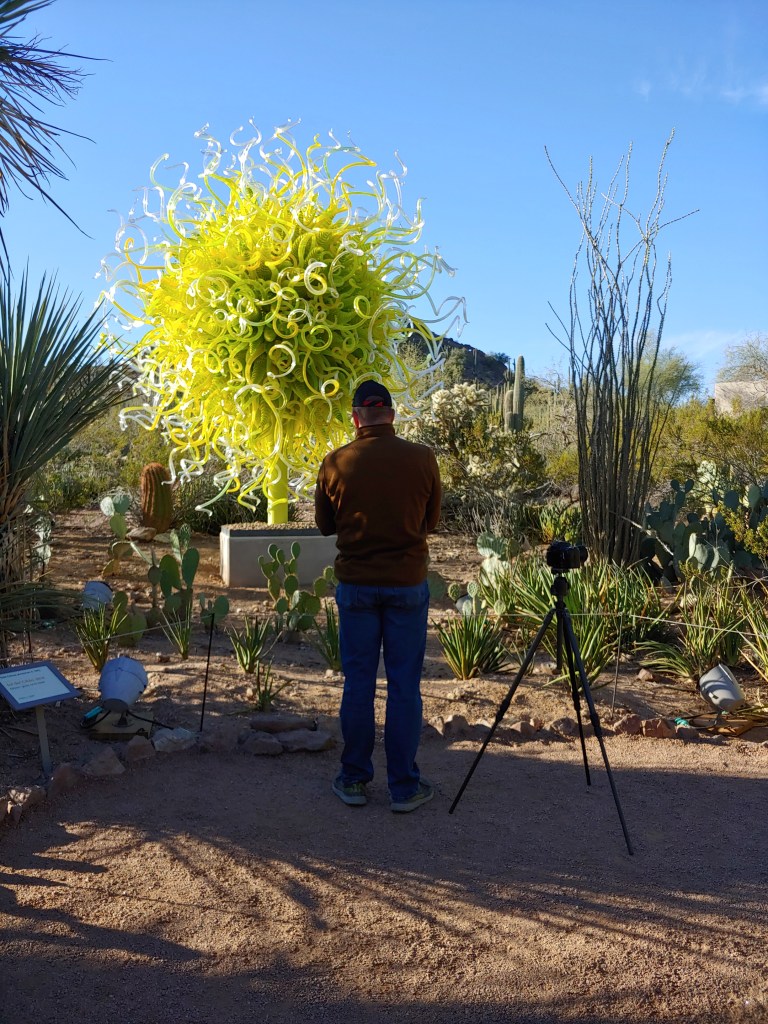
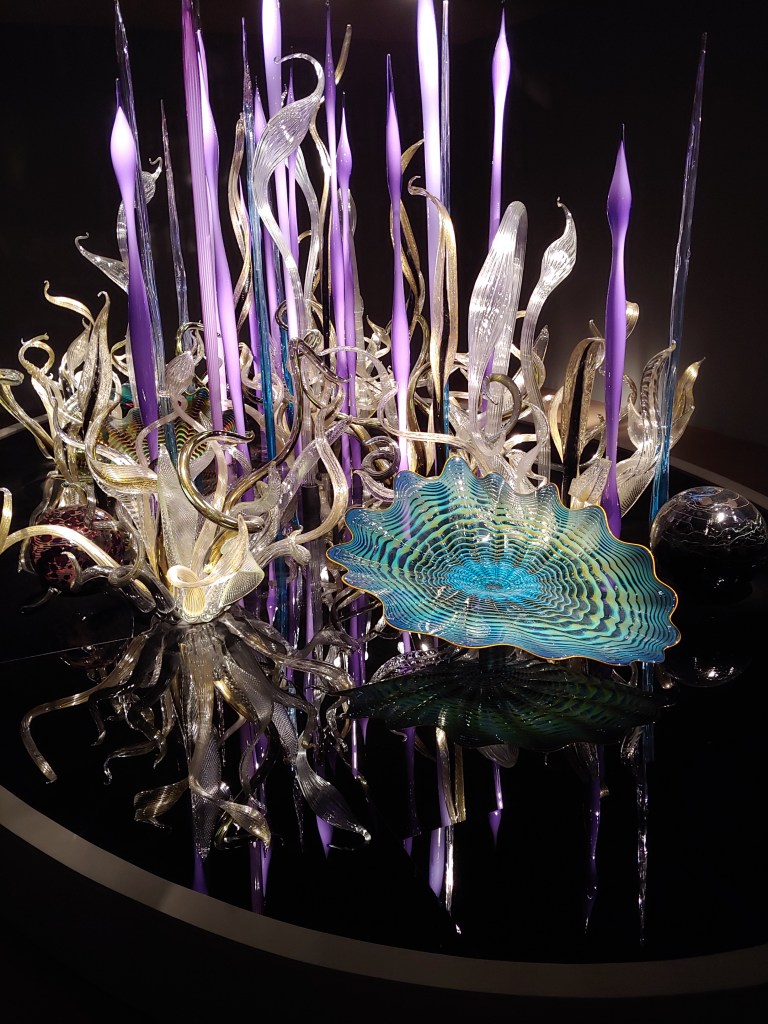
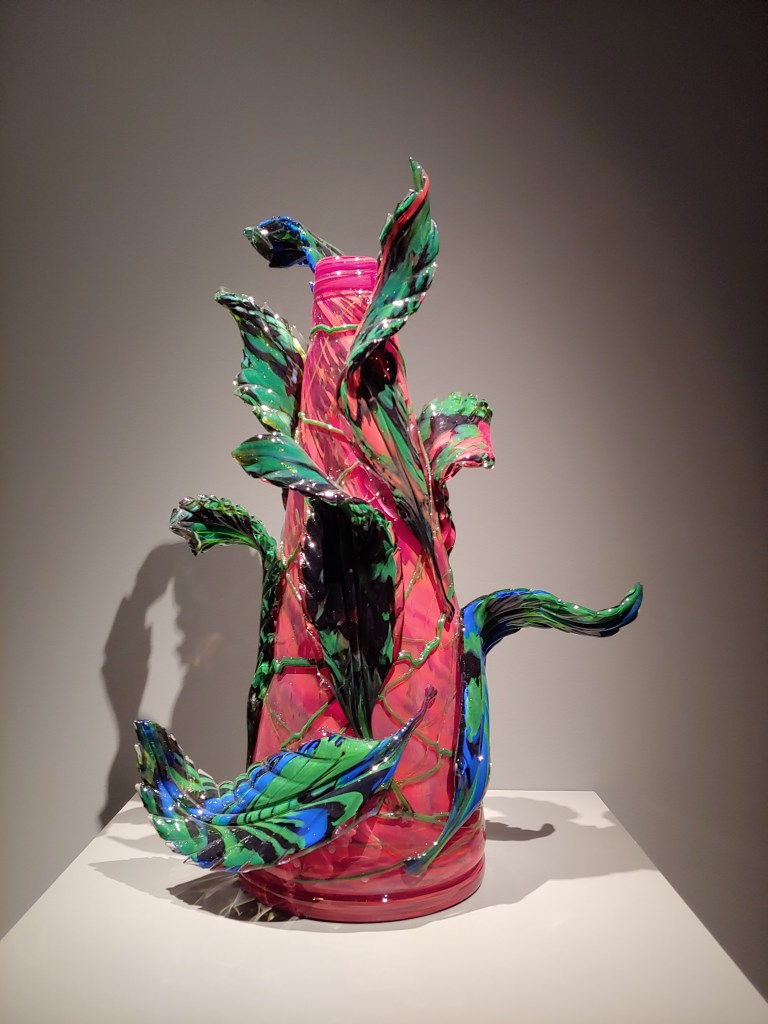
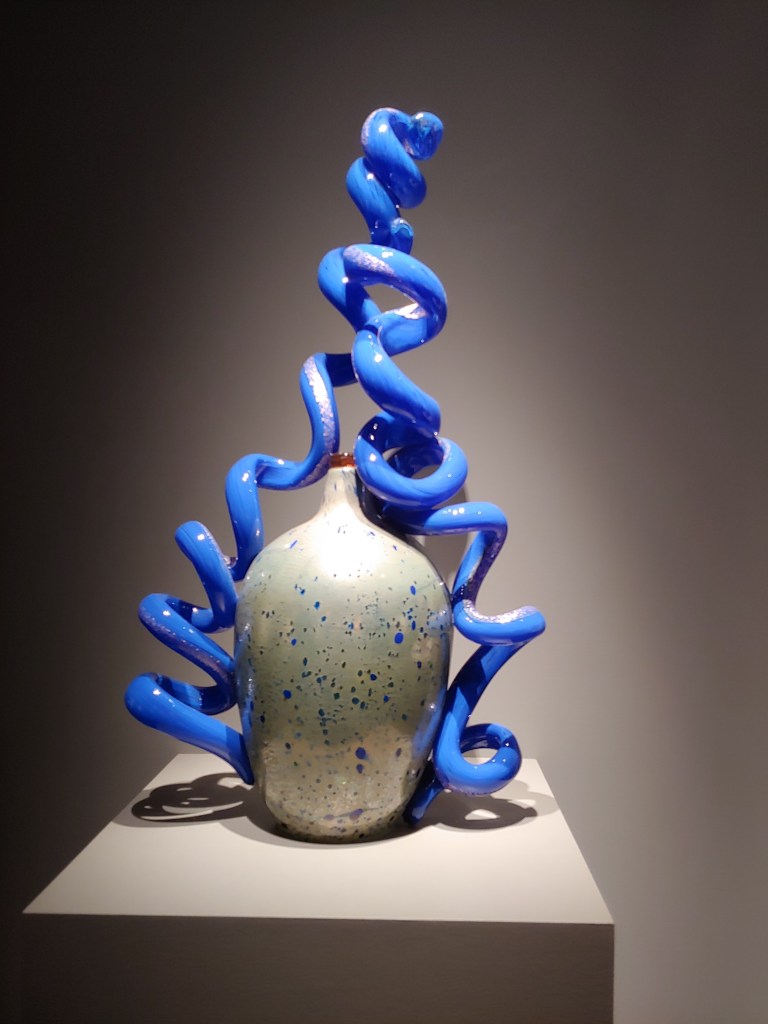
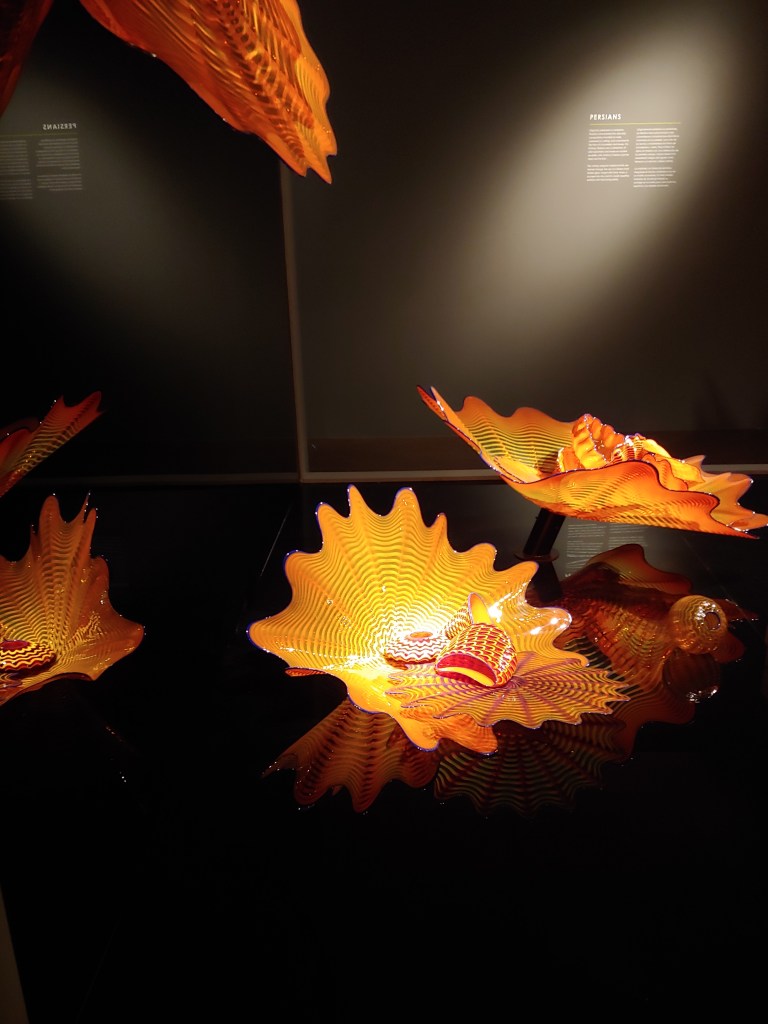
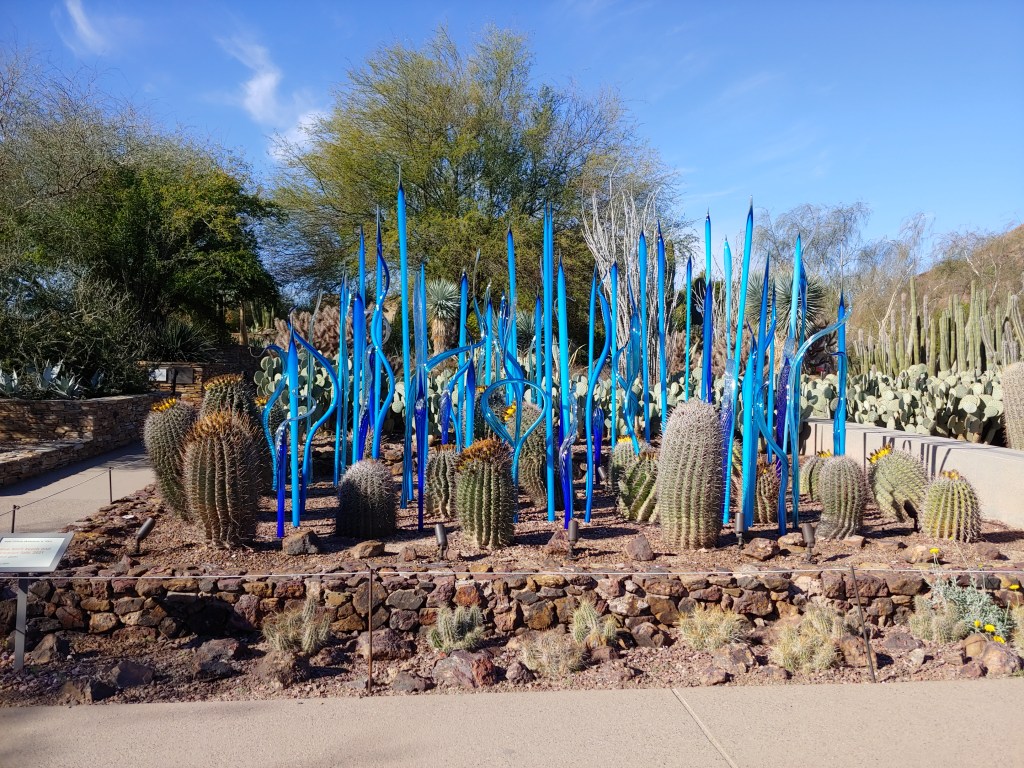
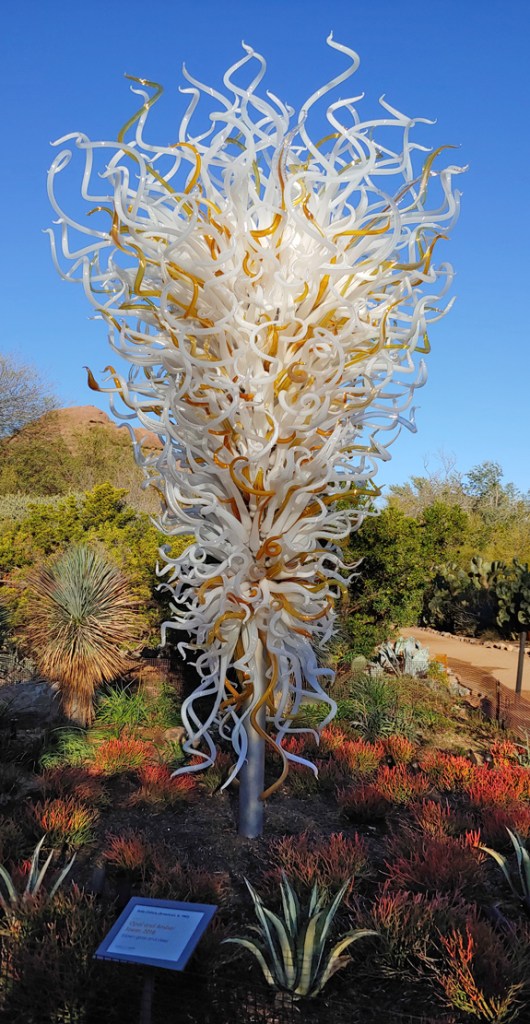
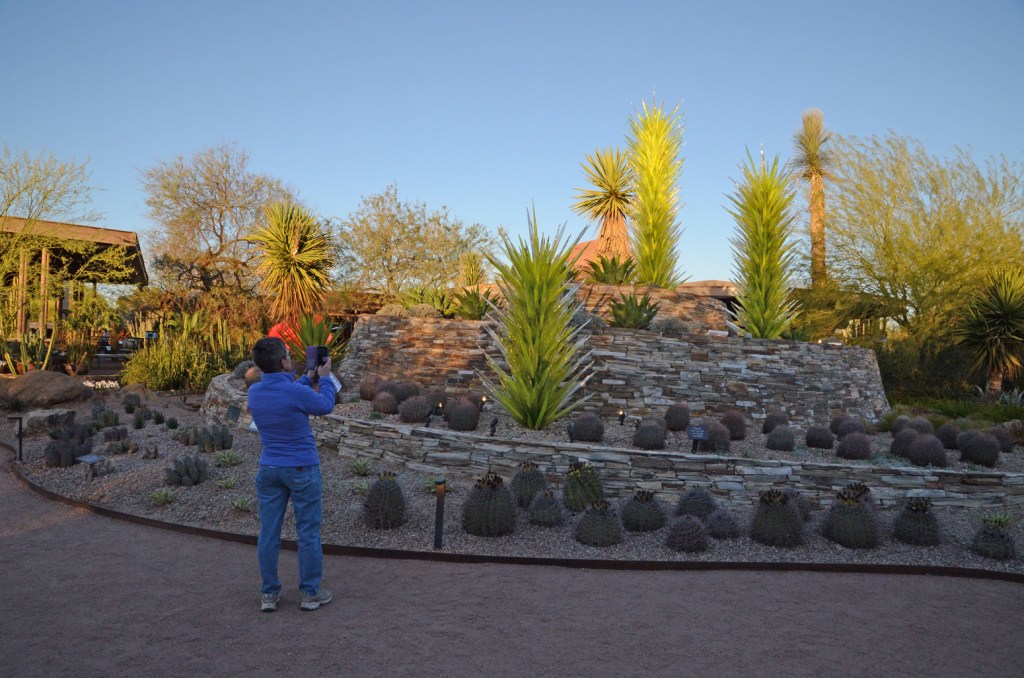
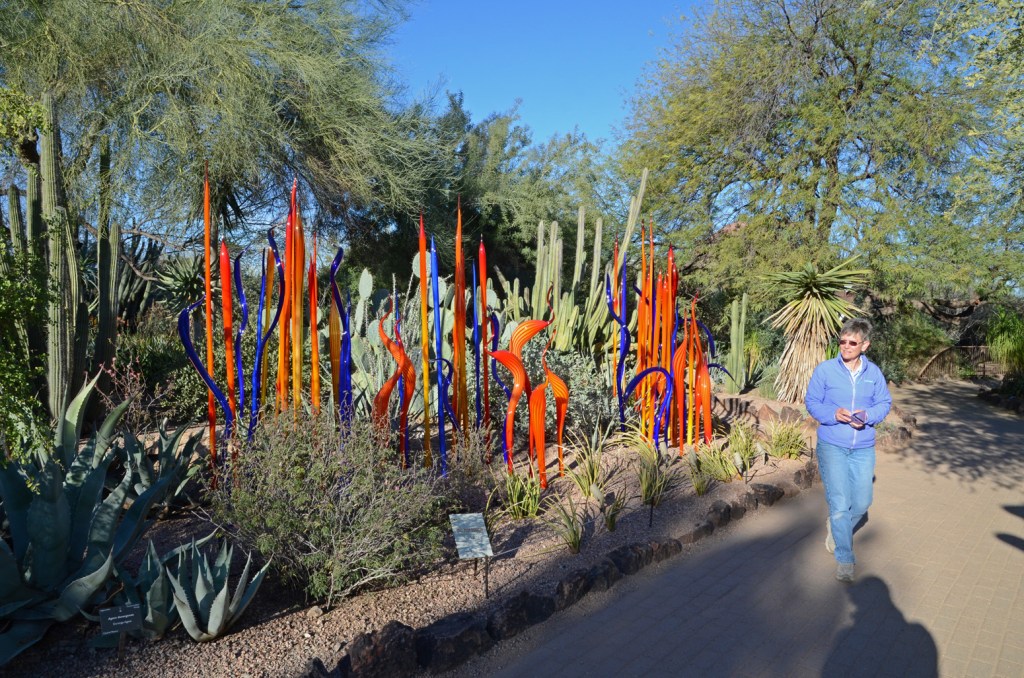
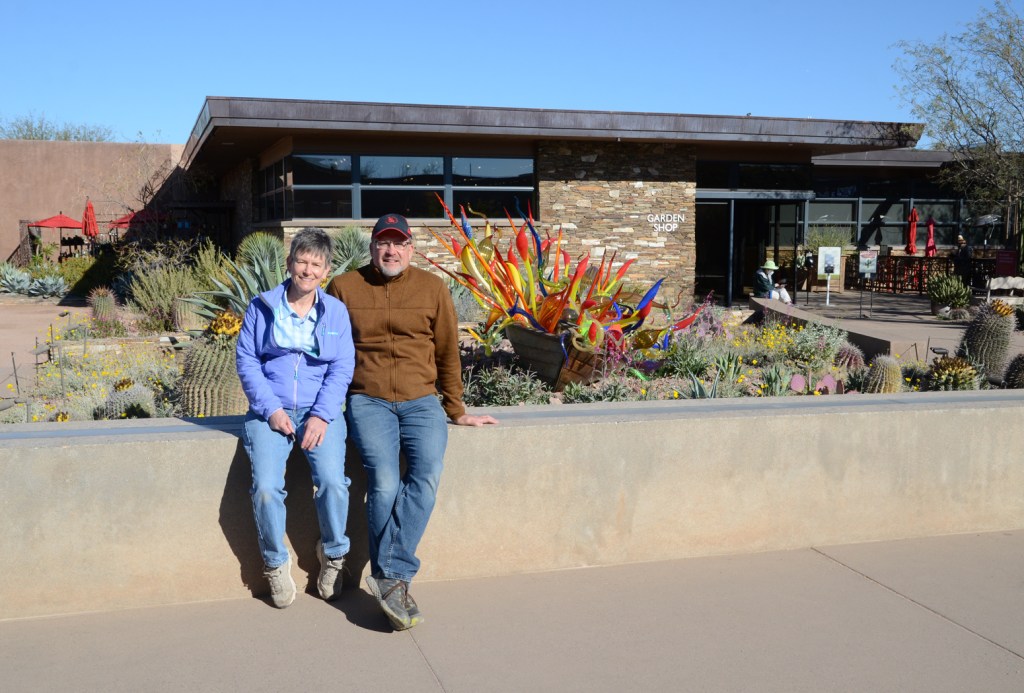
Growing up in the Pacific Northwest, our family is well acquainted with the artwork and studios of Dale Chihuly. Looking at the events calendar for the Phoenix area, I was thrilled to see an exhibit of Dale’s work at the Desert Botanical Garden. Chihuly in the Desert showcases Dale Chihuly’s stunning, large-scale installations nestled among the Garden’s world-class collection of desert plants. Featuring installations on the Garden’s trails complemented by a major indoor gallery in Dorrance Hall, the dynamic exhibition includes never-before-seen installations.
Chihuly’s spectacular artwork can be found in more than 200 museums worldwide, and garden exhibitions of his work have been mounted at the New York Botanical Garden, Atlanta Botanical Garden, Missouri Botanical Garden, Phipps Conservatory and Botanical Garden, the Royal Botanic Gardens, Kew, and Gardens by the Bay, Singapore.
Add a beautifully designed and maintained botanical garden and you have an amazing experience – Joel and I spent almost 3 hours wandering around.
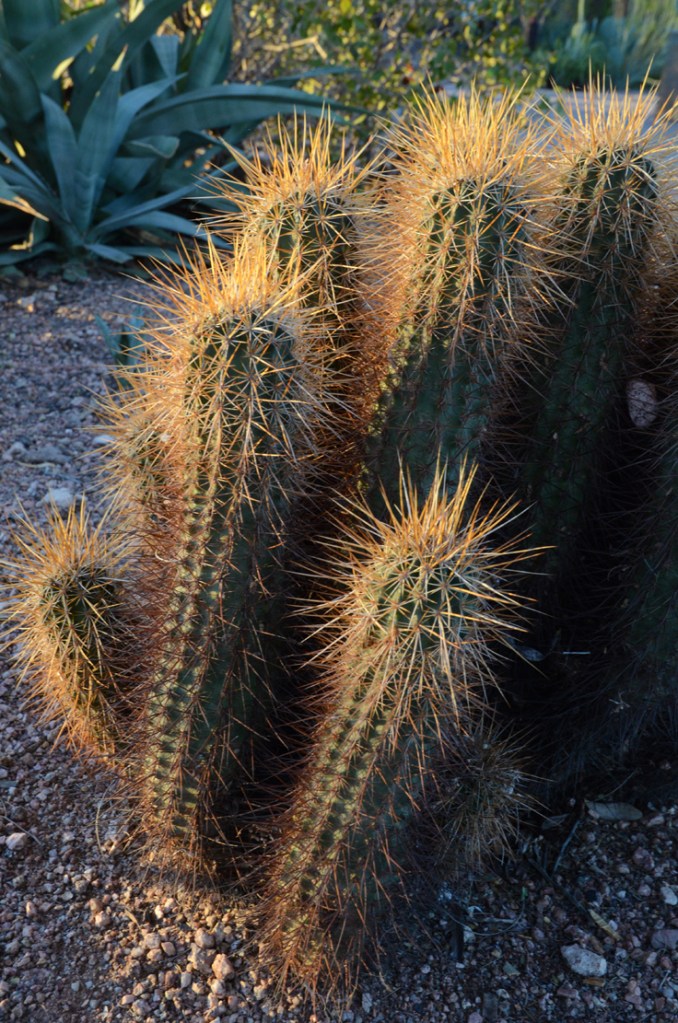
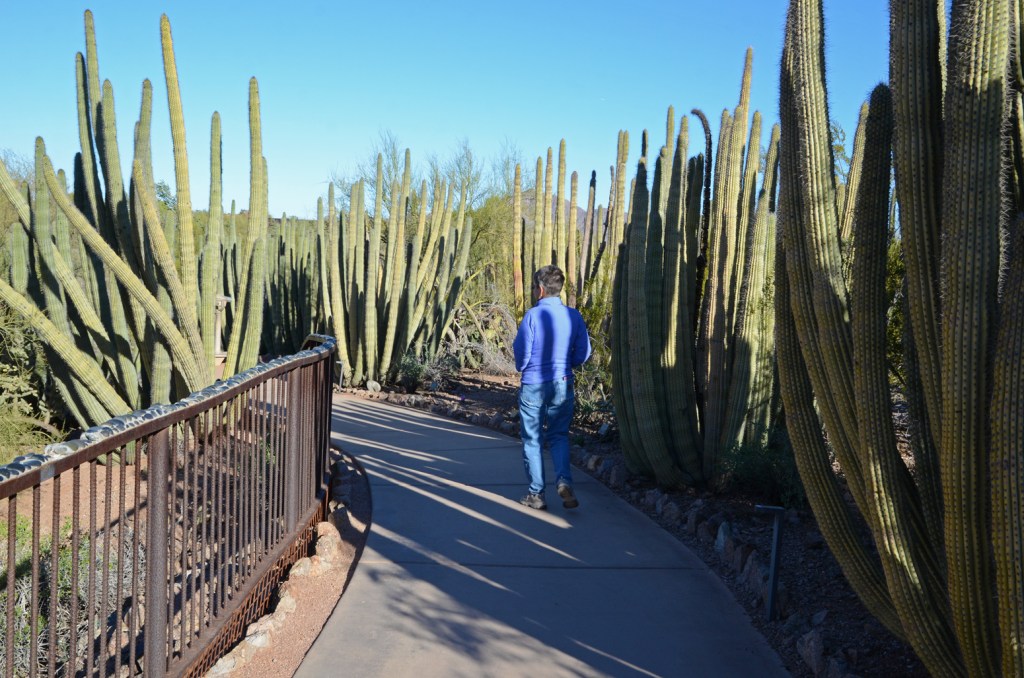
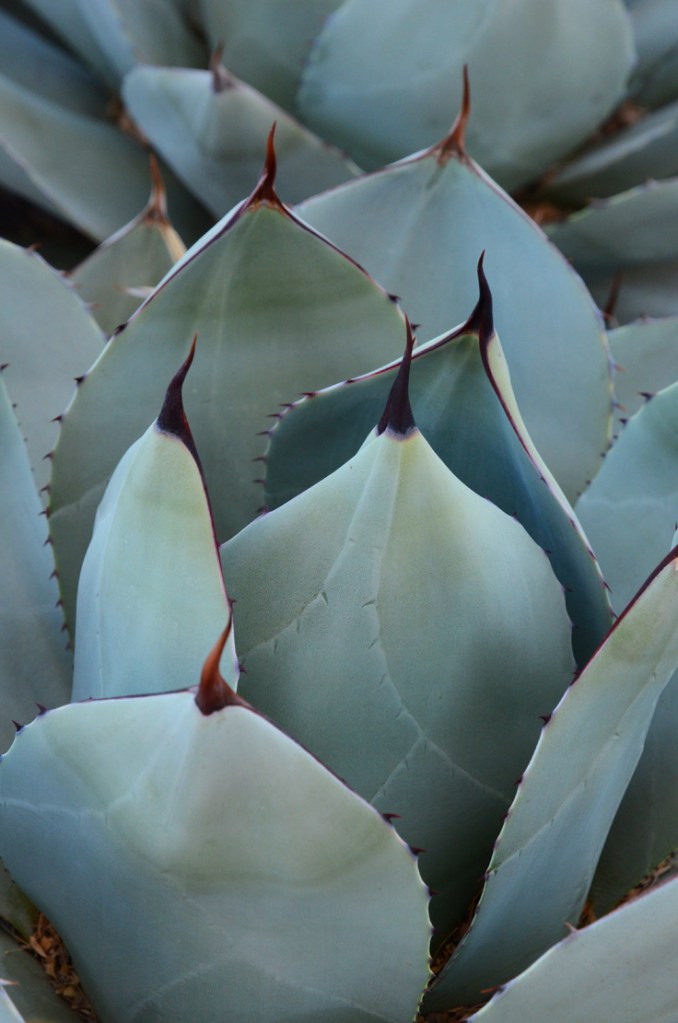
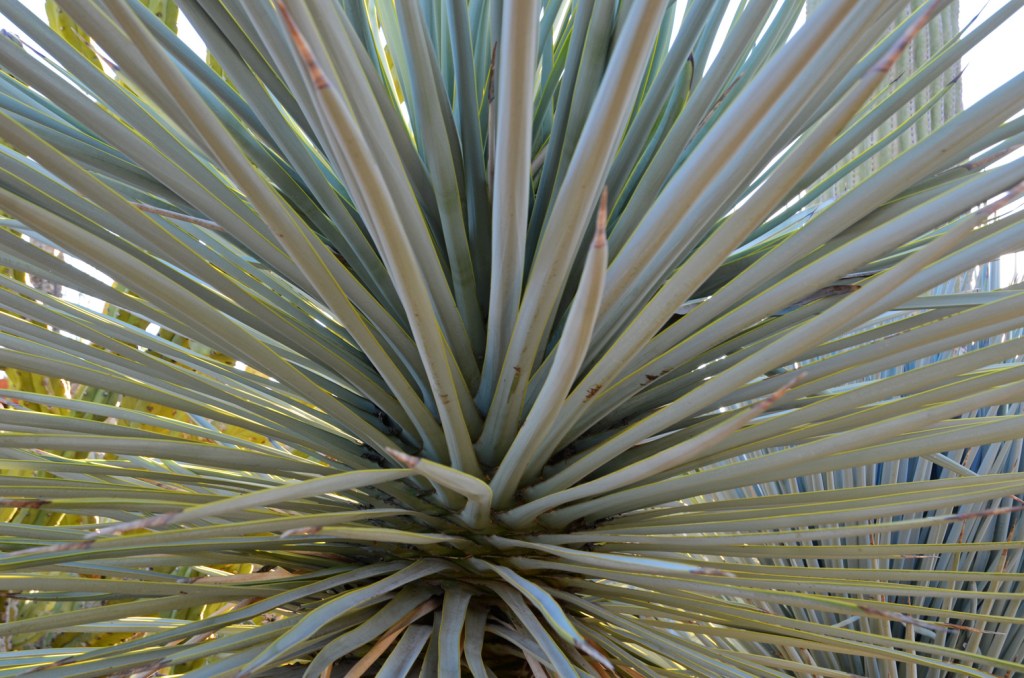
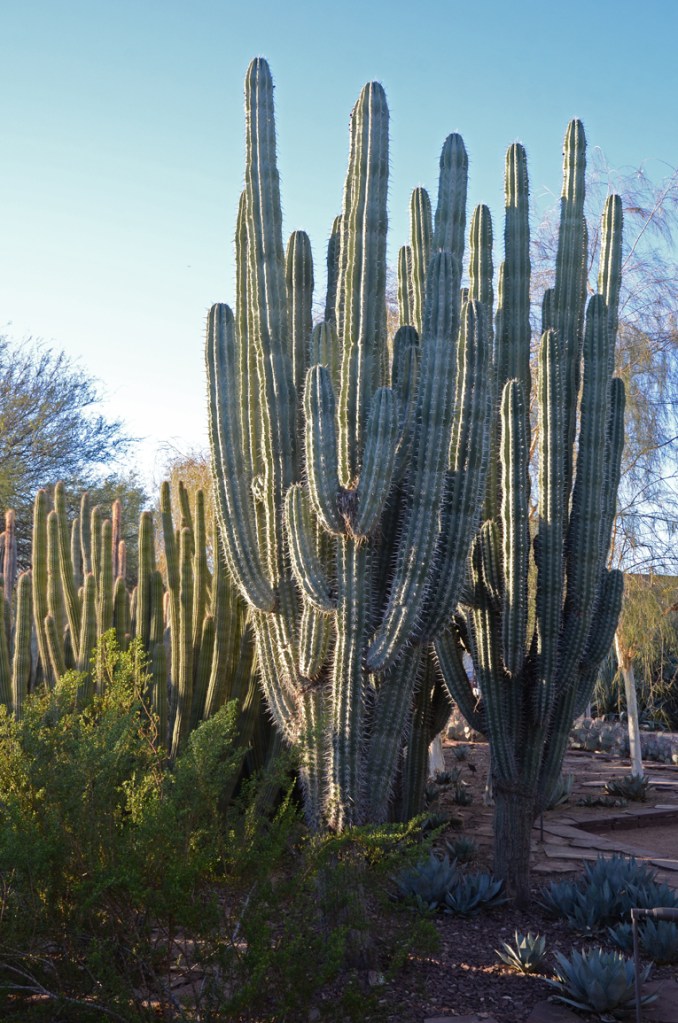
Visitor to the cafe area – figured out where all the crumbs ended up!A couple of the inside displaysEarly morning sunlight – at 8:00am when we arrived we had almost the entire garden to ourselves!Organ Pipe CactusAgave
Leaving the Green Valley/Tucson area the plan was to head SW to the Organ Pipe Cactus National Monument and then loop back up to Phoenix. At this point, I think Joel had seen enough cactus plus when he looked at the NPS guide for the park it stated:
“Organ Pipe Cactus National Monument is a safe place to visit. However, illegal border crossings and activities, including drug smuggling, occur daily. It is unlikely that you will encounter any illegal border activity, but you should be aware that such a situation is possible. Many safety precautions are in existence as a means to protect you and to continue preserving this national treasure.”
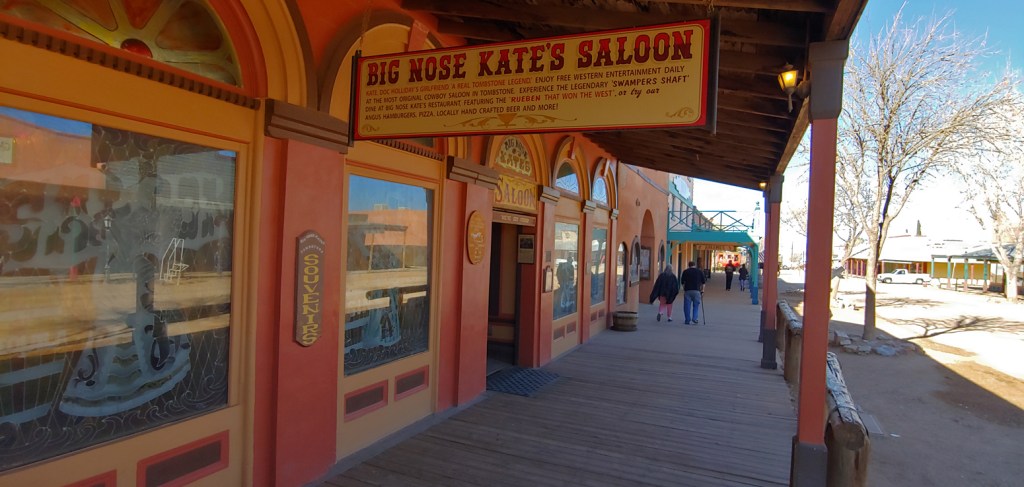
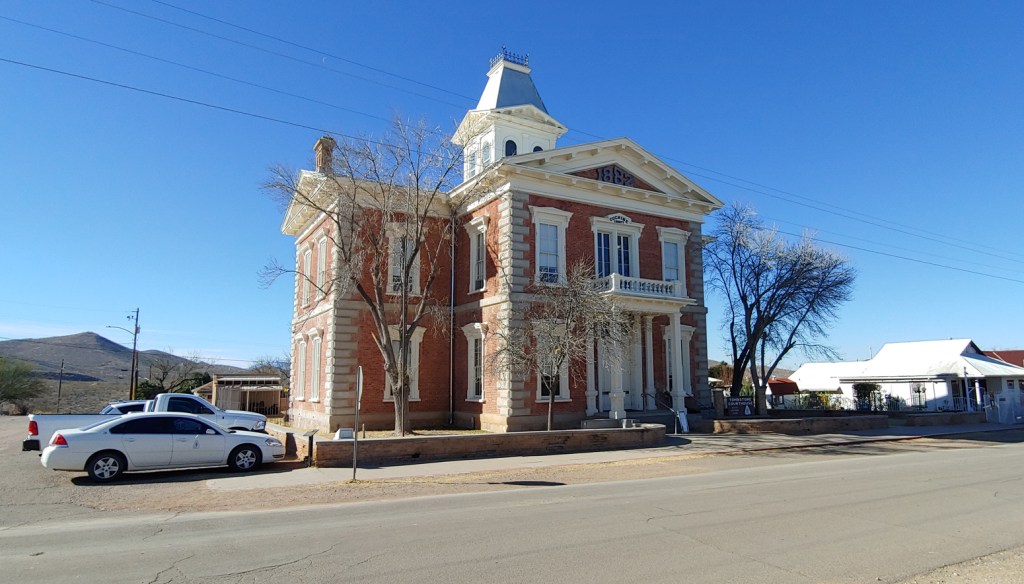
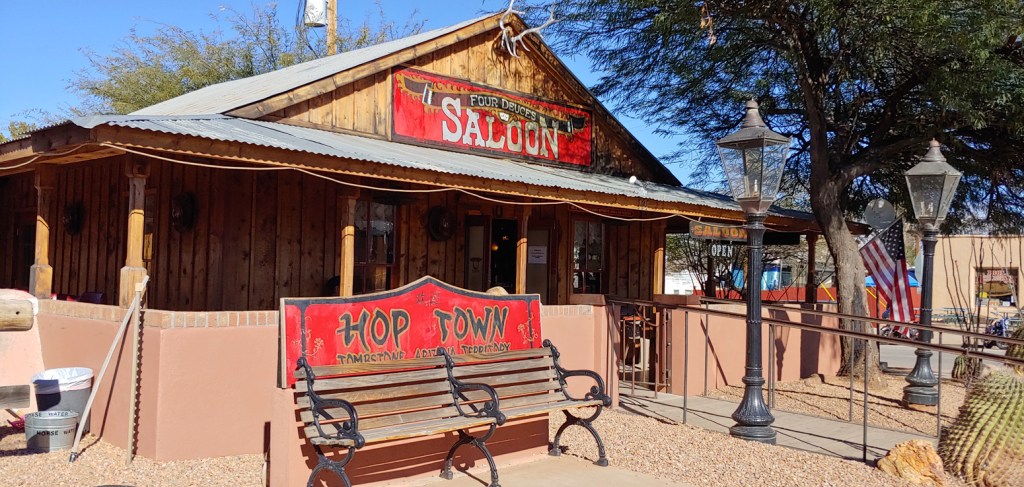
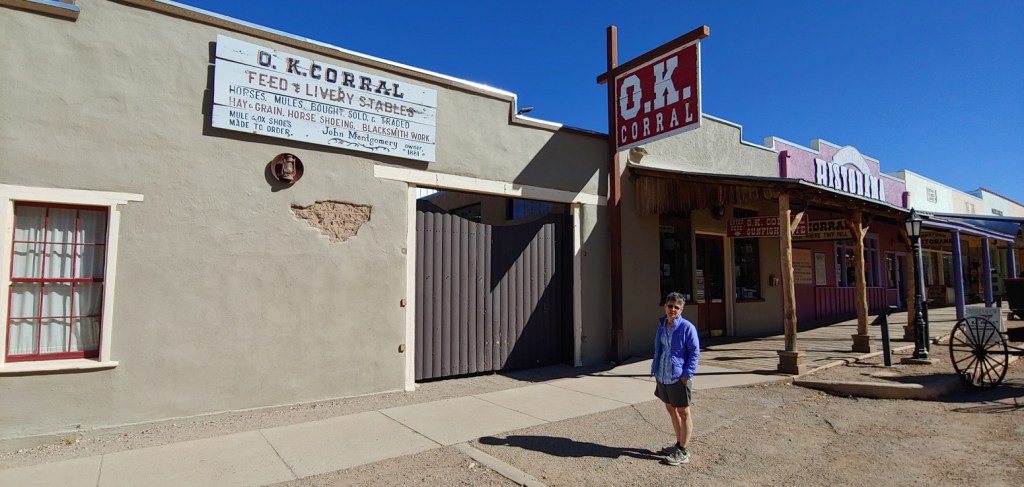
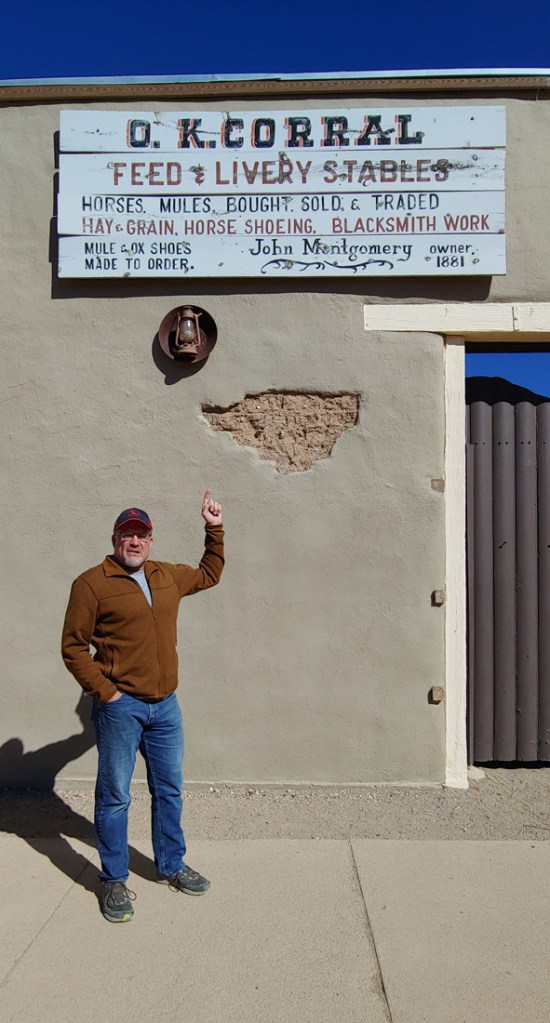
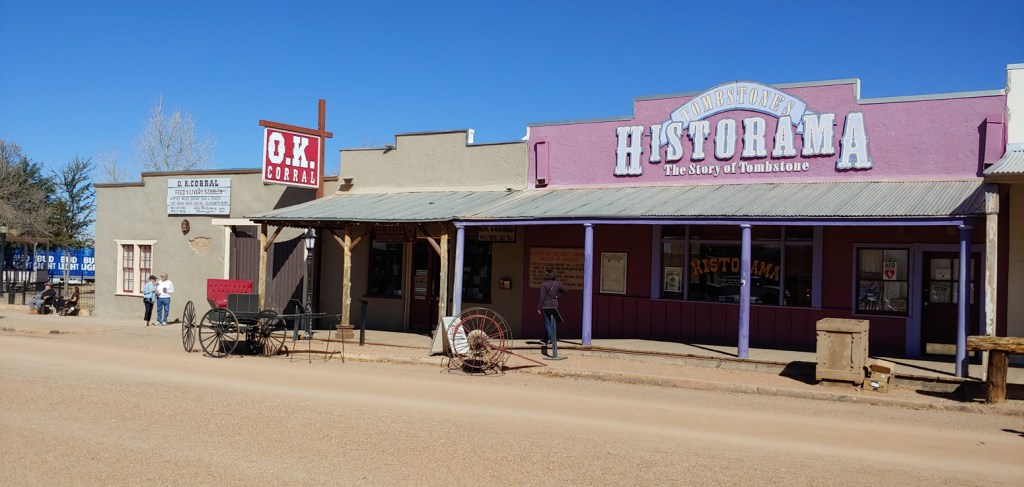
So Plan B came to fruition – travel SE to Tombstone, AZ. Oddly enough, we had watched about a month ago the movie “Tombstone” so it made perfect sense. Very “touristy” but again, being early in the morning and the off season, we had the place virtually to ourselves. Had lunch, bought a few souvenirs and then headed up to Phoenix.
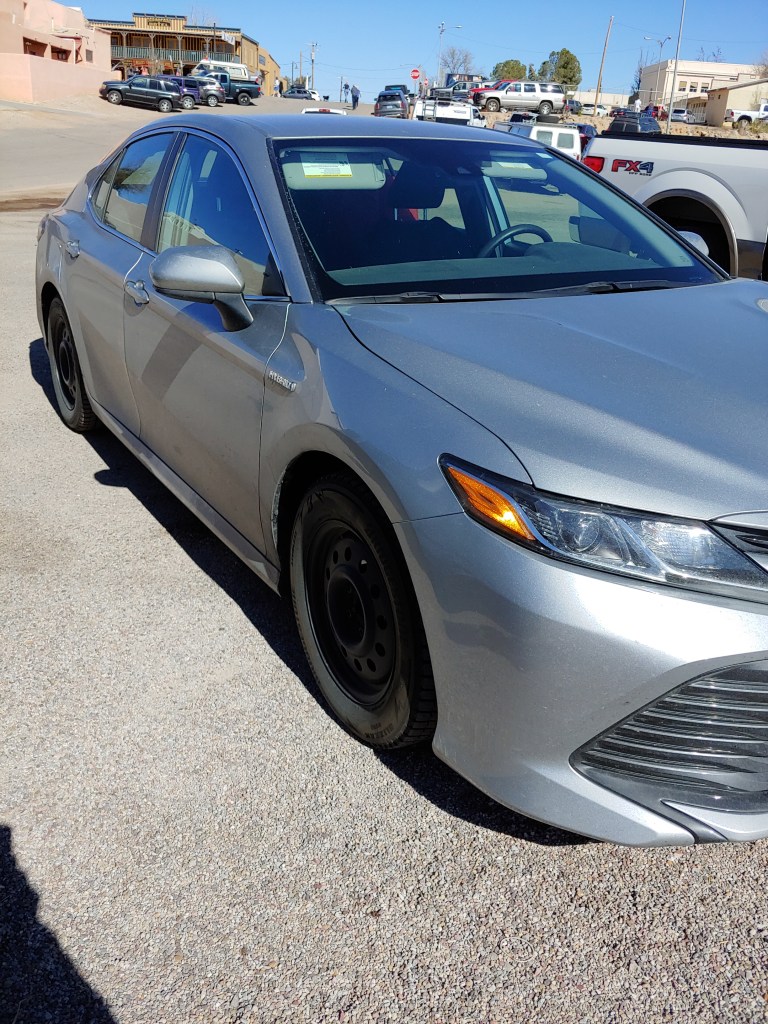
Tombstone CourthouseOnly vehicle in southern Arizona with snow tires on!
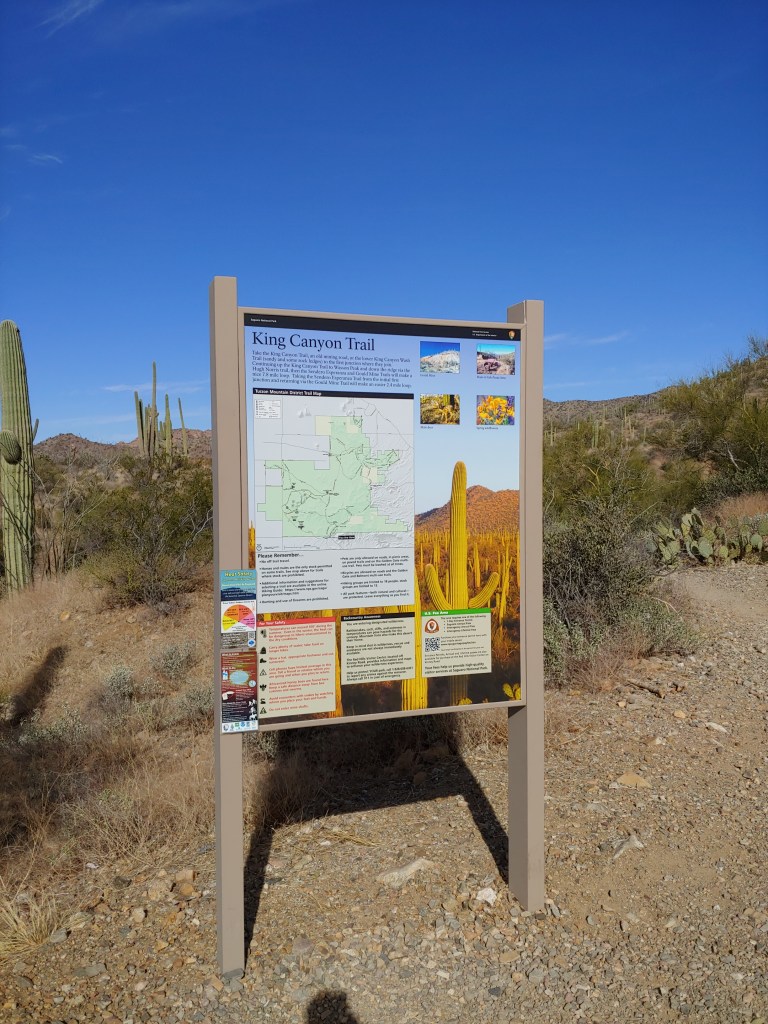
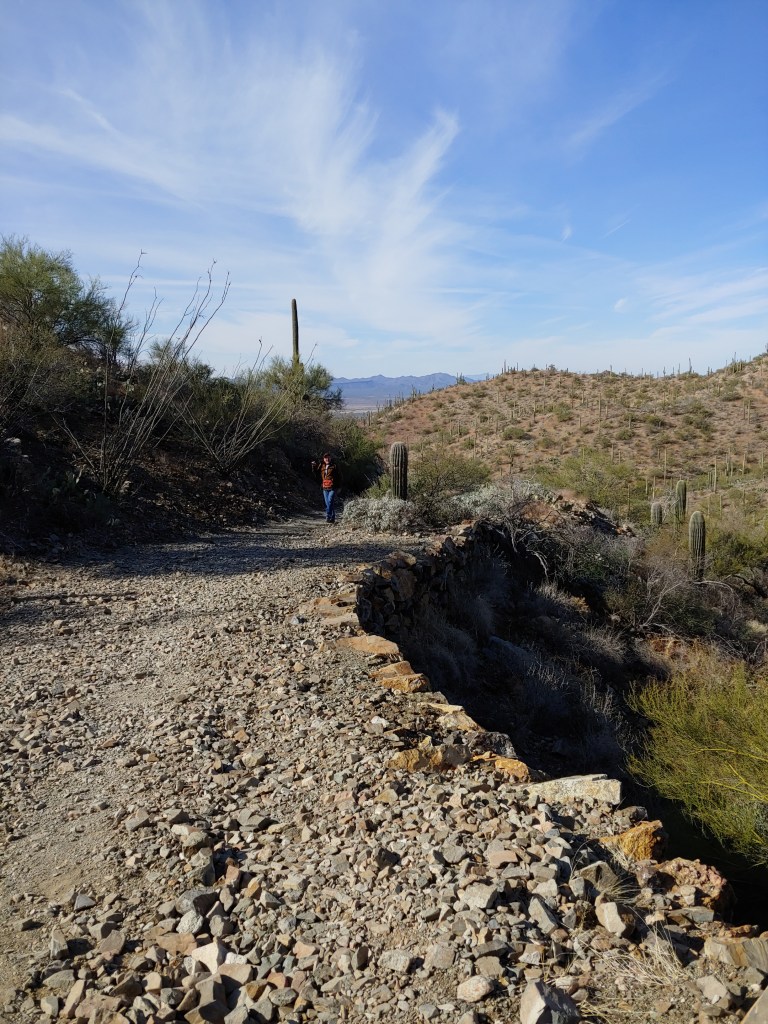
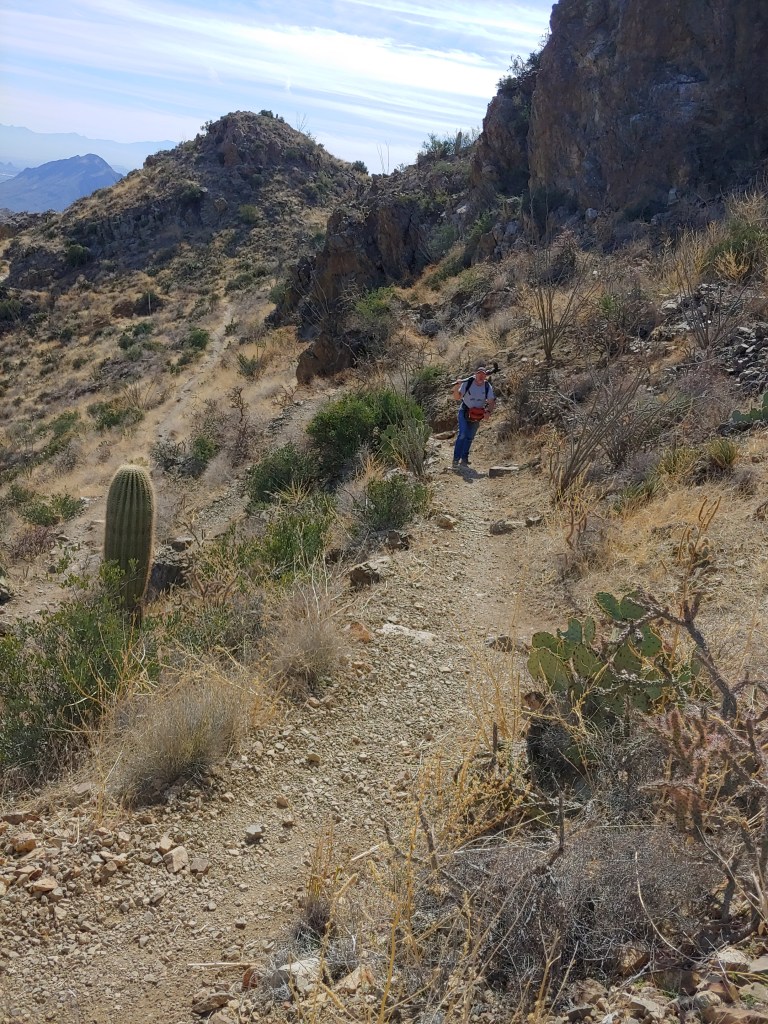
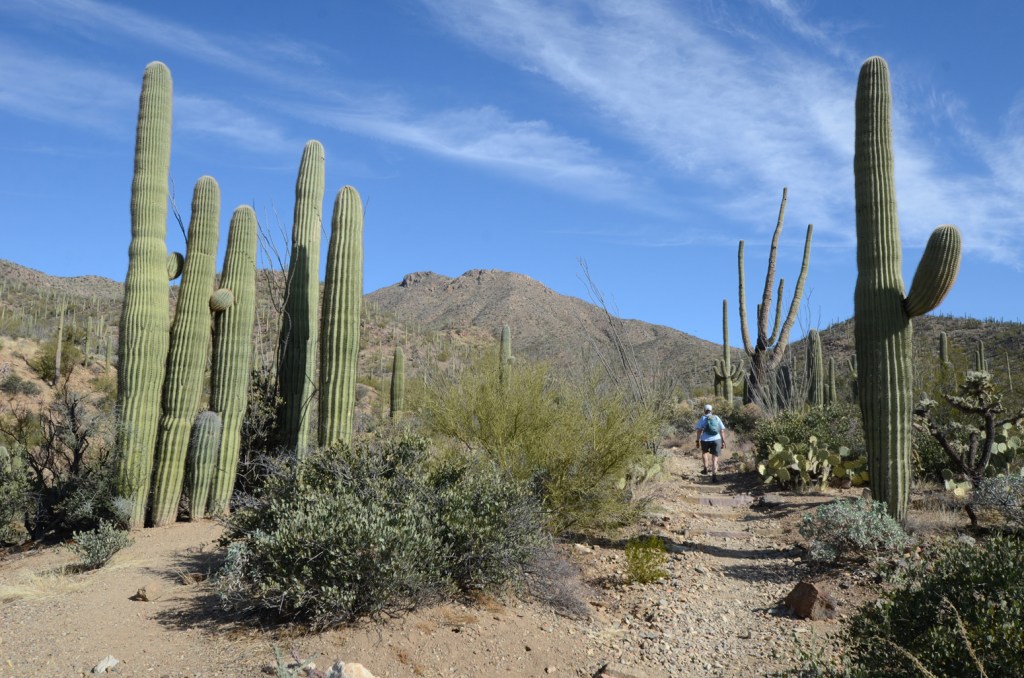
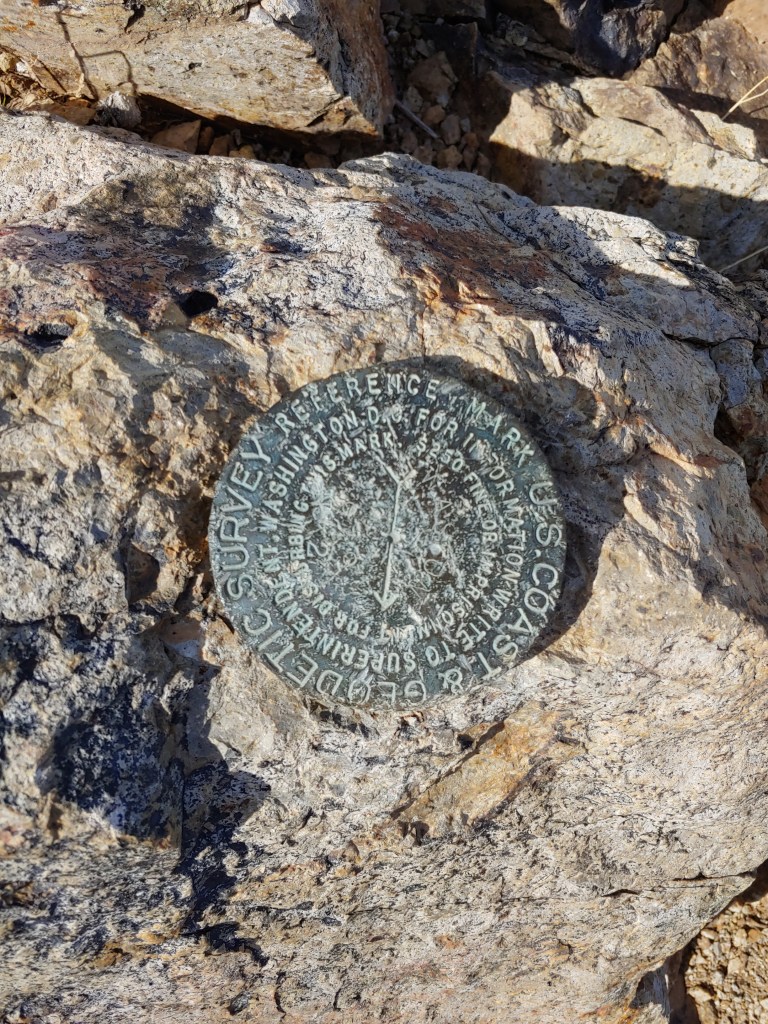
The west side of the Saguaro National Park is much smaller and “only” has about 40 miles of trails or 1/3 of what is on the east side. But the trails here gain elevation much quicker and provide more access to the areas of the park with great scenic overlooks. We stopped at the Visitor Center and got information about the various hikes and chose a 7ish mile loop including parts of the King Canyon Trail, Hugh Norris Trail and Gould Mine Trail, including a short hop to the summit of Wasson Peak (4687′.)
As it was in the middle of the week it was relatively quiet. The temperatures were great, mostly in the high 60’s so hiking was comfortable – couldn’t imagine being down here in the dead of summer – not much shade. As with the east side venture the day before, we barely scraped the surface of the trail system so this may be an Annual Pilgrimage? Joel, what say you?
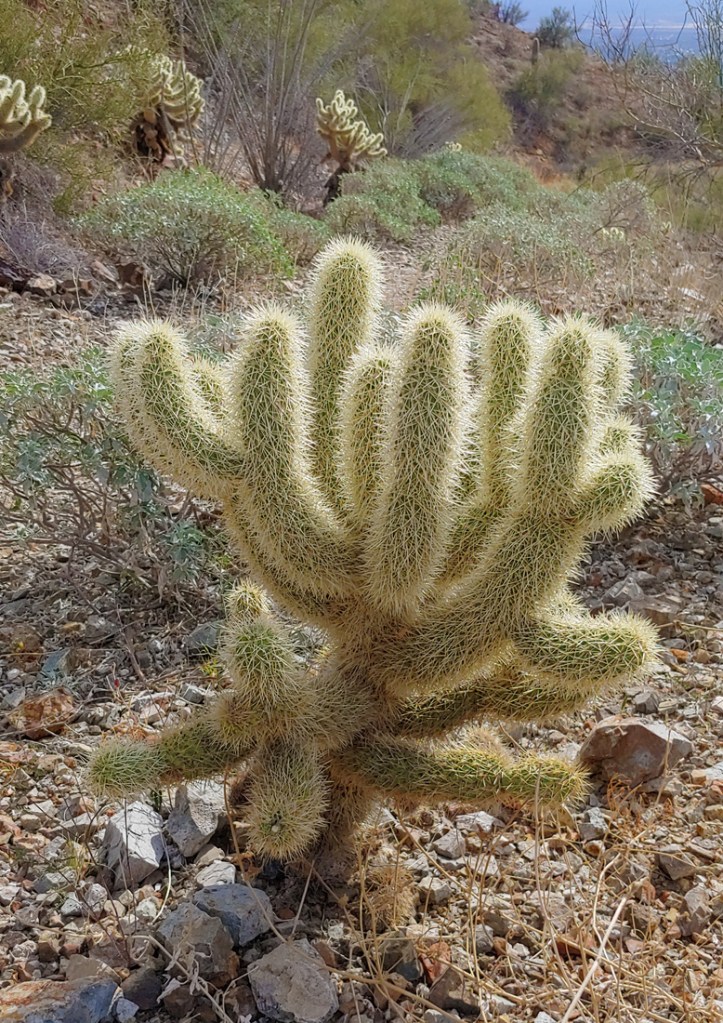
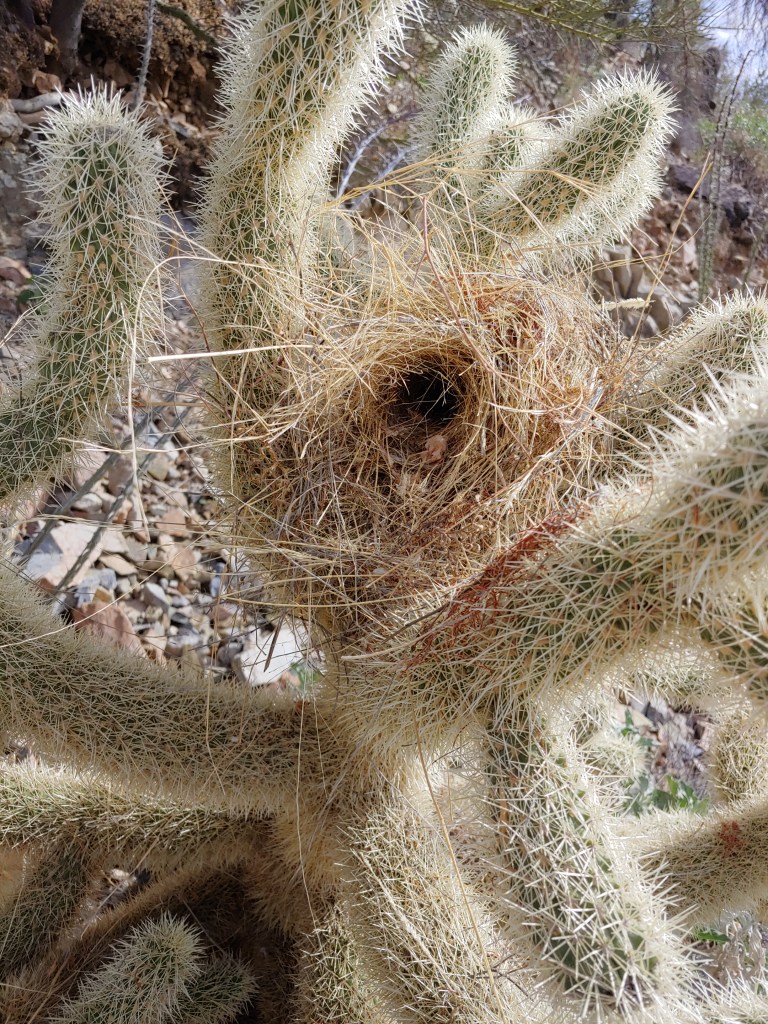
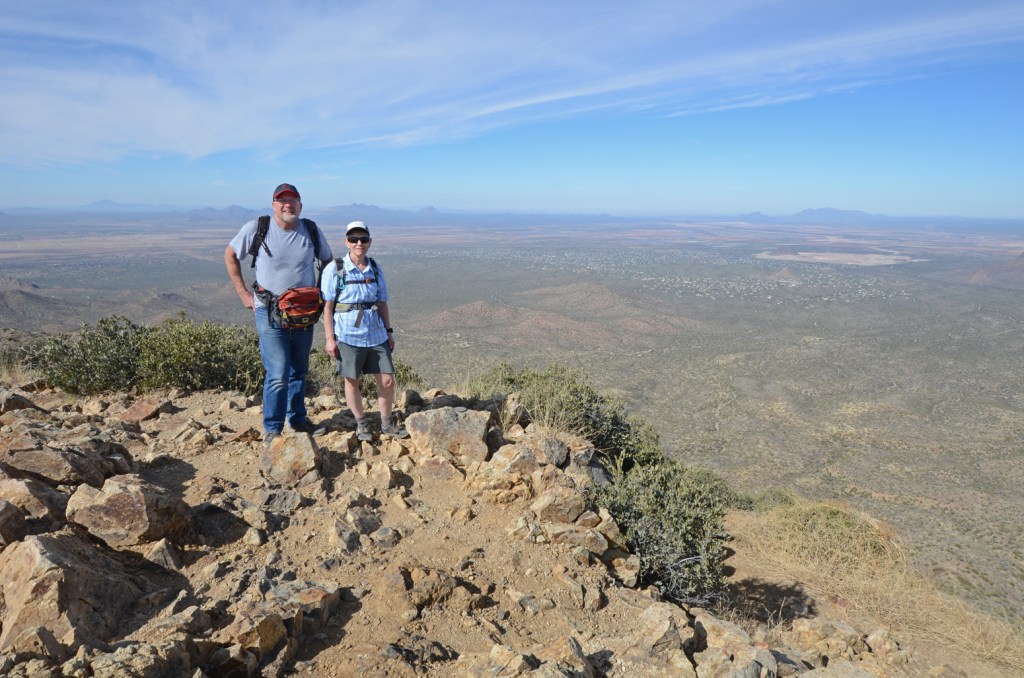
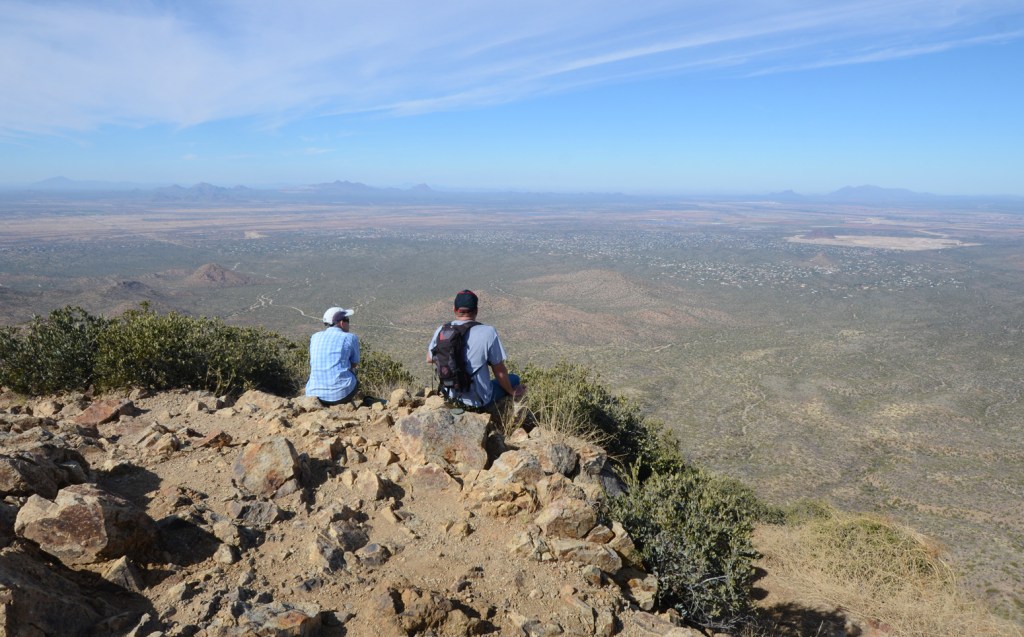
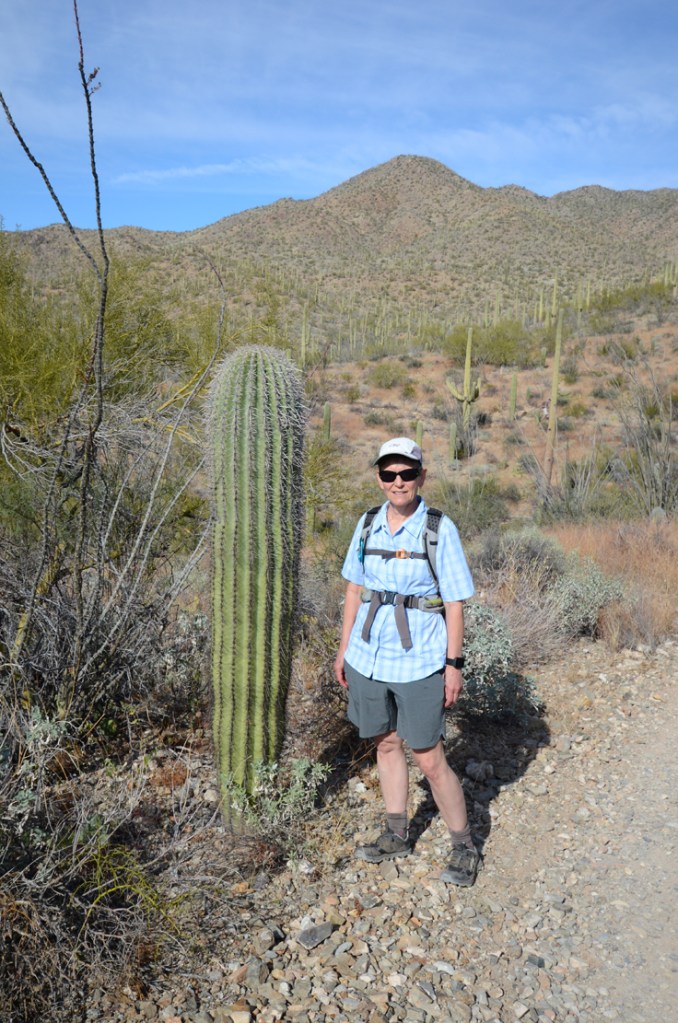
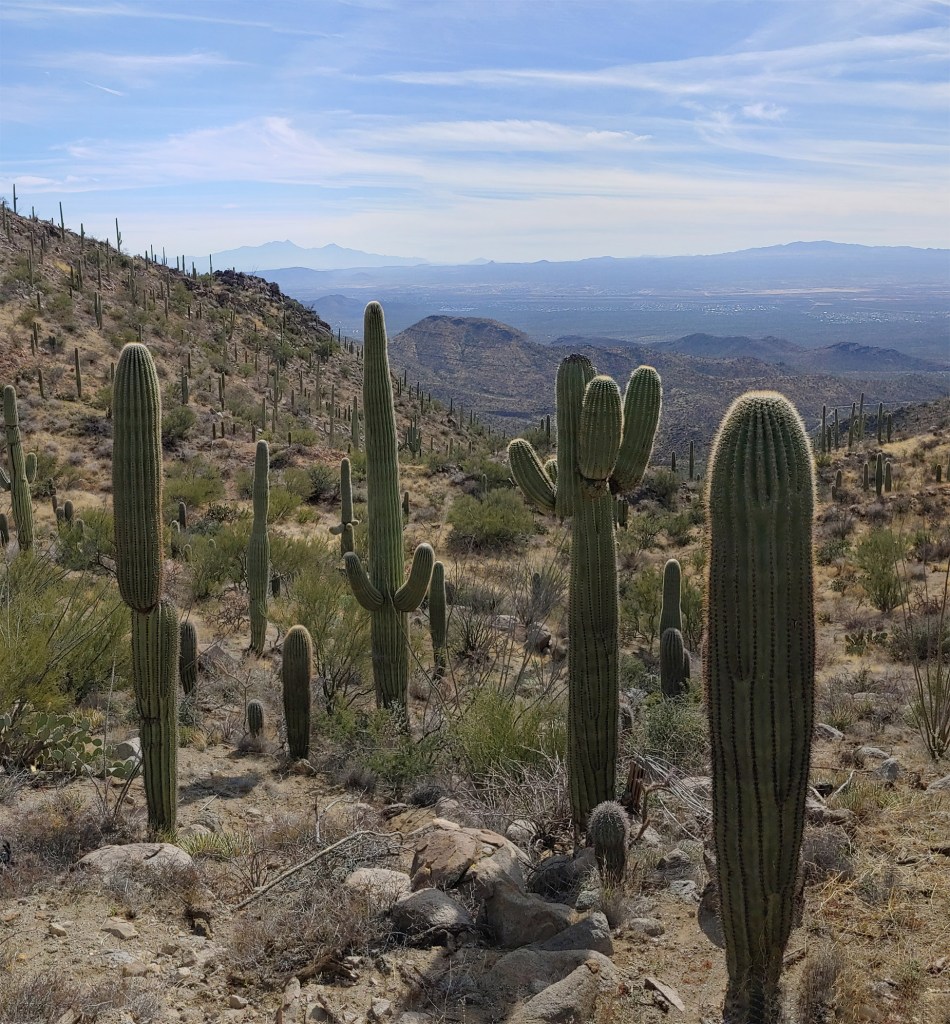
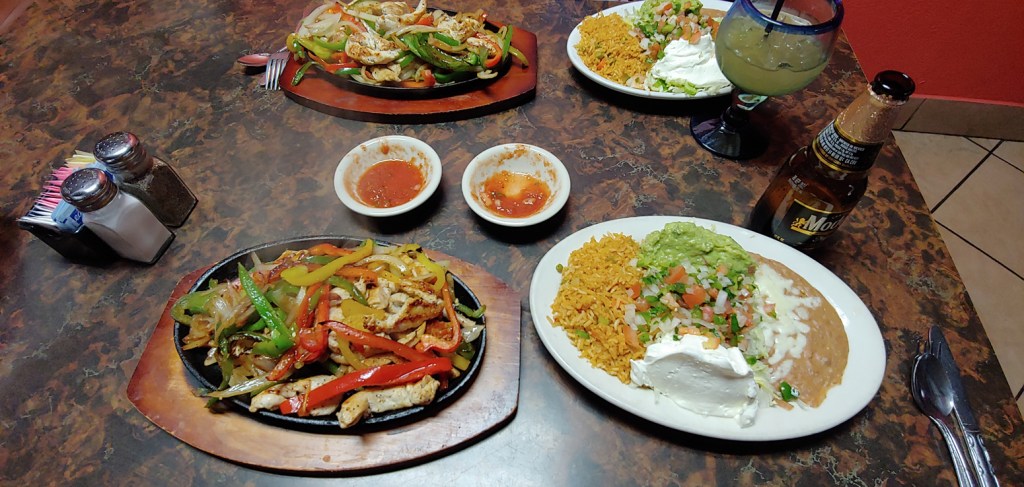
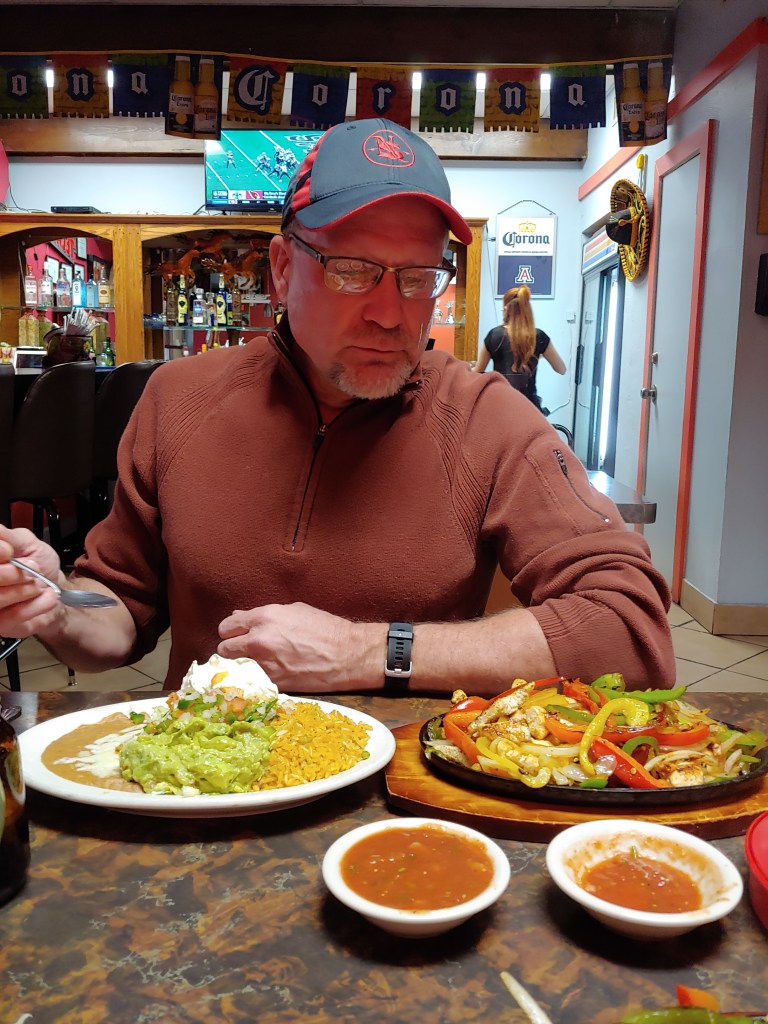
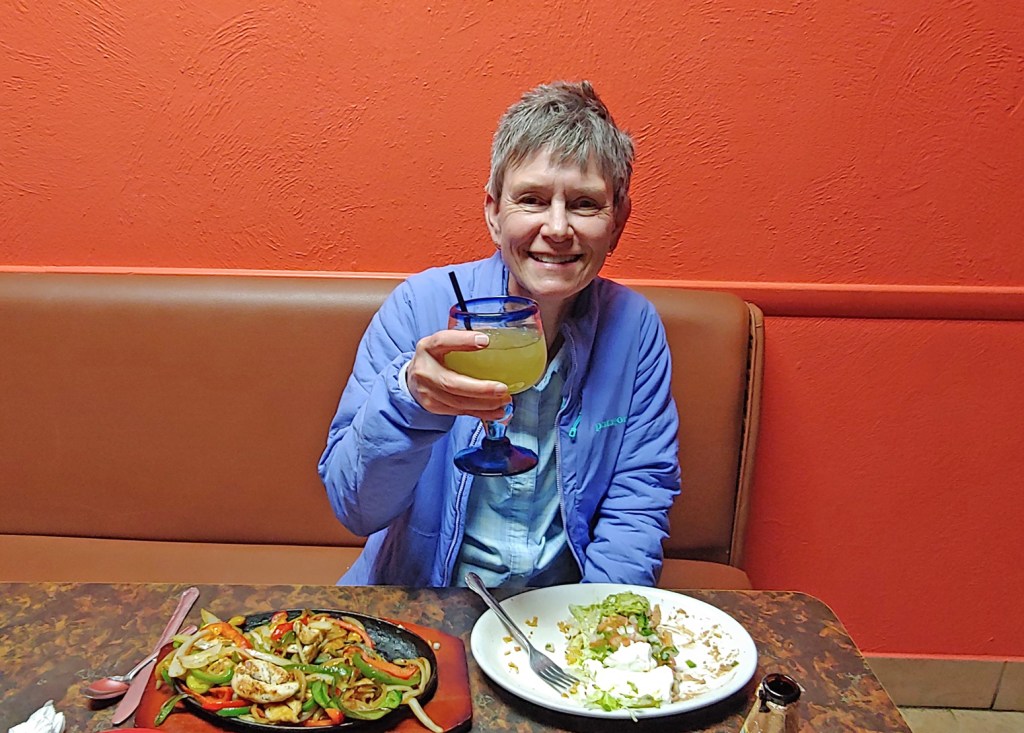
First part of the trail is a gentle grade, then it gets a bit steeper and more rocky.The whole time we were hiking, staring up at what we thought was Wasson Peak on the left, we were wrong … can’t even see it until you are up high on the ridge. Cholla cactus with bird’s nest.Summit of Wasson PeakLooking out towards the north – amazed by the clean air and blue skies – huge contrast to the winter inversions over the Salt Lake Valley where we live.Do I look as old as this cactus? Probably the same age …Joel surveying his monstrous pile of chicken fajitas – we ended up taking half of our food back to the motel.Quite possibly the second to last Margarita I will ever drink.
The Saguaro National Park is interesting in that it consists of two pieces – the Rincon Mountain District to the east and the Tucson Mountain District to the west. The city of Tucson sits in the middle and, based on traffic, it may be upwards of 30 – 60 minutes to get from one side of the park to the other. As we drove south from Window Rock, AZ, we decided to try and get a hike in on the east side and then tackle the west side the following day.
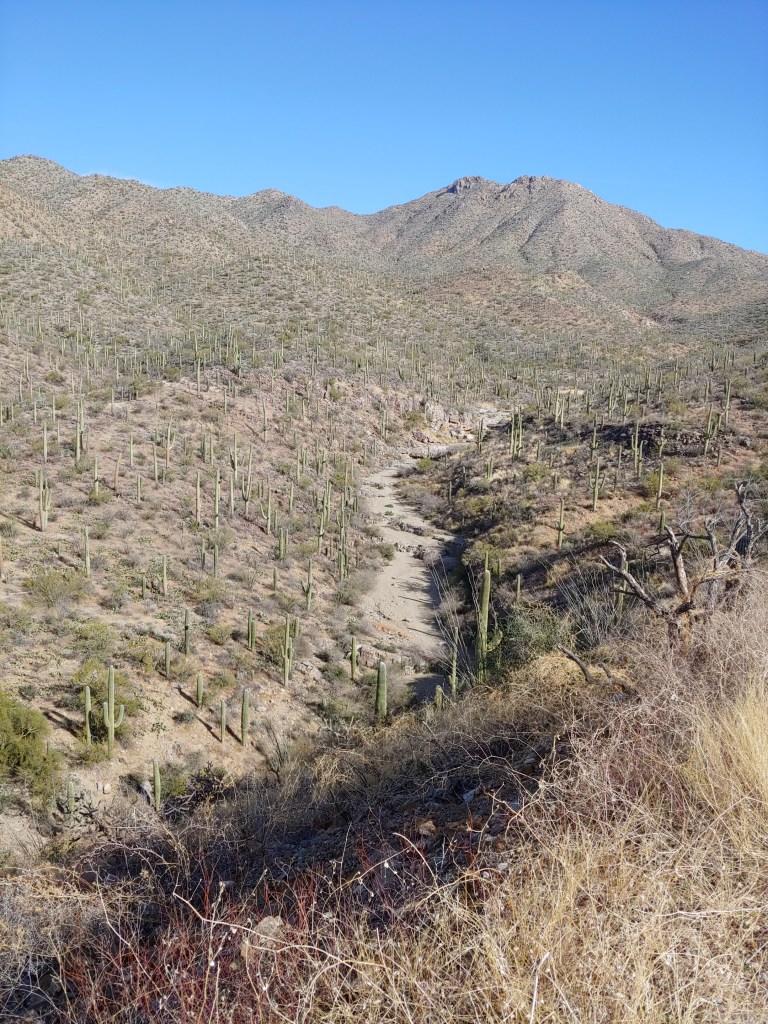
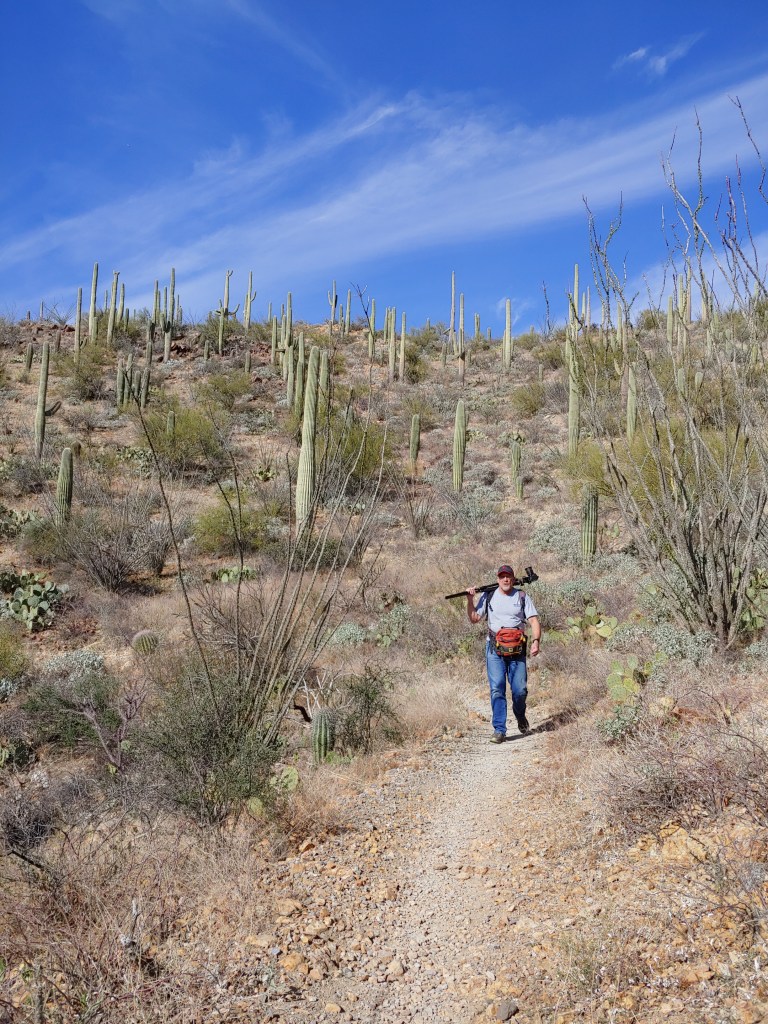
The East Side – Rincon Mountain District is much larger and has about 128 miles of trails on it – we only explored about 4 miles, hiking the tiny Desert Ecology Trail and part of the Squeeze Pen Trail. There are several much longer trails with backcountry campsites that need to be saved for next time!
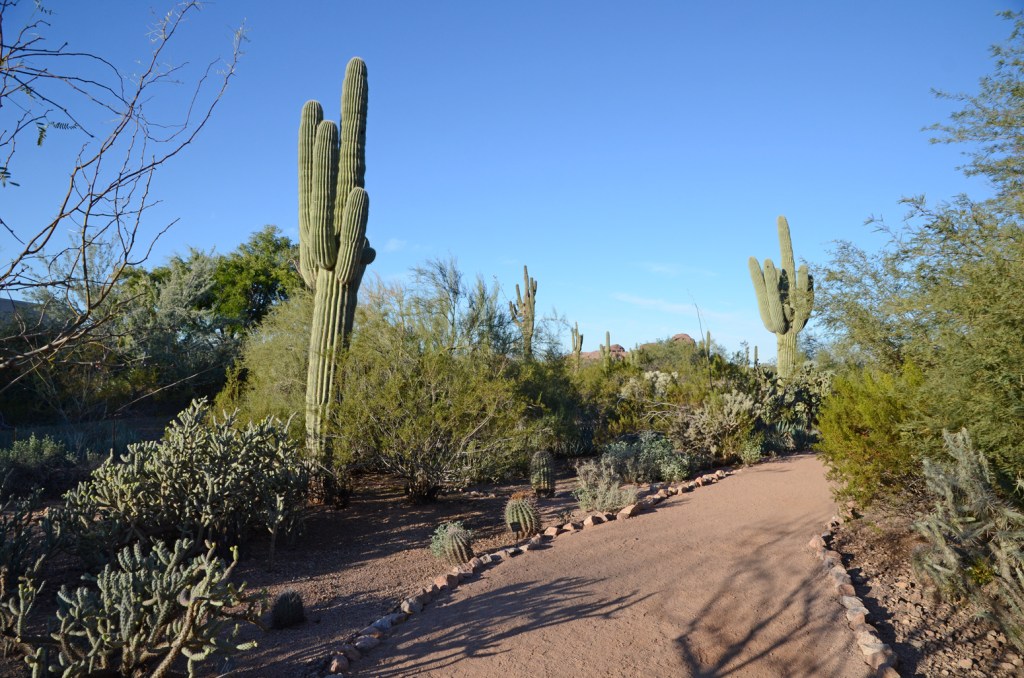
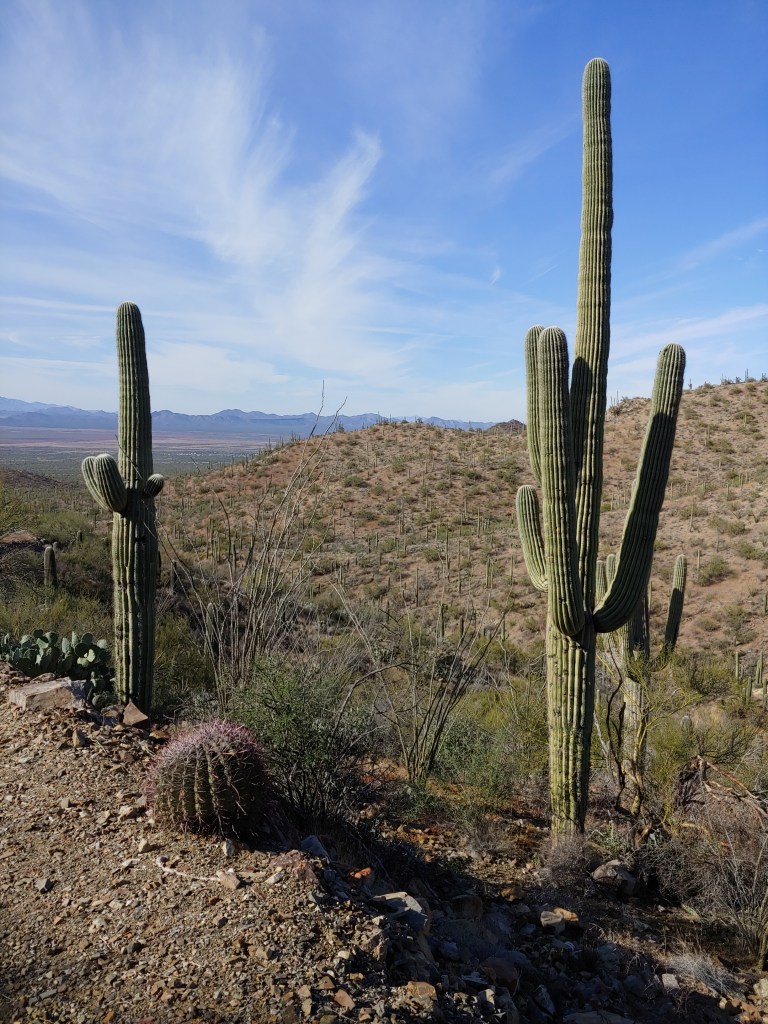
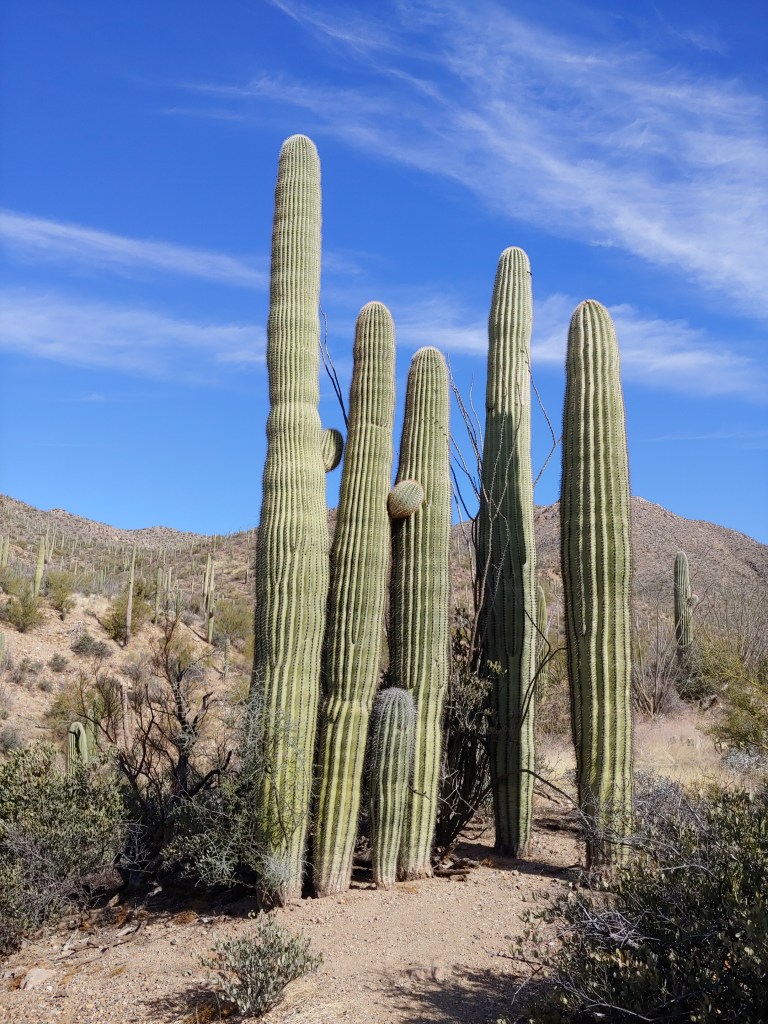
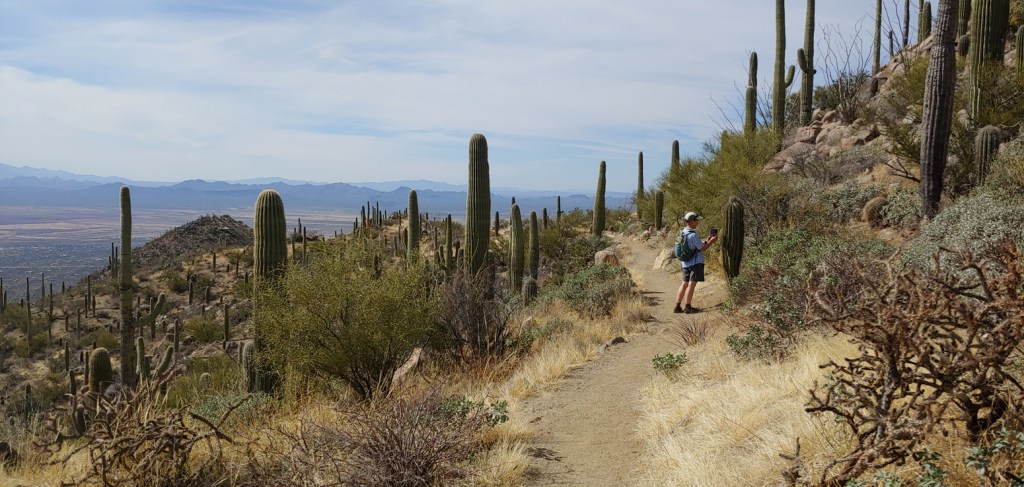
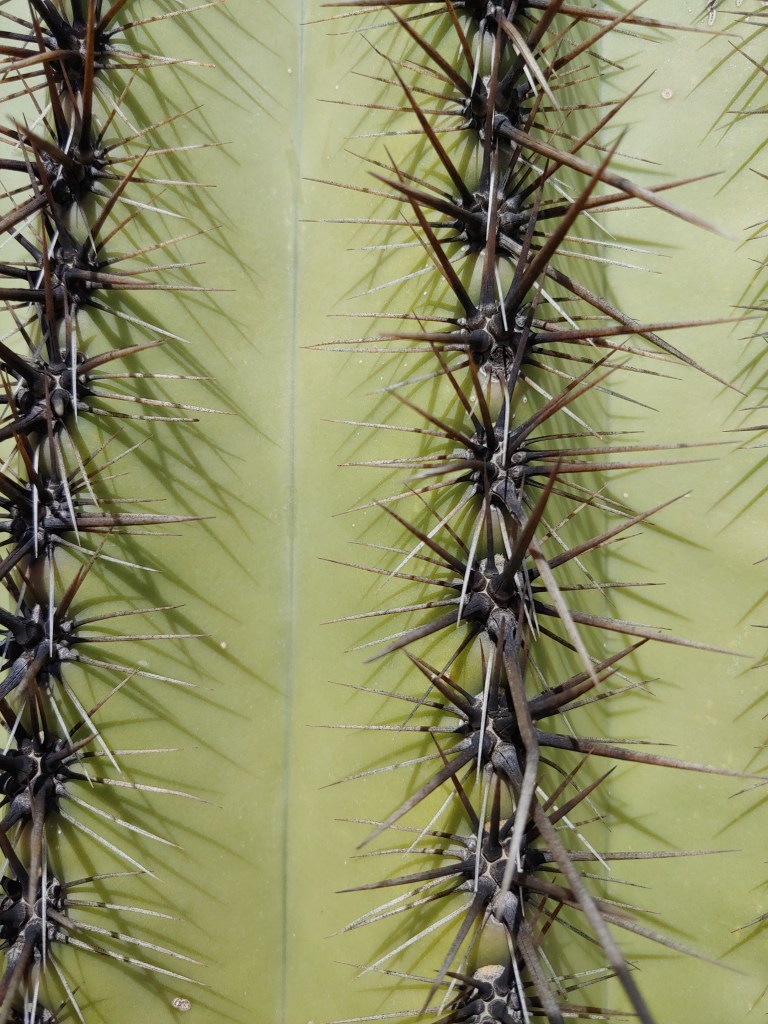
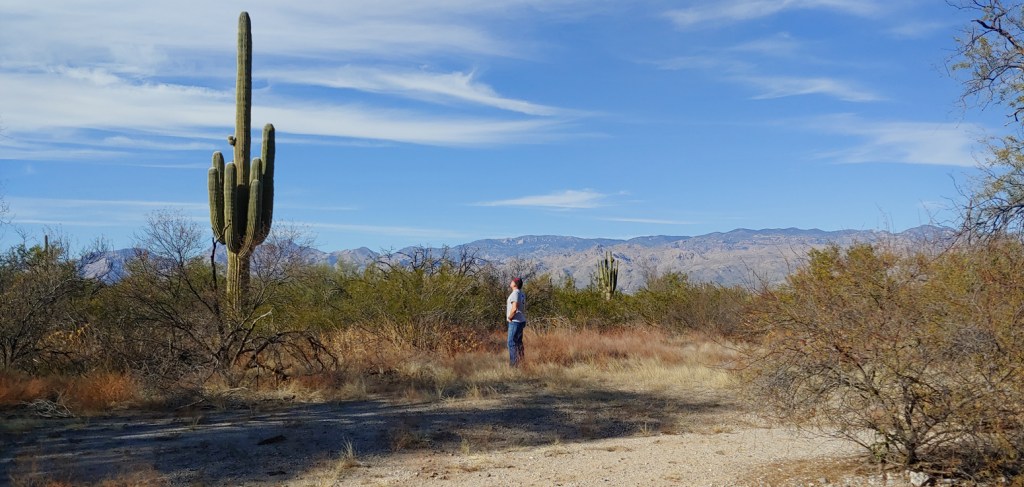
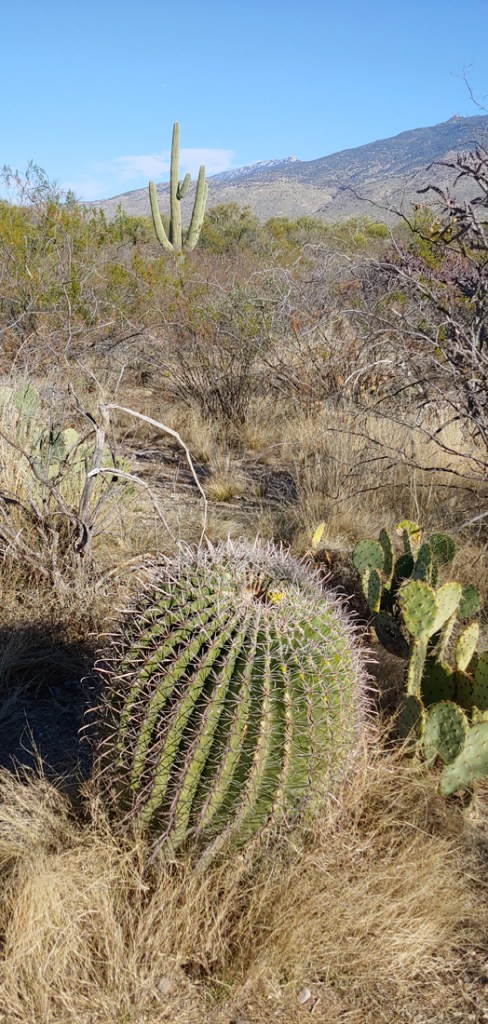
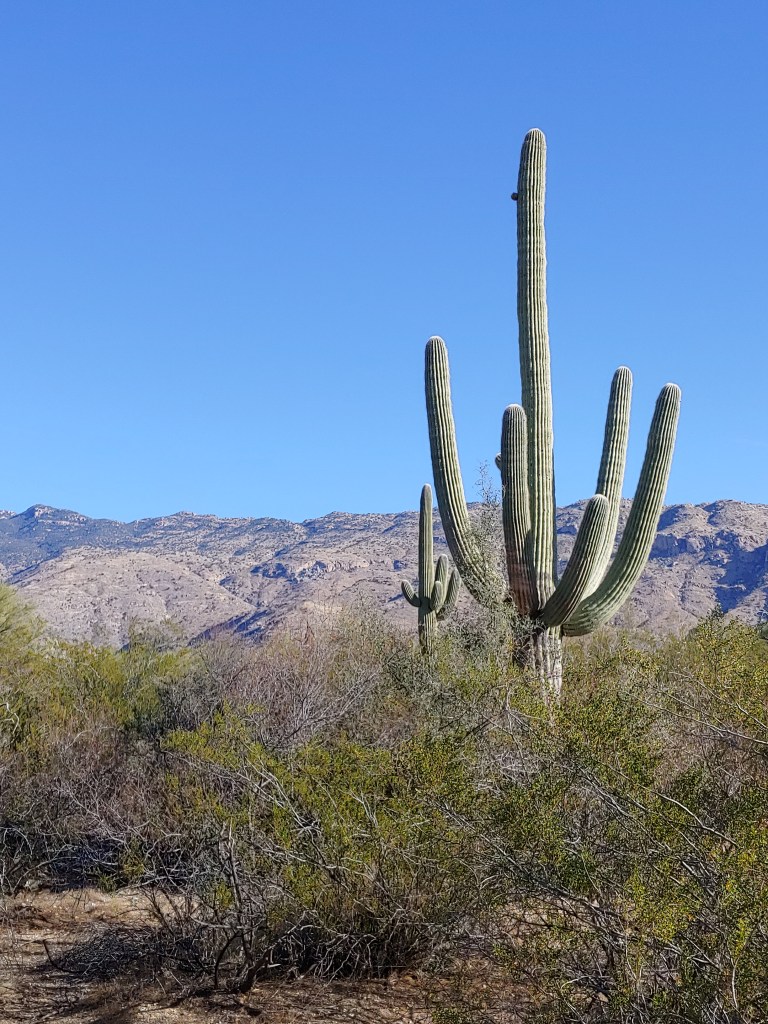
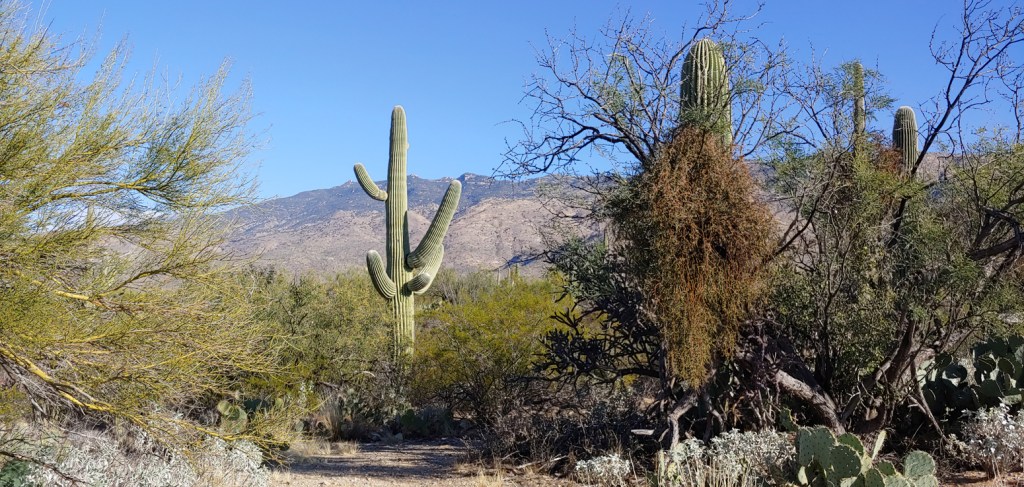
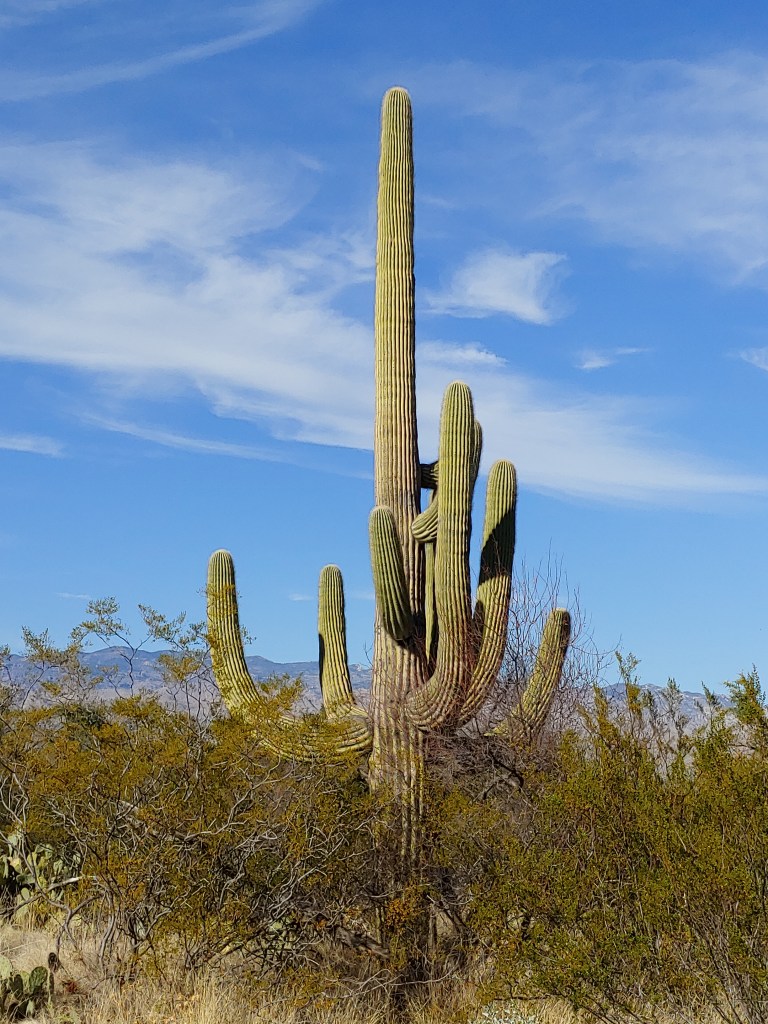
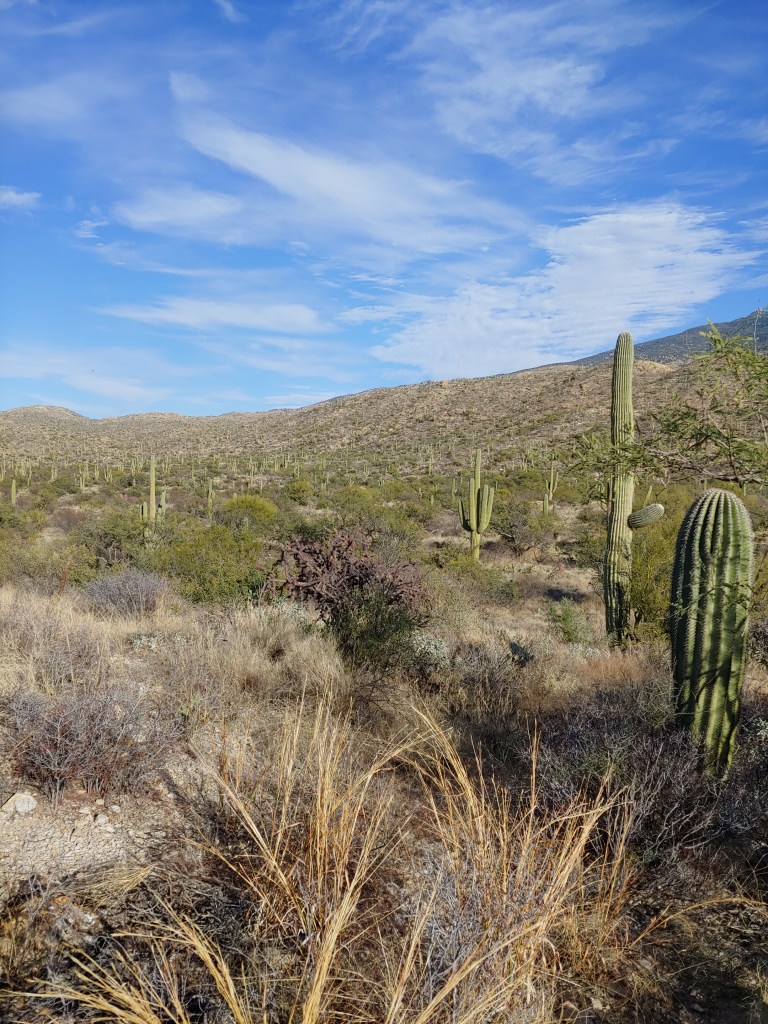
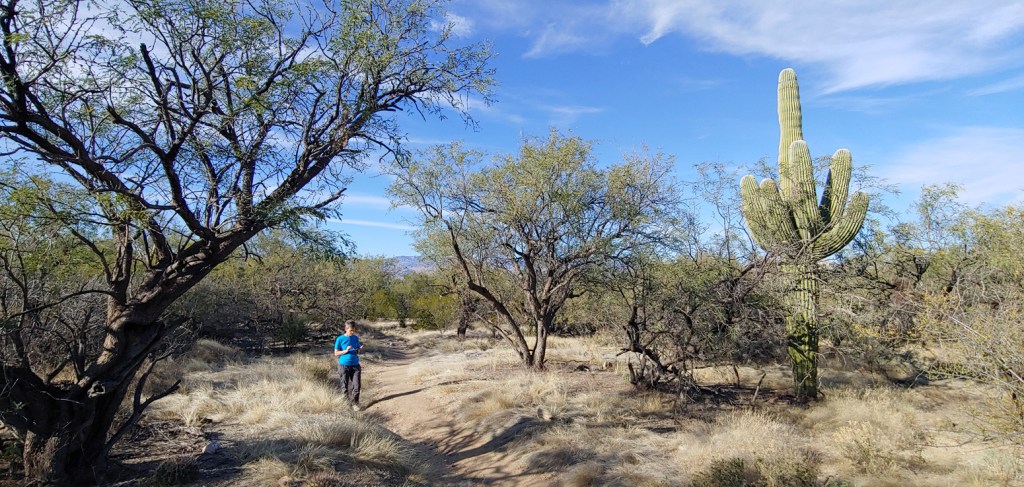
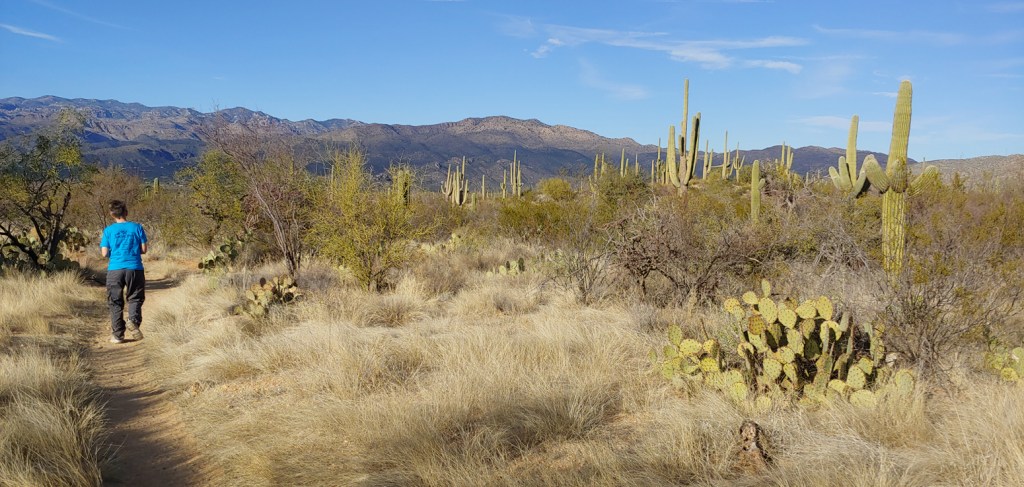
Mature Saguaro can be 60′ – 75′ tall and over 150 years old. Initially growing about an inch a year, they sprout “arms” around 50 – 70 years old – some never sprout arms …Barrel Cactus, Prickly Pear Cactus and Saguaro on Squeeze Pen Trail with the Rincon Mountains and Tanque Verde Peak in the background.“Put that damn phone down.”
As the plants and geological features of this desert are so much different that the Great Basin Desert that we have closer to us, it was fascinating to see so many different kinds of cactus.
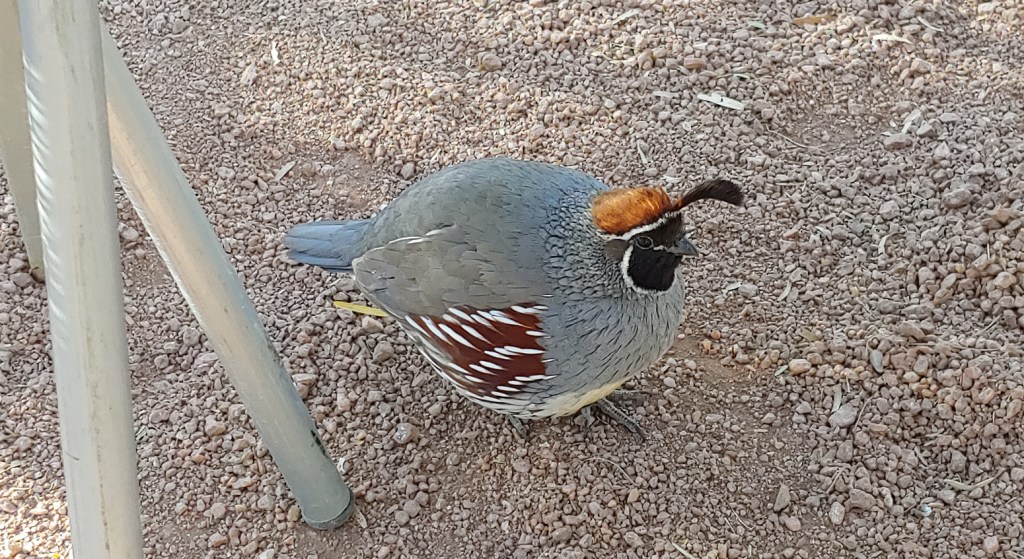
We did see a Roadrunner scoot around the corner on the first trail but aside from a few Gila Woodpeckers seen later in the trip, the native wildlife remained well- hidden and elusive.
The Cactus Forest Loop took us out of the park and back on the road to our hotel in Green Valley.
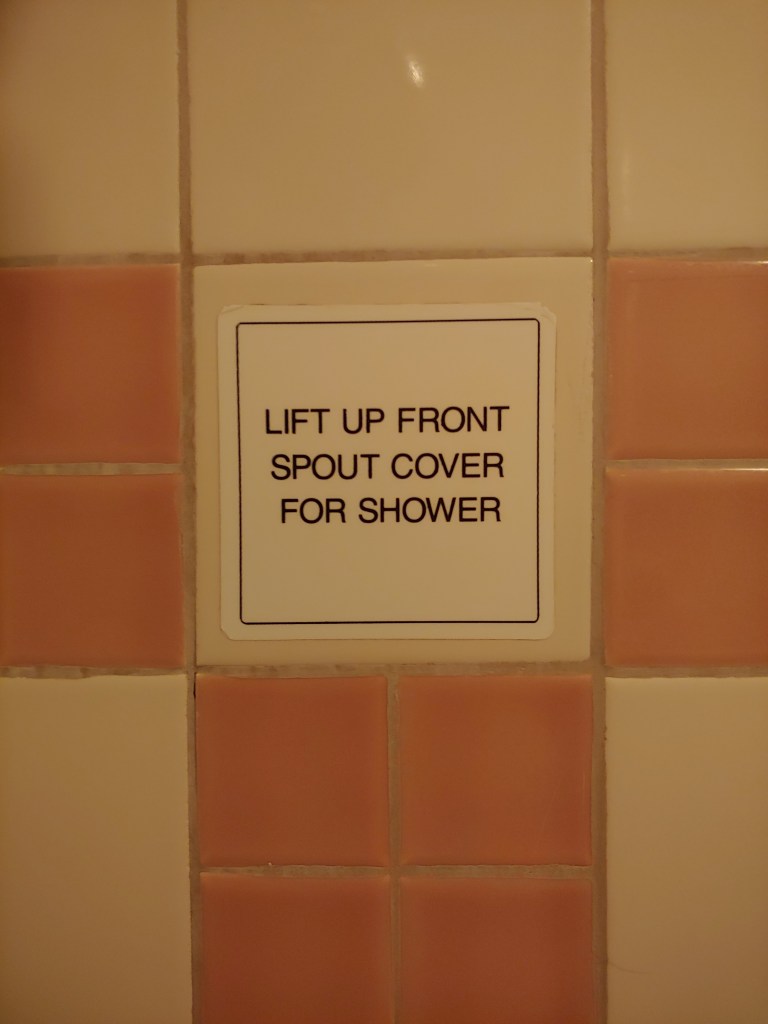
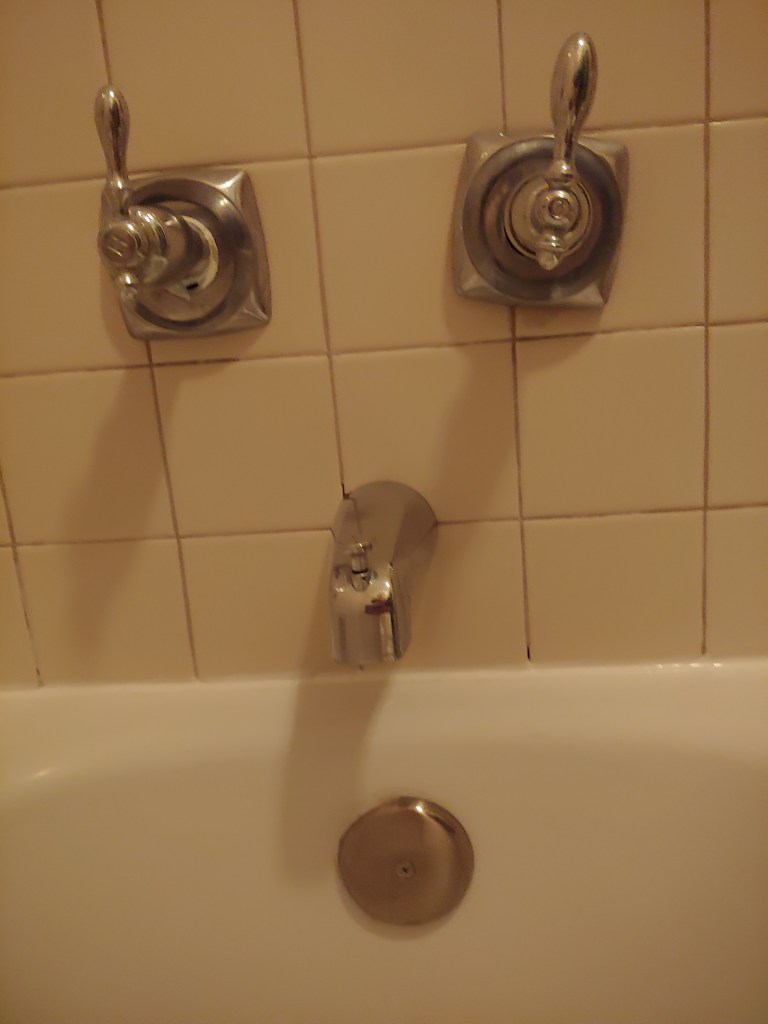
Tony is a big deal all the way out West in Tucson!The shower ensemble consisted of about 3 different handles, spouts and showerheads – made very confusing by the sign above that didn’t match the current fixtures!
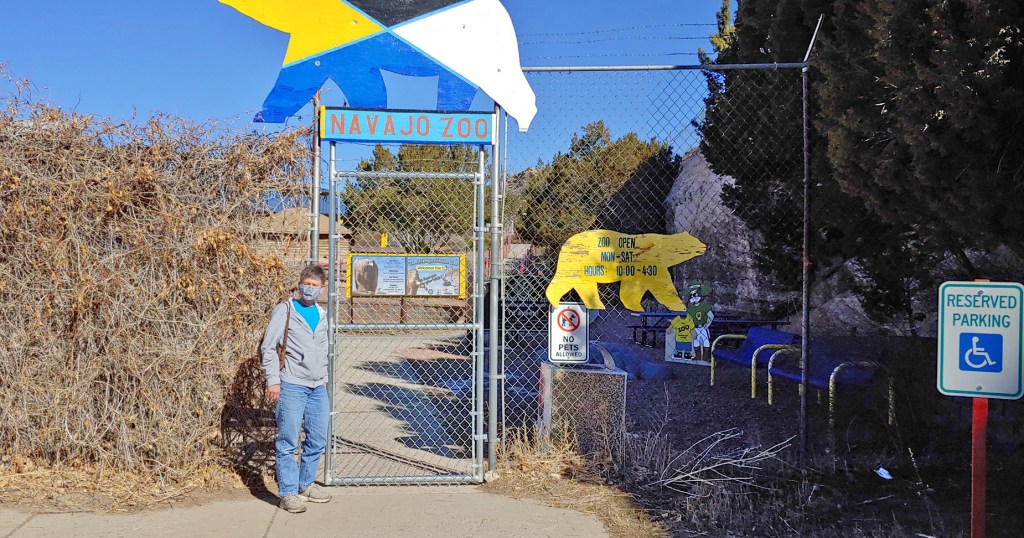
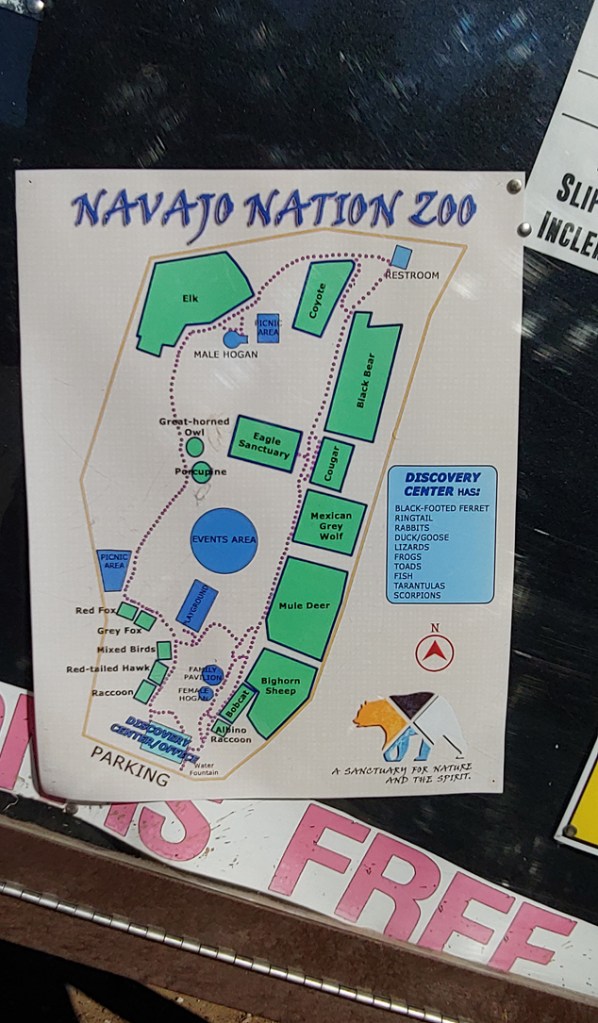
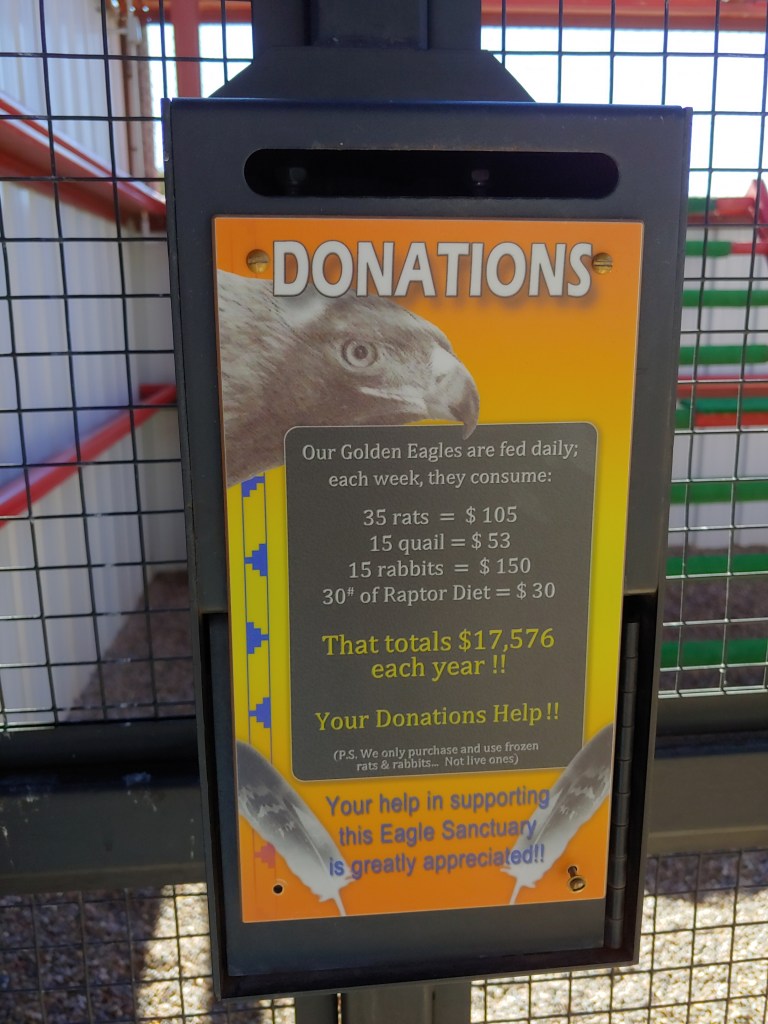
The next stop on our journey south was to the Navajo Zoo in Window Rock, AZ. This is the only tribal zoo in the country, exhibiting only animals found in Navajo Lands. It now houses three “patients” that came in to WRCNU that were deemed non-releasable due to their injuries.
In December, a couple of the caretakers/staff from the Navajo Zoo drove up with a large van to transport a Coyote, Sandhill Crane and Golden Eagle to their facility. Since this was generally on the way down to our final destination, we took a day to visit the zoo and the adjacent Navajo Museum.
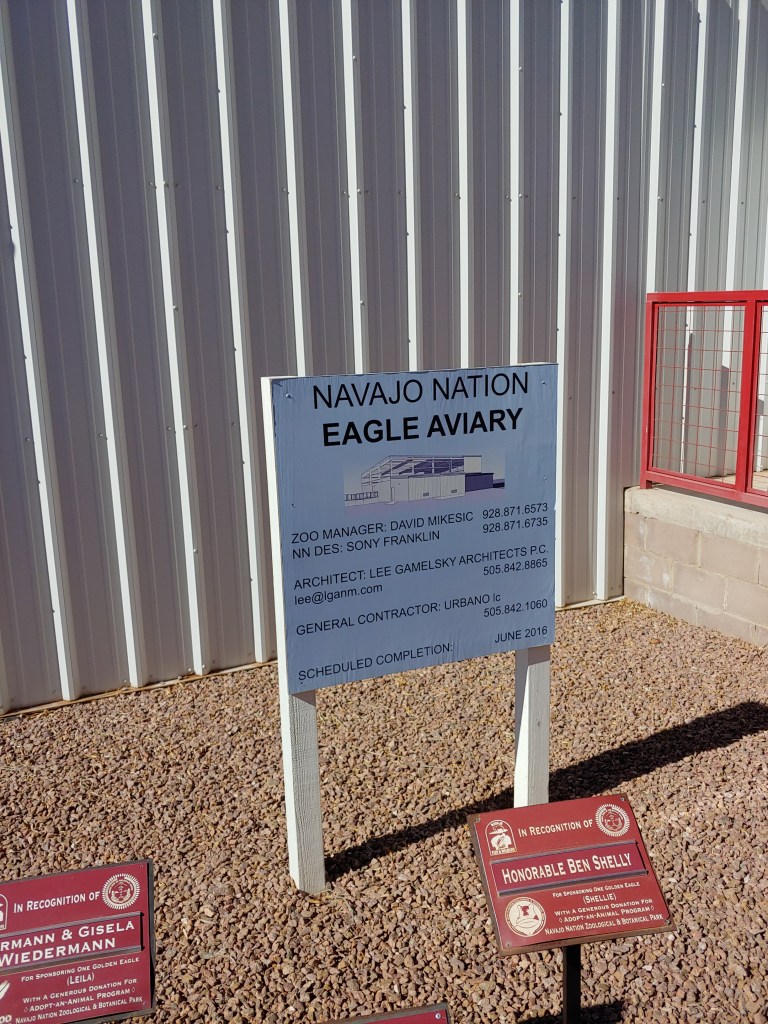
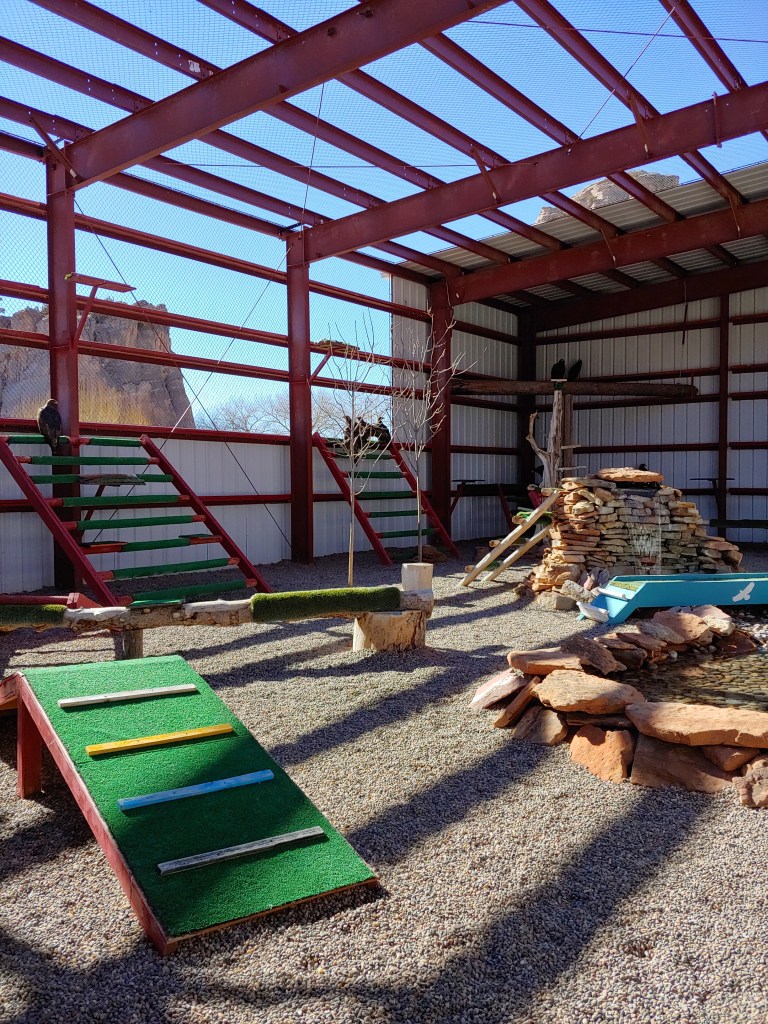
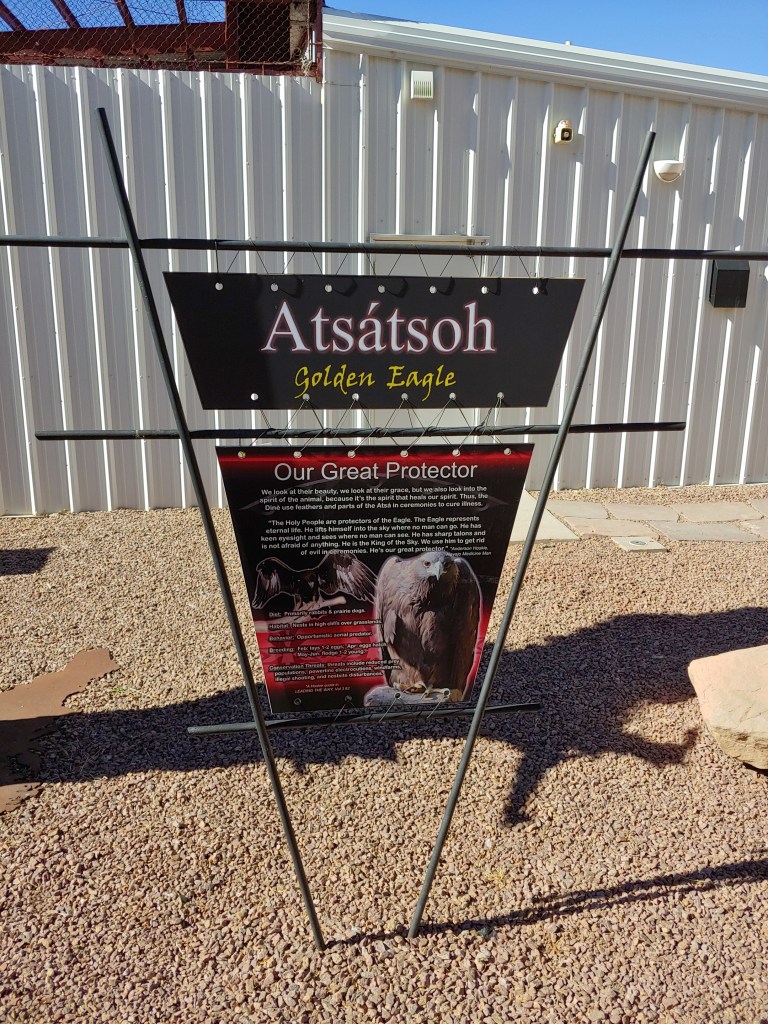
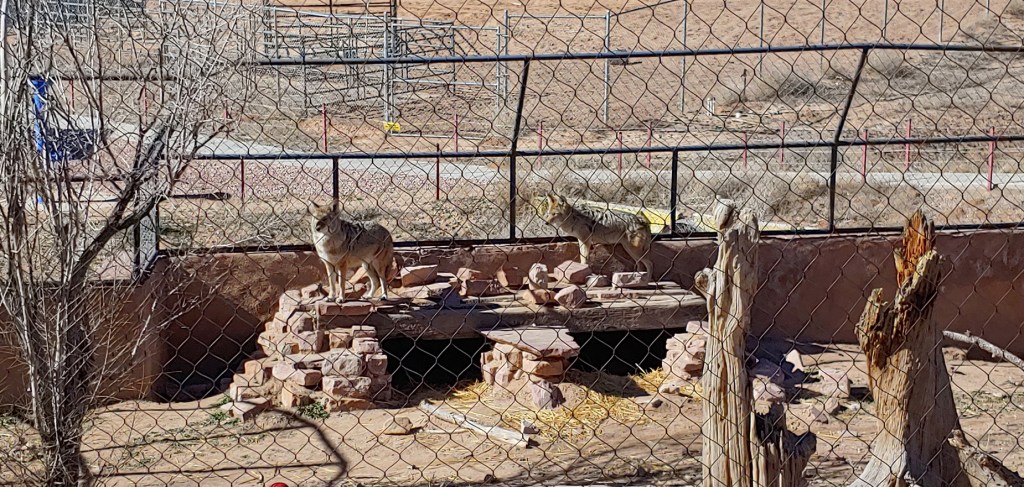
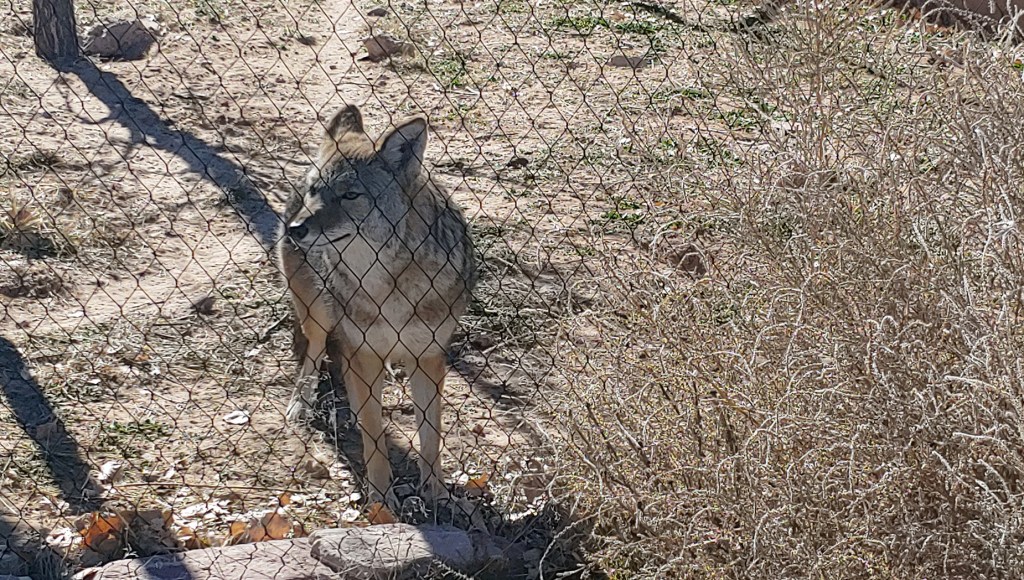
Joel and I did a walkthrough of the zoo and were able to see the Sandhill Crane and the Coyote. We also viewed the Eagle Aviary but there were many Golden Eagles inside and I wasn’t able to figure out which one came from us!
The zoo is fairly small but the exhibits were very clean and most of the residents were older; in my mind a testament to the care taken and pride the team has of their facility. I stopped by to say “Hi” to the Zoo Manager and he ended up taking me on an hour long “behind the scenes” tour of the facility – Amazing!
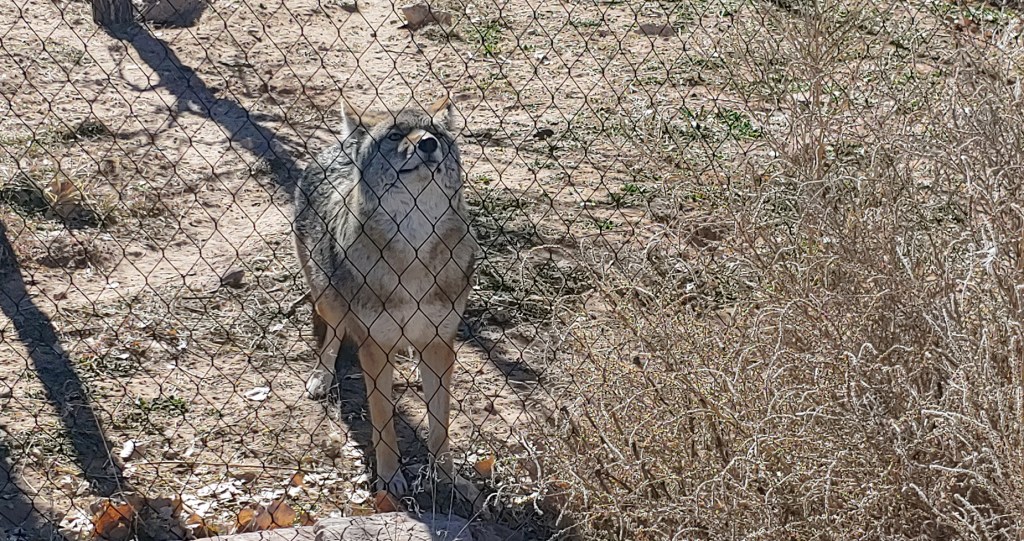
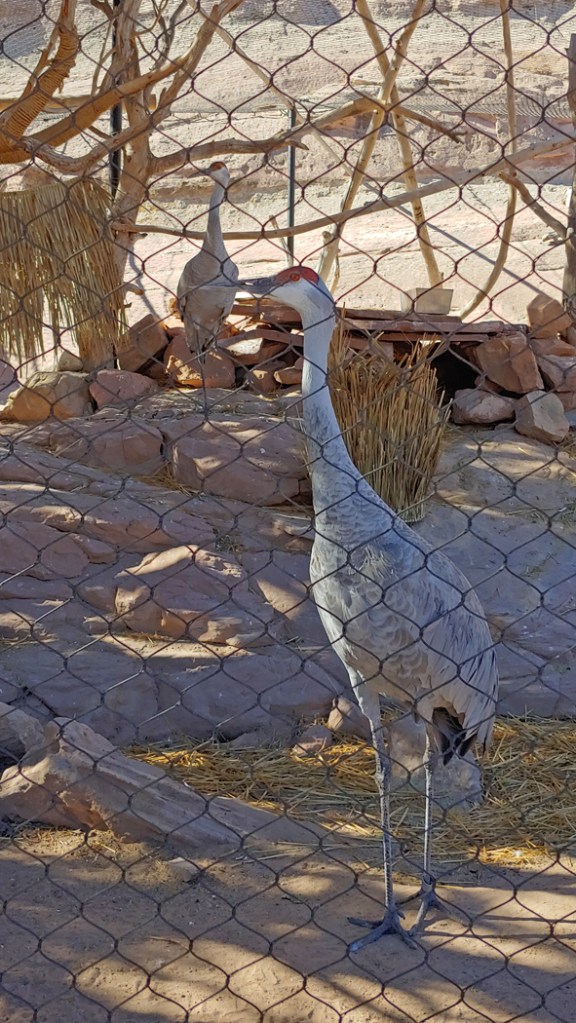
The 4,000 sq ft Eagle Aviary housed approximately 15 Golden Eagles and was immaculate!“Jack” the Coyote on the left – he didn’t recognize me necessarily by sight or sound but when the wind shifted and he caught my scent, he walked right over to where I was standing, sniffing the whole time.The zoo’s 30 year old resident Sandhill Crane is in front, the young male from us is in the back.
The opportunity to take a quick vacation south to Tucson and Phoenix was our first goal. We planned to explore the Saguaro National Park and a few other trails in these areas of AZ that we had not seen before. A secondary goal, based on our route through Kanab, UT, was to transport 18 pigeons to the Best Friends Animal Society.
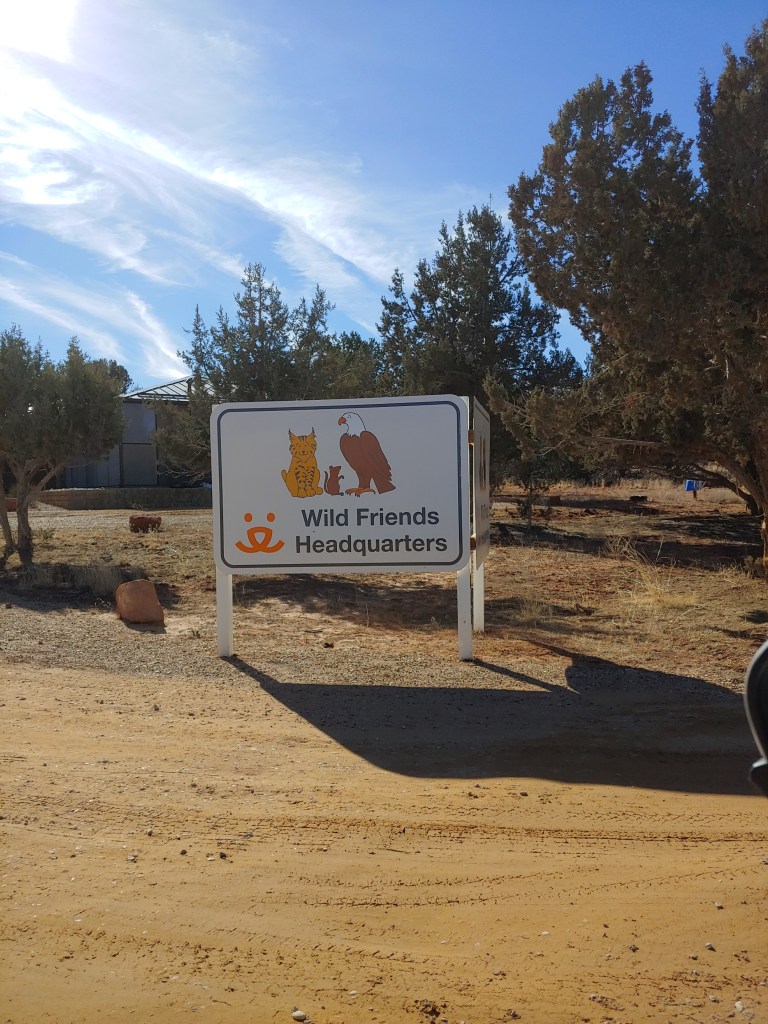
Best Friends Animal Society is a leading national animal welfare organization dedicated to ending the killing of dogs and cats in America’s shelters. To help Save Them All, Best Friends works with shelters, rescue groups and our members nationwide. The facility in Kanab, UT, also includes a separate group, “Wild Friends” that provides wildlife rehabilitation services to the Southern Utah area.
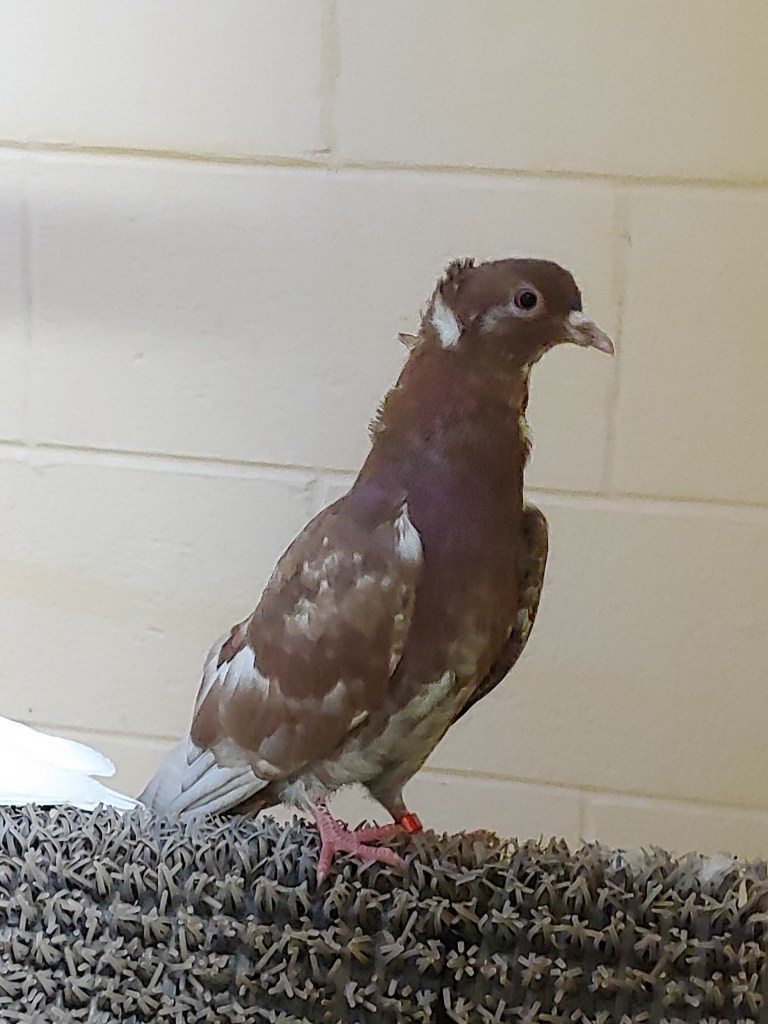
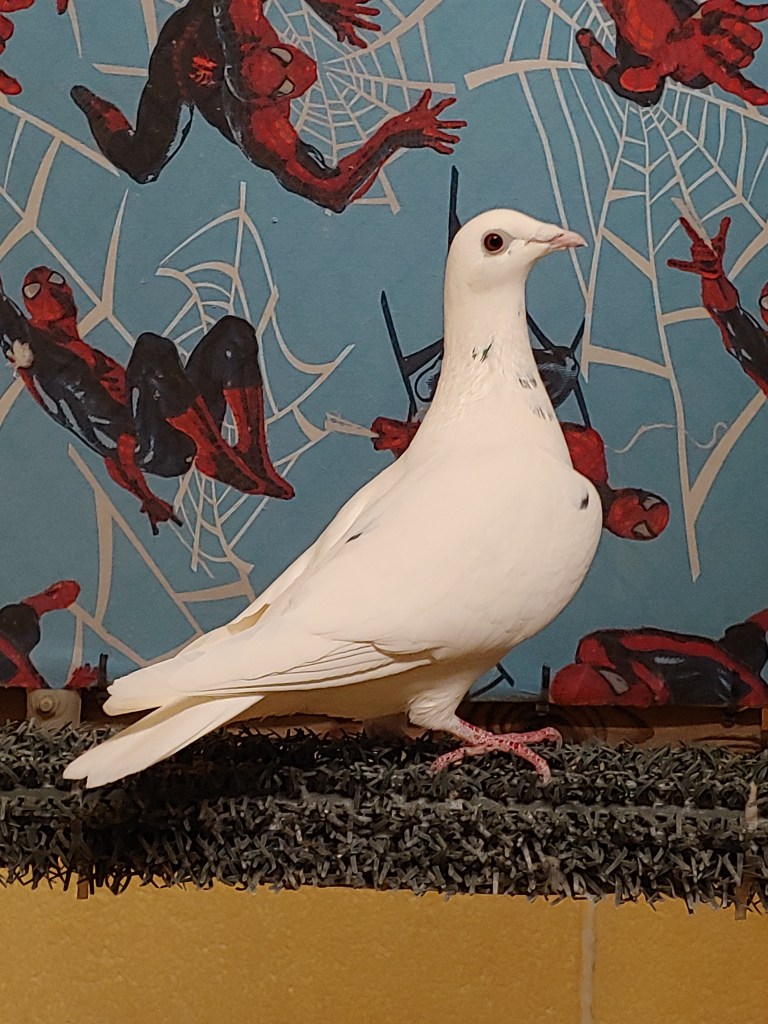
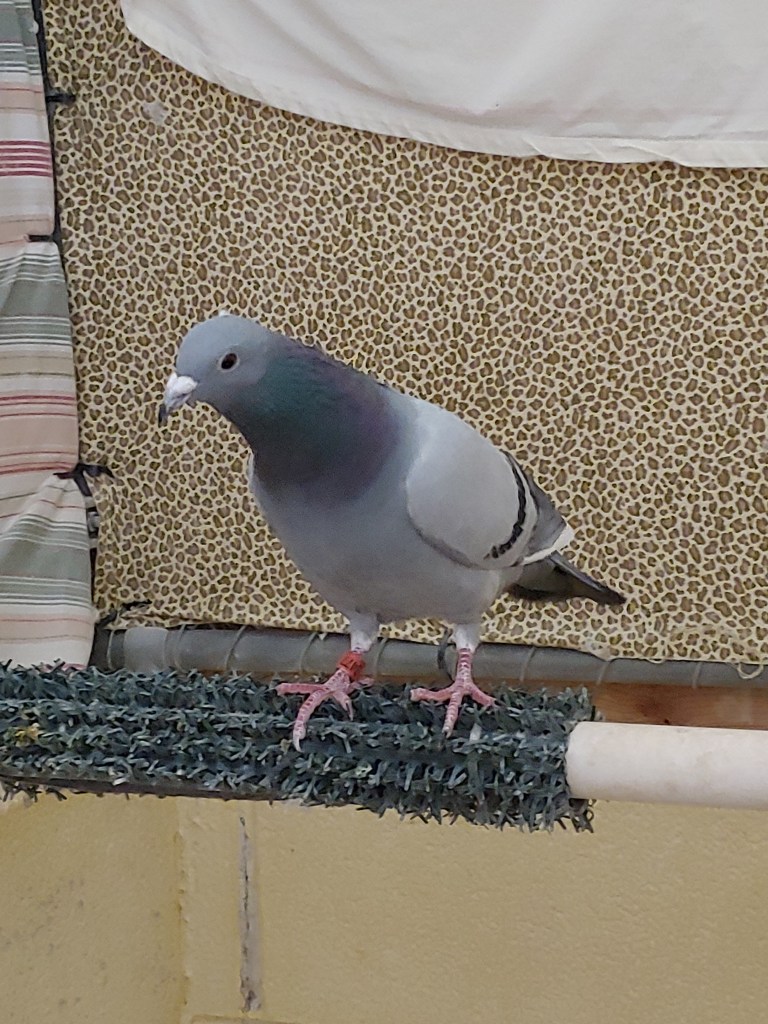
Enter the pigeons … The pigeons we treat at WRCNU fall into a category that is somewhat in between wild/feral and domestic – pigeons are not protected under the Federal Migratory Bird Treaty Act as are almost all other birds in the US – they are considered an introduced, non-native species. Although they are not protected, and we do not have to treat them, when they come in injured to WRCNU, the goal is to treat and rehabilitate them just like any other species. (We also get many banded and lost homing and racing pigeons but that is a story that would take up many more blog posts!) We had gotten to the point in the last month or two that caring for the pigeons we had was affecting our ability to care for the other animals that came through our door so I was able to work with the team at Best Friends to facilitate this transfer – they had more space to continue with the care needed for these birds at “Wild Friends.”
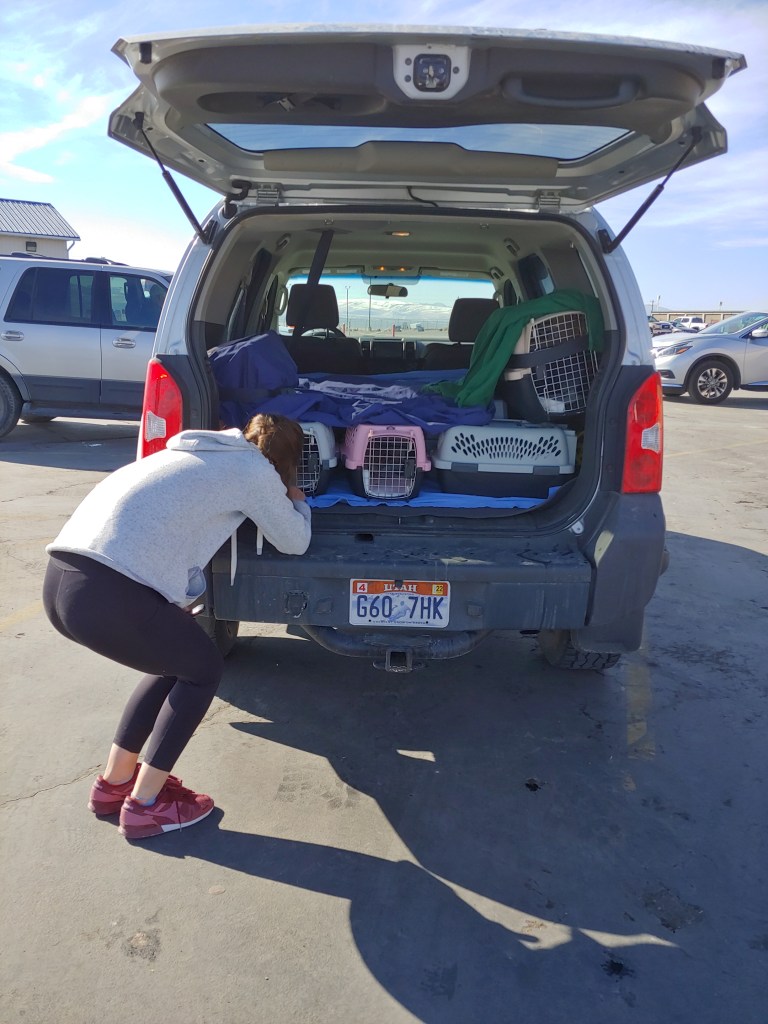
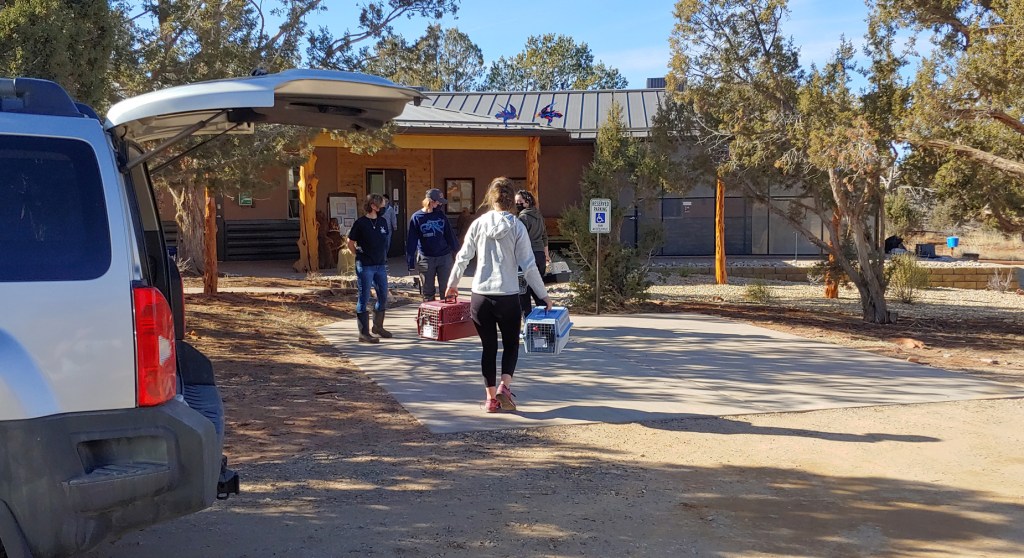
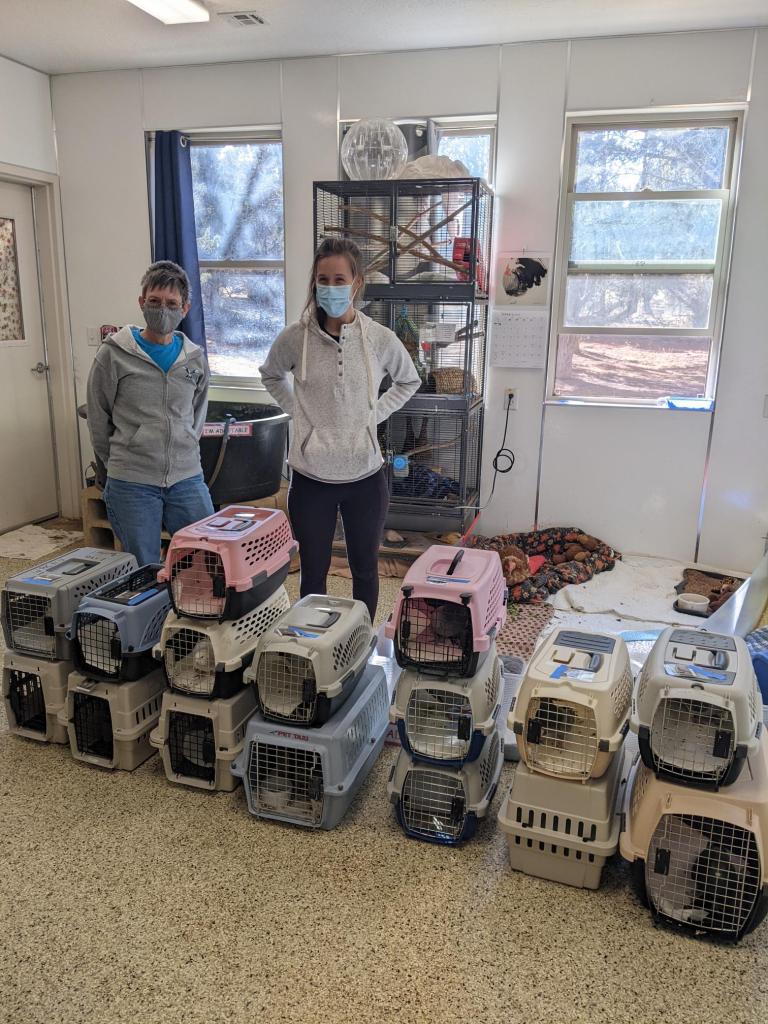
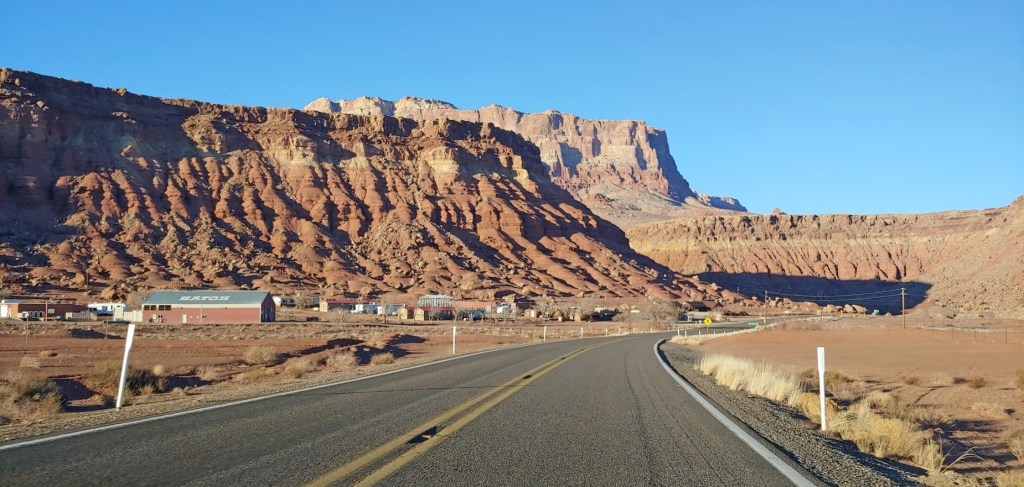
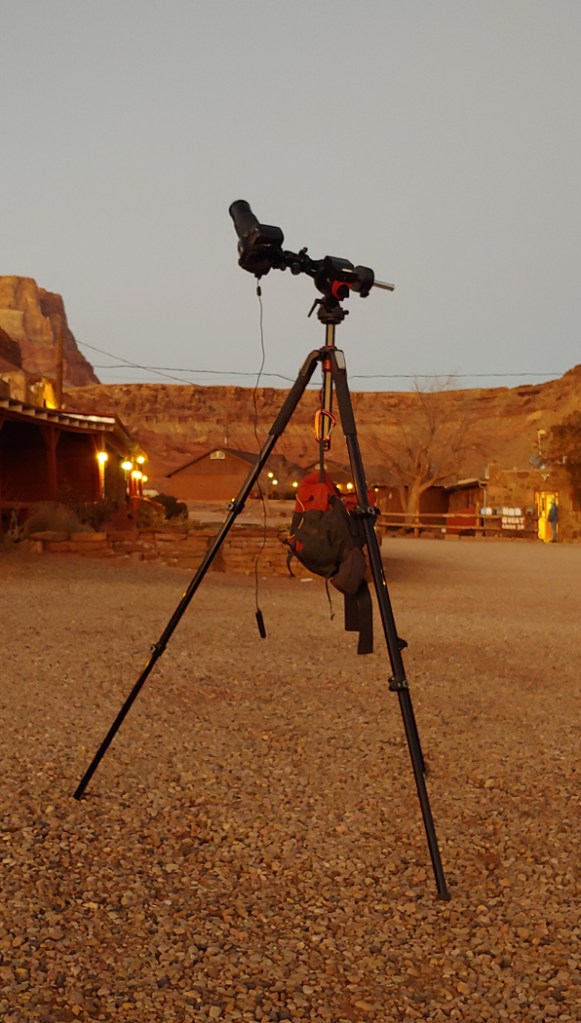
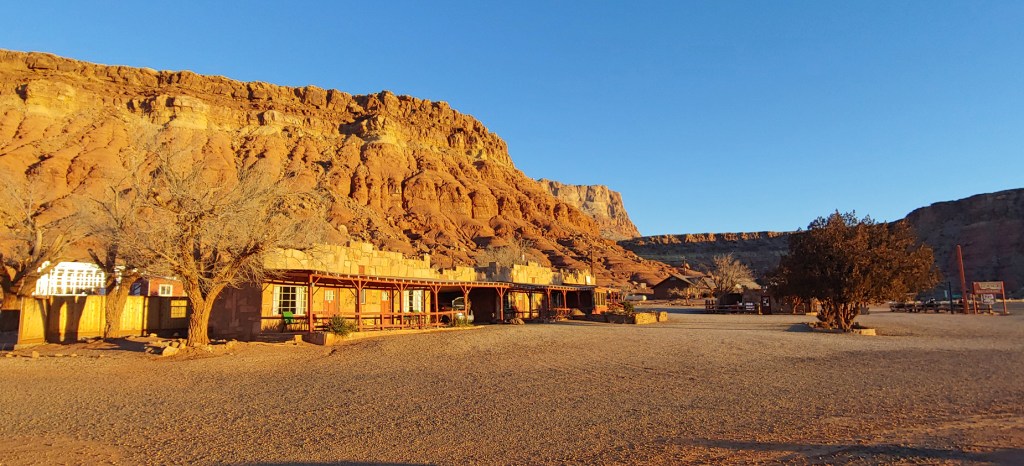
Initially we had a “plan” to take all 18 birds in our car but space constraints warranted that we have a second car follow us. We ended up with 6 birds and a fellow volunteer, Shelby, ended up with 12. She dropped the birds off after our 5+ hour journey south and then drove another 5 hours back up to northern Utah, making for a very long day! Joel and I continued about another 2 hours south where we stopped for the night at Cliff Dweller’s Lodge in Lee’s Ferry, AZ.
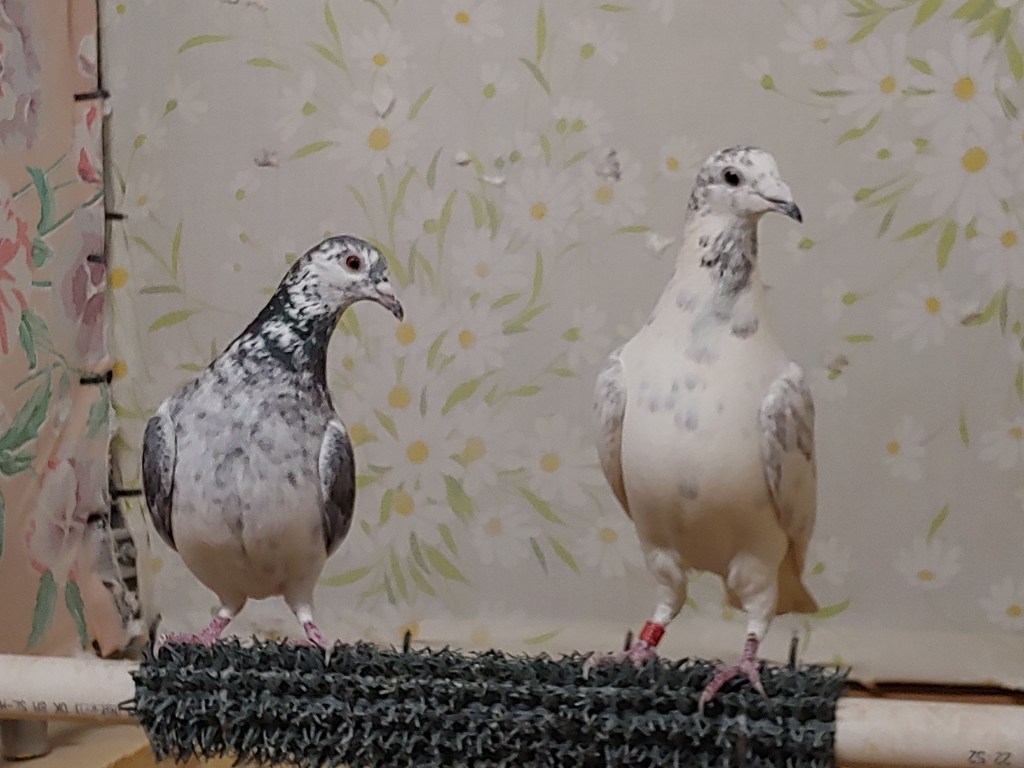
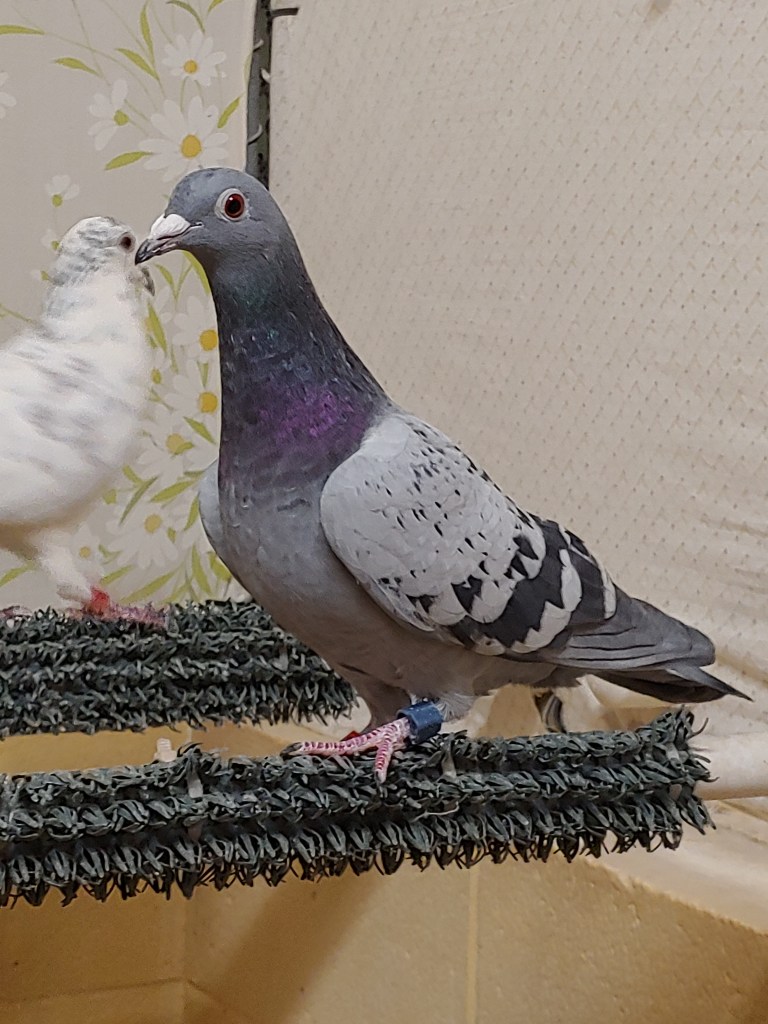
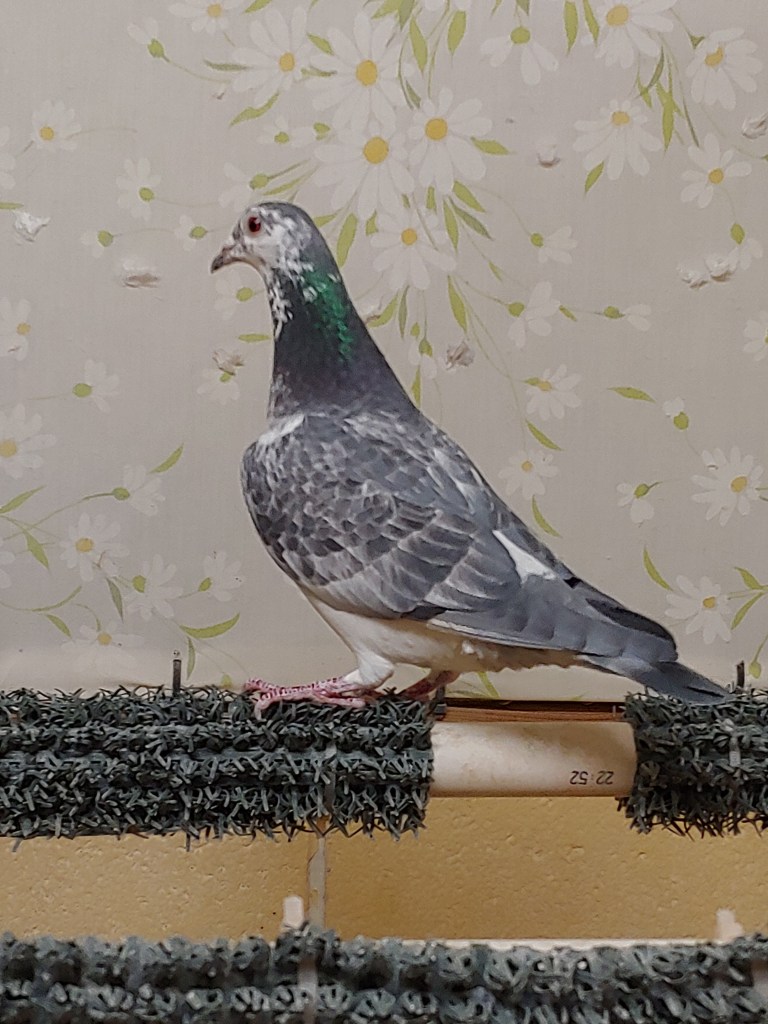
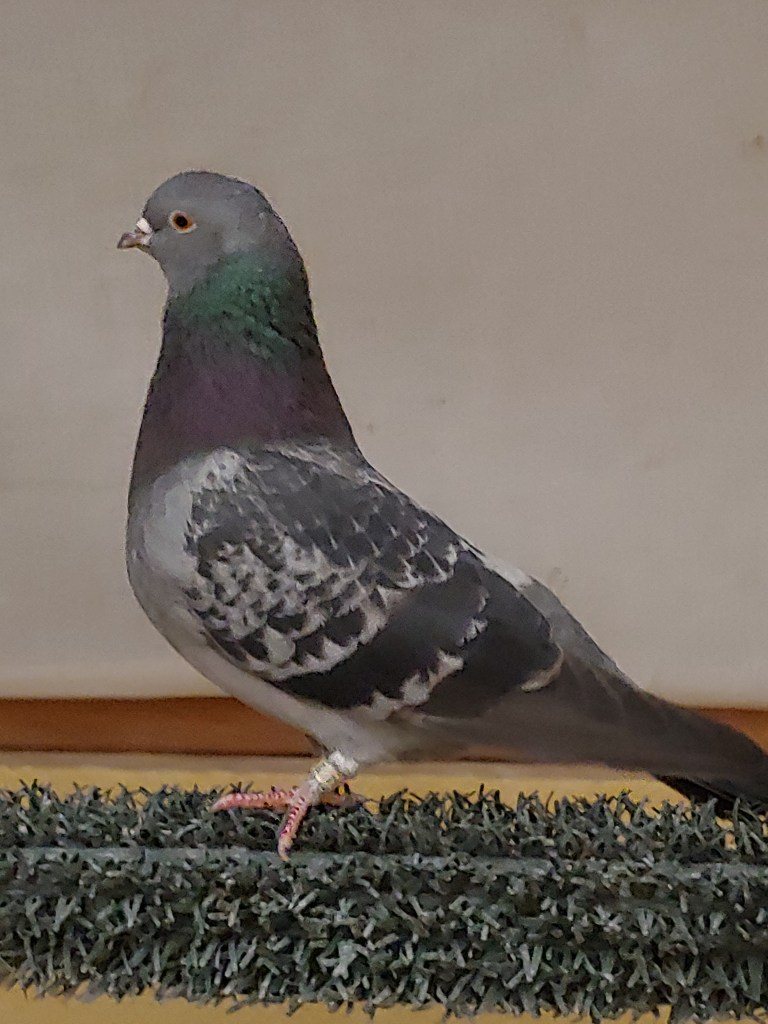
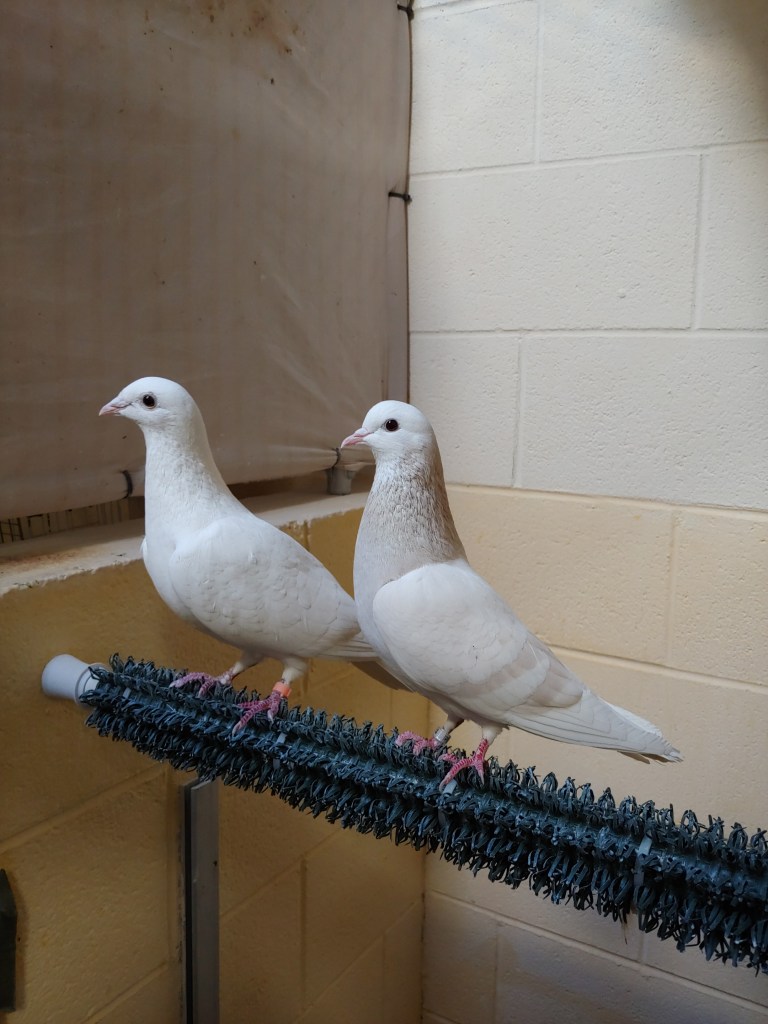
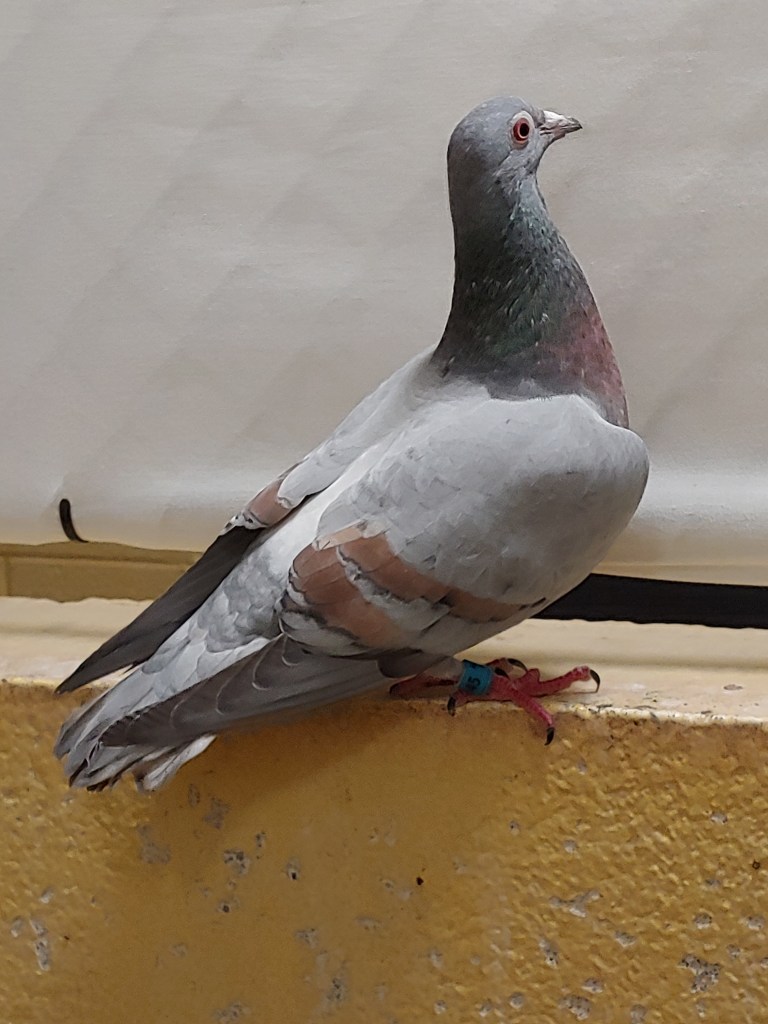
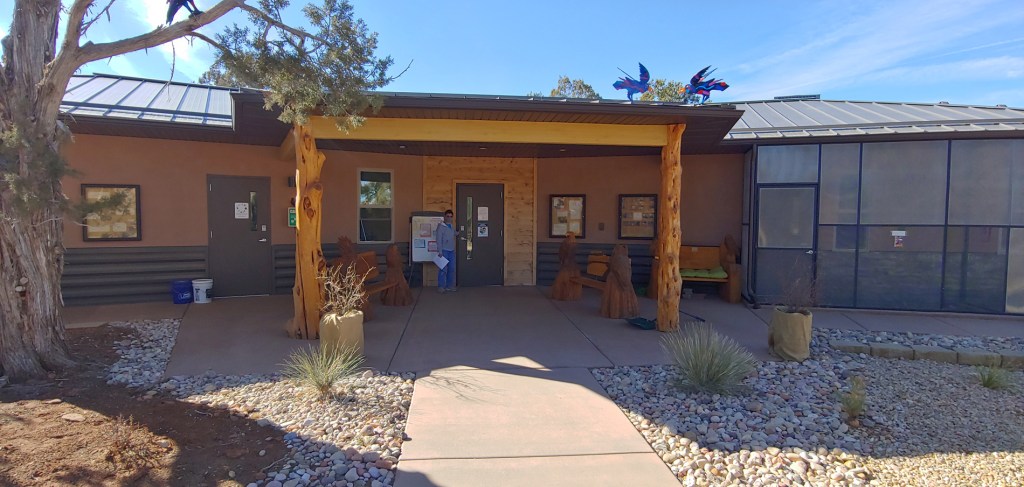
Many of the pigeons had very unique colors and had both identification bands and bands with timing chips in them. And some, well they were “just” pigeons!Shelby checking on her charges.Best Friends “Wild Friends” administration building.Me and Shelby with the pigeons at their new home. Approaching Lee’s Ferry with the Vermillion Cliffs behind us. So happy to see the blue sky and clean air!Joel’s set up for night photography with his camera and “star tracker.” Unfortunately the cliffs obscured the North Star, which is needed to “zero in” and calibrate the tracker so the “shoot” never happened …Cliff Dweller’s Lodge – we were the only guests for the evening so it was pretty quiet!
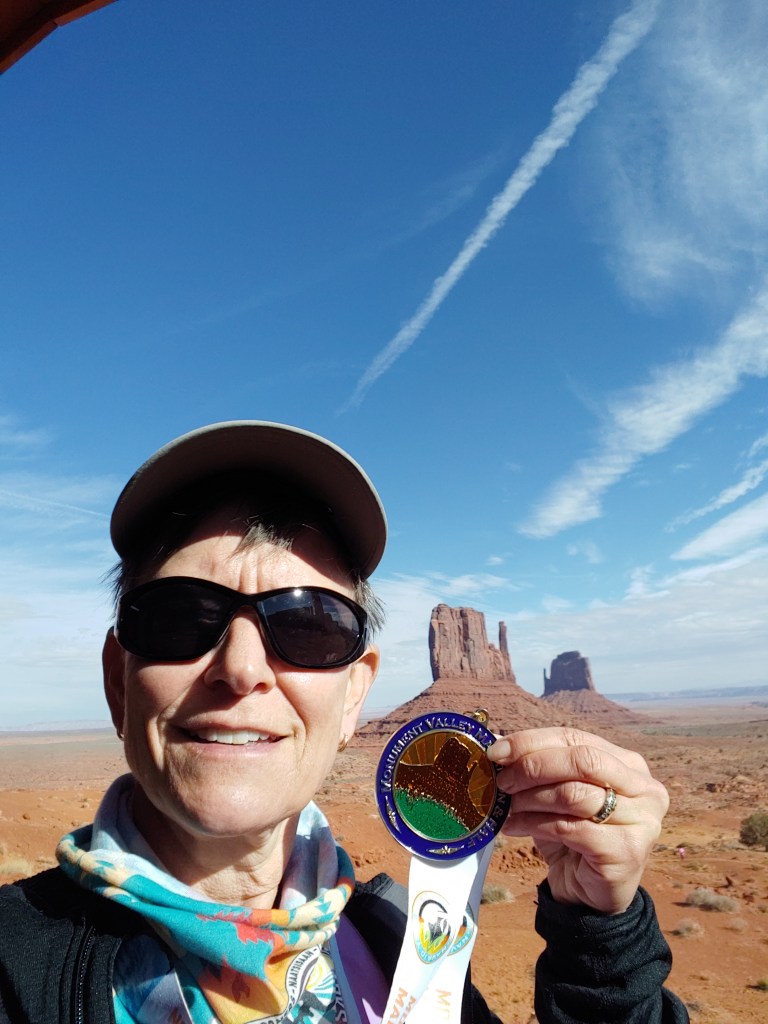
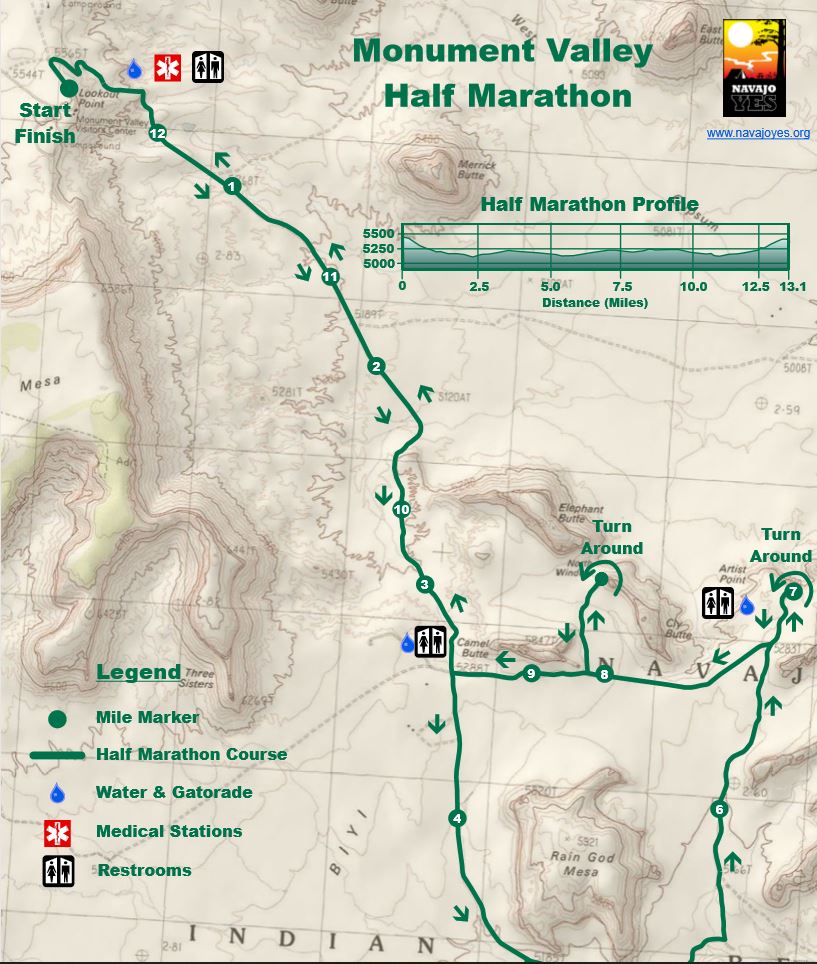
Skipped it last year as it was held only as a “virtual” event. This year finished 00:01:08 faster than 2 years ago. Beautiful site and it was nice to be able to venture out. Only about 1/3 of the “normal” entries, hopefully they can get back up to capacity next year!
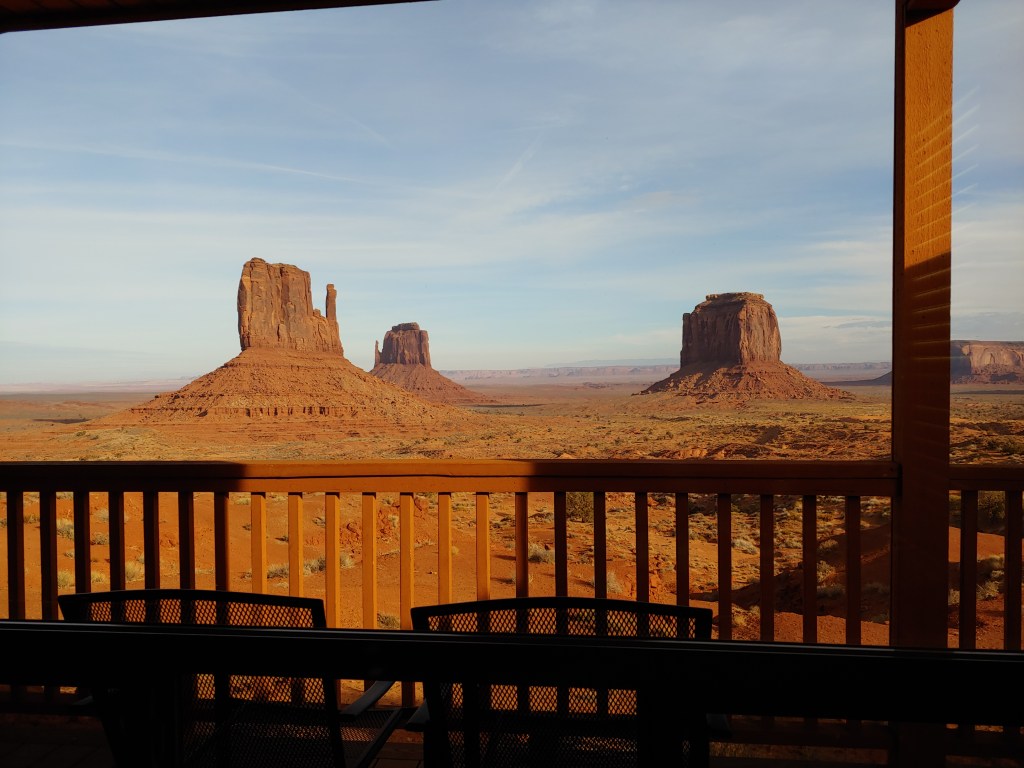
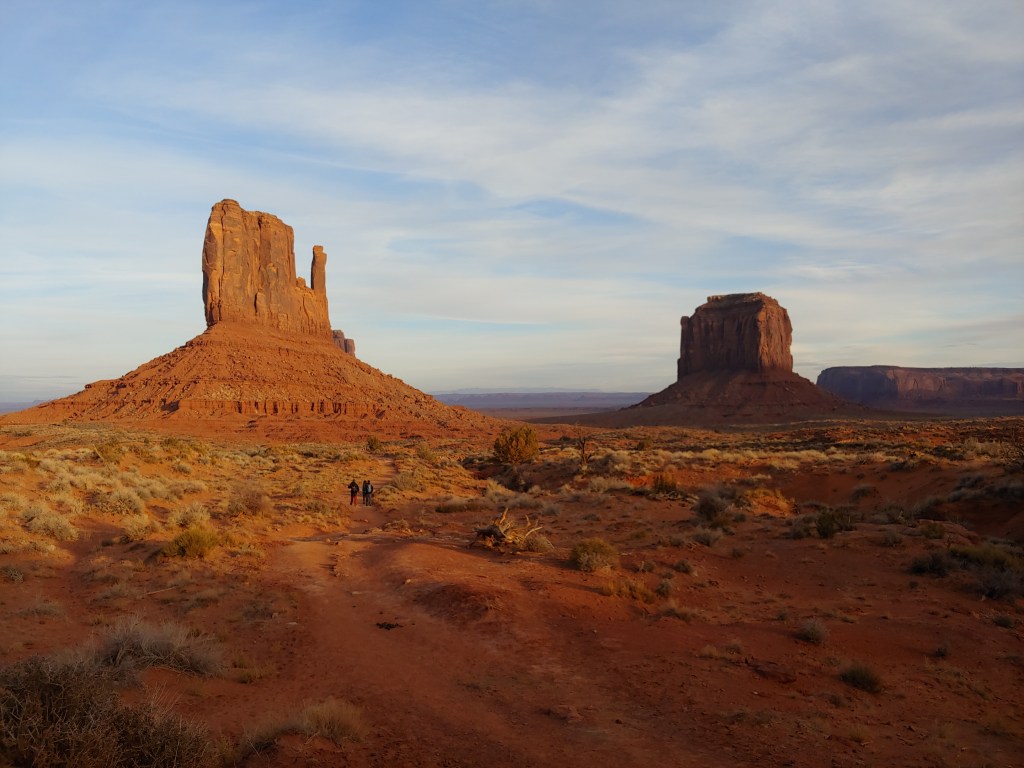
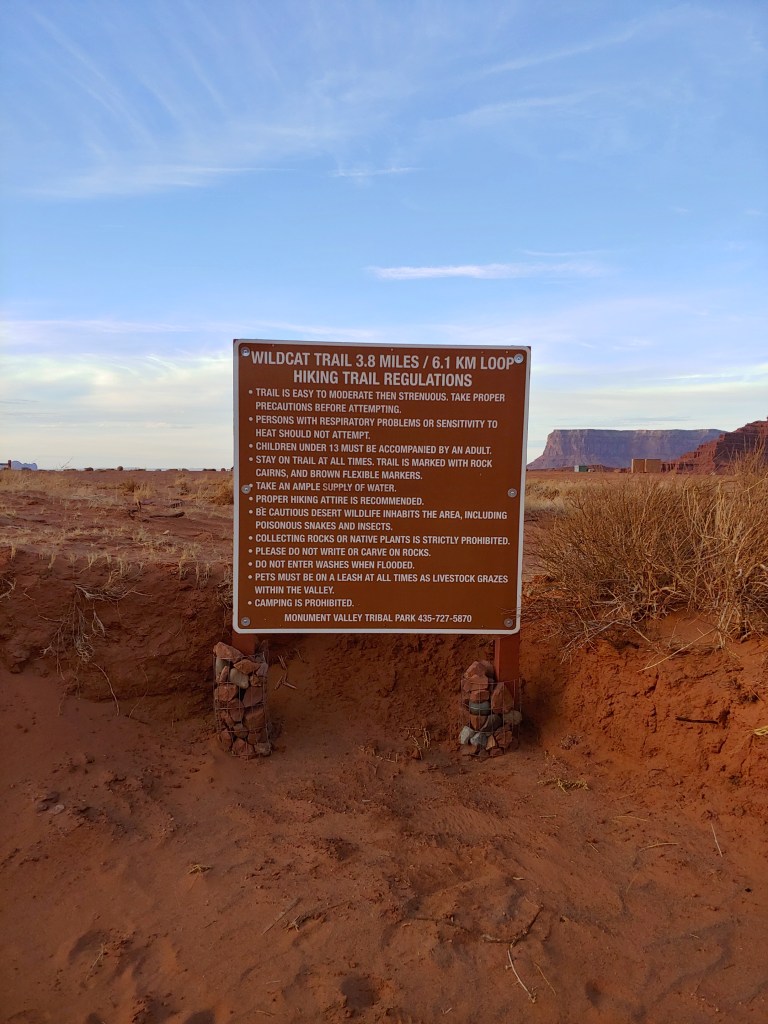
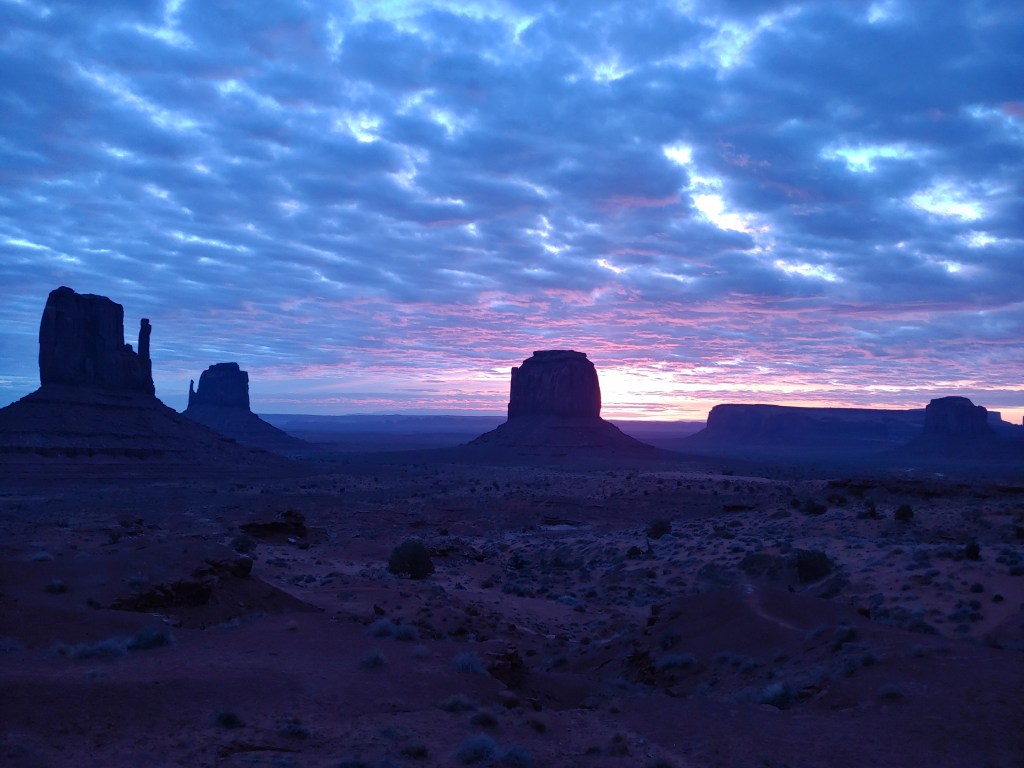
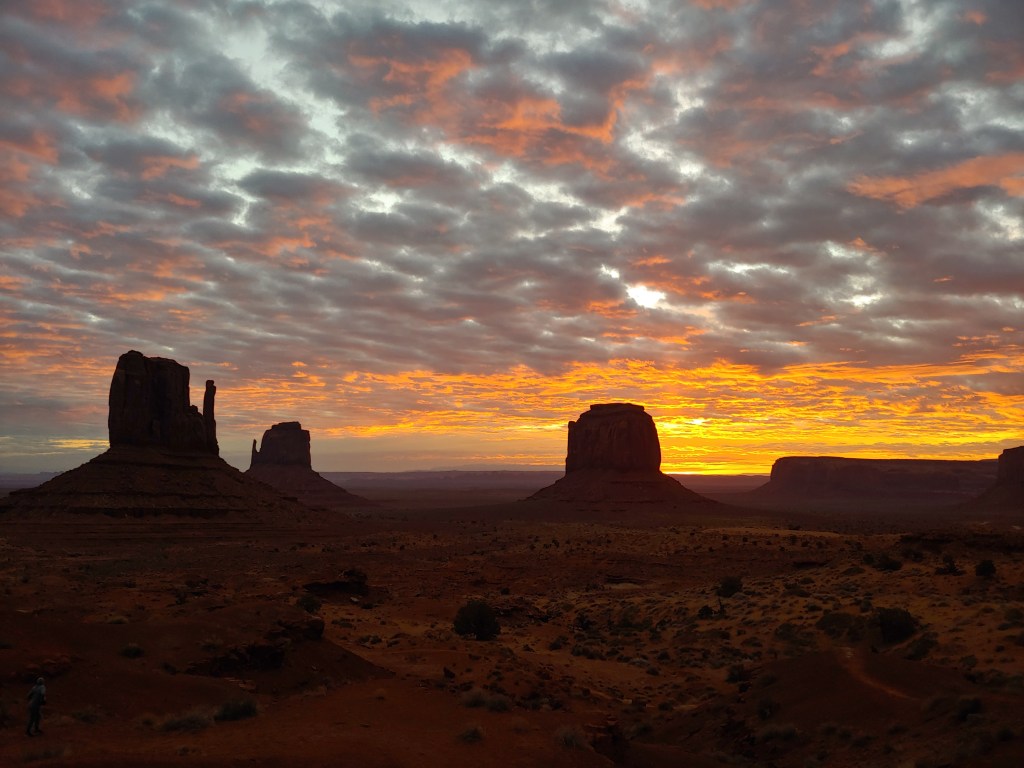
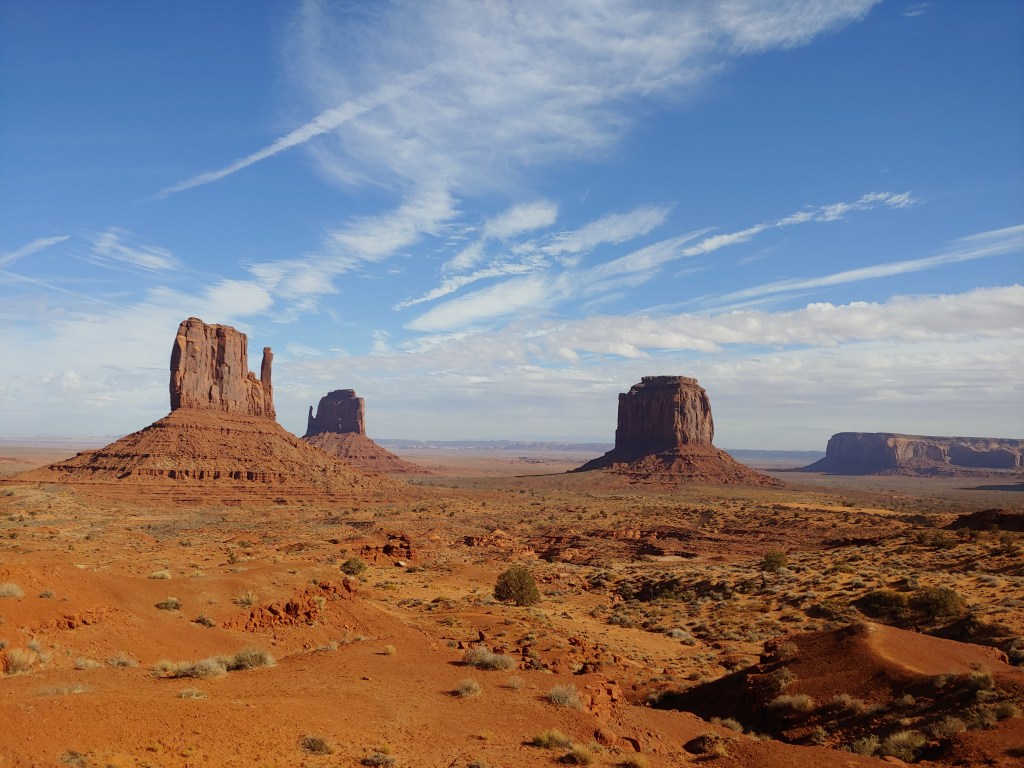
View from the cabin.Took a little hike on the Wildcat Trail – this is the only maintained hiking trail in the park about 4 miles out and around Mitten and Merrick Buttes.Stunning sunrisePhoto taken 2 minutes later!
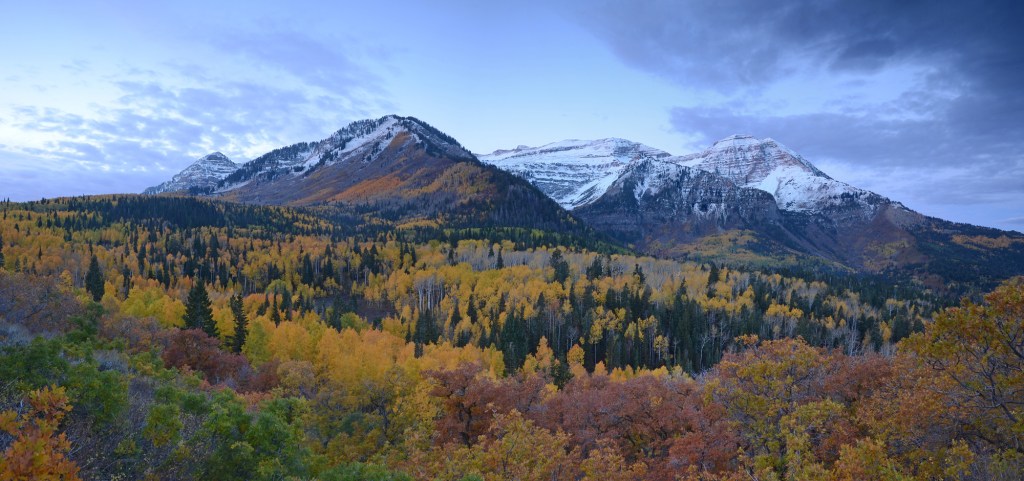
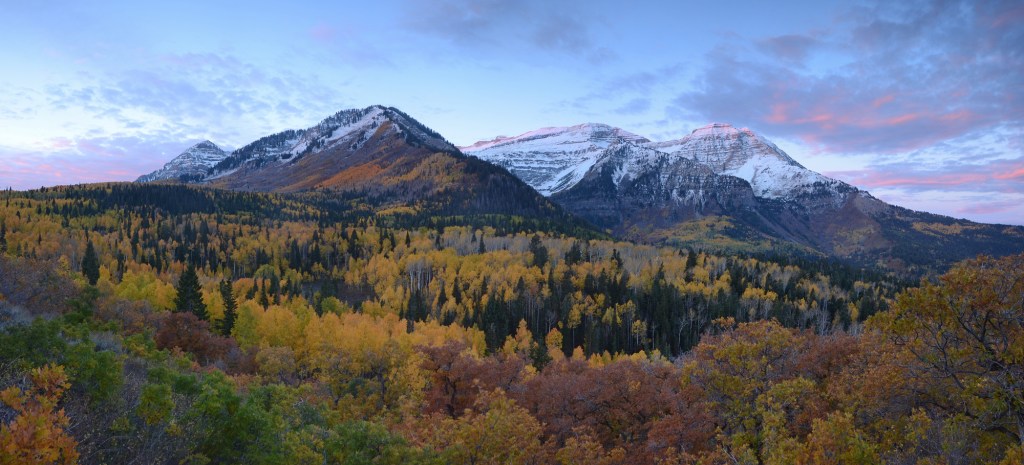
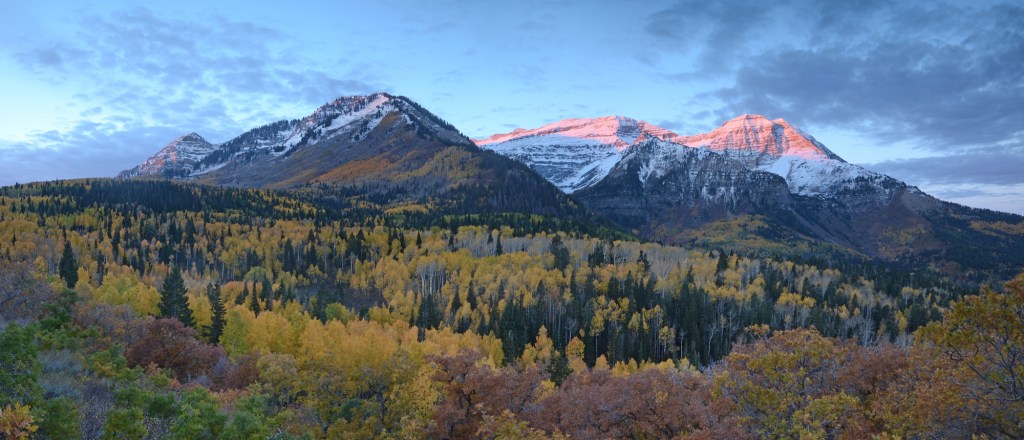
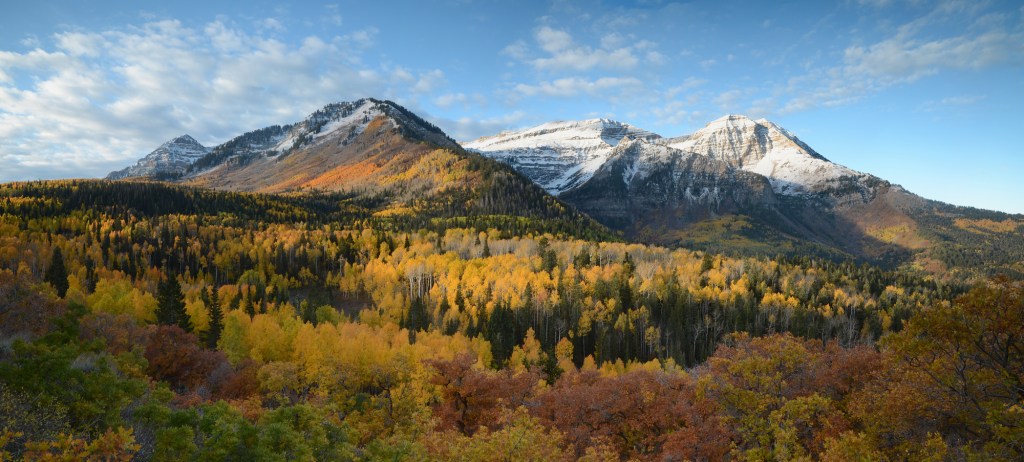
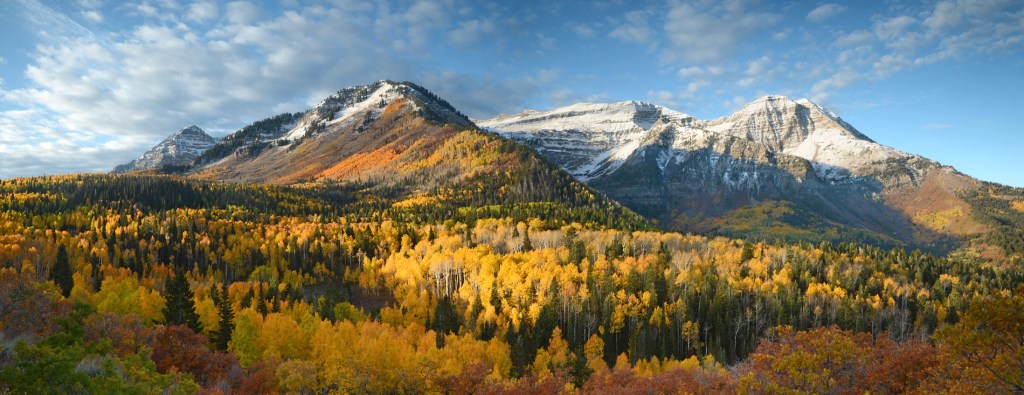
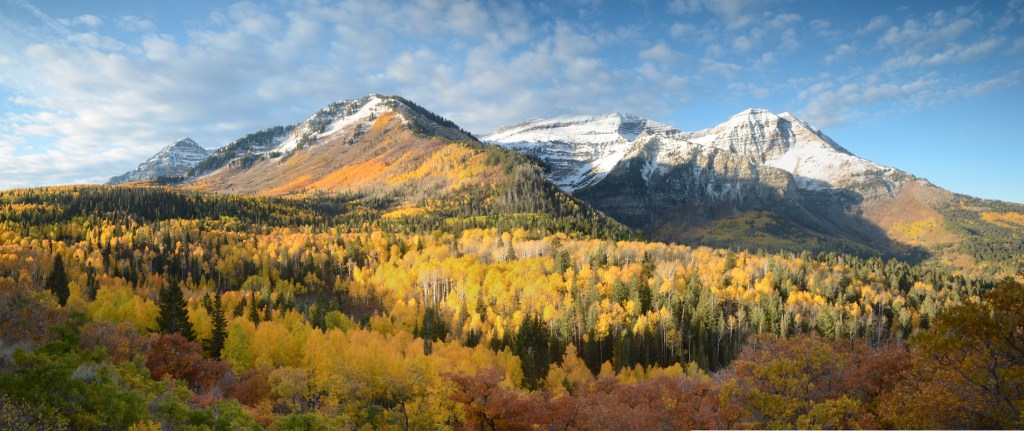
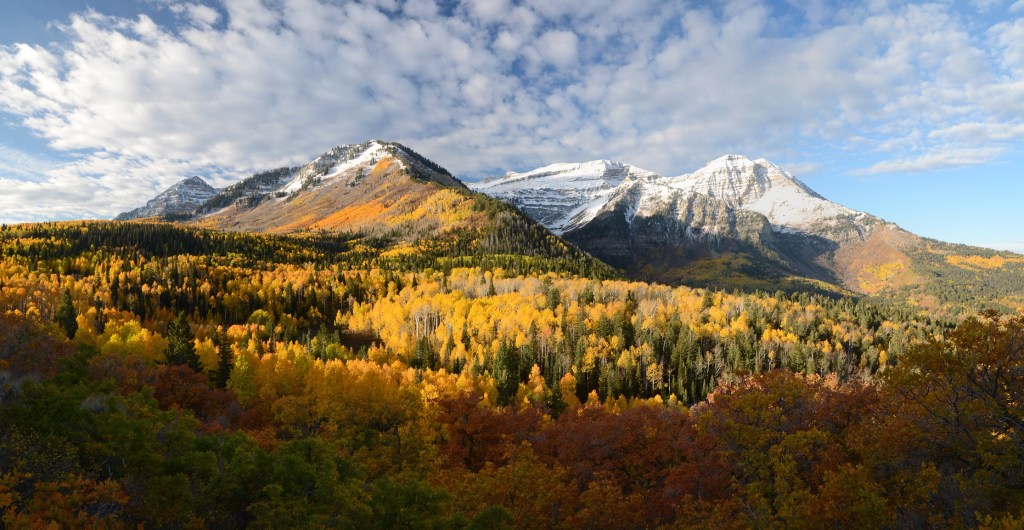
With the promising combination of snow, sunrise, a few clouds and Fall colors, Joel and his friend Kevin drove about 90 miles south of our house to Mt. Timpanogos. The photos below represent a very small segment of those that he took. They were taken over a period of about 1 1/2 hours as the two of them snapped away waiting for the sun to rise.
Joel remarked that in some of them the colors were so vibrant that he actually had to mute them a little in Photoshop because they looked almost fake! ENJOY!
For many years now I have gotten texts from Dad in the morning after he has read the newspaper. He will send me temperature information about Peter Sinks if it was the lowest US temperature the previous day. Sort of a running joke …
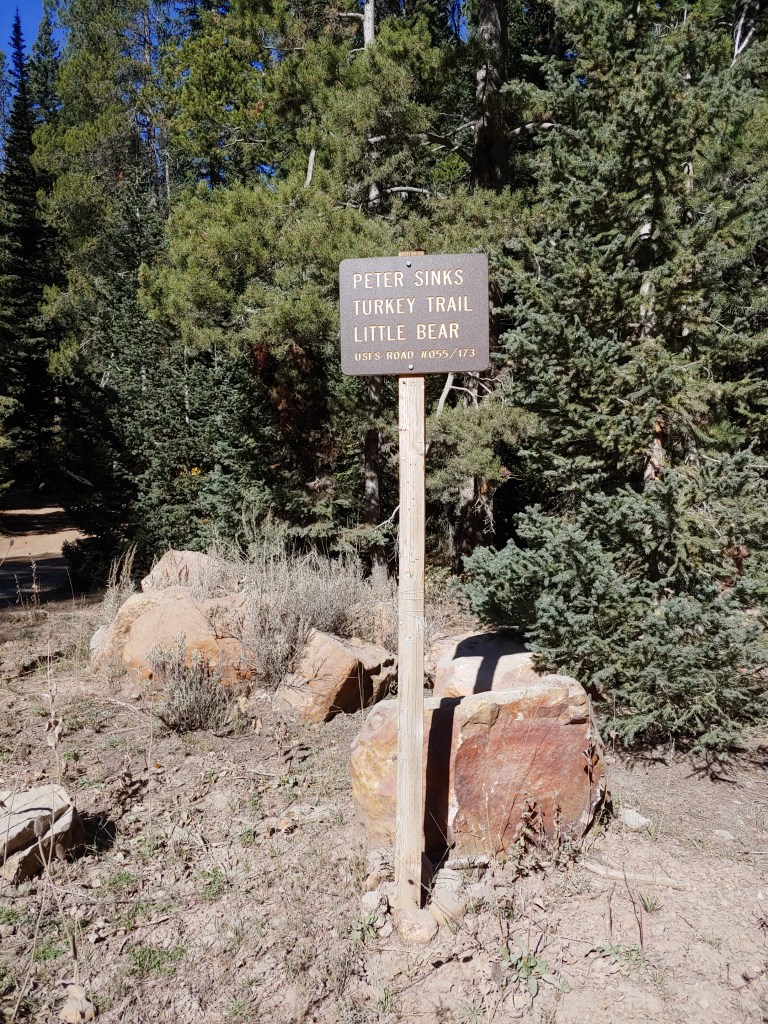
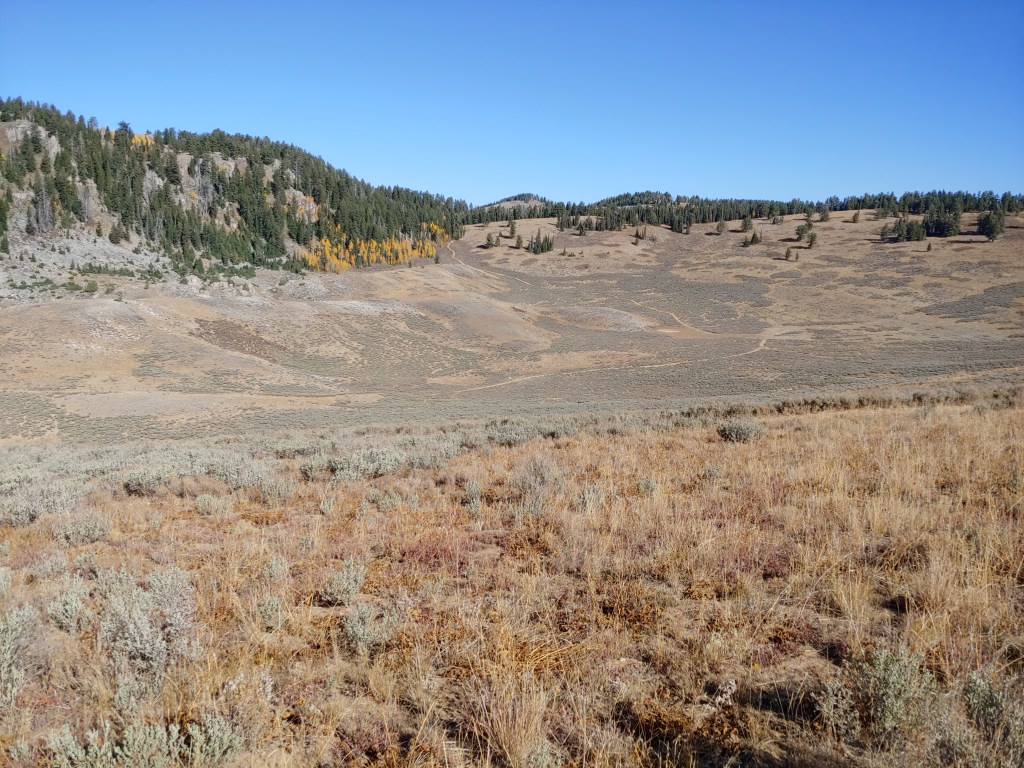
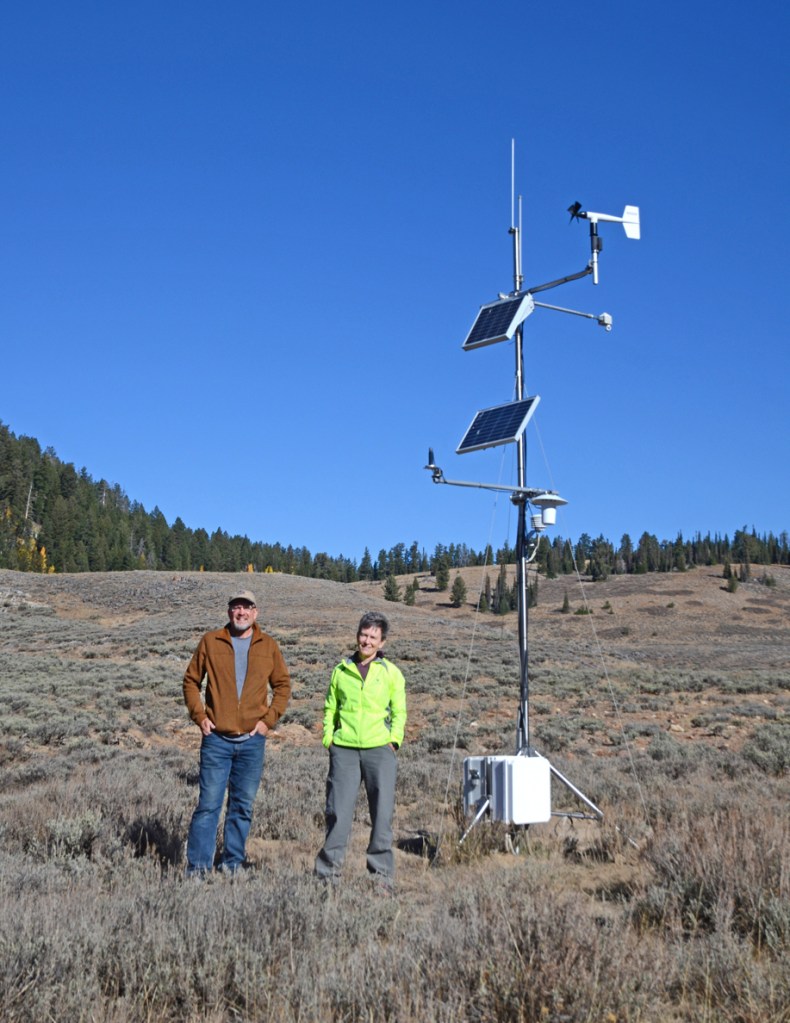
Let me explain … Peter Sinks (elevation 8,164 feet) is a natural limestone sinkhole approximately one-half mile wide in diameter located in the Bear River Mountains, east of Logan, Utah. It is one of the coldest spots in the lower 48 – on February 1,1985, a temperature of −69.3 °F was recorded there, the lowest recorded temperature in Utah, and the second-coldest temperature ever recorded in the contiguous United States. Joel and I decided to head up there last Sunday to see if we could find this Utah Oddity.
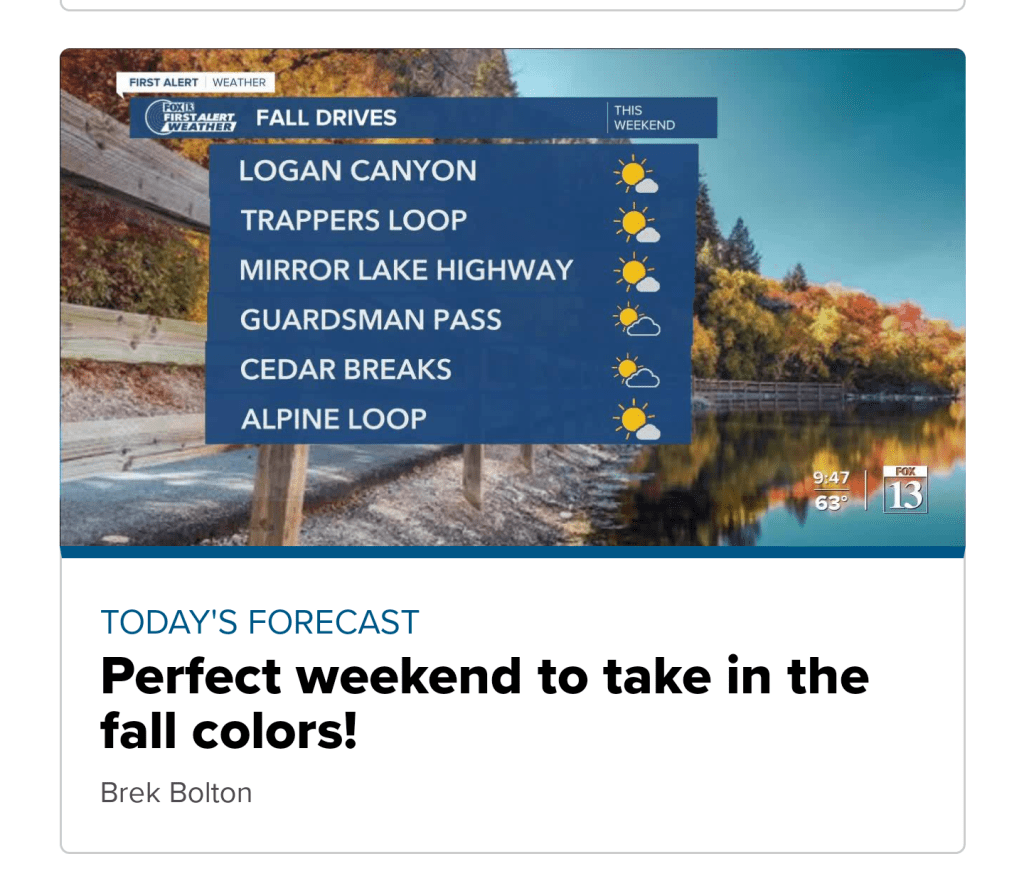
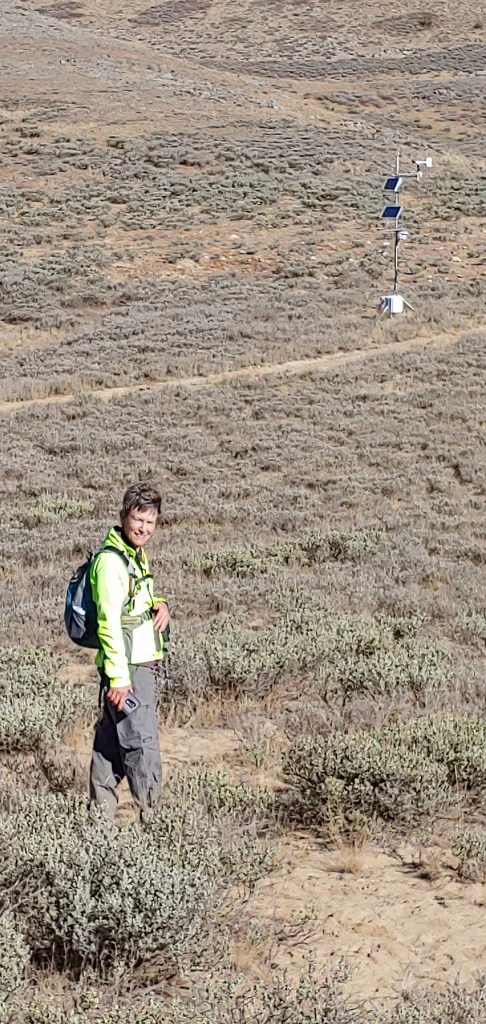
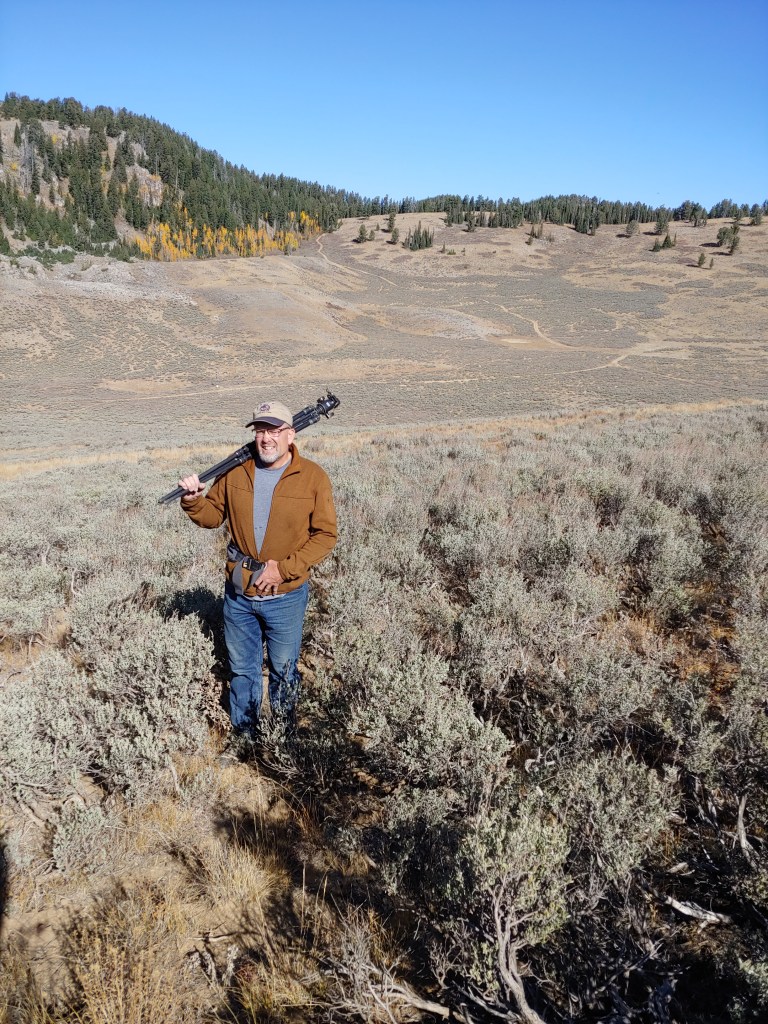
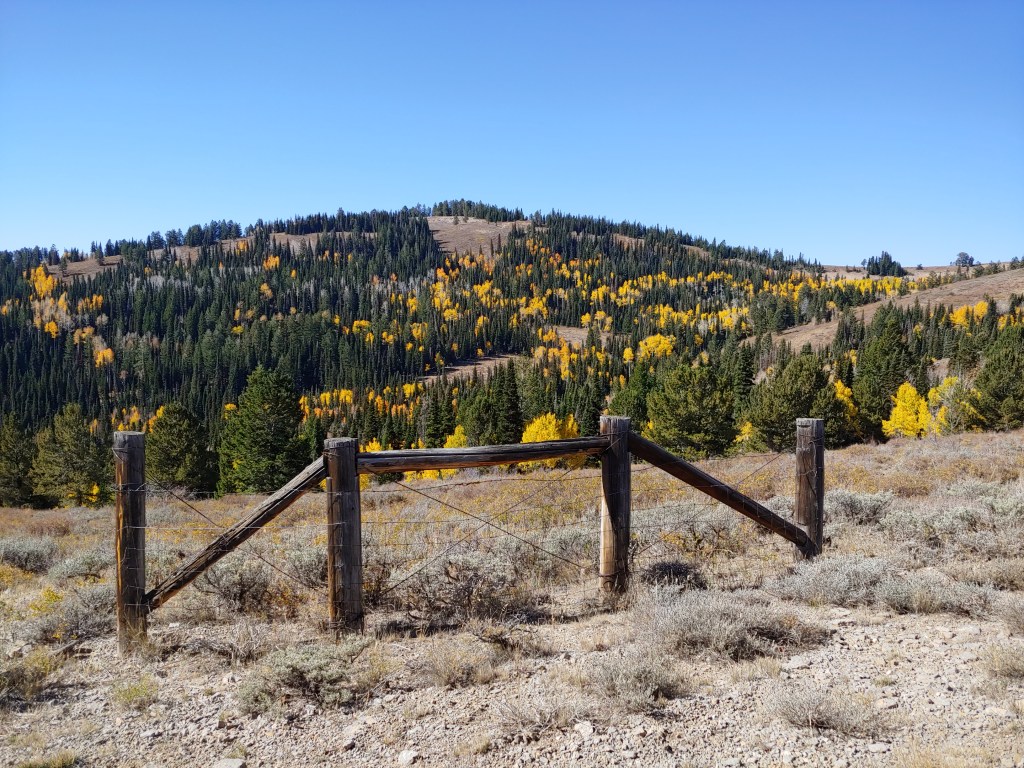
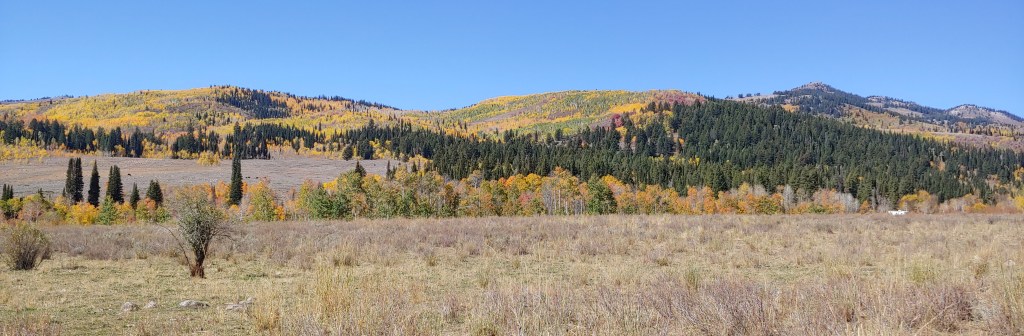
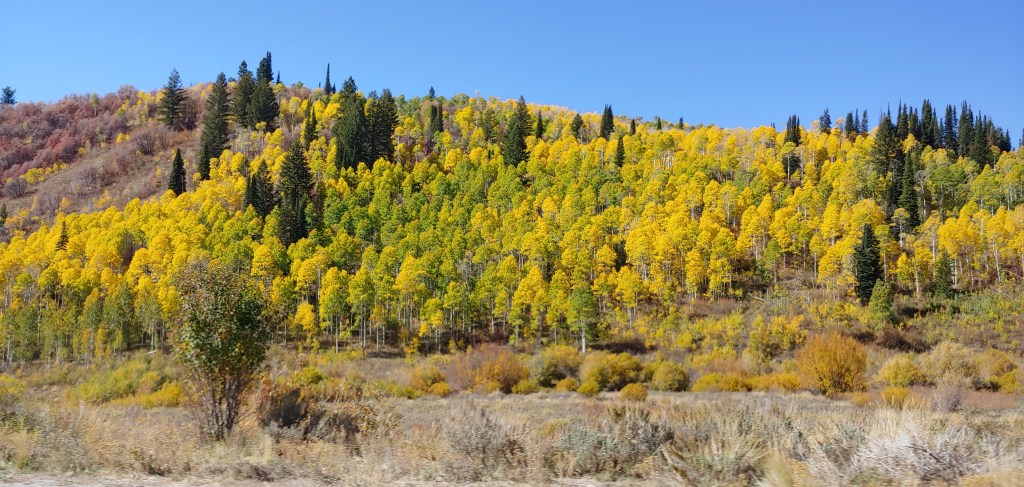
It ended up being about a 2 hour drive and then about a 1.5 mile hike into the weather station. We left early in the morning and saw very few people but the canyon had been featured on the news as one of the Fall Color “Hotspots” the day before and it was wall to wall traffic for about 30 miles until we got out of the canyon on the way home.
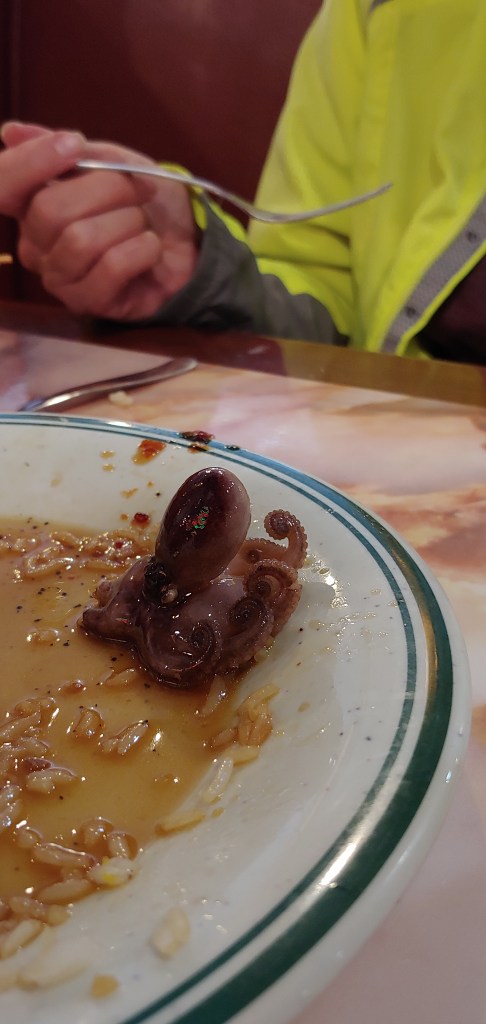
We tried stopping at our favorite Mexican restaurant but they were closed so we went to a Chinese Buffet next door. For whatever reason, Joel thought the giant steaming pan of baby octopus looked good. They all looked so oddly similar that I wonder if they were actually molded out of something (tire rubber) and were fake like that fake crab they sell? HMMM He threw one on my plate but NO THANKS!
The famous Peter Sinks – the weather station is directly below the yellow band of trees on the dirt road you can see that runs through the middle of the photo.Excitement mounts as I get closer to the weather station.Vibrant yellows and oranges at the top of the canyon (Quaking Aspens) while at the bottom there were a lot more reds (Maples and Sumac.)No clue why Joel thought this would taste good …
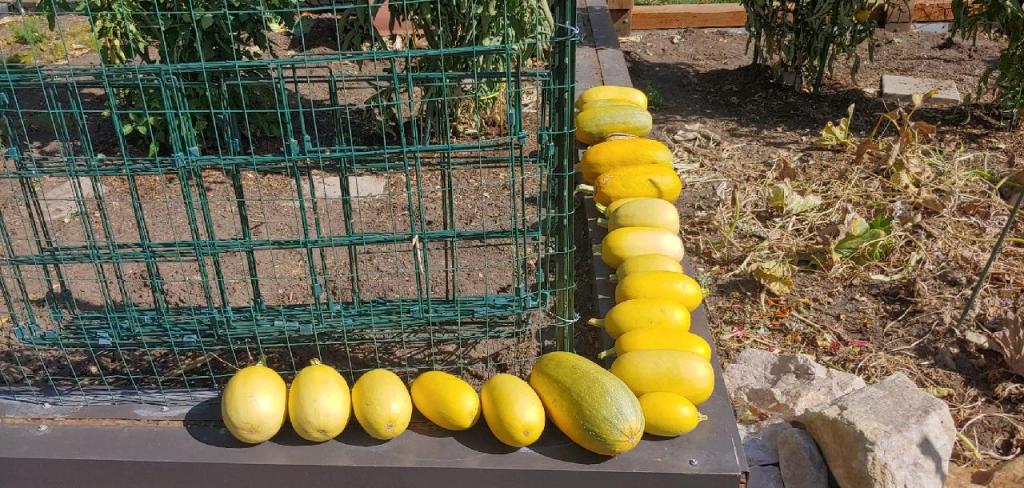
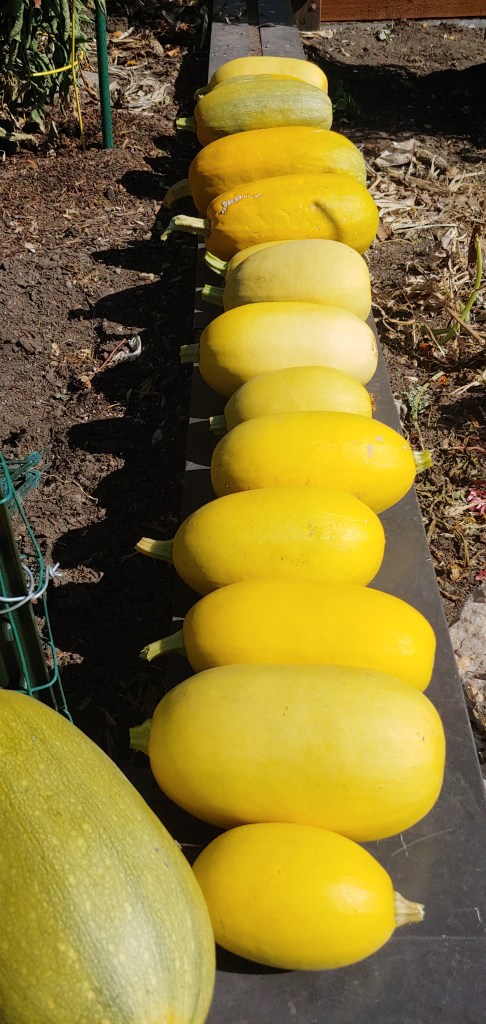
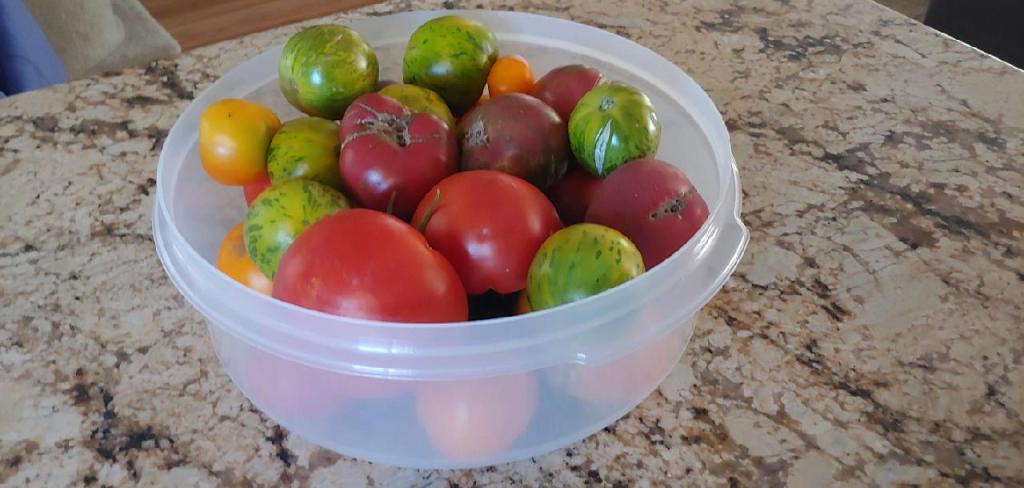
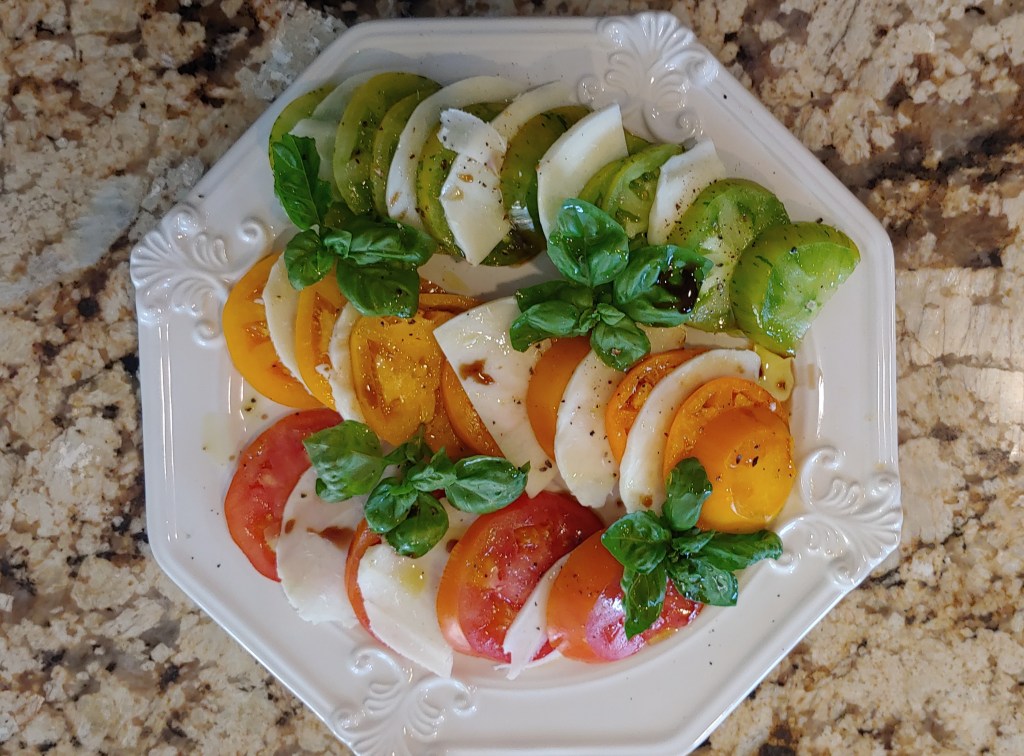
Probably the final post on the garden this year as we have picked the last of the tomatoes and squash. We had an overabundance of spaghetti squash this year but Joel was able to track down a local Food Bank that took about half of what we had left.
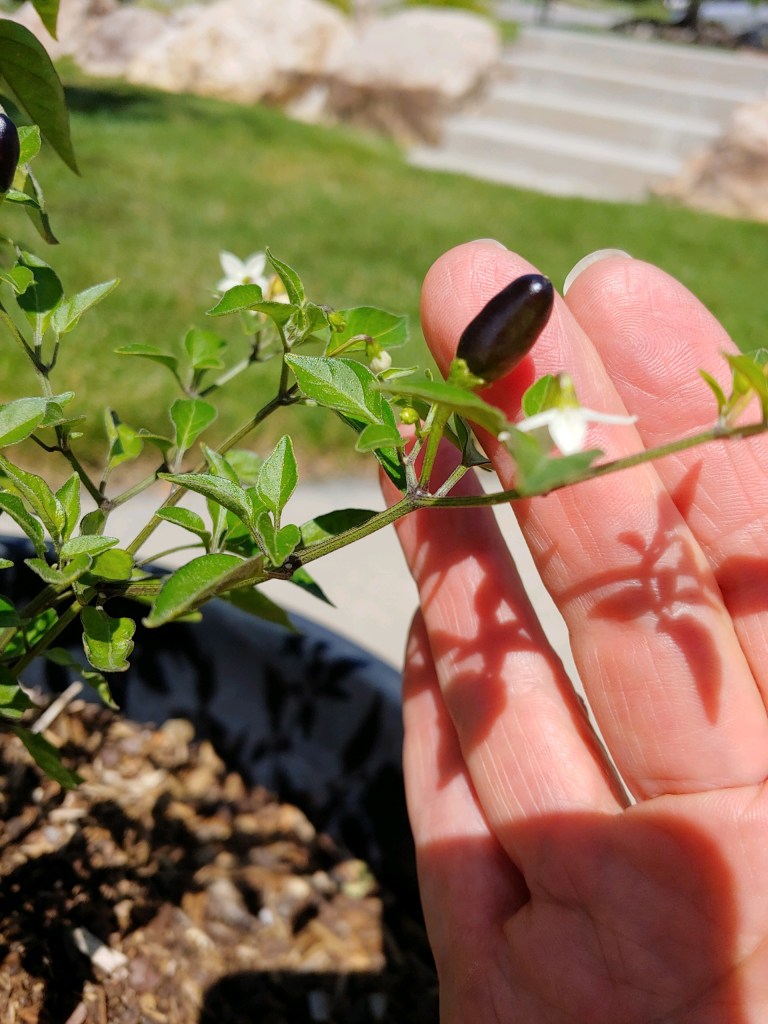
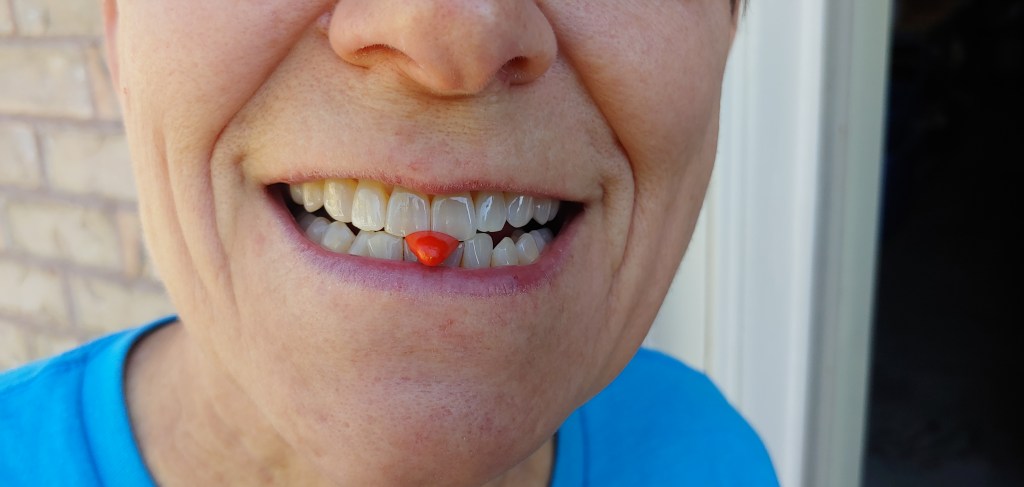
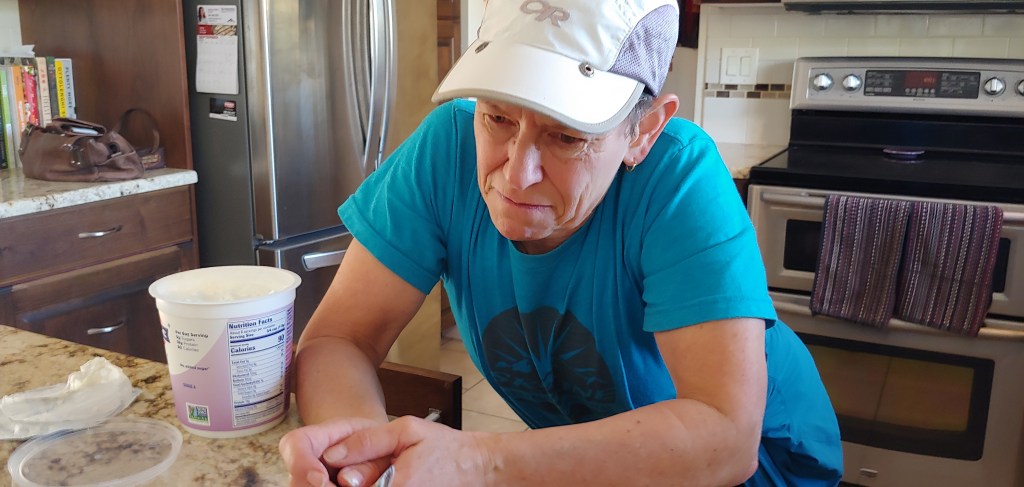
Have a very small “Boonie” Pepper plant from a friend at WRCNU – weird plant- must have been the runt of the litter because the plant is very small and the peppers are just now turning red. Apparently they are sort of a rare seed commodity and come from Guam. Joel ate one so I had to as well. First I started hiccupping/burping at the same time and then at about 2 minutes I felt like I was going to throw up. NICE
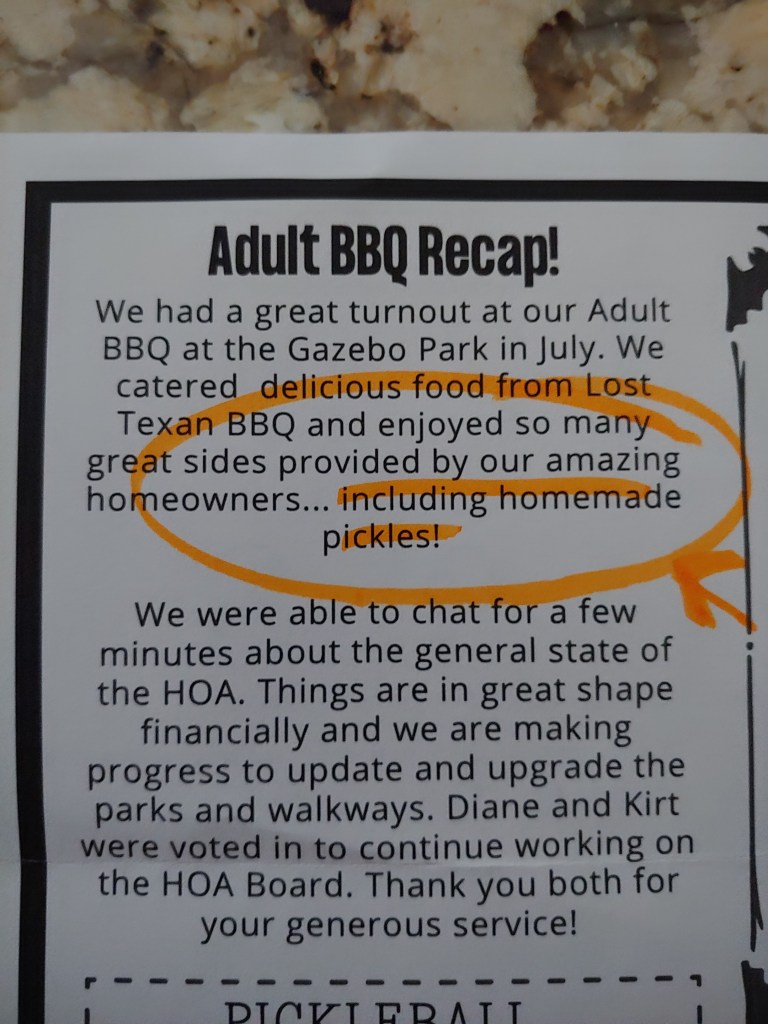
Joel got called out in the Homeowner’s Association newsletter for the pickles he brought to the BBQ!
Magpies up on the roof!“Boonie” Pepper – not quite readySuch a tiny little thing … how hot can it be?Thinking about the poor decision to eat the pepper on an empty stomach. Yogurt really didn’t seen to help!

 Joel and Alison's Excellent Adventures