One of the additional things that Alpine Ascents did a great job with was ensuring that all climbers were well acclimated. Serious consequences are known to happen if you rush up to altitude too quickly. We were actually eight days into our schedule before we attempted one of the volcanoes.
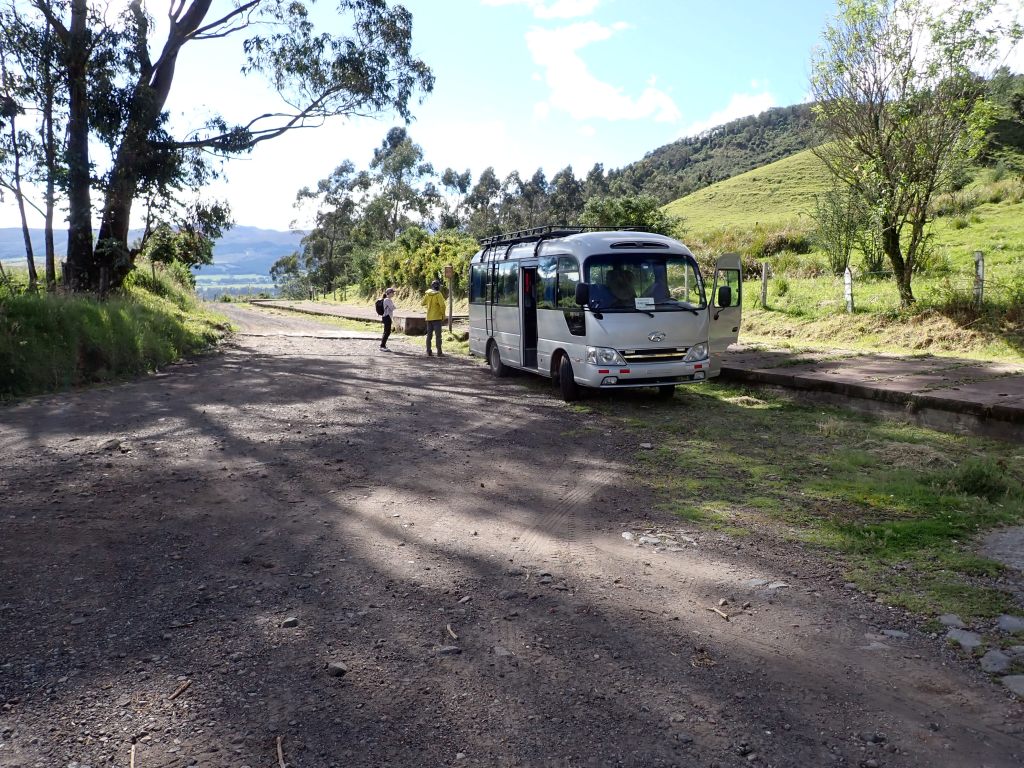
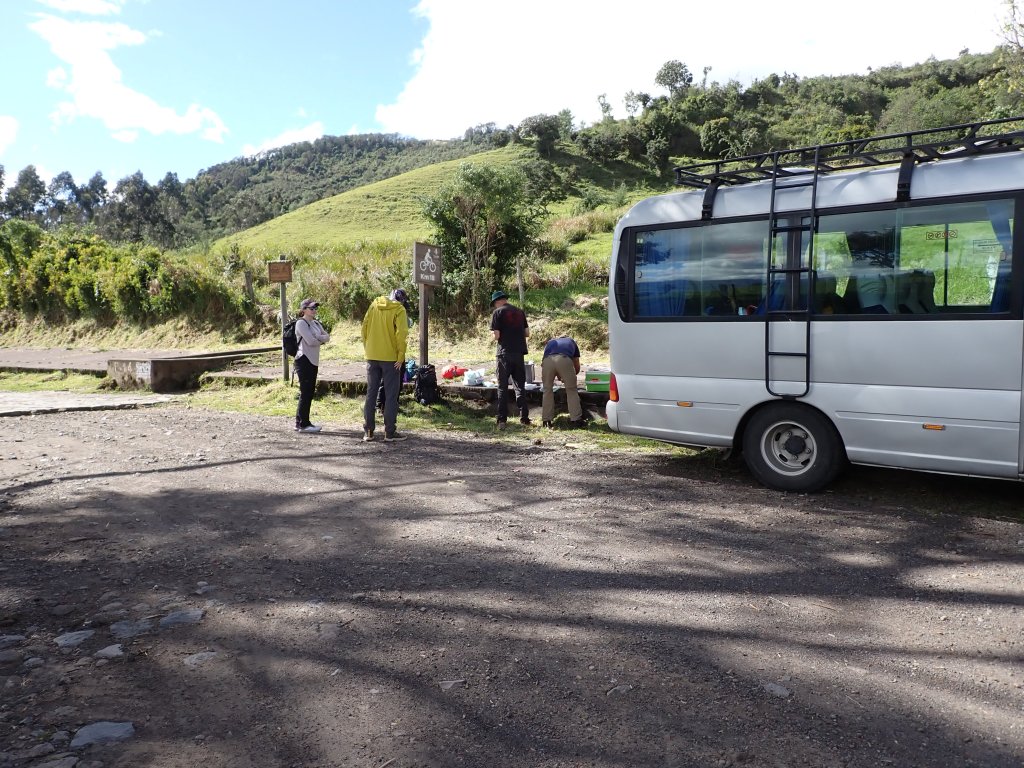
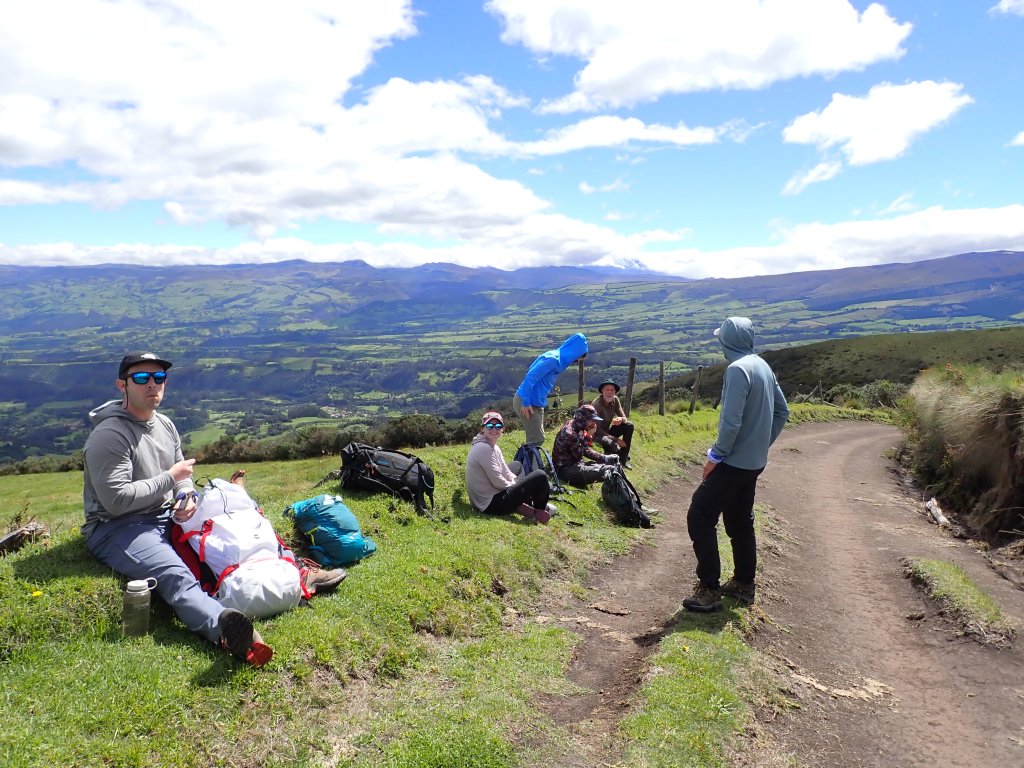
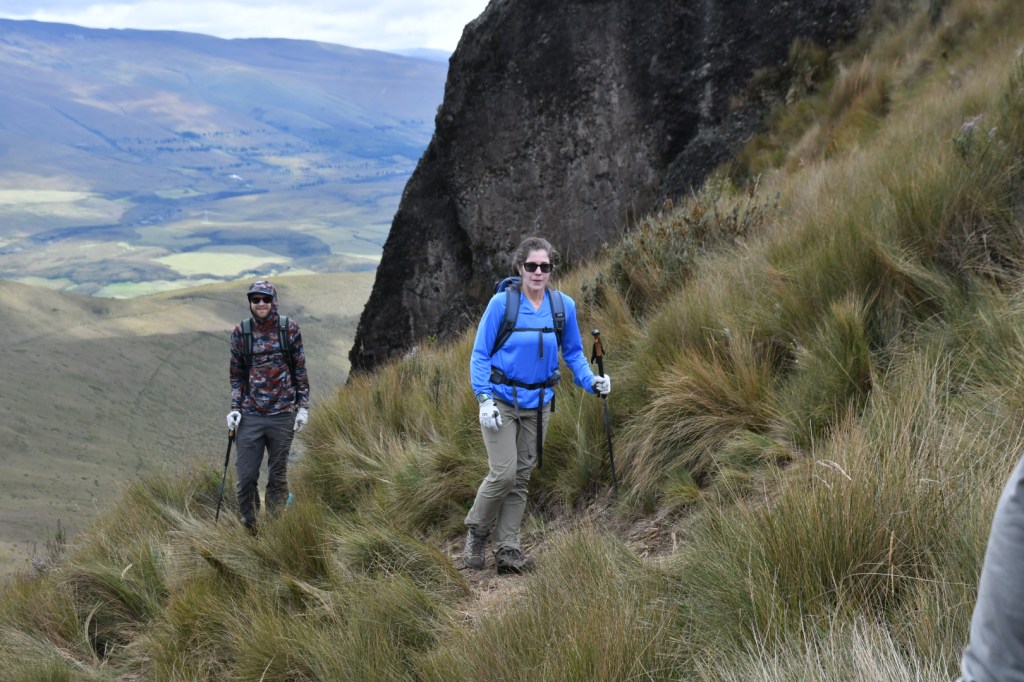
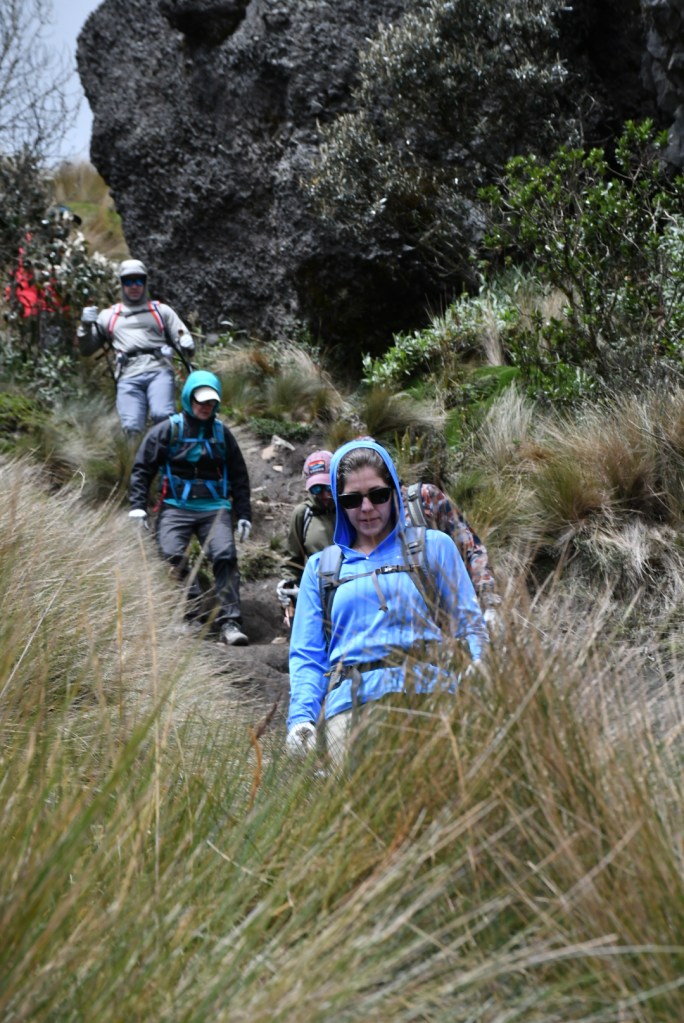
Several of those early days included hikes or drives up to a high altitude and then returning a few thousand feet to sleep at a lower elevation. Our first big hike was Pasochoa. From Quito, at an elevation of about 9,000′, it was pretty quick to drive up to the trailhead, prepare lunch/snacks and then start the two thousand foot, three hour hike to the summit at 13, 776′.
The hike also gave our guides a better sense of how we worked as a group, if we practiced “self-care” at breaks (hydrate, eat, keep warm, sunscreen), etc. In general, they were trying to figure out how much they were going to have to babysit us! Everyone felt great and did fine.
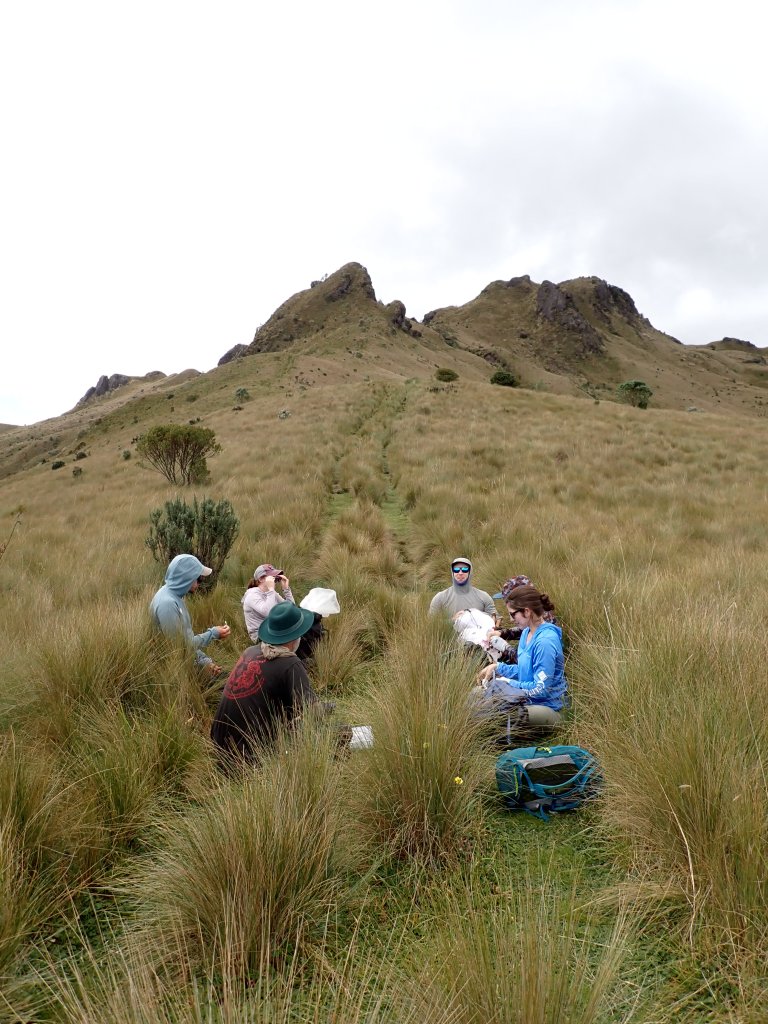
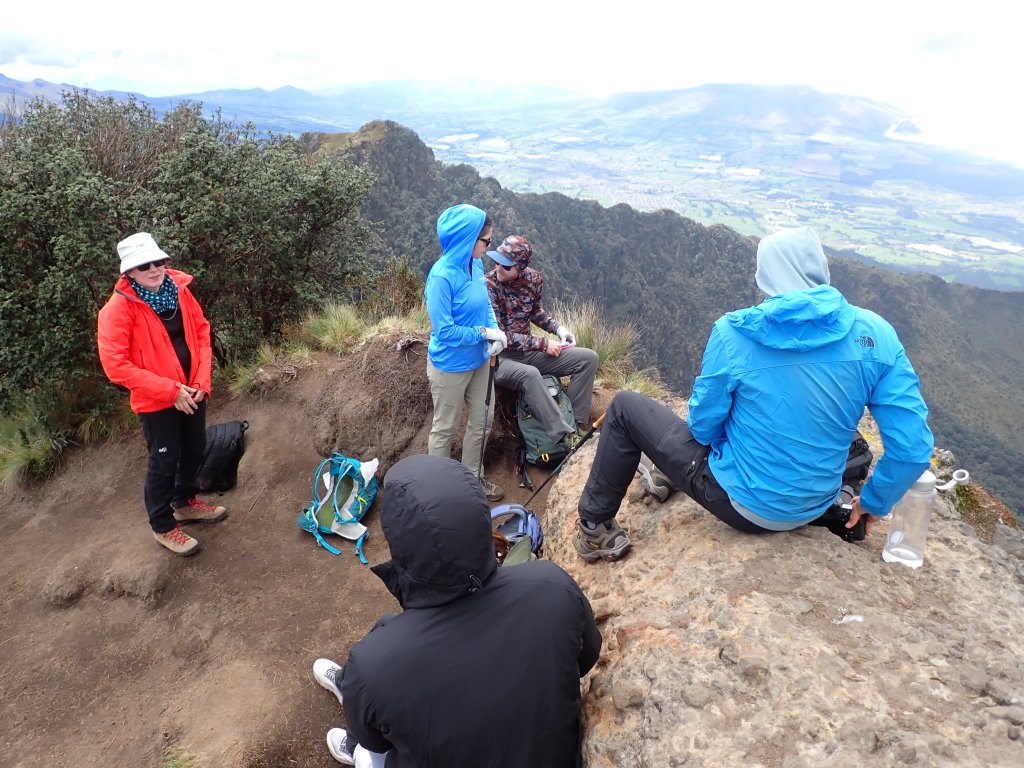
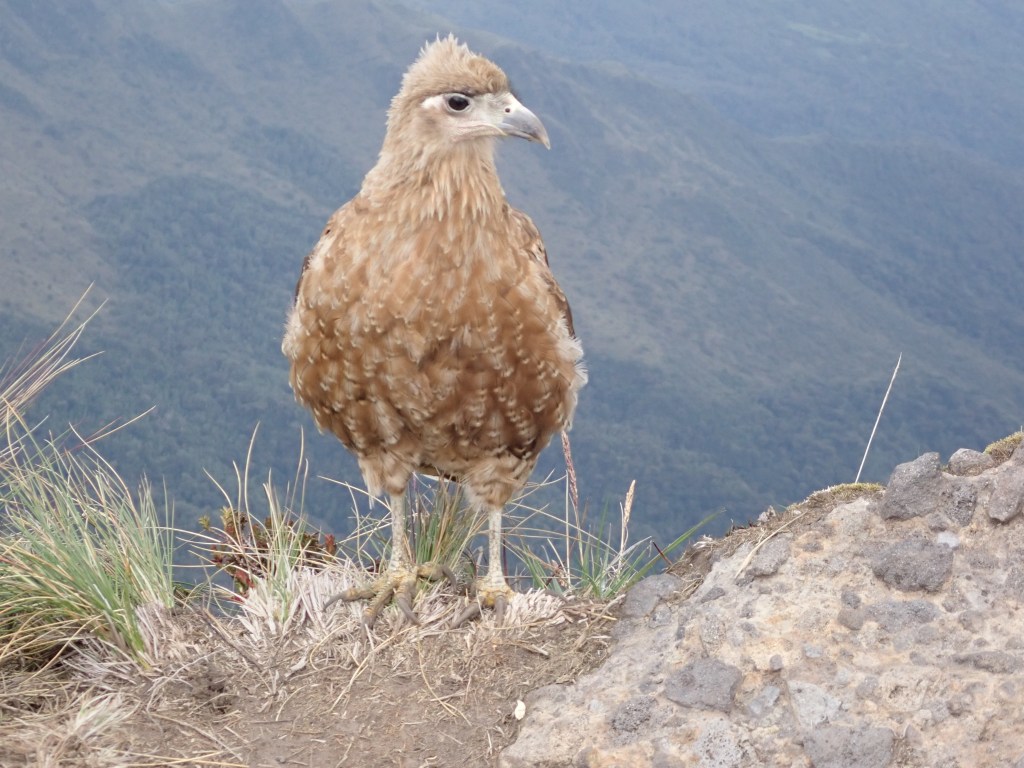
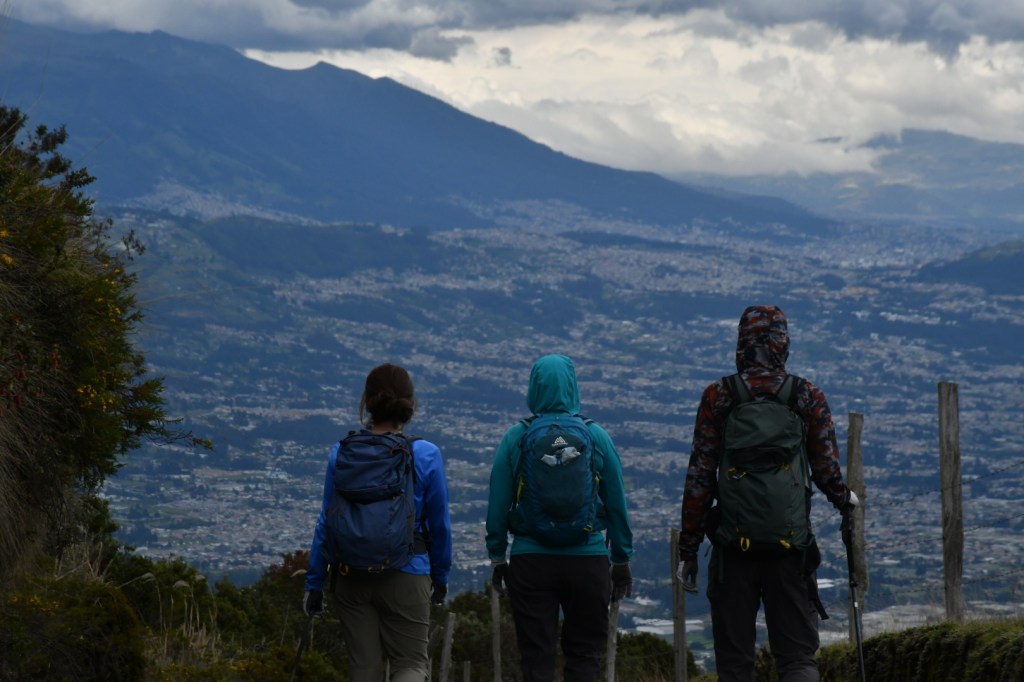
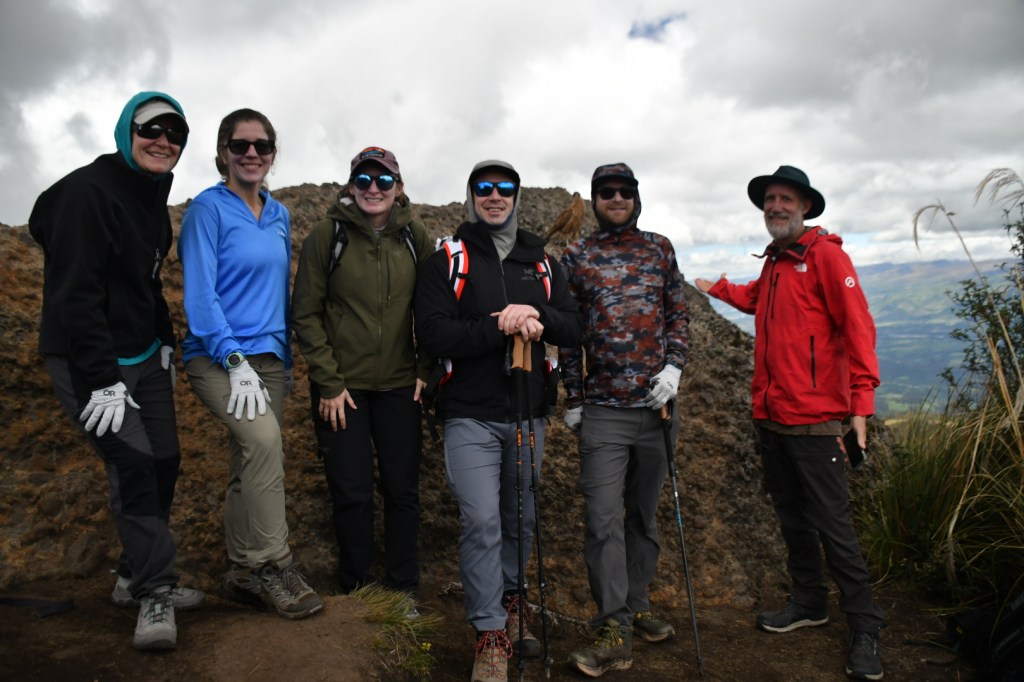
First snack breakSnack break – the summit is a bit behind the tallest point in the center of the photo.As we got to the summit, another group was just heading down. The gal in the red was on her second trip to Ecuador and getting ready for a second attempt at Cotopaxi.Juvenile Caracara – Camilo had mentioned that there was a friendly Caracara to us on the way up. Most likely the same bird who figured out there might be a handout. We also saw what was potentially an eagle or Andean Condor on our way down.The Caracara appears to be perching on Ethan’s shoulder.Heading back to the bus with a view of only a very small part of Quito – the city is massive!
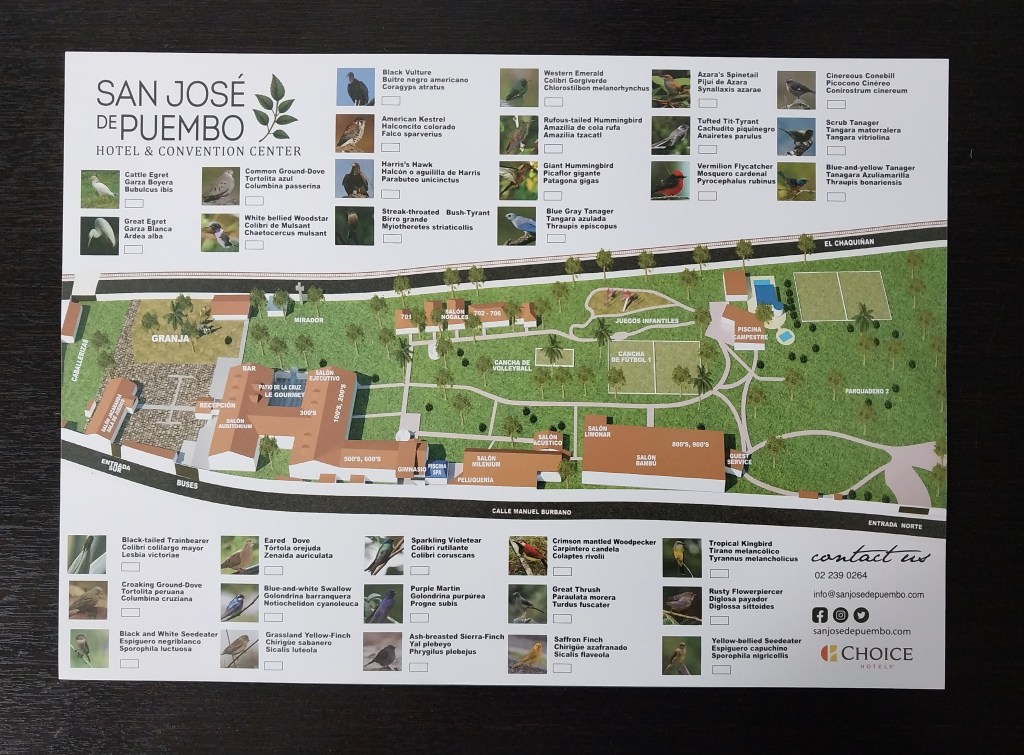
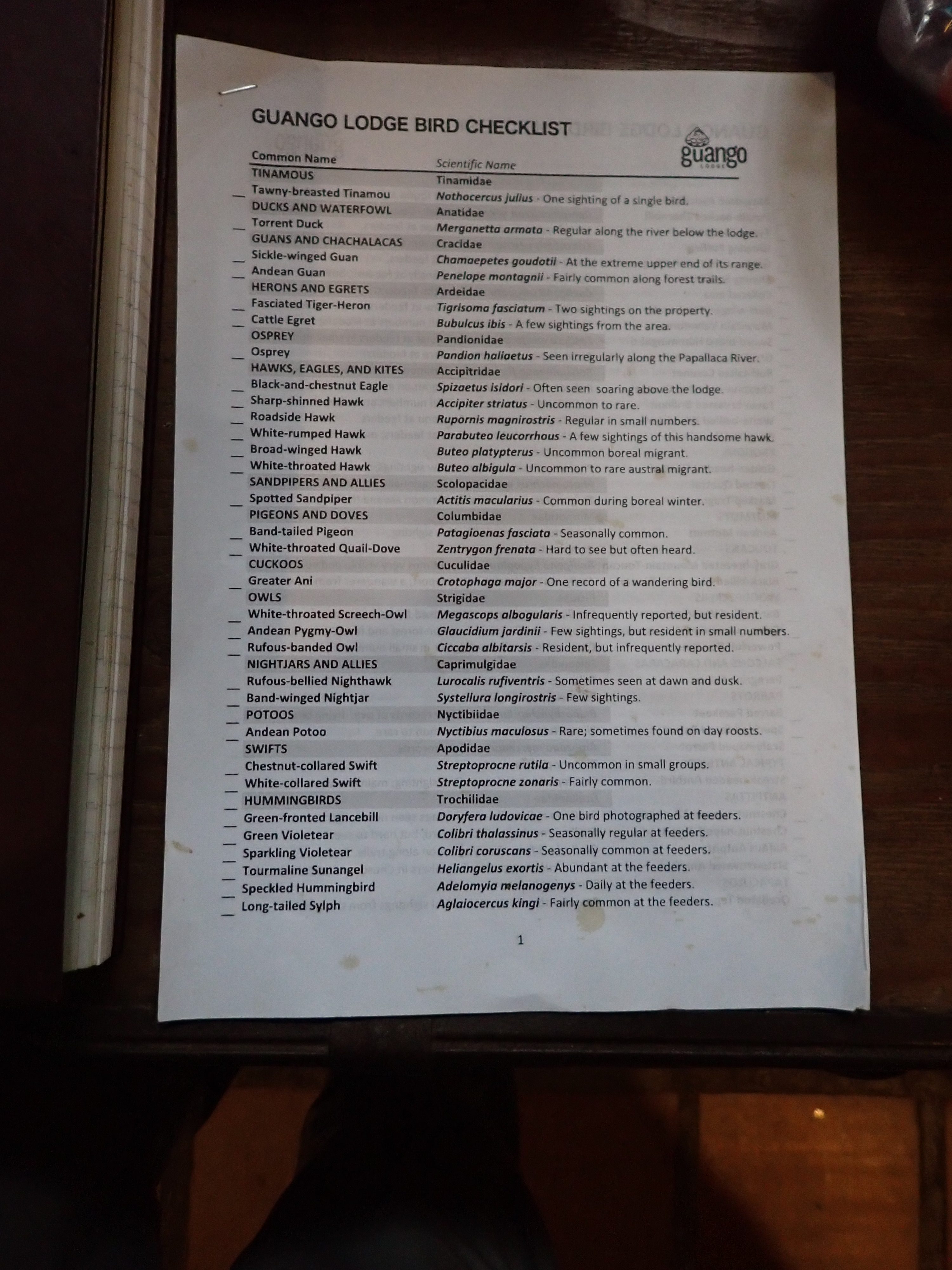
This will turn out to be one of the shortest posts, I think. Aside from the huge number of tropical birds I heard and viewed (but never got any good photos) the critters we saw in Ecuador were mostly the domestic kind. The San Jose de Puembo had a neat checklist at the front desk that showed all the birds that are typically seen on their property.
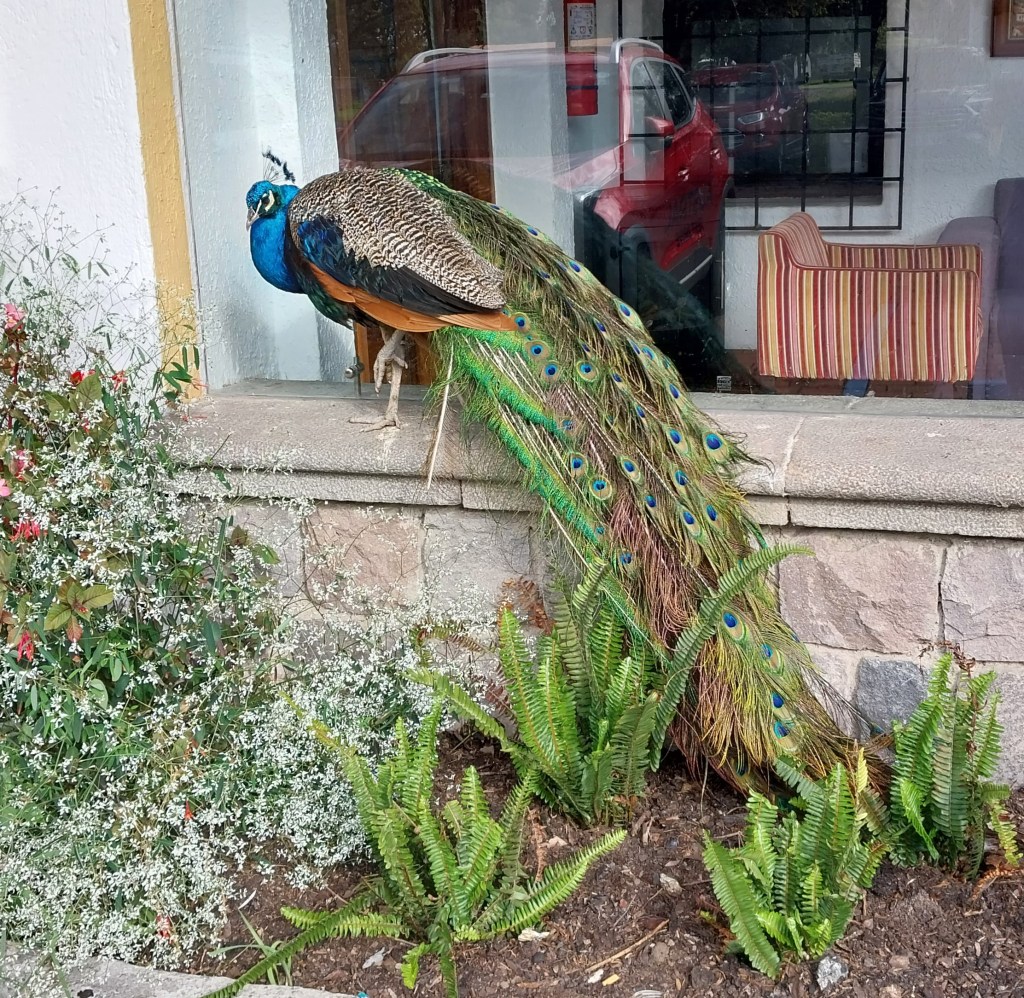
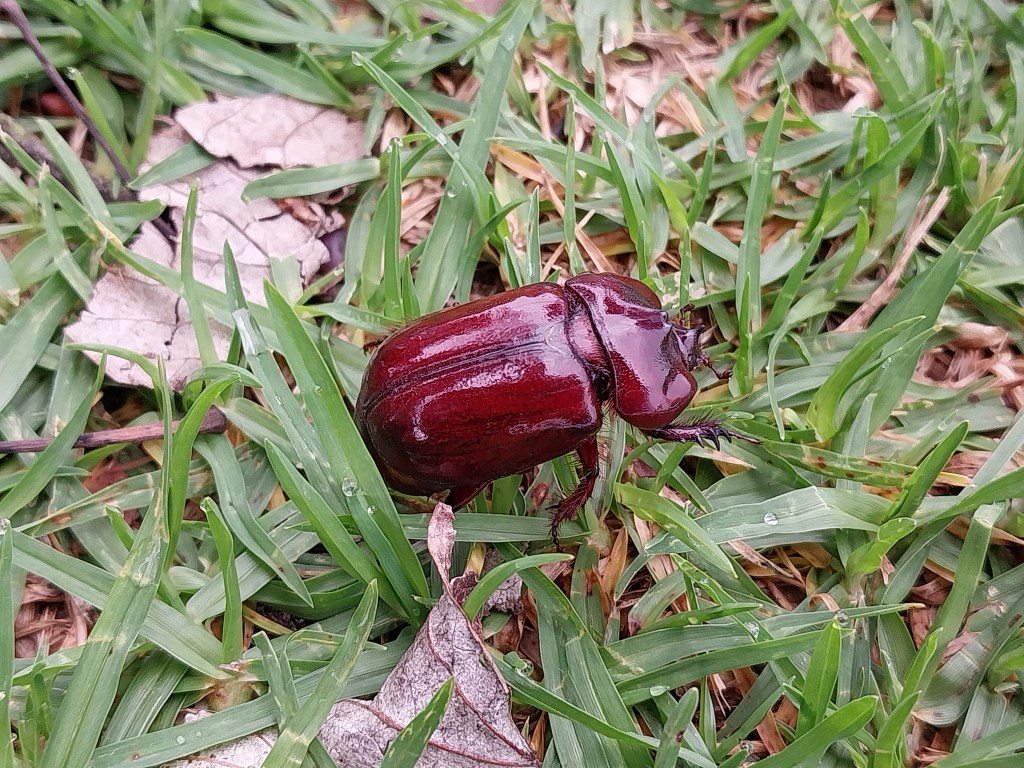
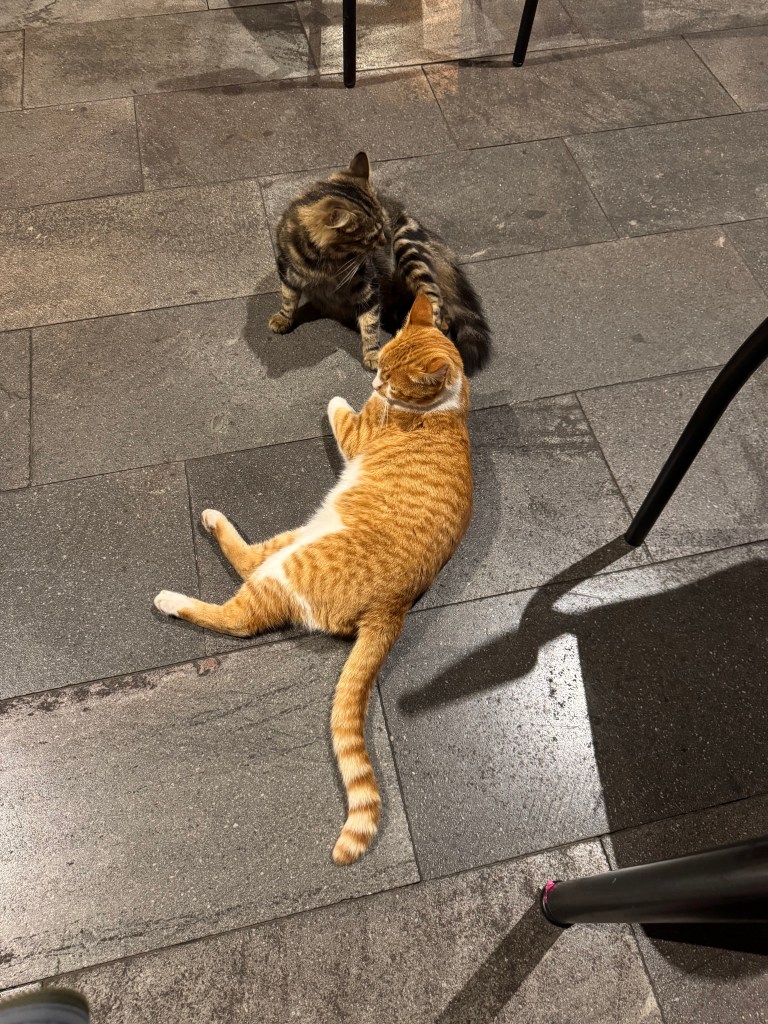
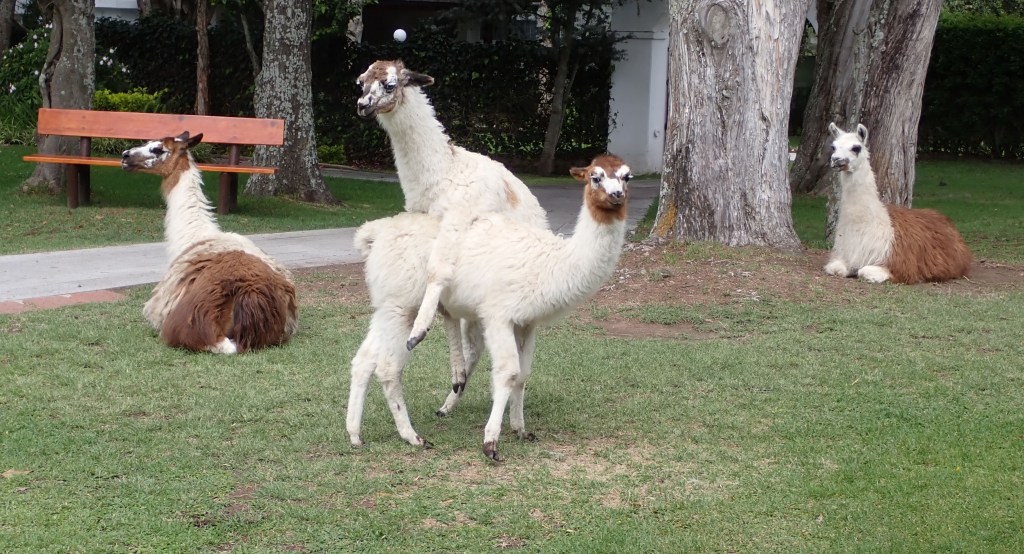
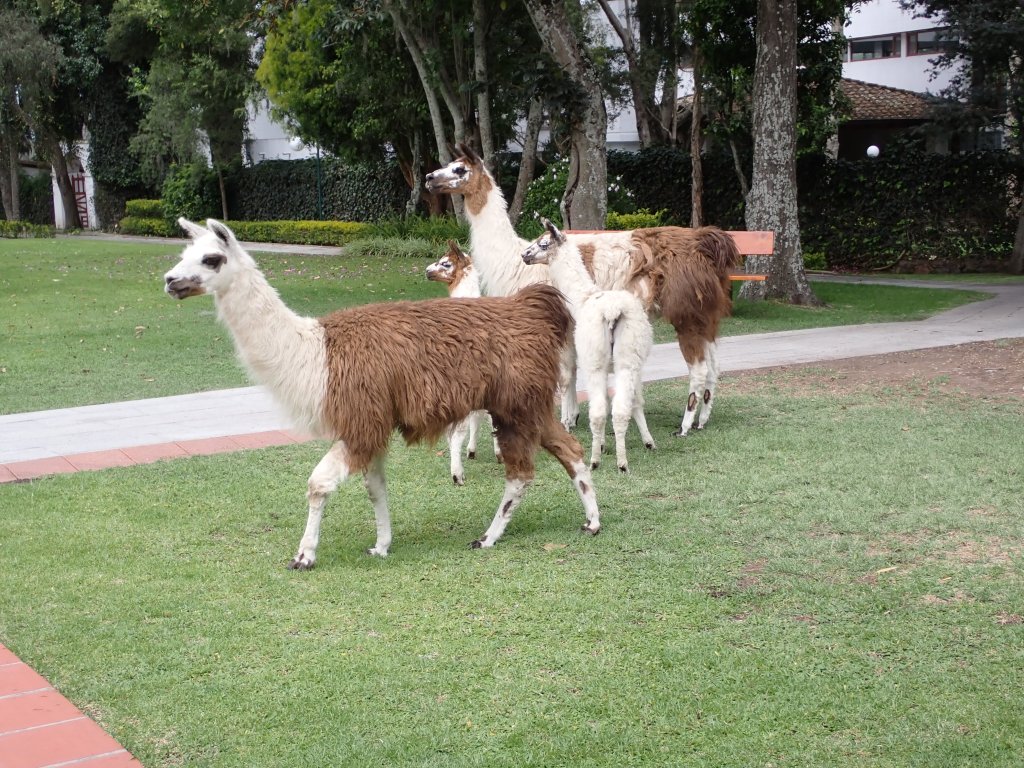
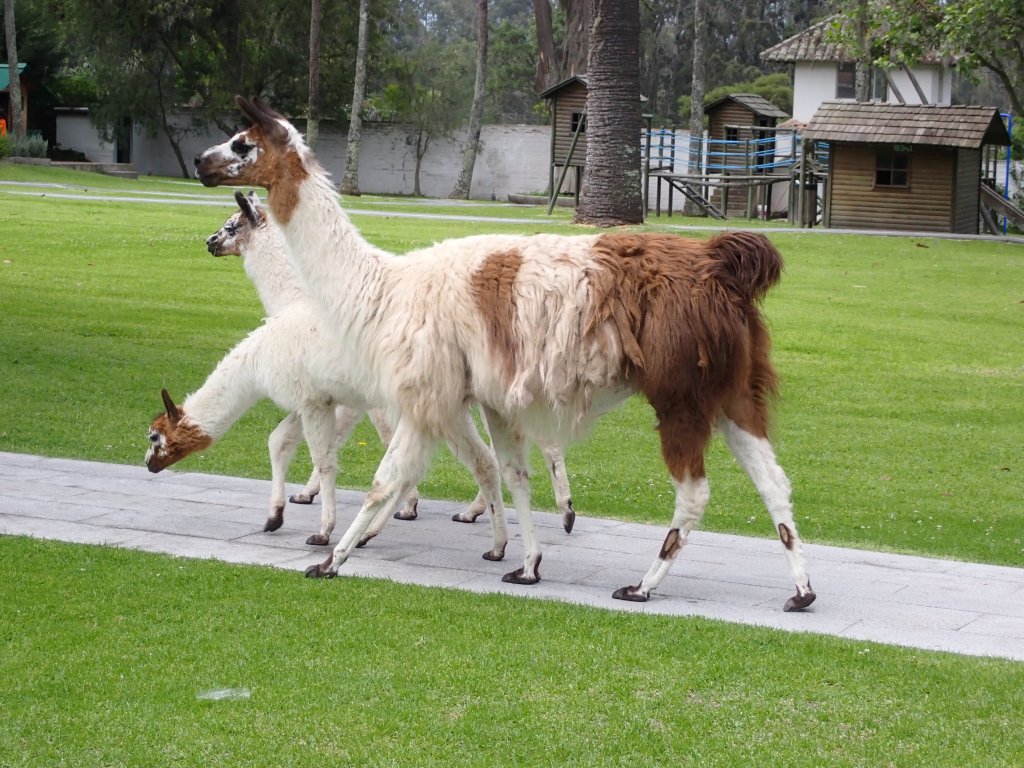
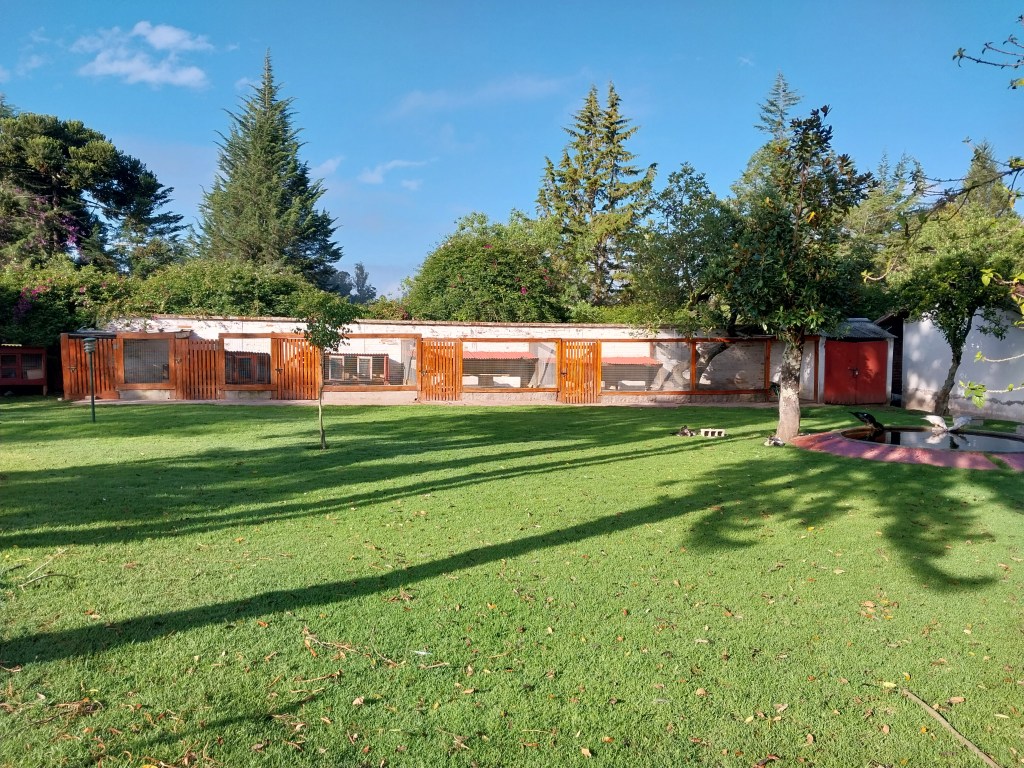
On their grounds they had llama, ducks, geese, peafowls, giant bugs, a few cats and small mammals at the petting zoo.
These two cats joined us for dinner!These llama “kids” were messing around and shortly thereafter Mom, in the back on the right started screaming and jumped up after them. Funny.
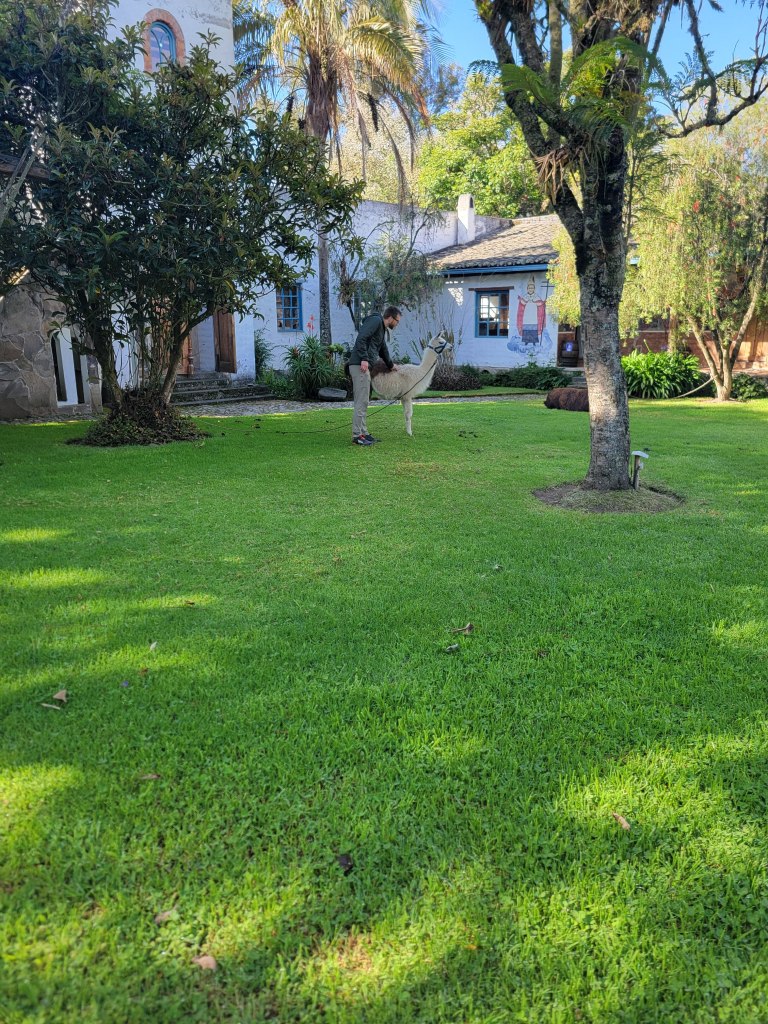
The llamas were pretty docile everywhere we went but we all knew of their ability to spit, at very long distance so we gave them their space!
Ethan was the only one brave enough to actually pet one!
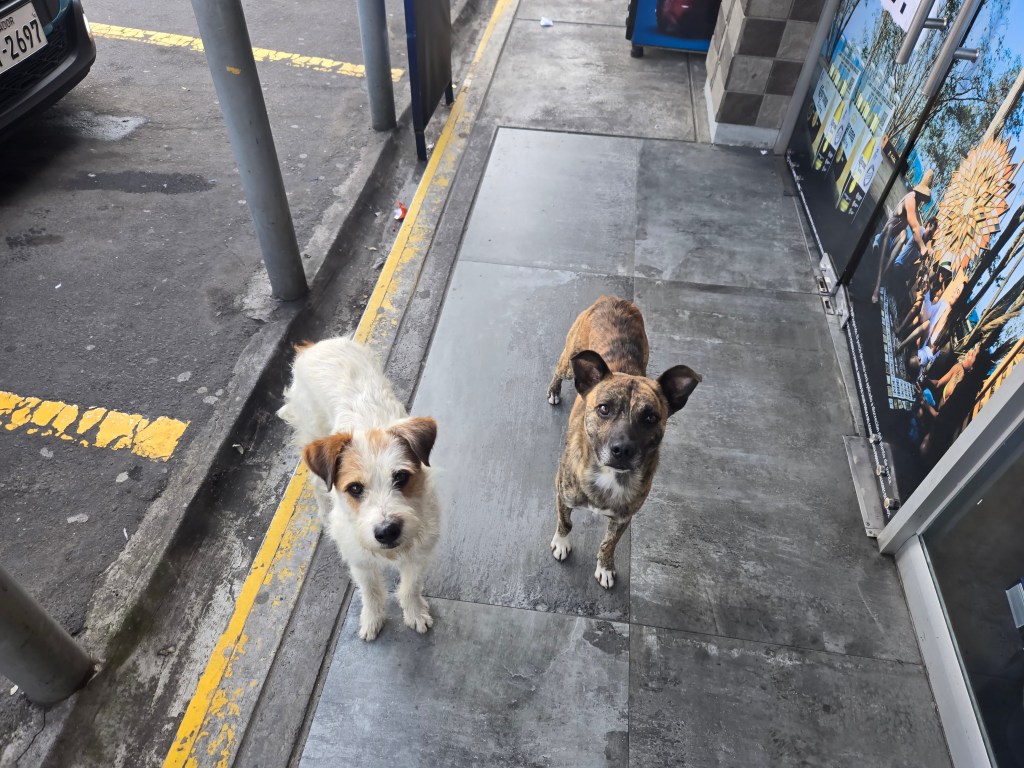
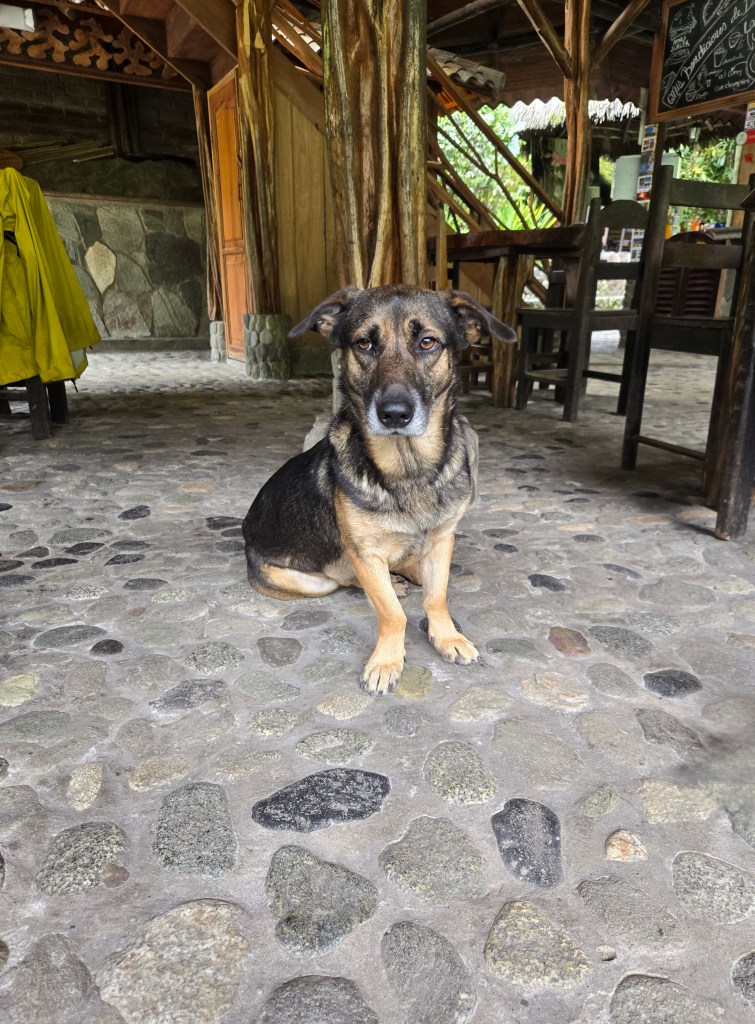
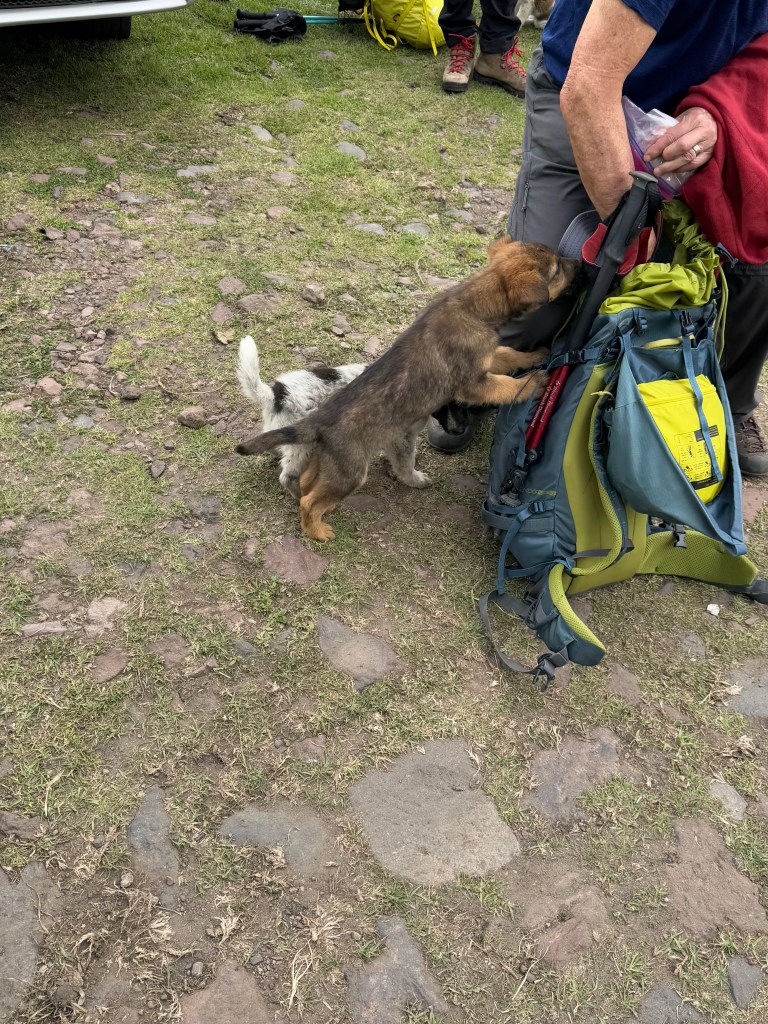
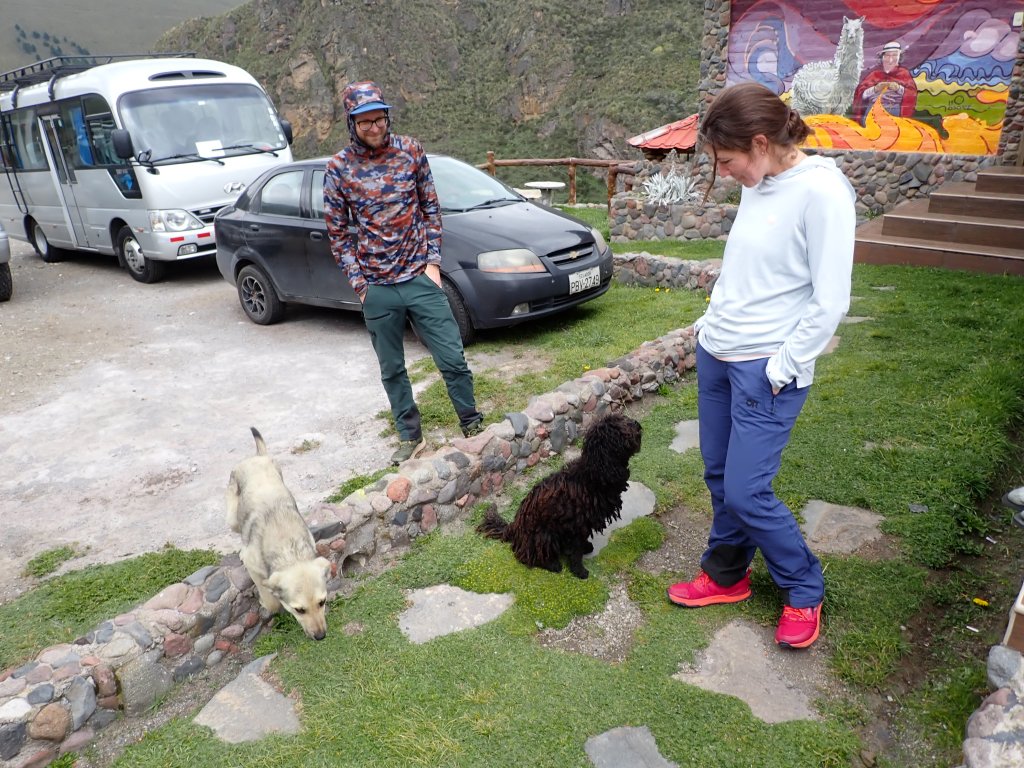
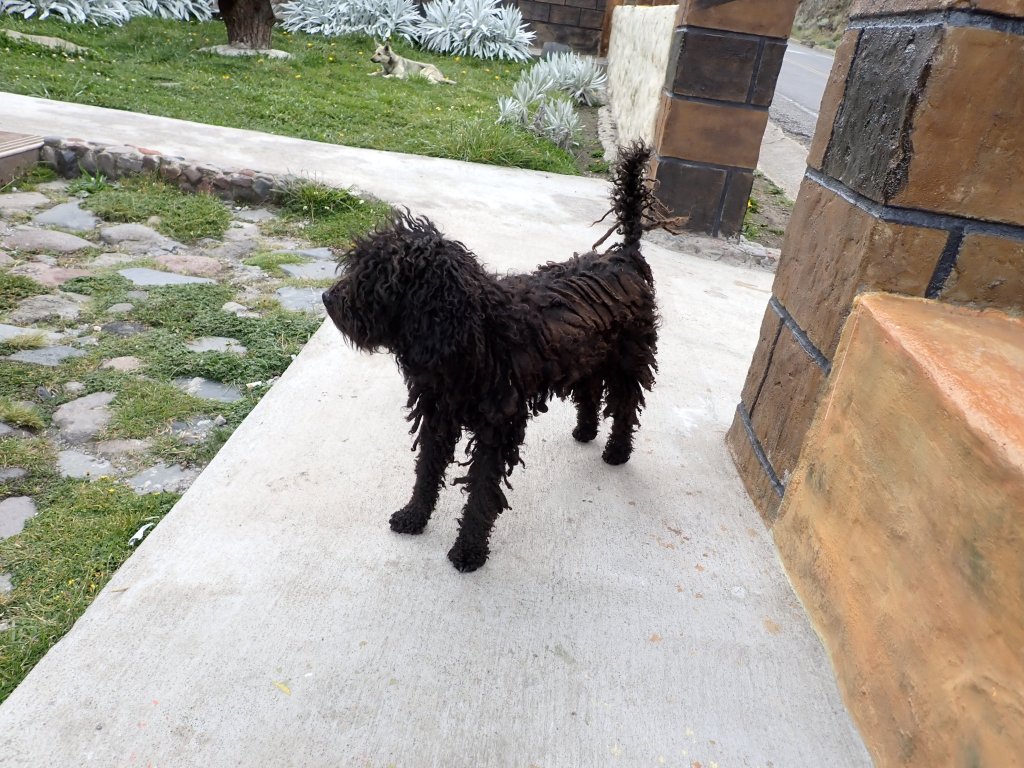
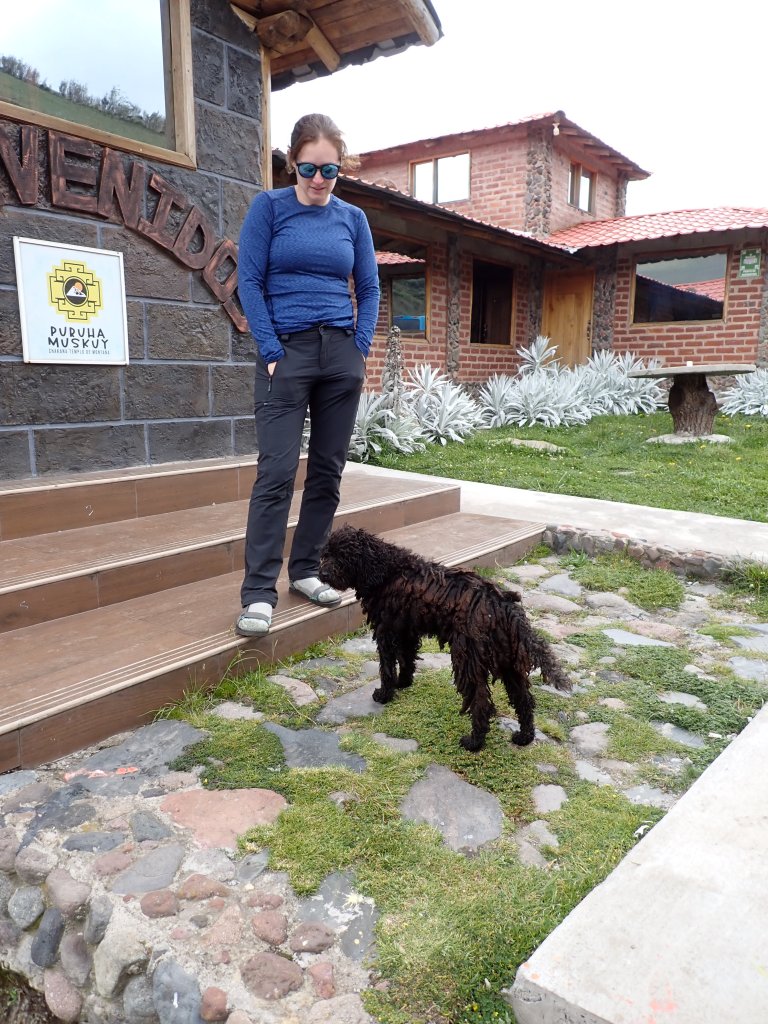
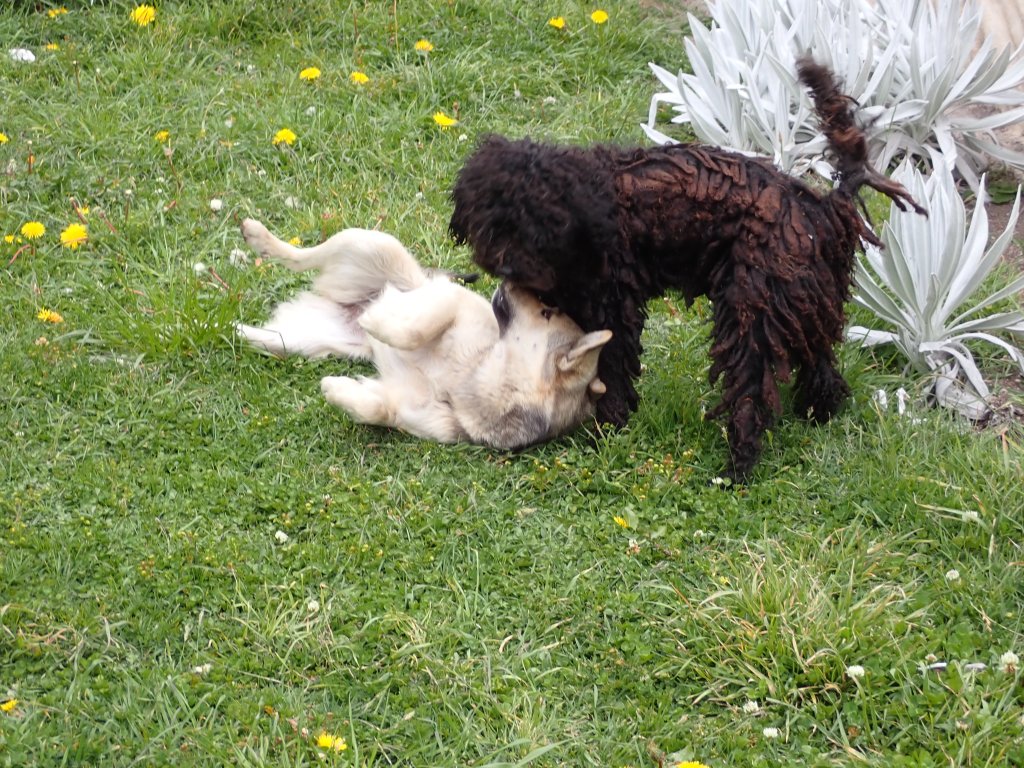
There were a LOT of stray dogs, similar to what I had seen in Nepal and Bolivia. They didn’t look especially unhealthy or malnourished but were always on the lookout for handouts.
There were several dogs and puppies that looked to have Husky in their bloodlines.
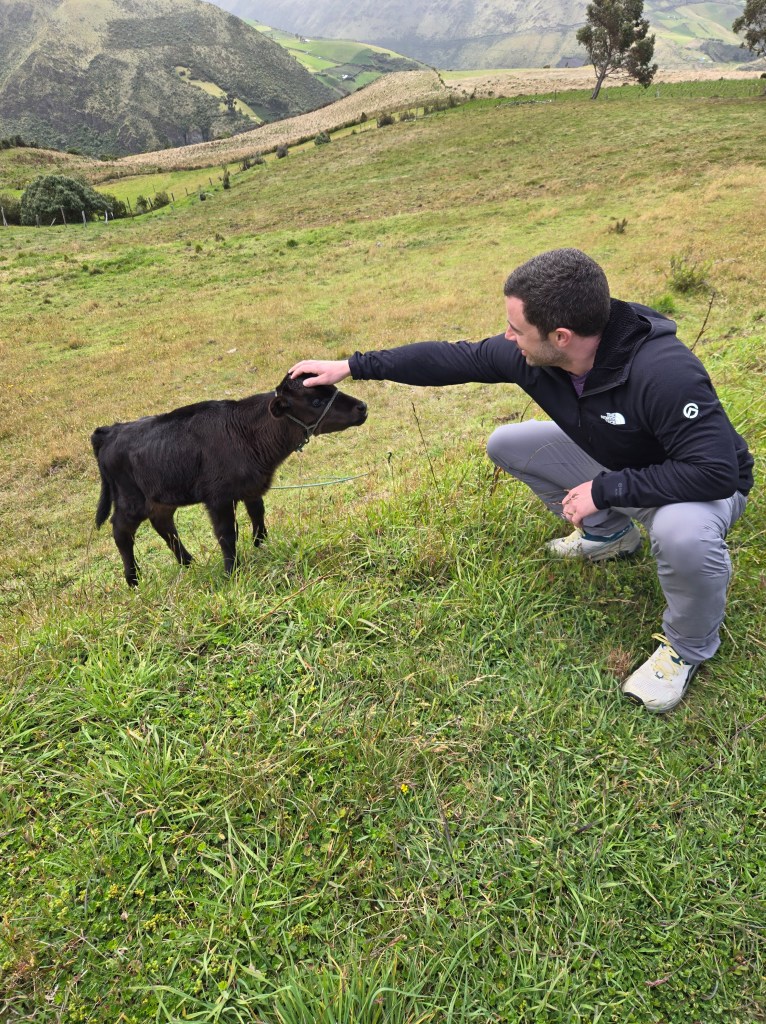
Most of the homes that we passed in the country (and some in the town limits) had a couple cows.
Aaron “taming” a calf
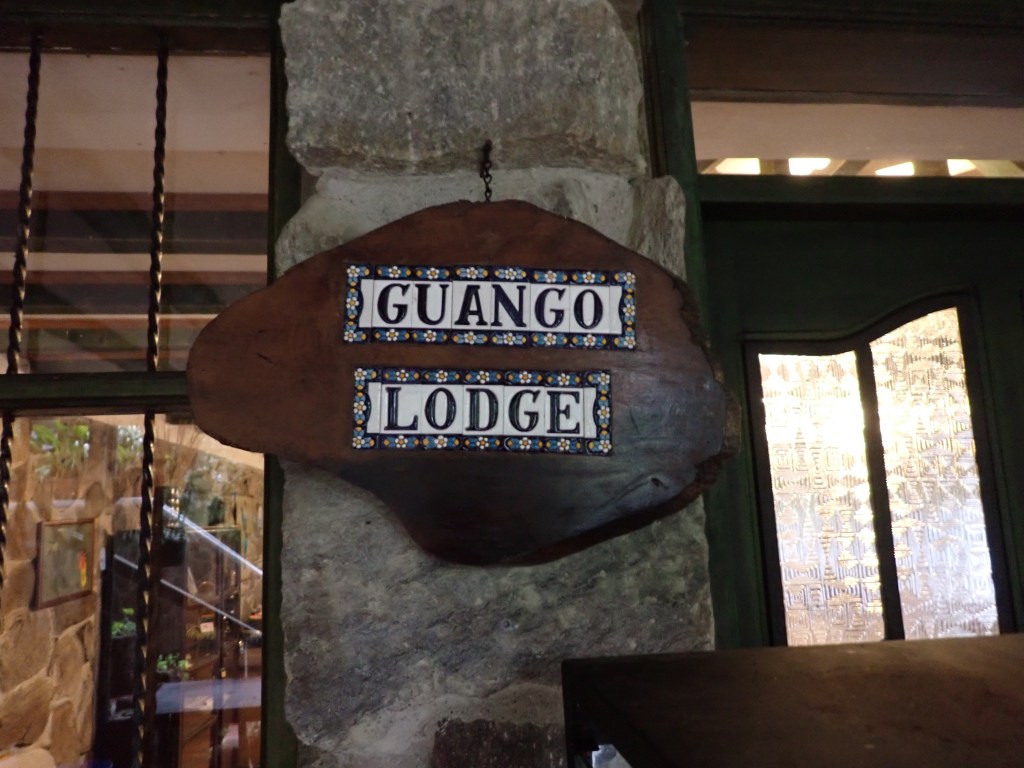
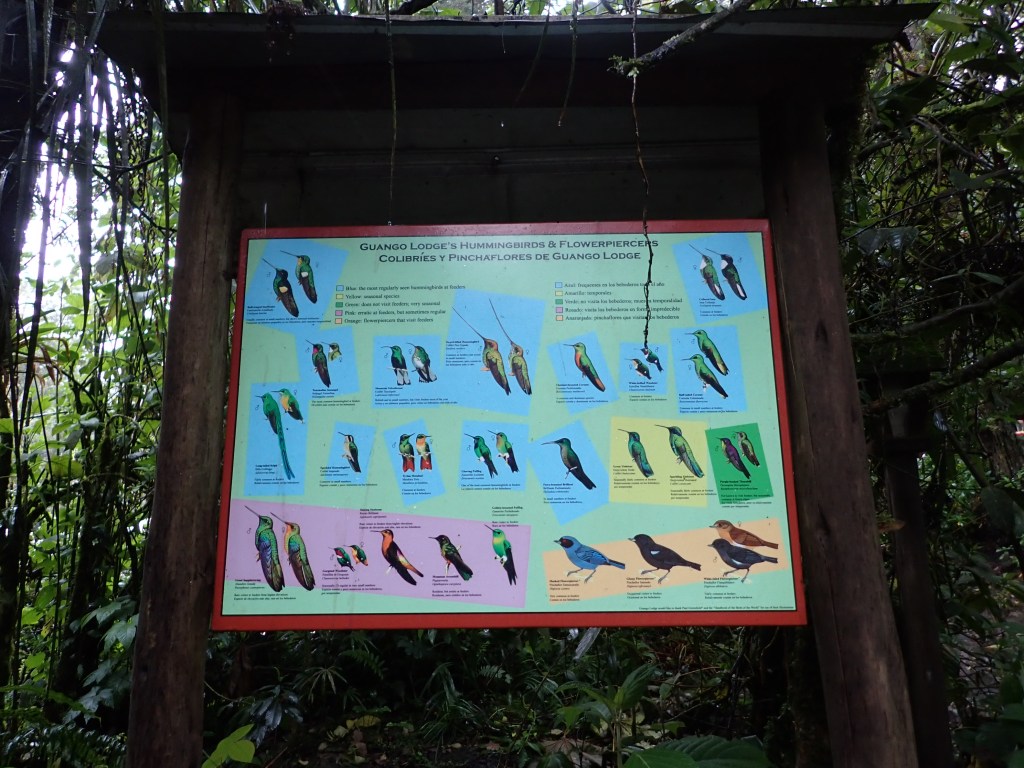
One of the hotels we stopped by, but didn’t stay at, is called the “Hummingbird Hotel” by the locals. They cater to the bird watching tourists and we easily saw at least 10 different kinds of hummingbirds in about a half an hour.
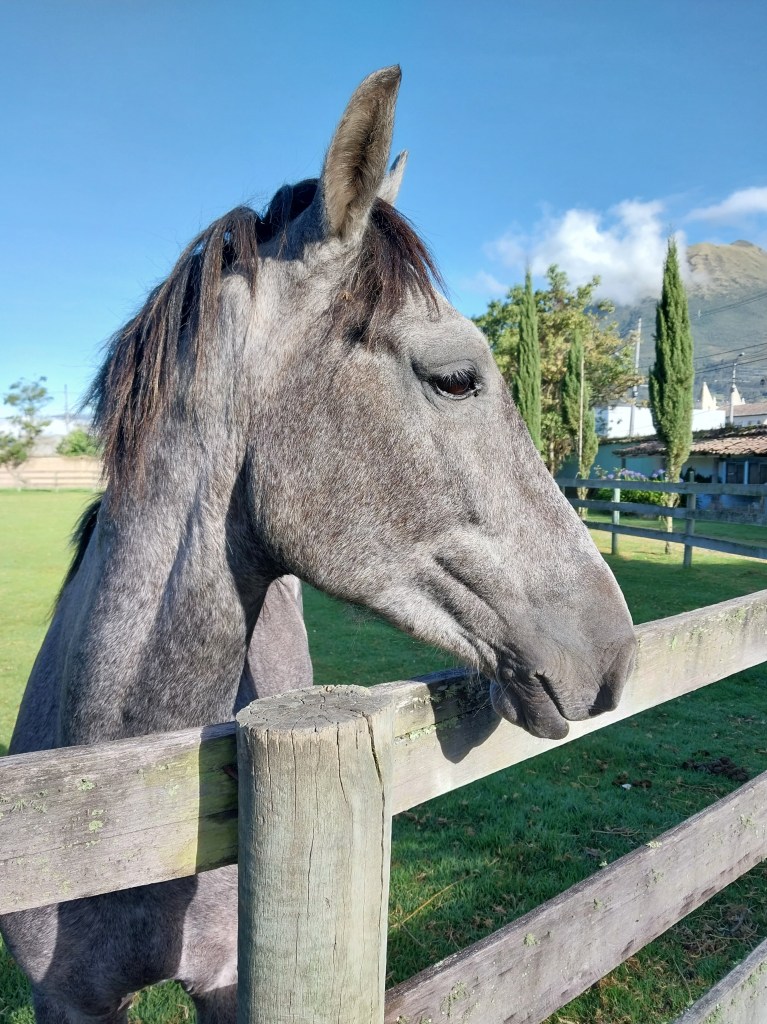
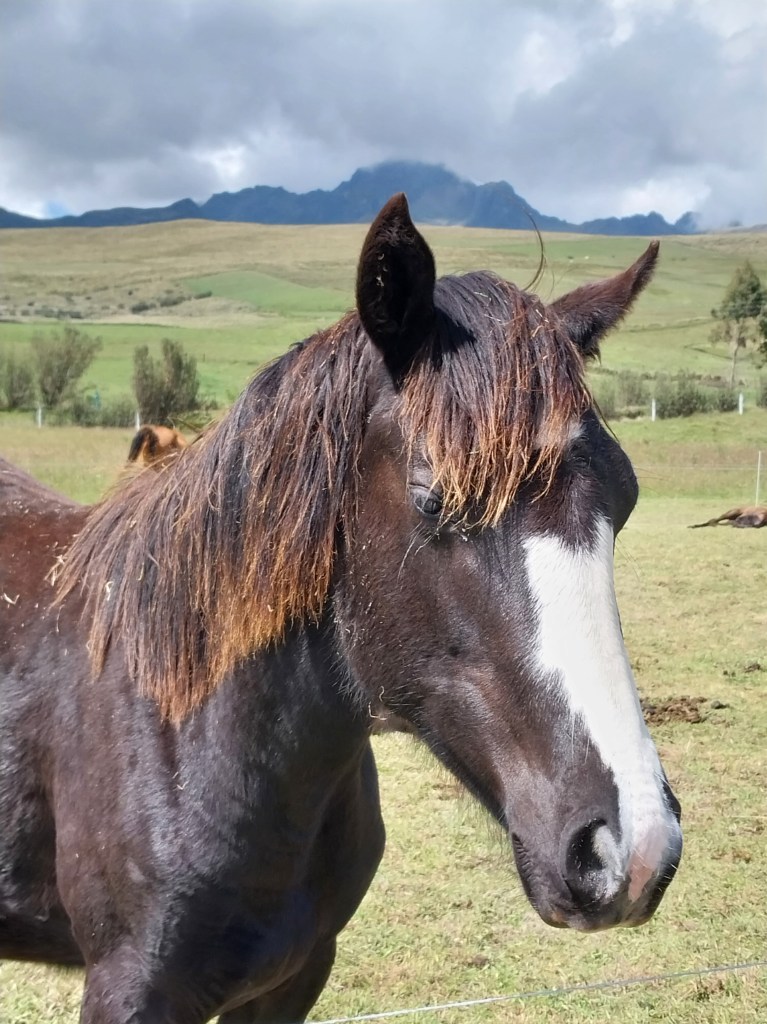
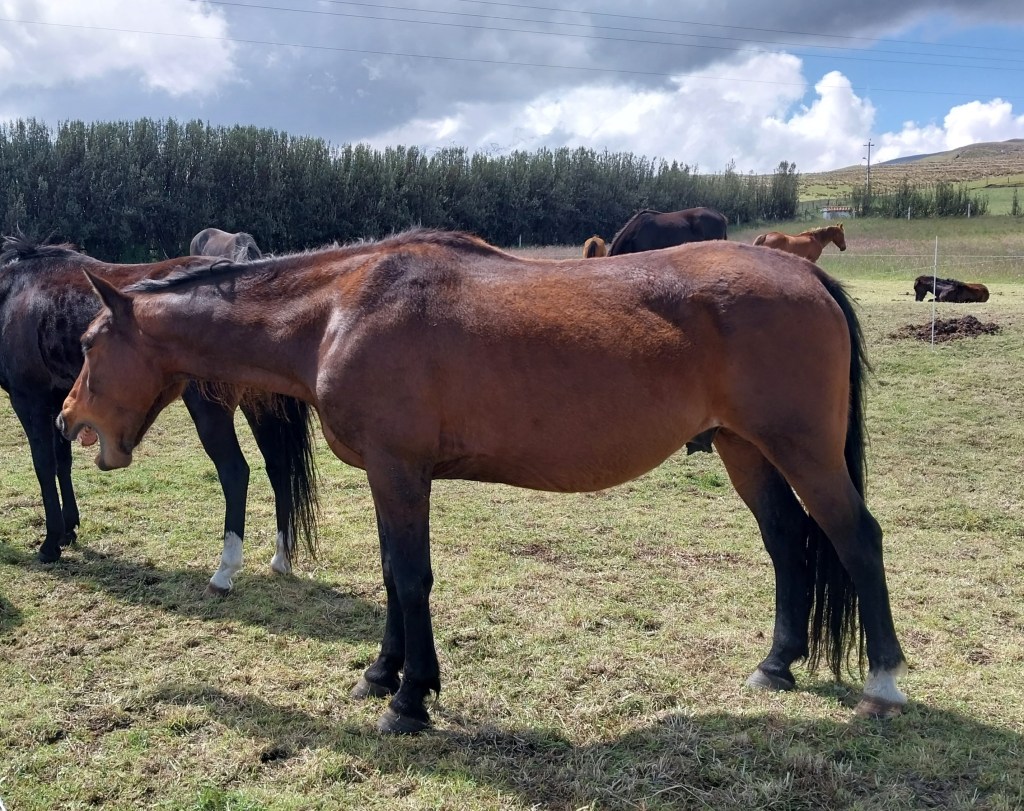
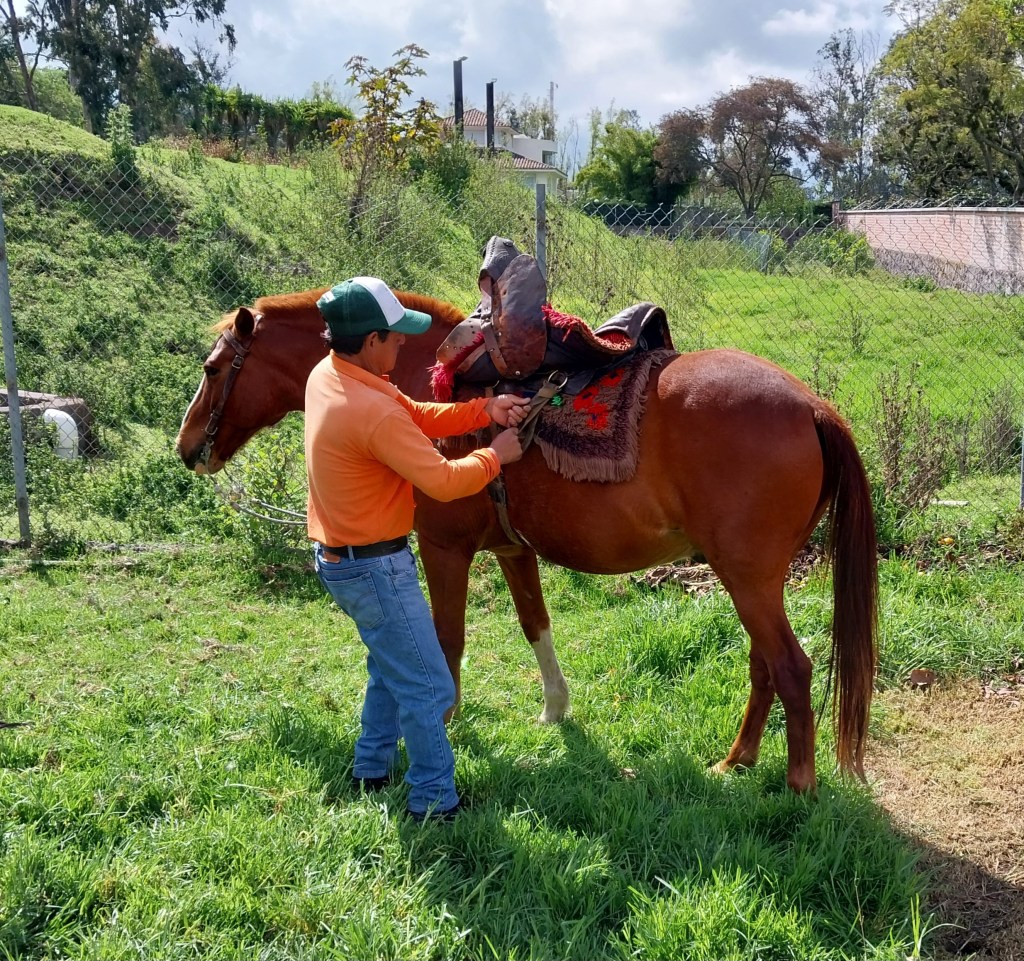
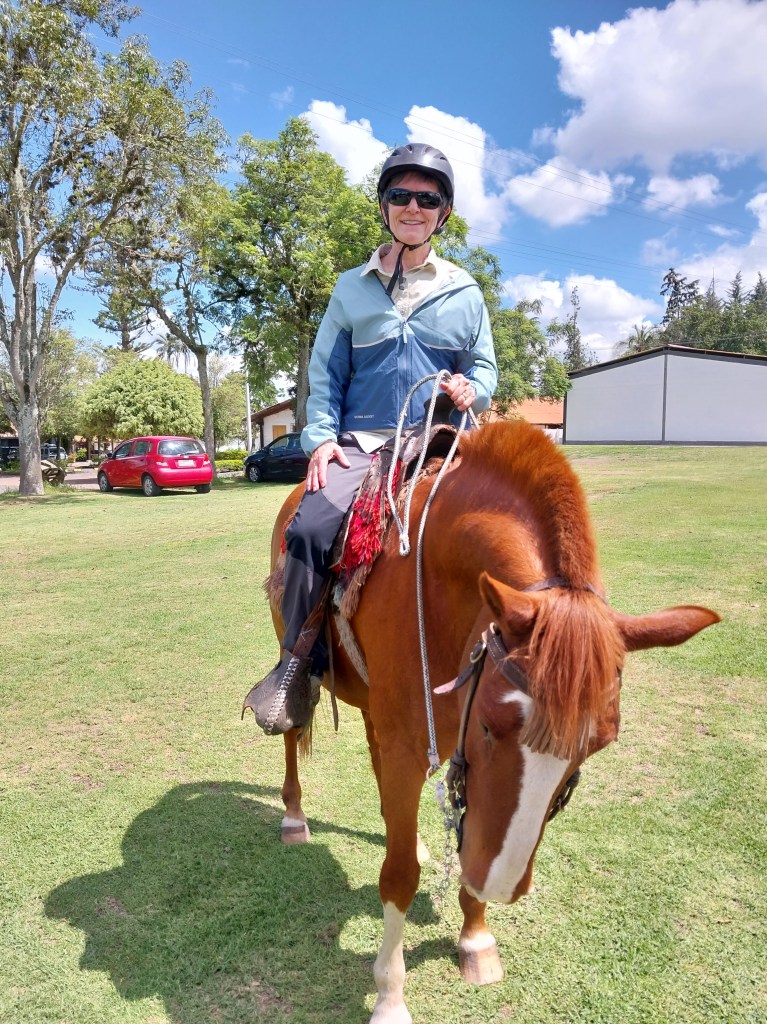
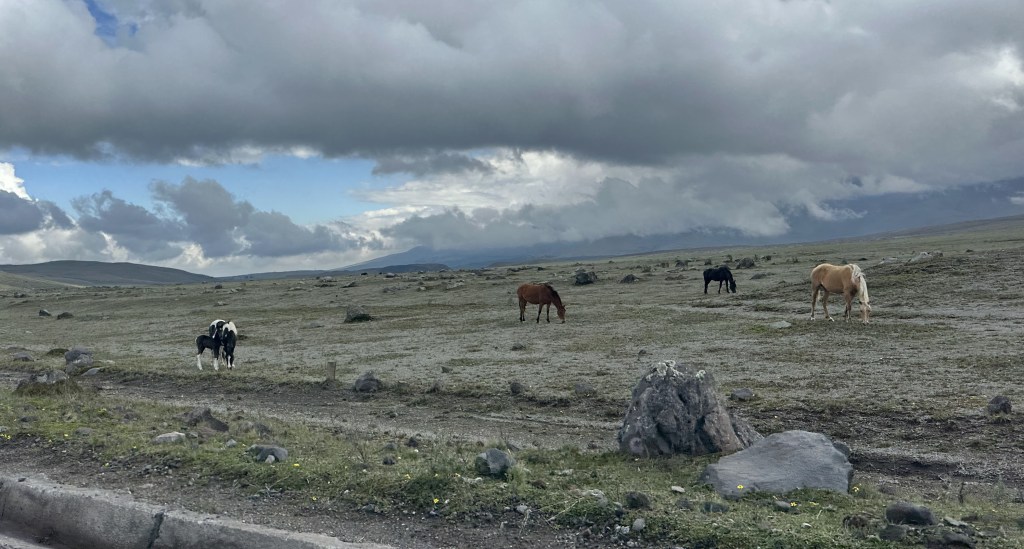
Horses rounded out the animals that we saw. Most were found at the hotels or refugios that had horseback riding as one of the amenities you could pay for.
Me and Manuelo. Interesting ride in that the guide (previous photo) did not speak a lick of English!This is a part of a wild herd that lives on the flanks of the Cotopaxi volcano. The park service will let residents take a horse (or two) in return for a set amount of manual labor – painting, plumbing, etc., at the facilities on site.
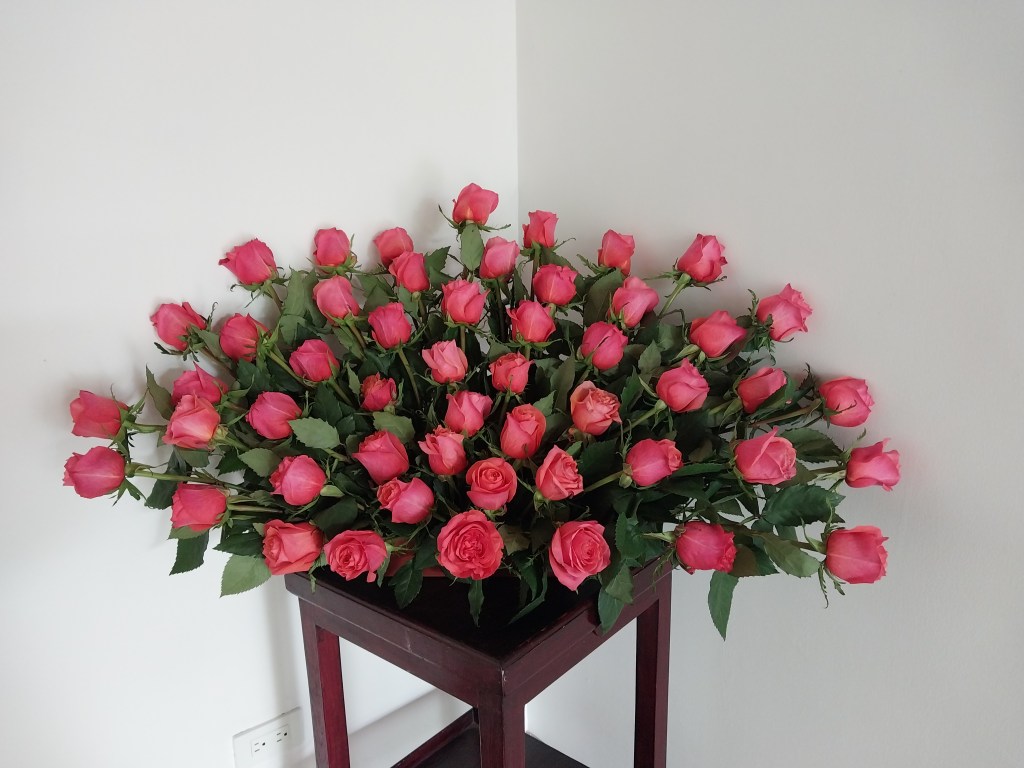
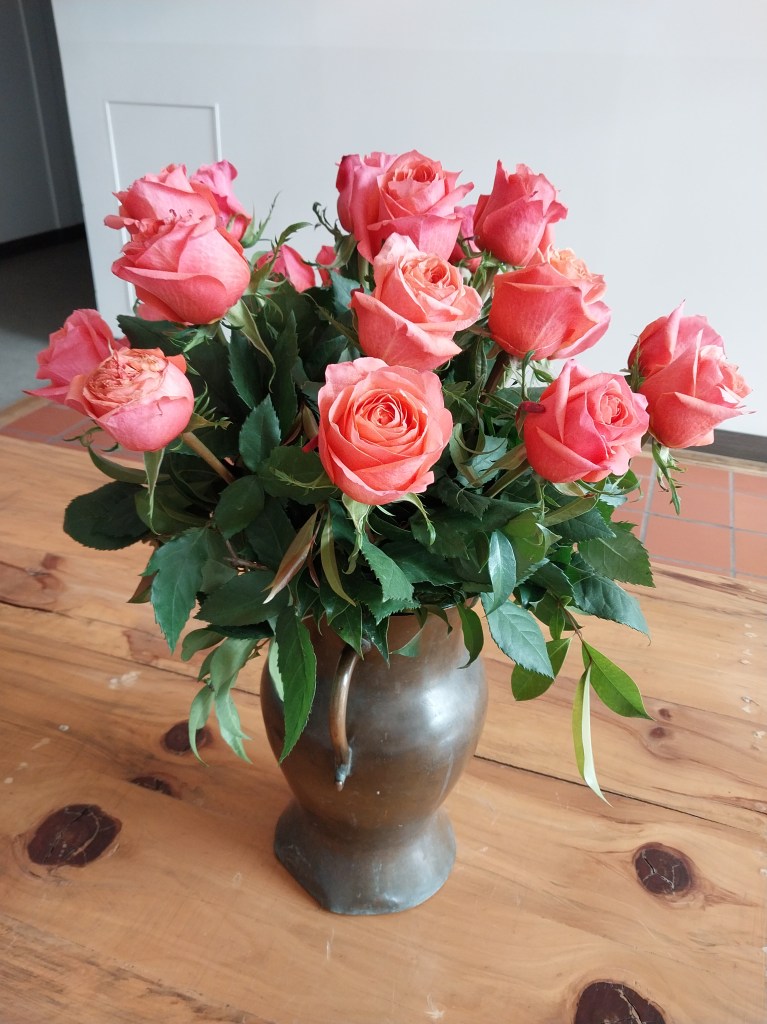
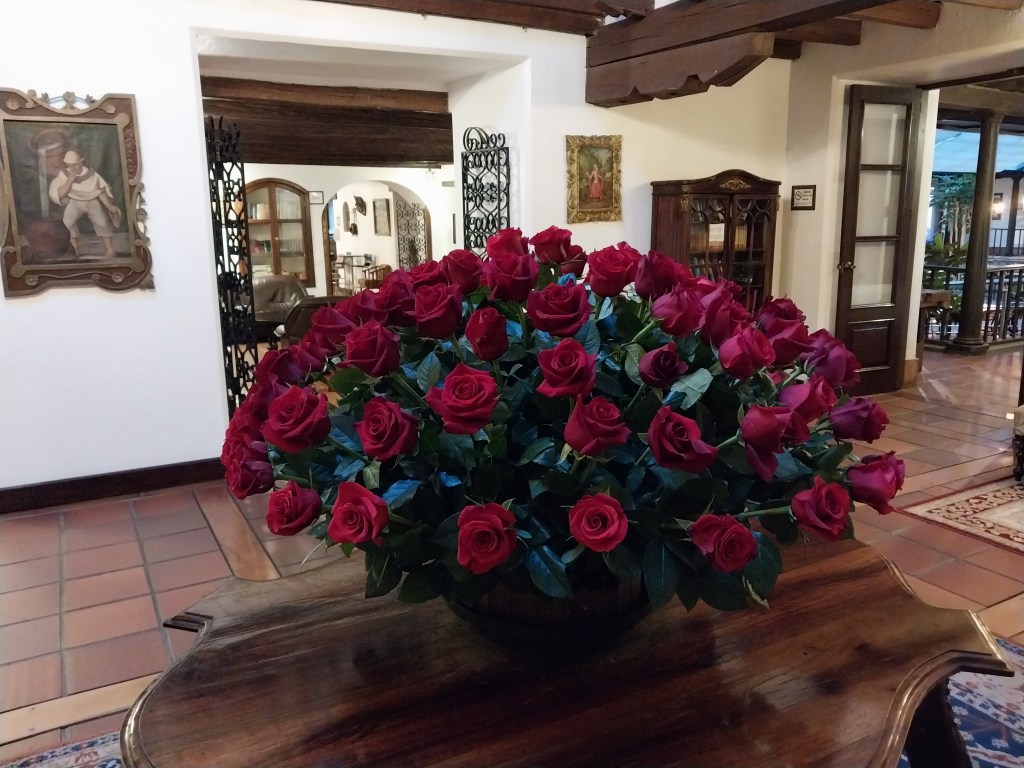
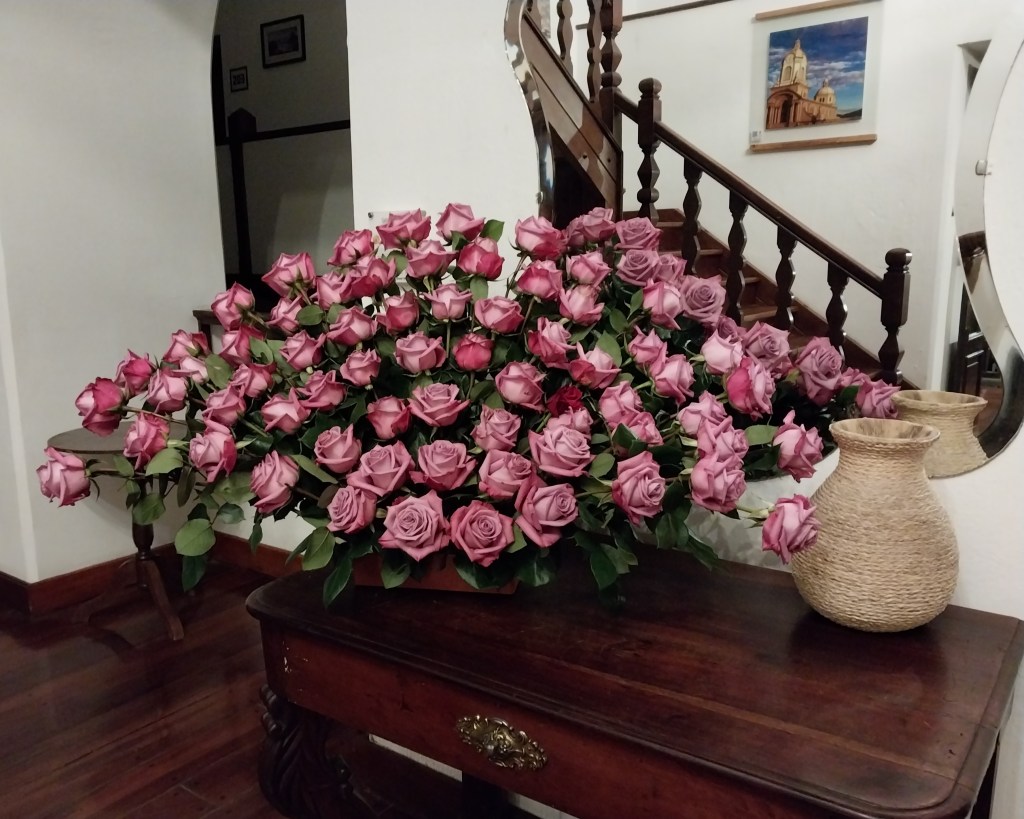
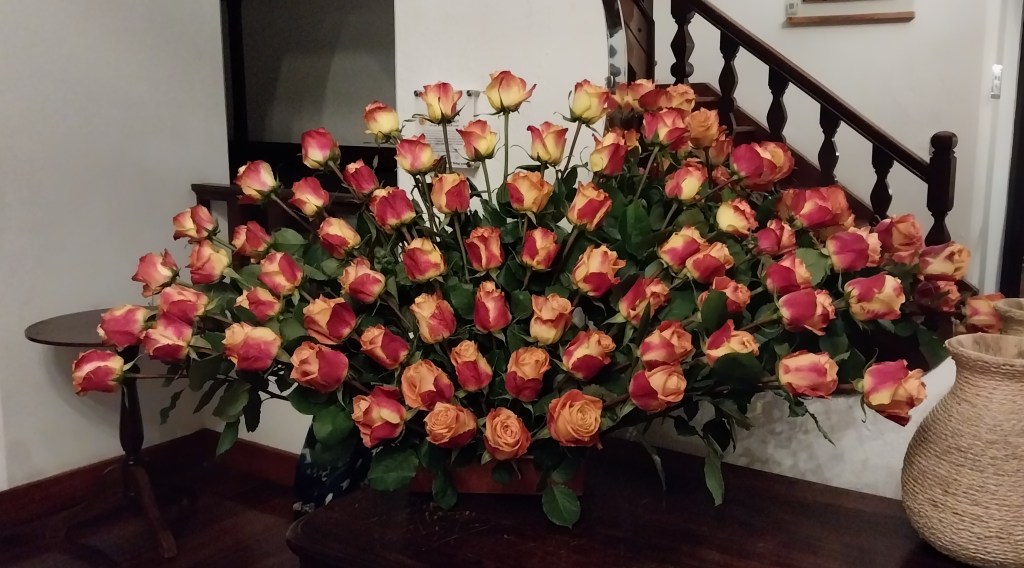
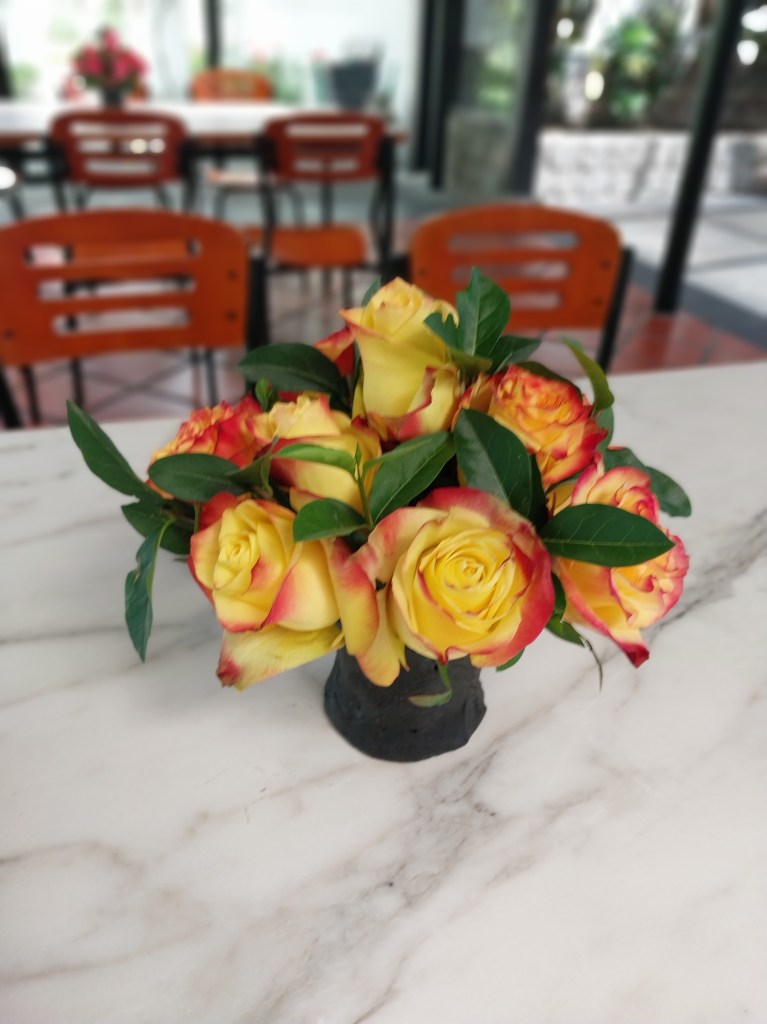
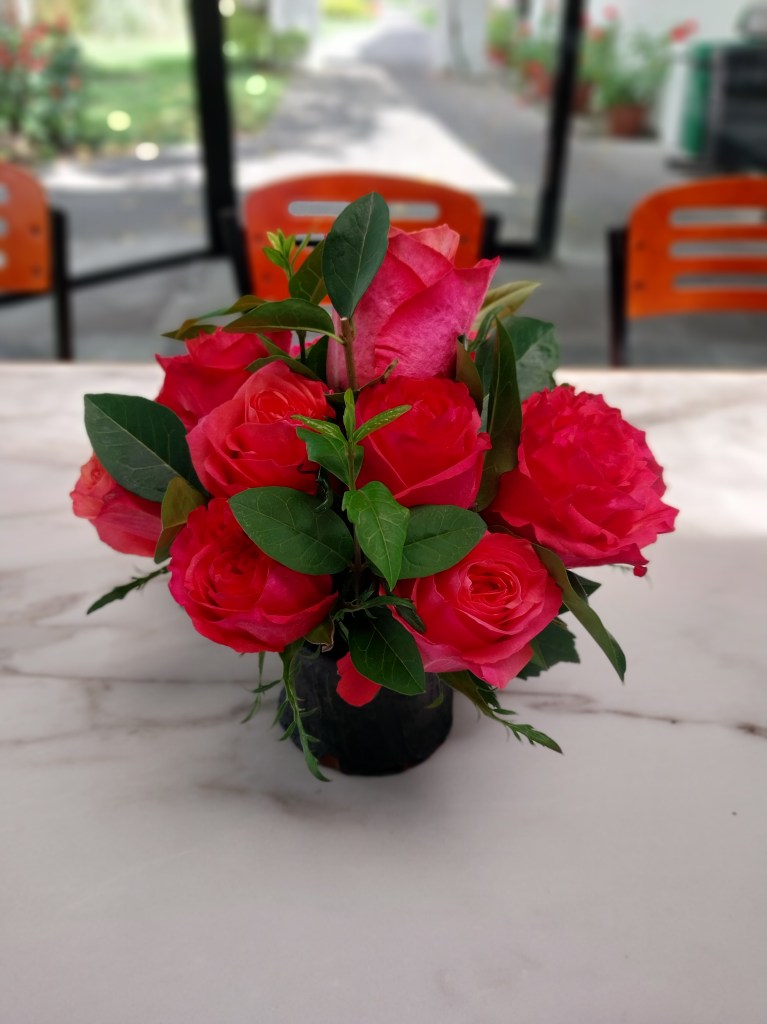
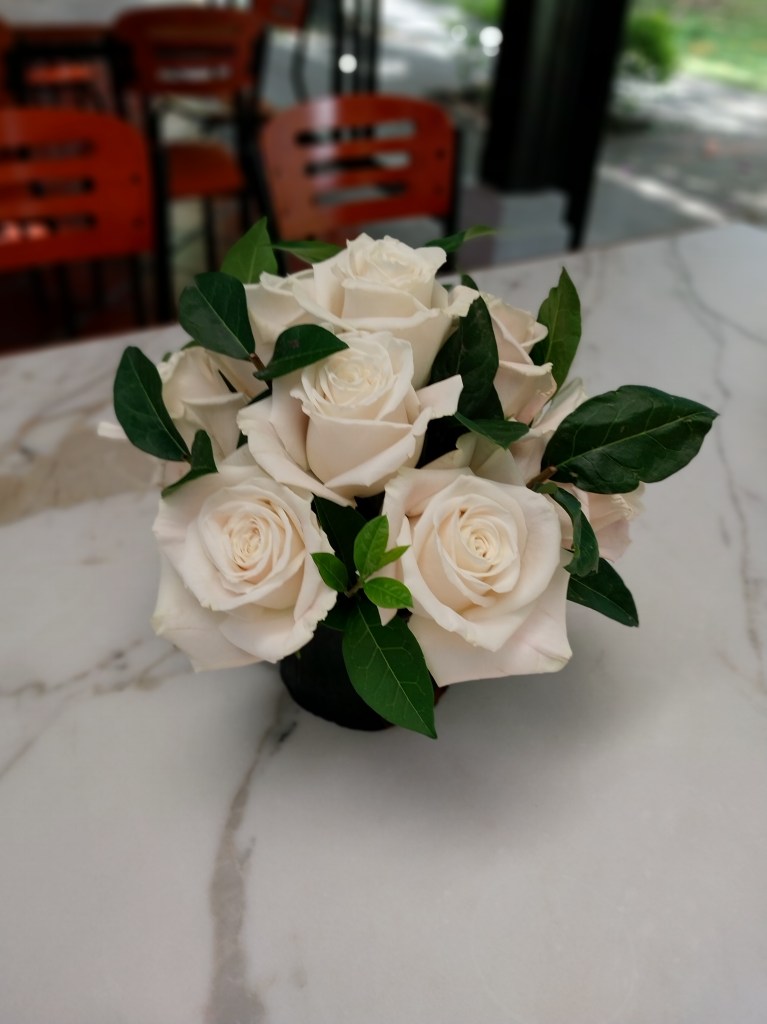
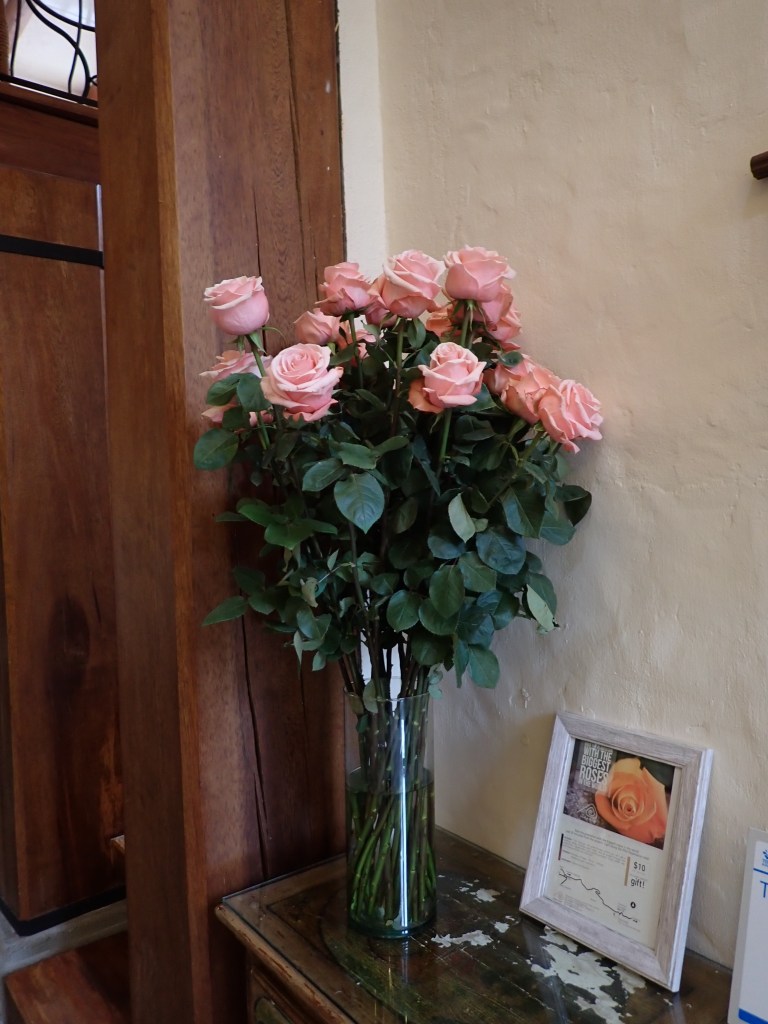
When I flew in to Quito it was late in the evening. I did not see the massive greenhouses that blanketed the hillsides around Quito and up and down the “Avenue of the Volcanoes” from Cayambe to Cotopaxi. Apparently in the 1980’s, the world began looking at Ecuador as an extra special place to grow roses – along the equator, the roses, with constant temperatures and sunlight, grew straight up, had massive stems and blooms. The volcanic soils above 10,000′ rounded out the near perfect growing conditions. Ecuador now produces about 500 varieties of roses to the tune of 1.1 billion dollars (2023.) They are third behind the Netherlands and Colombia in cut flower exports. We were fortunate in our travels to see just a small number of these beautiful roses – mostly adorning the tables and hallways of the various hotels we stayed in.
Good old red roses – about $0.89 a stem – wonder how much this bouquet would cost in the US!This photograph does not do this arrangement justice – they are purple/lavendar.It is said that the multi-color roses are preferred in China while the extra long stems (up to 6′) and bold colors are favored by the Russian customers.Table decorations at San Jose de Puembo
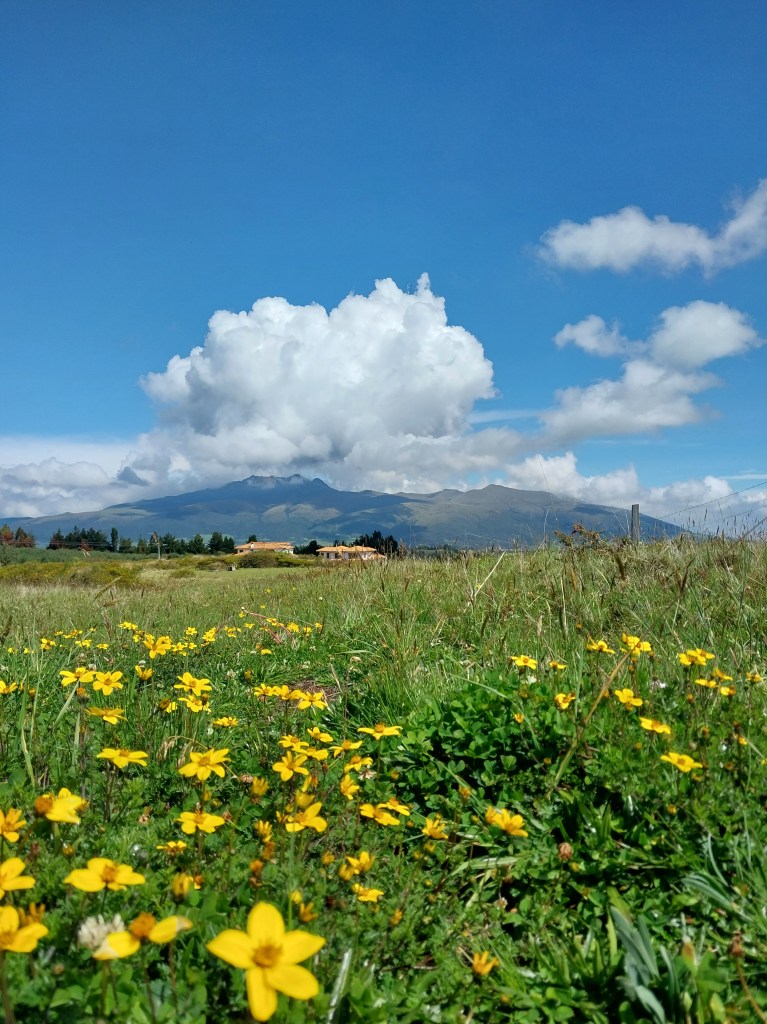
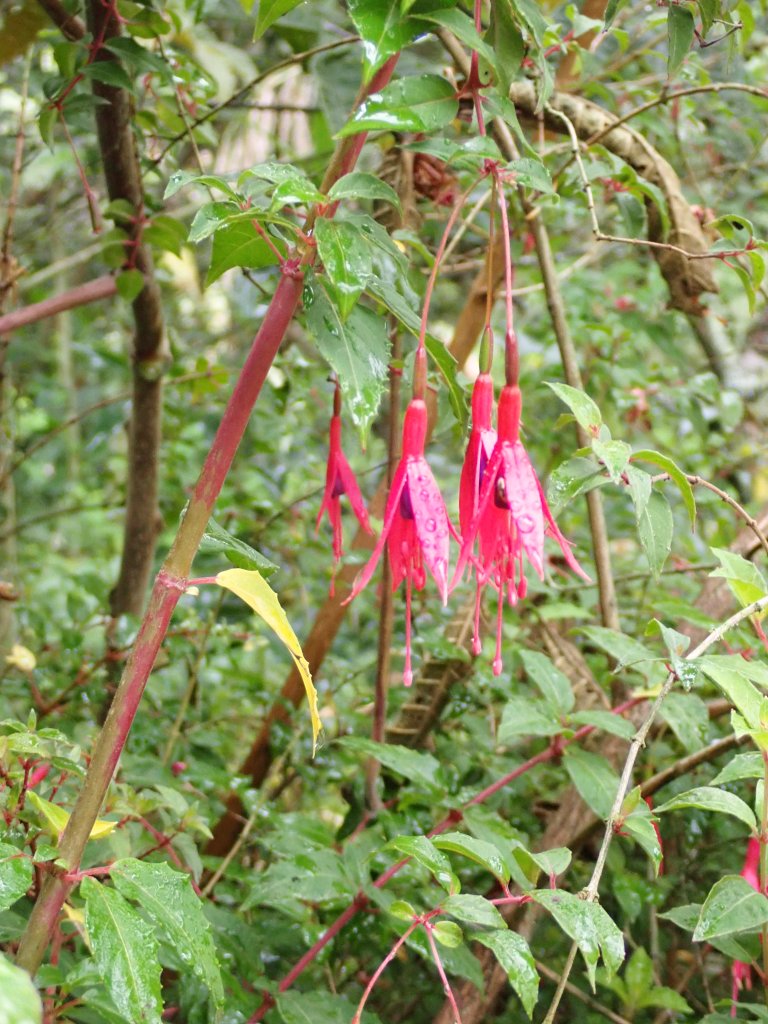
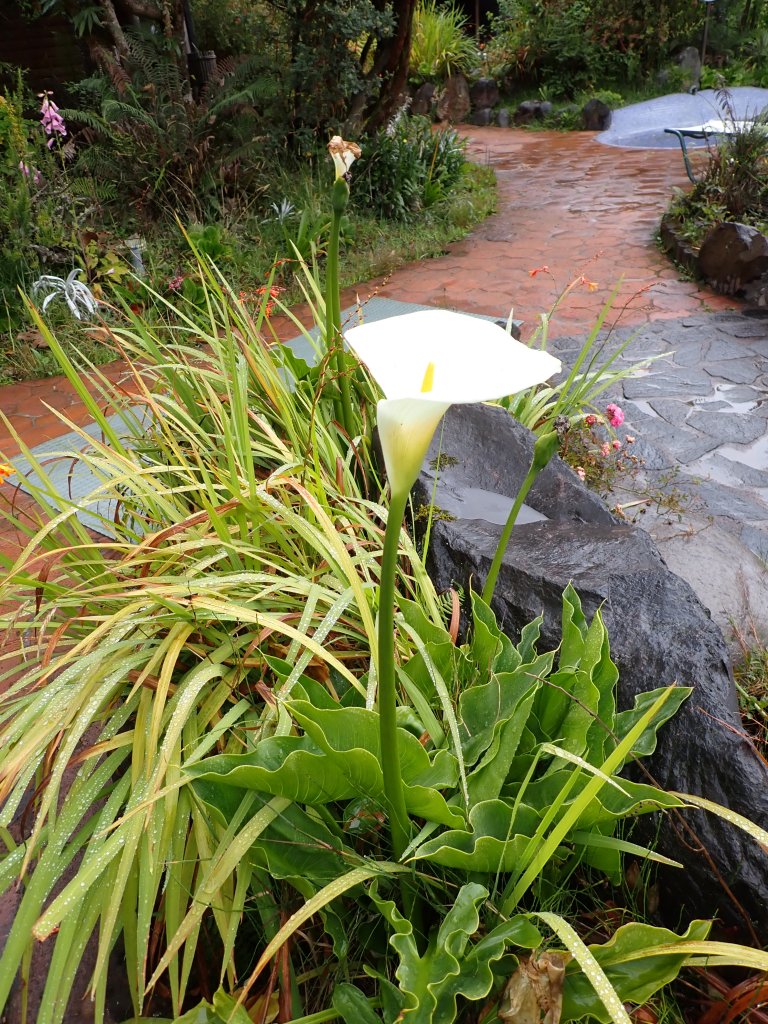
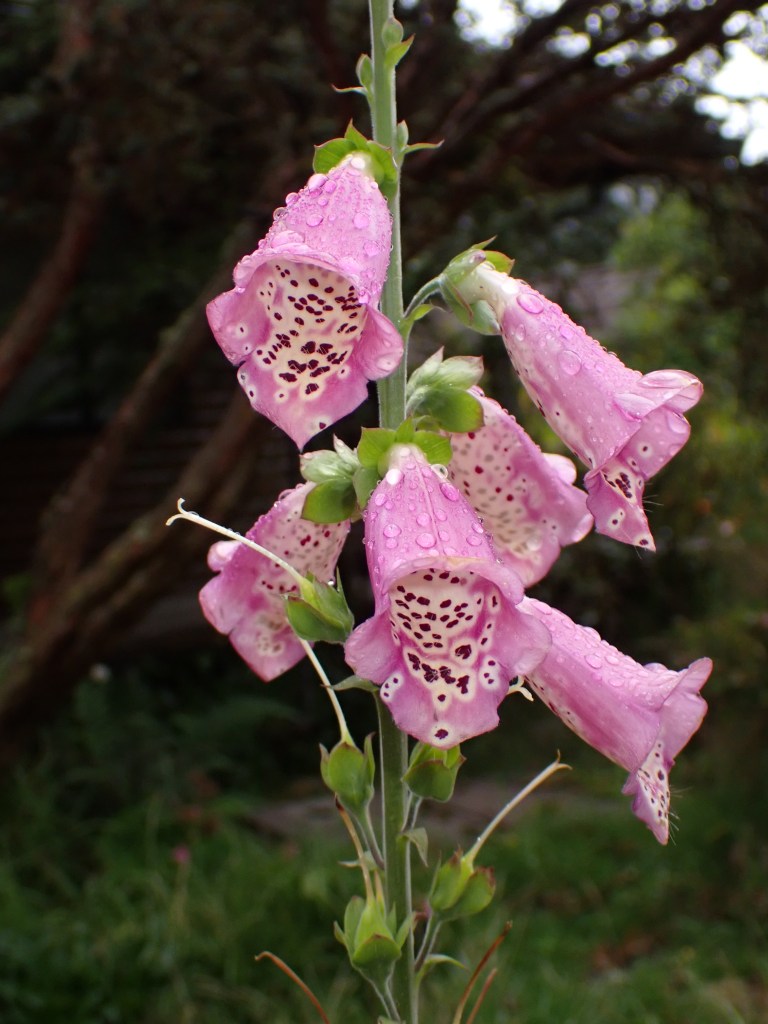
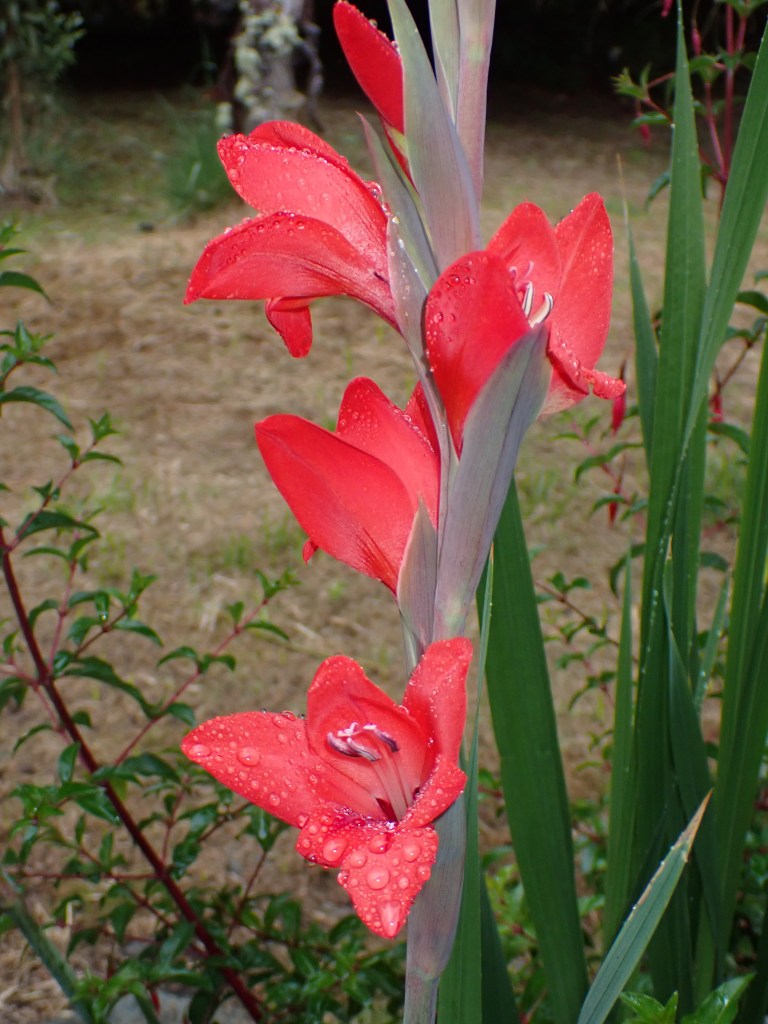
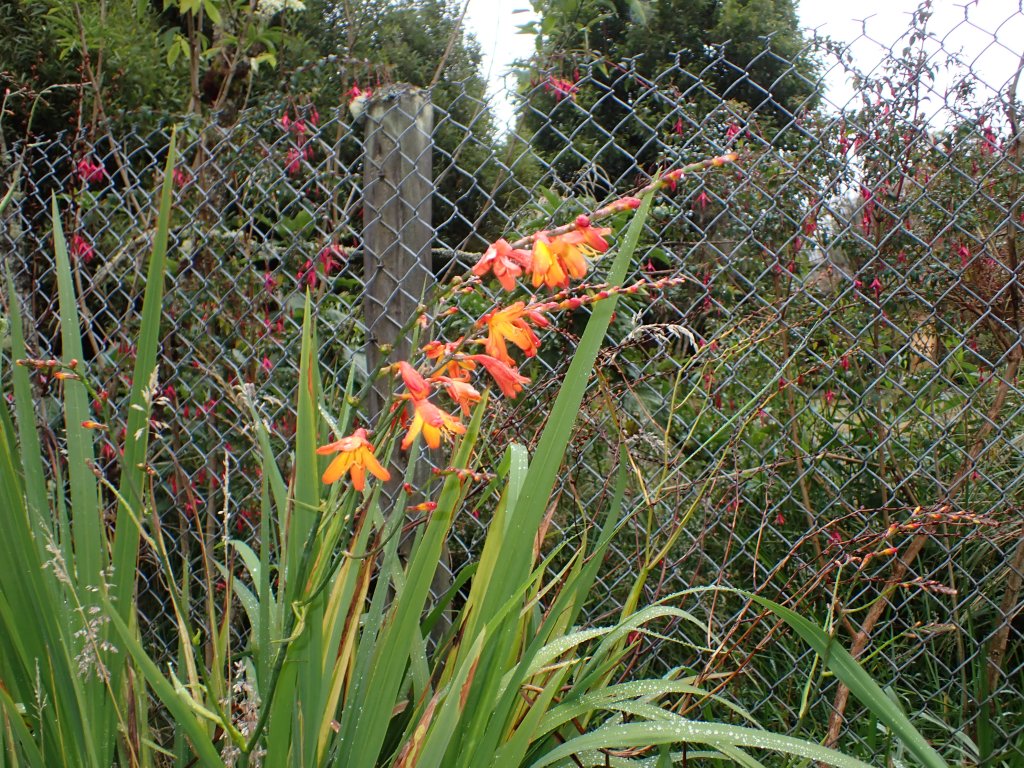
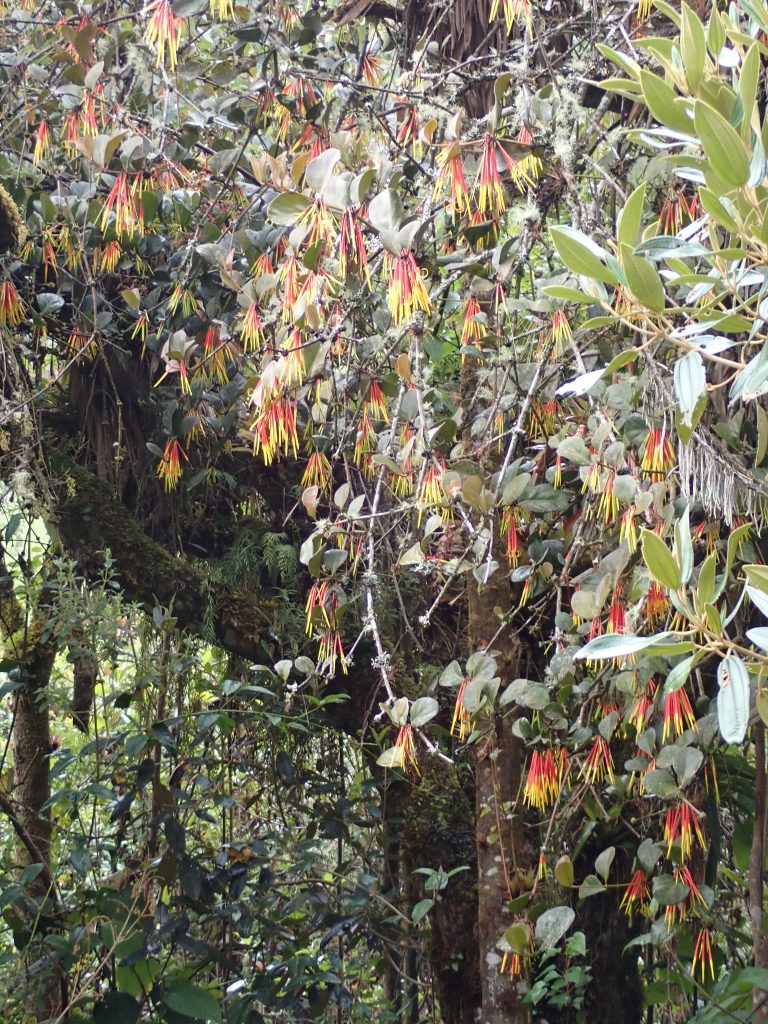
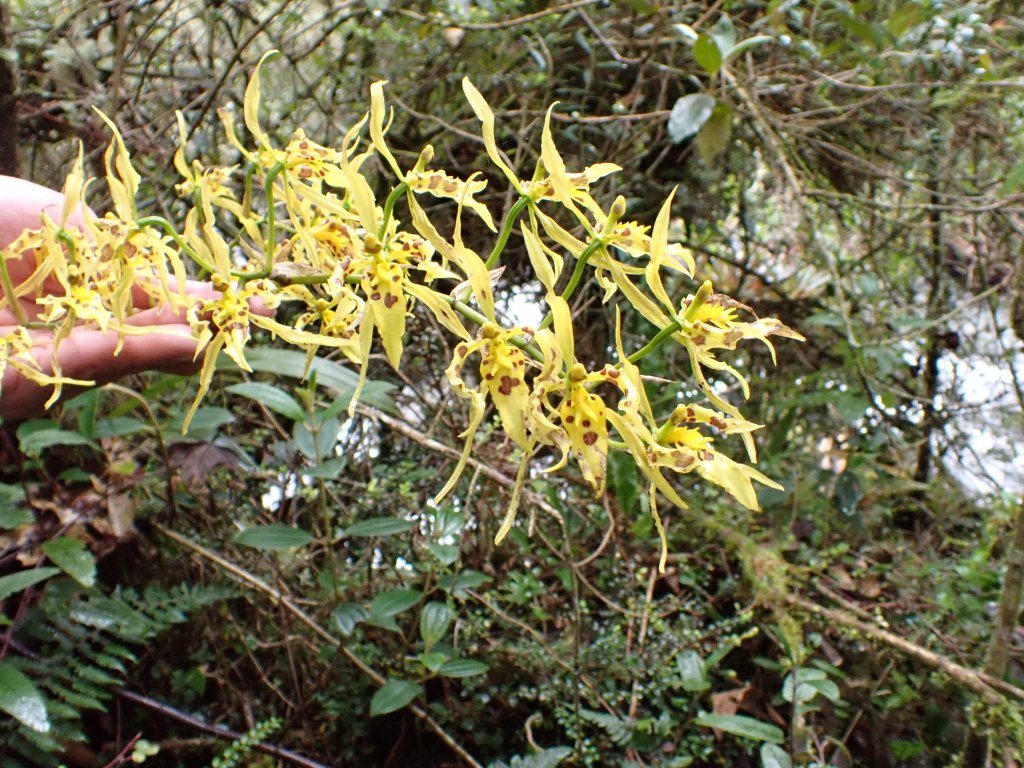
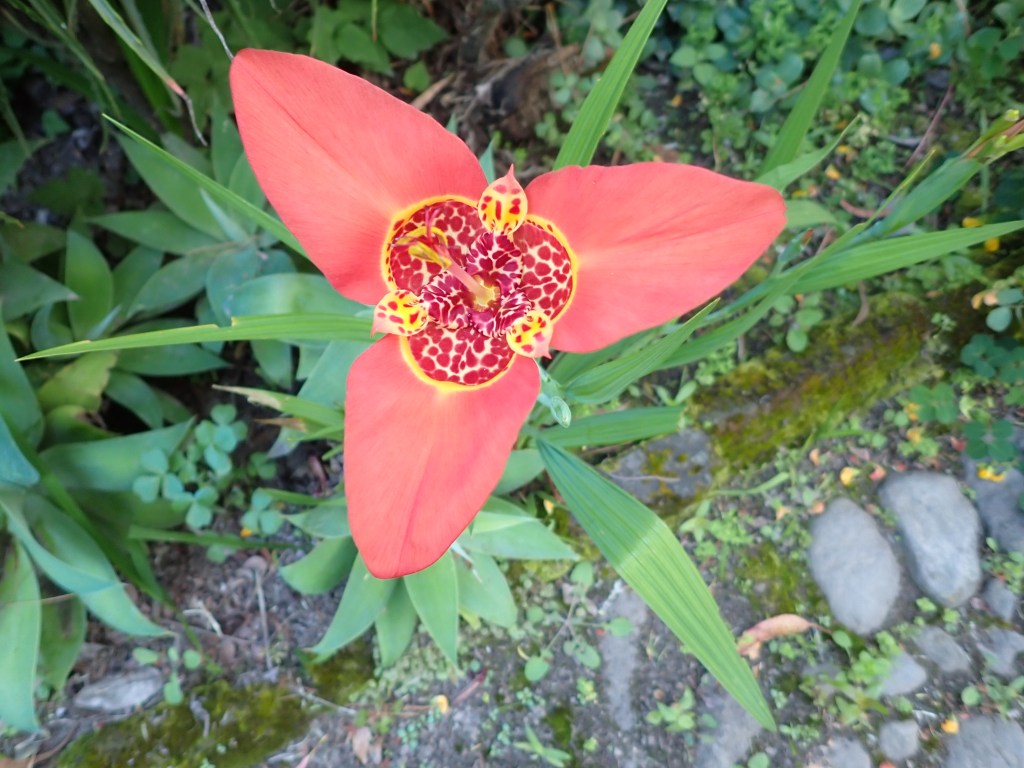
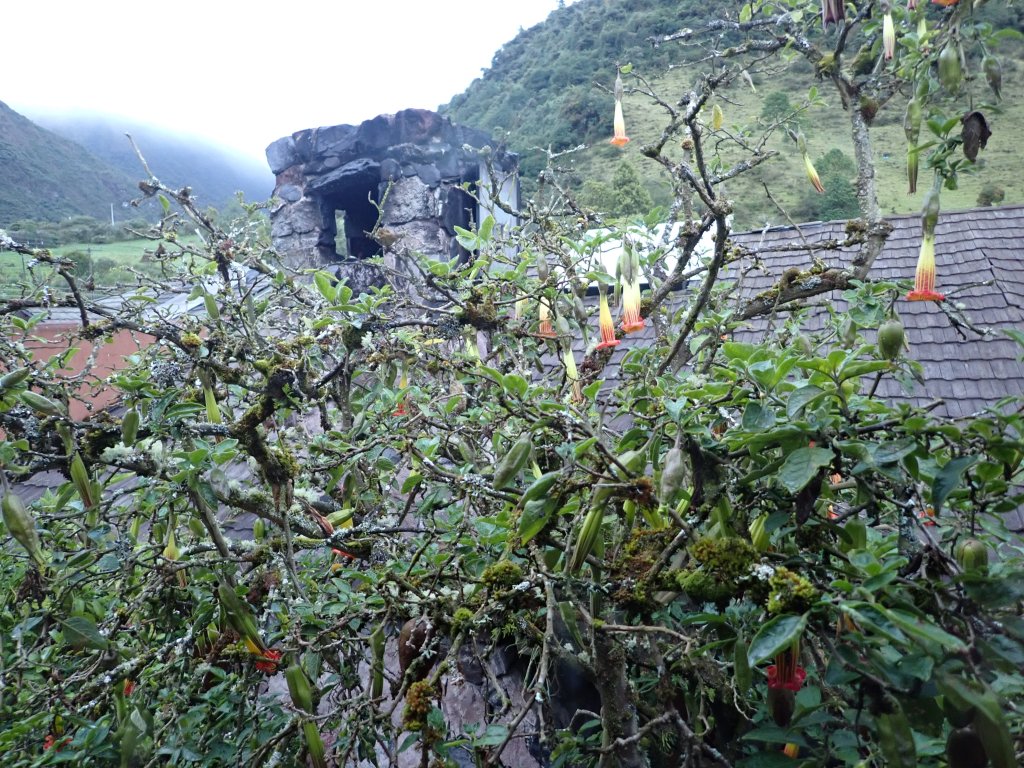
Not to be outdone, the flowers that we saw hiking and wandering were equally beautiful. It was especially interesting to see flowers that we buy at local garden shops (fuchsias, geraniums, spirea bushes, etc.) growing in the wild. We also saw several of the common alpine flowers – lupine and Indian Paintbrush – as we were hiking. The locals use the lupine seeds as part of their diet as a snack. I never had the opportunity to try them but I hear they are good.
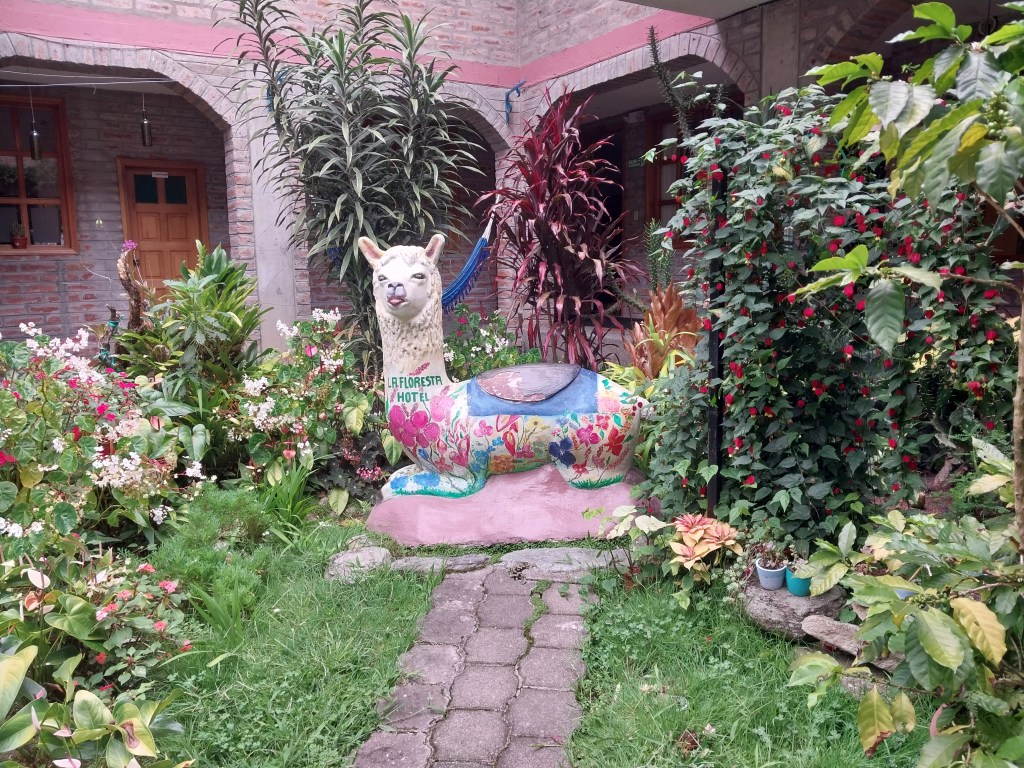
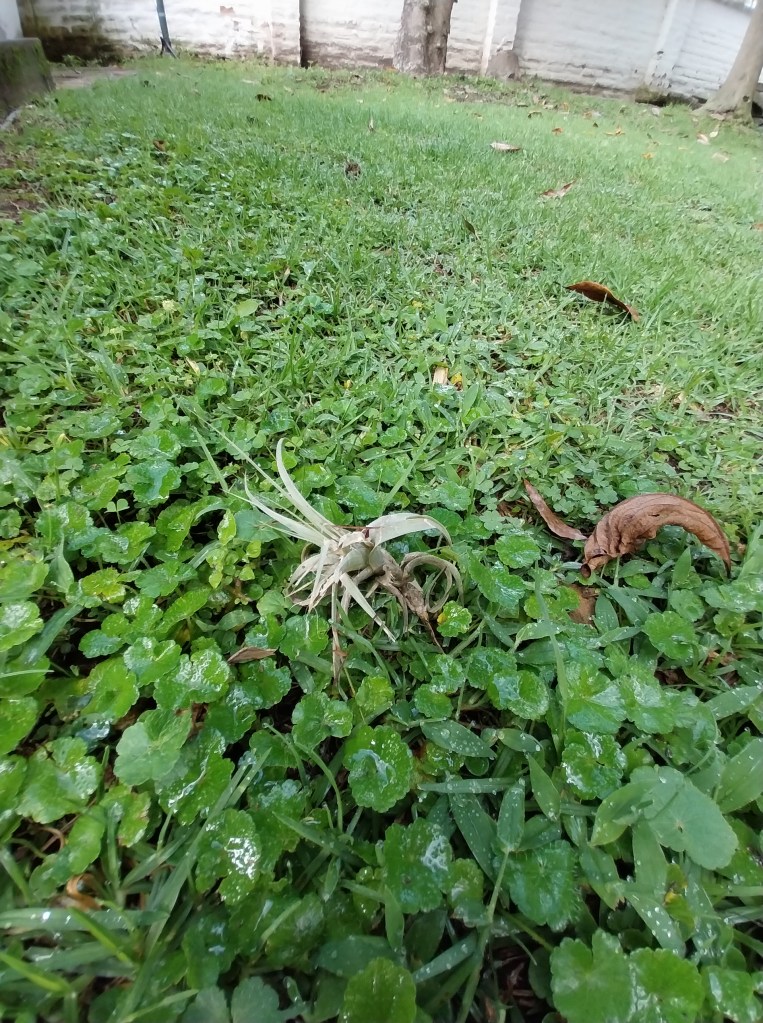
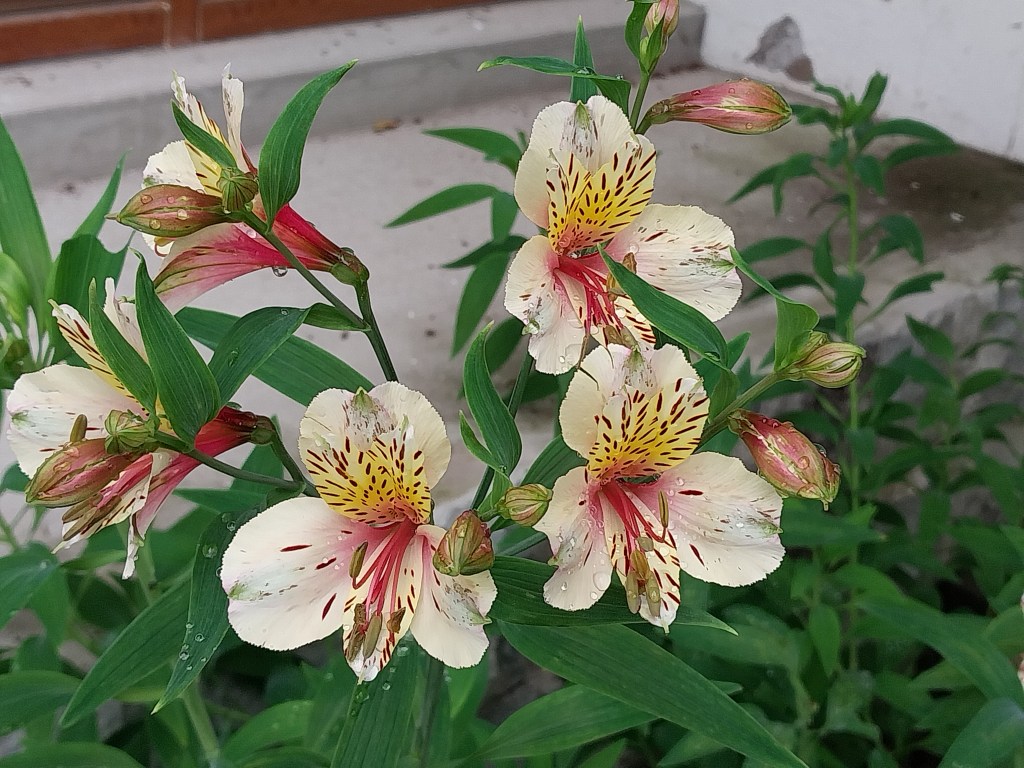
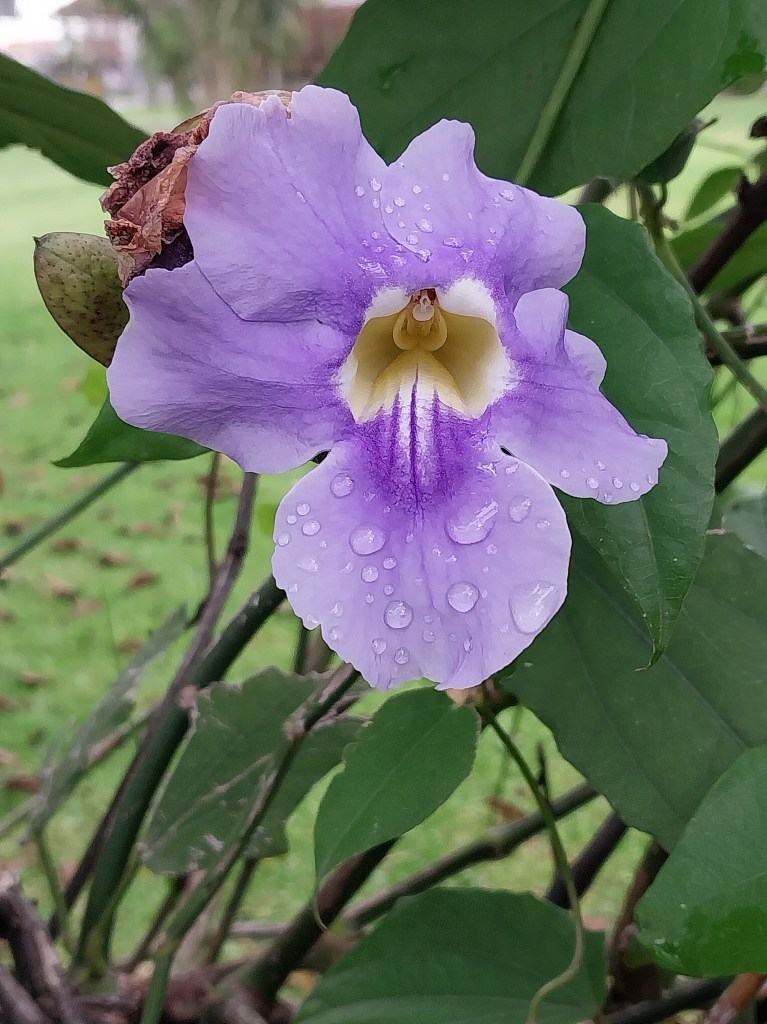
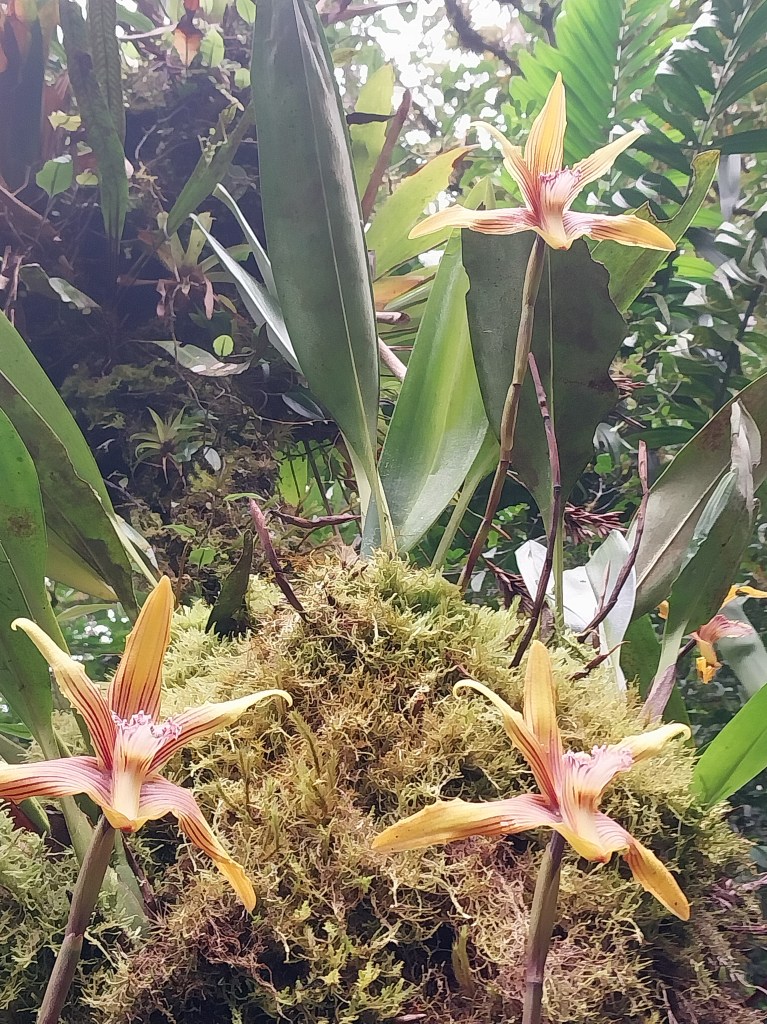
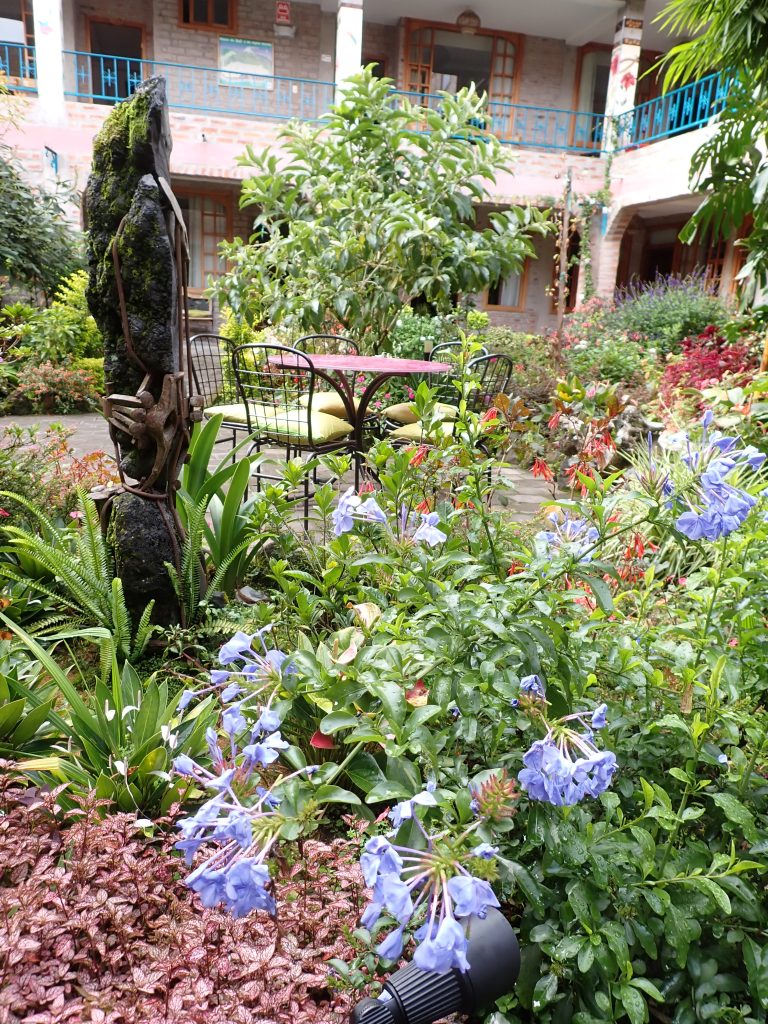
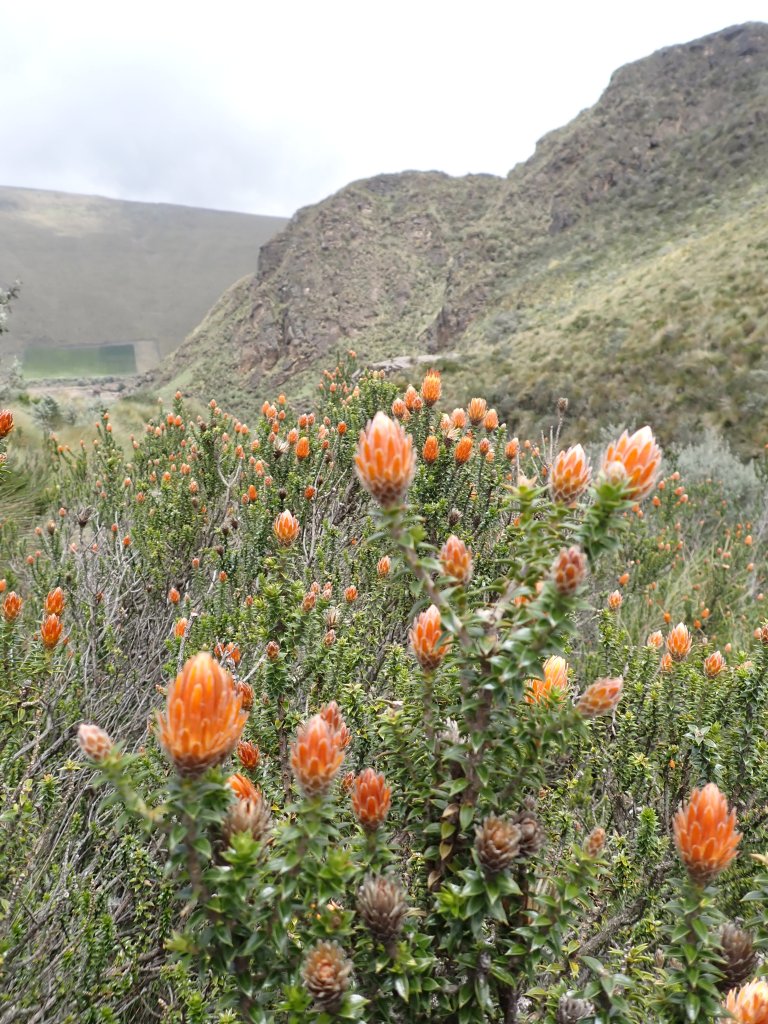
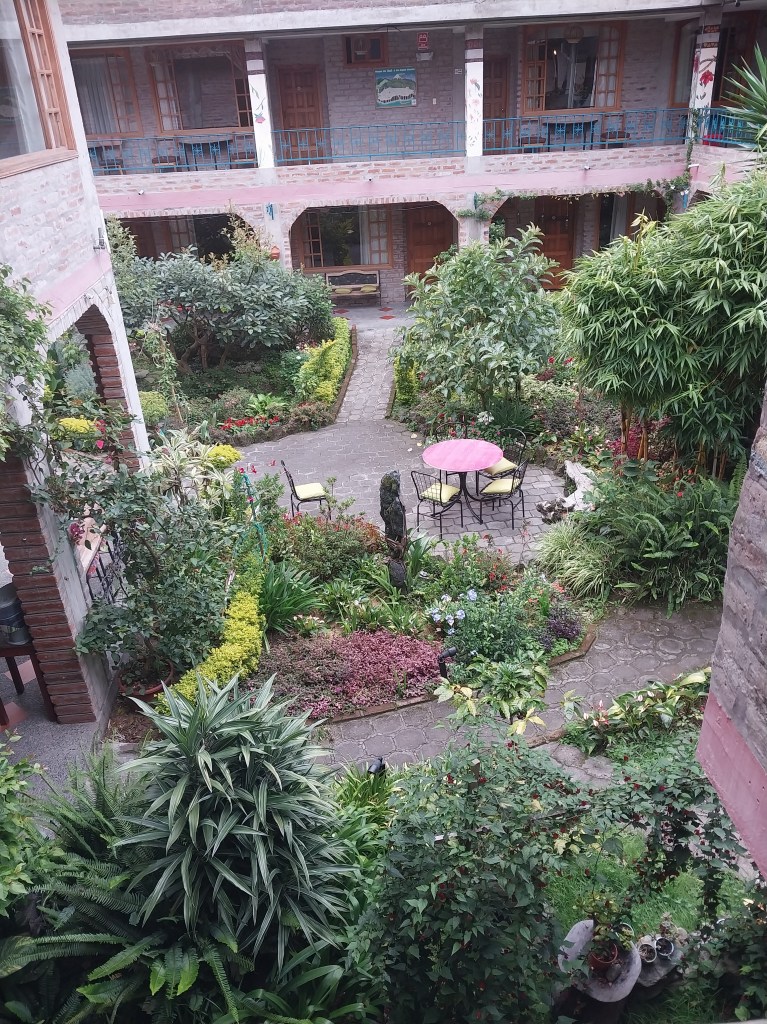
Wildflower fields in front of one of our hotels.This is a popular “air fern” that you can buy as a novelty in the US. Hanging off most of the trees and then dropping off in the windstorms, it was hard not to pick up a few and try to smuggle in my luggage!Obviously a popular variety in US bouquets.Even though this one was a bit mangled, the color was stunning.Orchids growing next to one of the waterfalls we visited.Fuchsia growing wildCalla lilyI have the same color Gladiolas in my garden!Another variety of orchid that we saw on one of our walks.Beautiful gardens in the courtyard of La Floresta hotel – they smelled as good as they look.These were in a meadow on the lower flanks of Chimborazo.
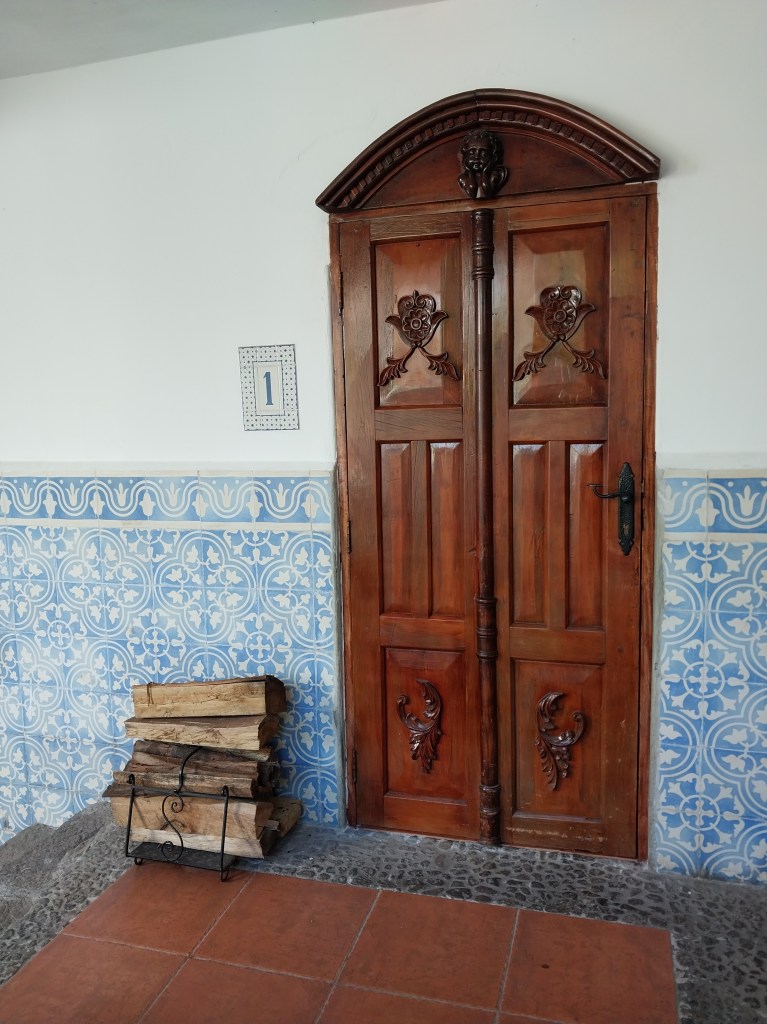
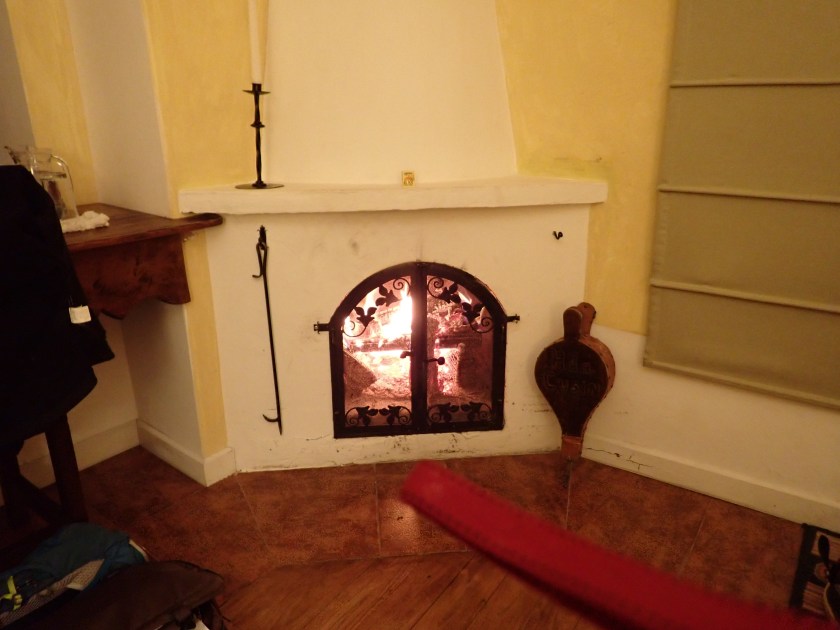
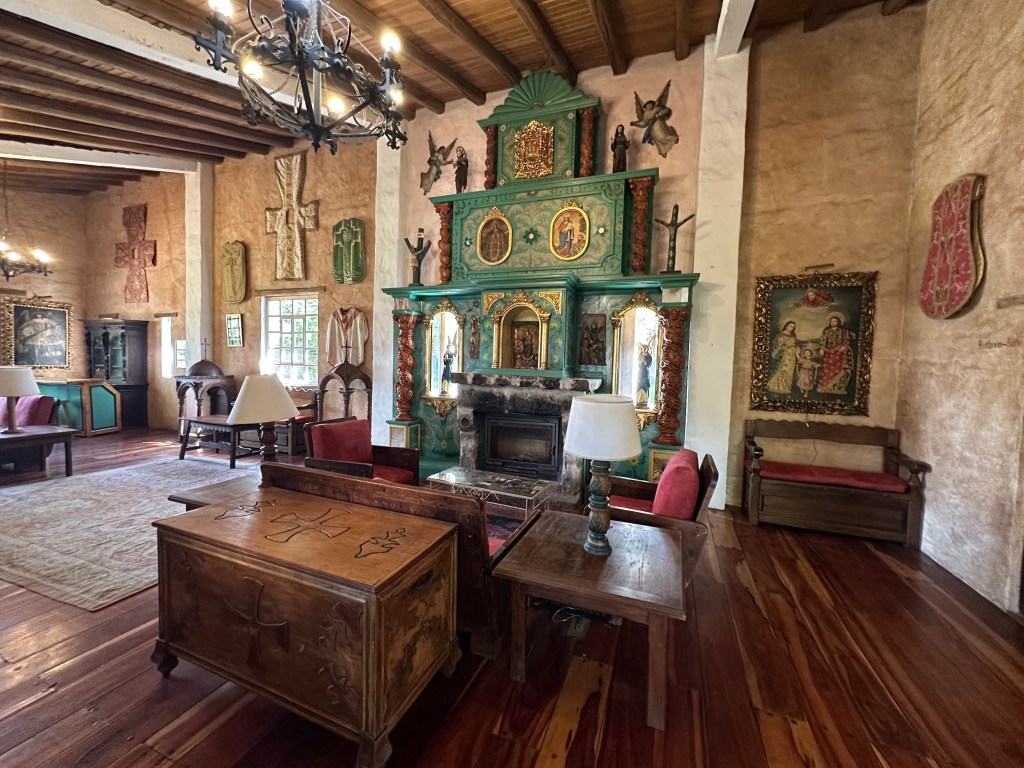
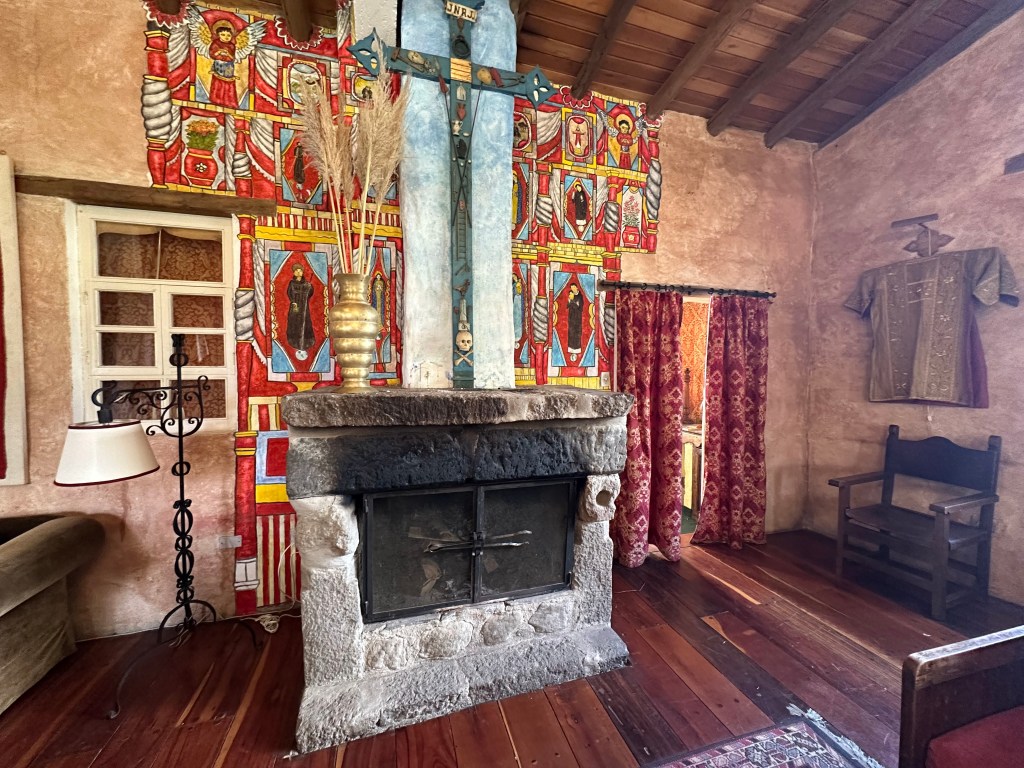
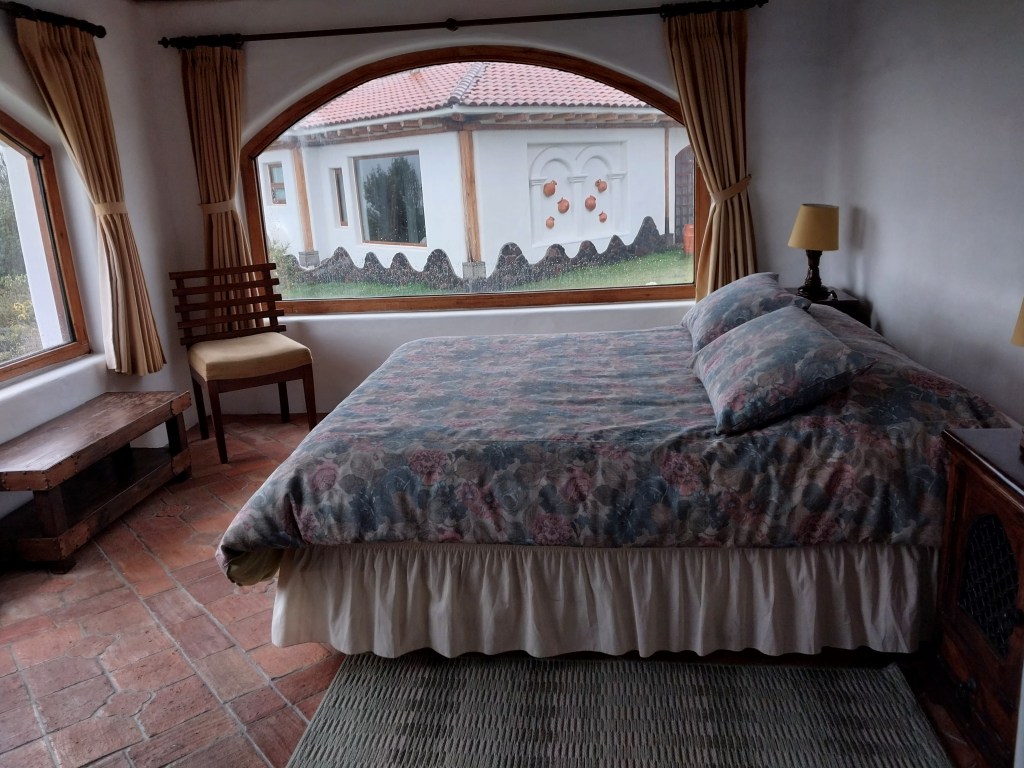
By US standards, most of the hotels we stayed in would be classified as luxury resorts – and at about 1/4 the price. In general they were on stunning grounds and many were restored 17th century haciendas and compounds. Many had original architecture, wood, doors and most had updated, modern amenities. Those that didn’t well, how about a fireplace in the room and a hot water bottle in the bed while you ate dinner?
Even the refugios/huts that were high on the mountains were adequate. Running water and hot showers were sometime lacking but what the heck, we are supposed to smell like climbers!
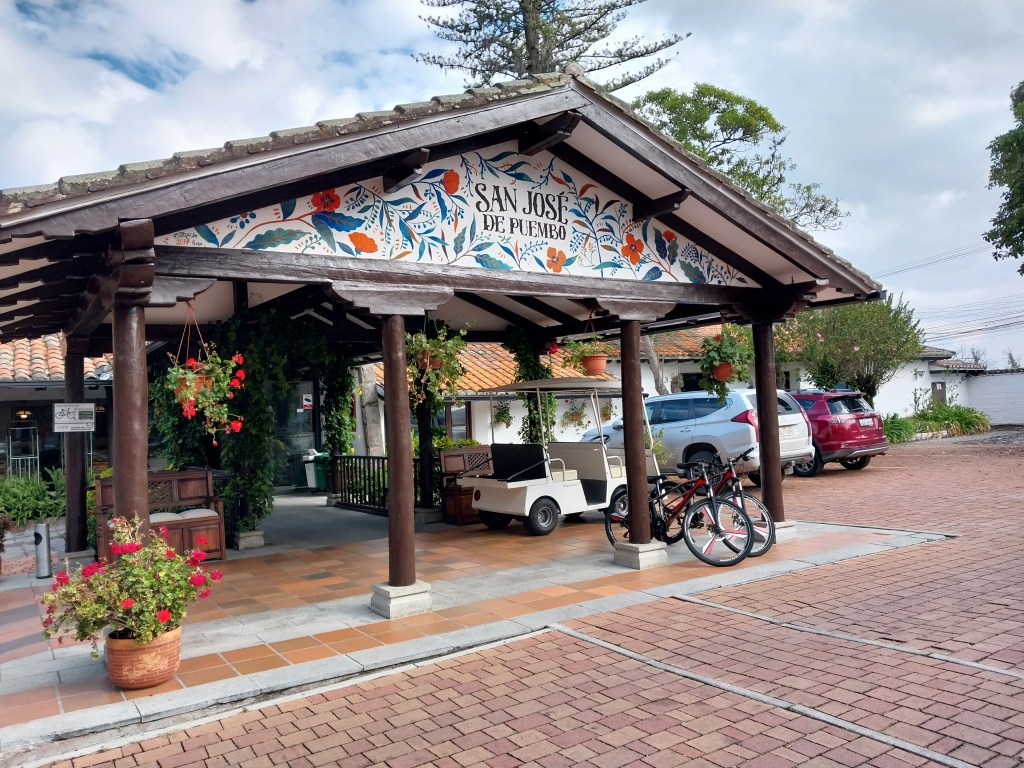
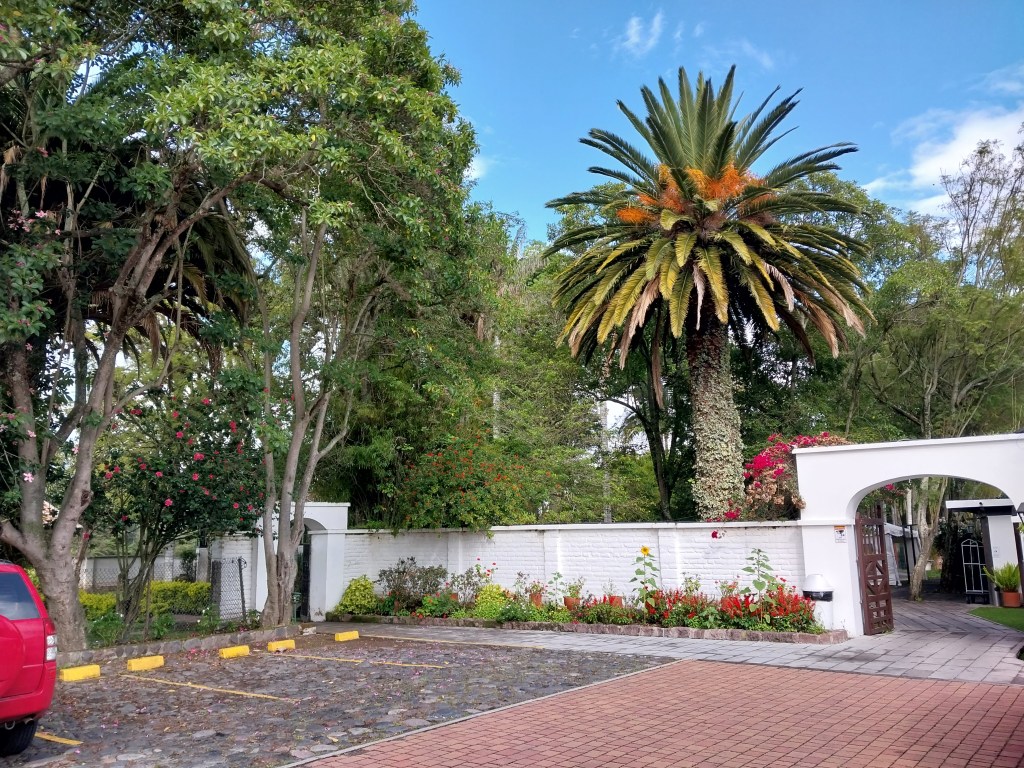
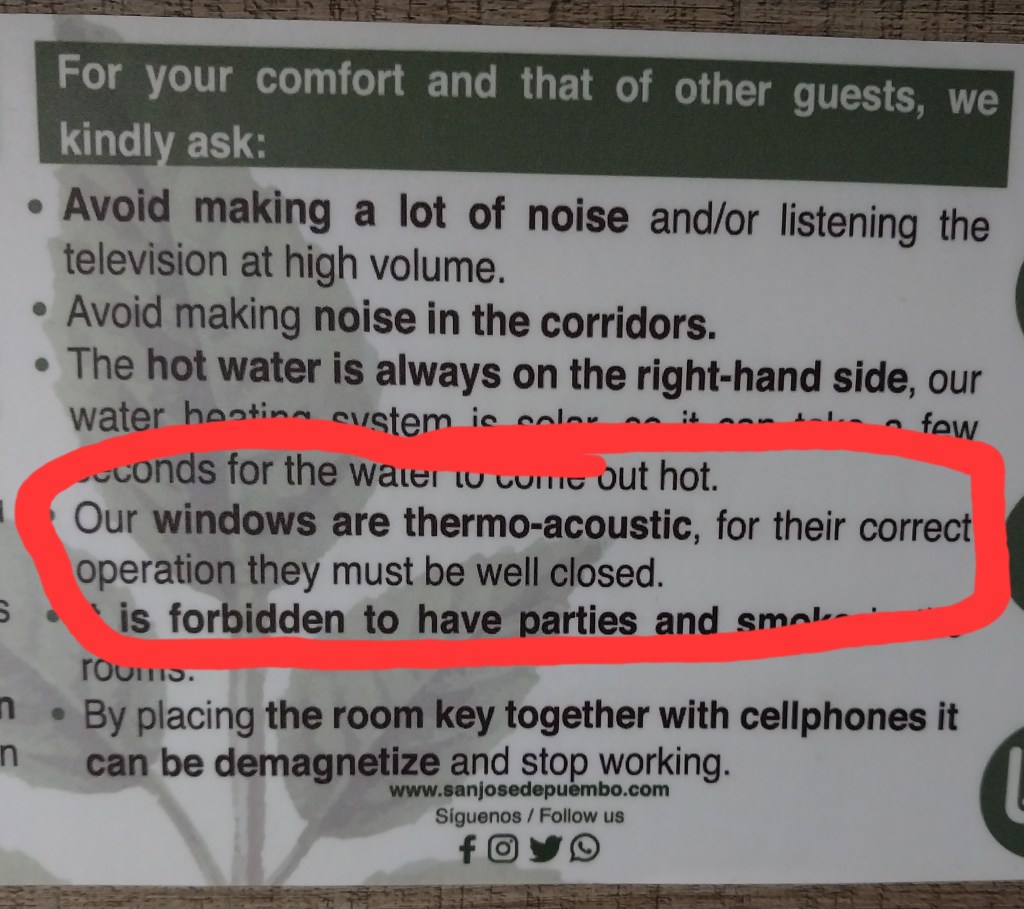
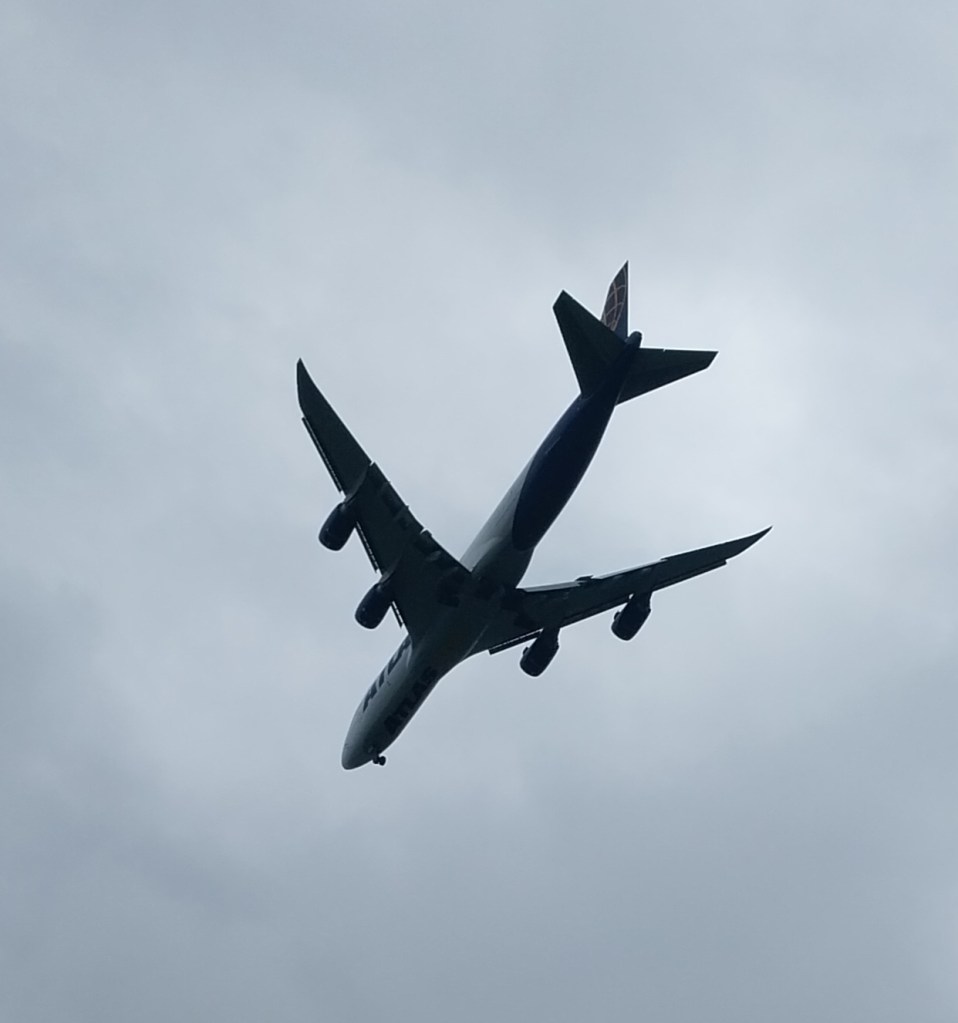
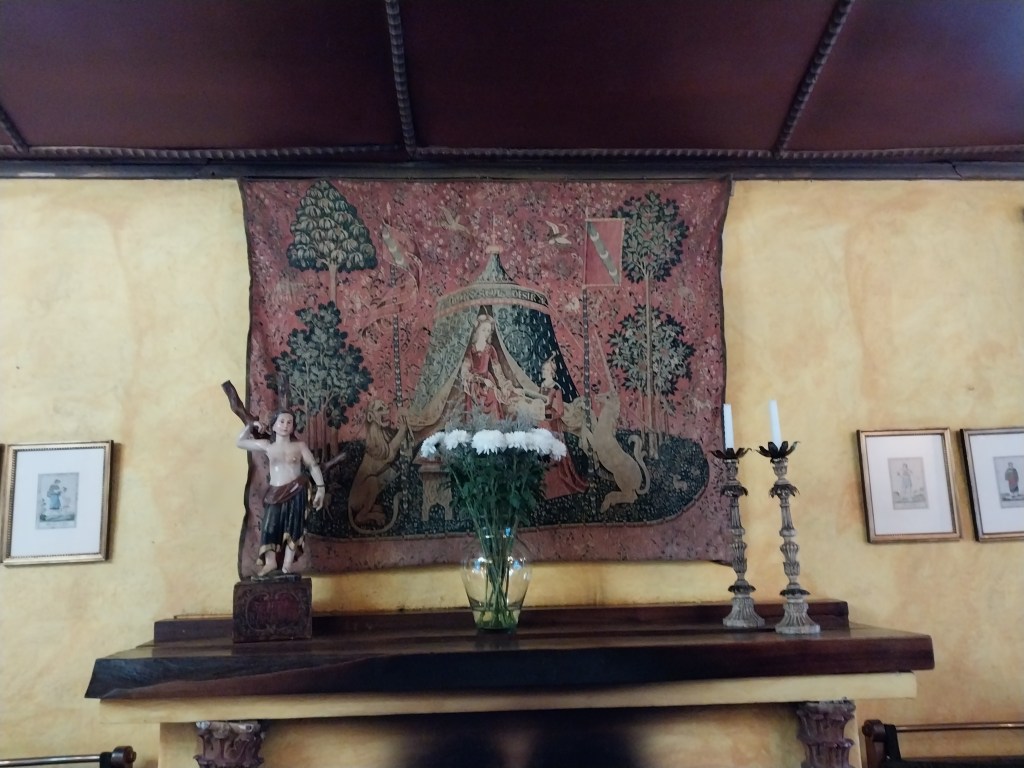
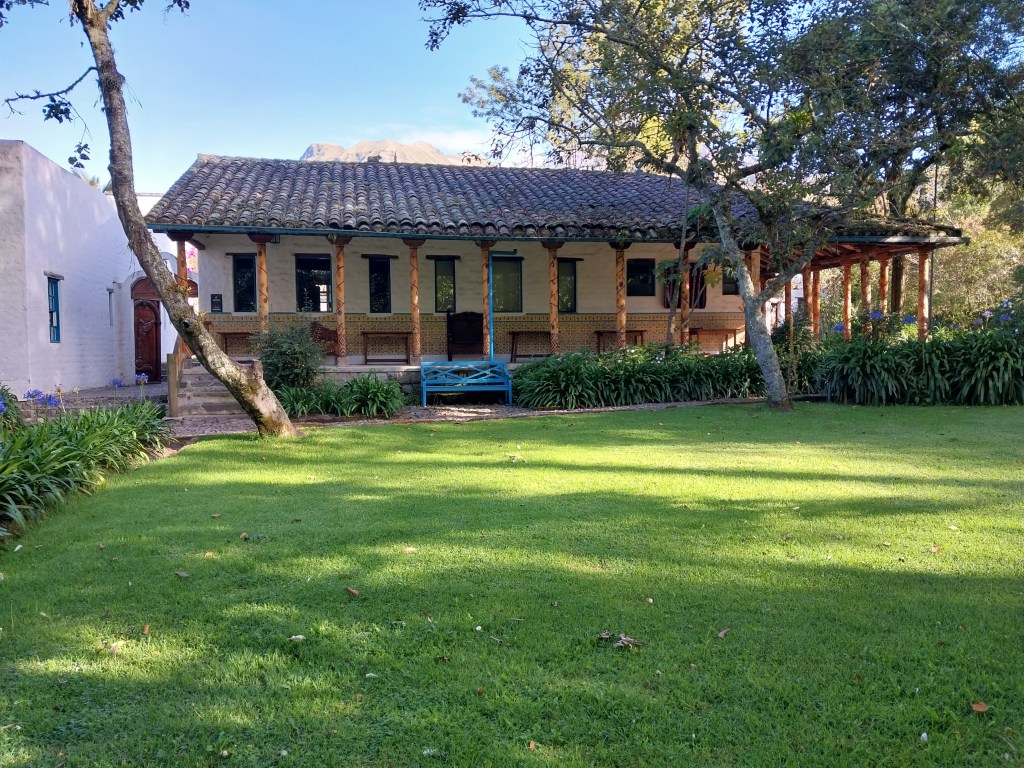
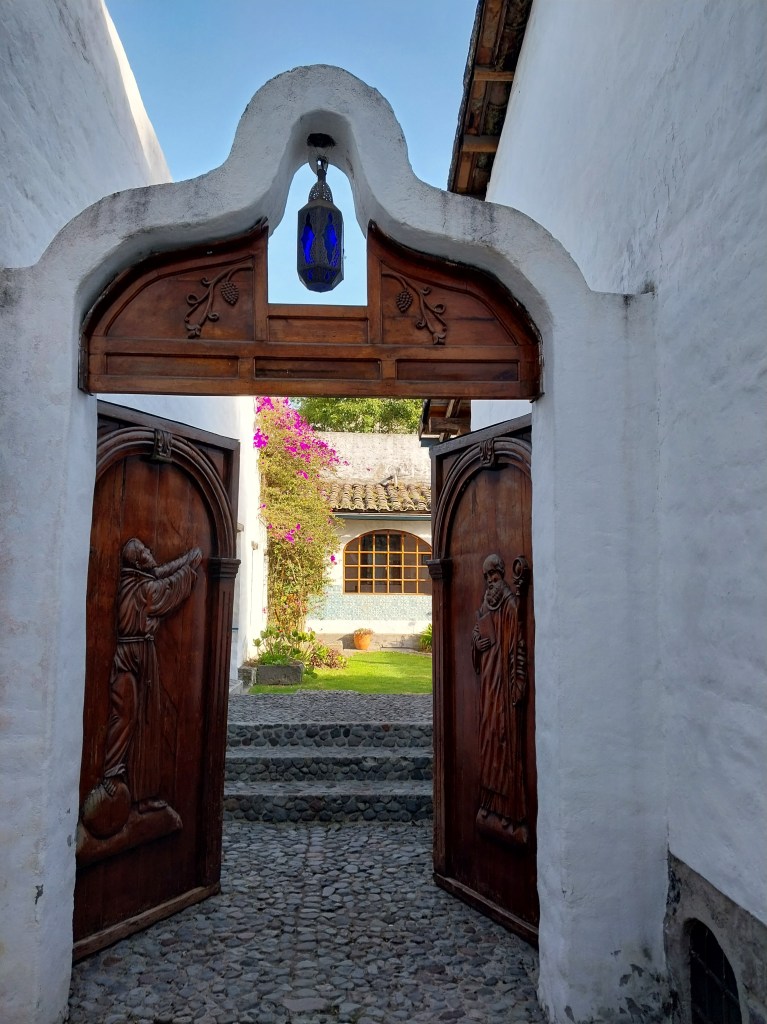
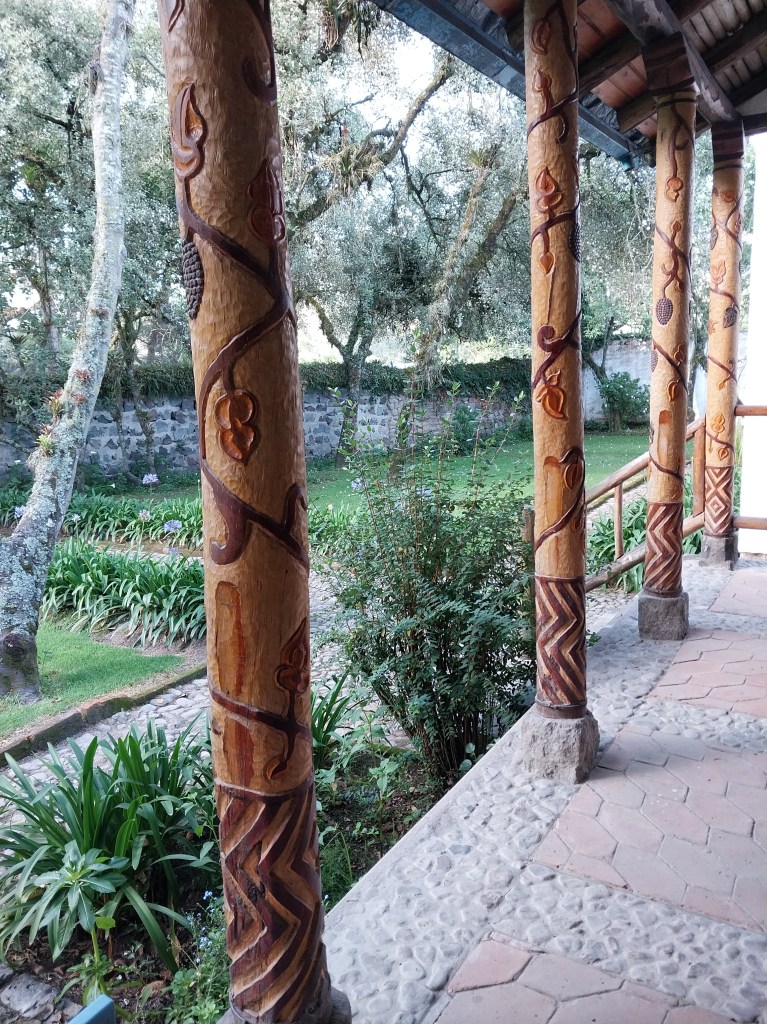
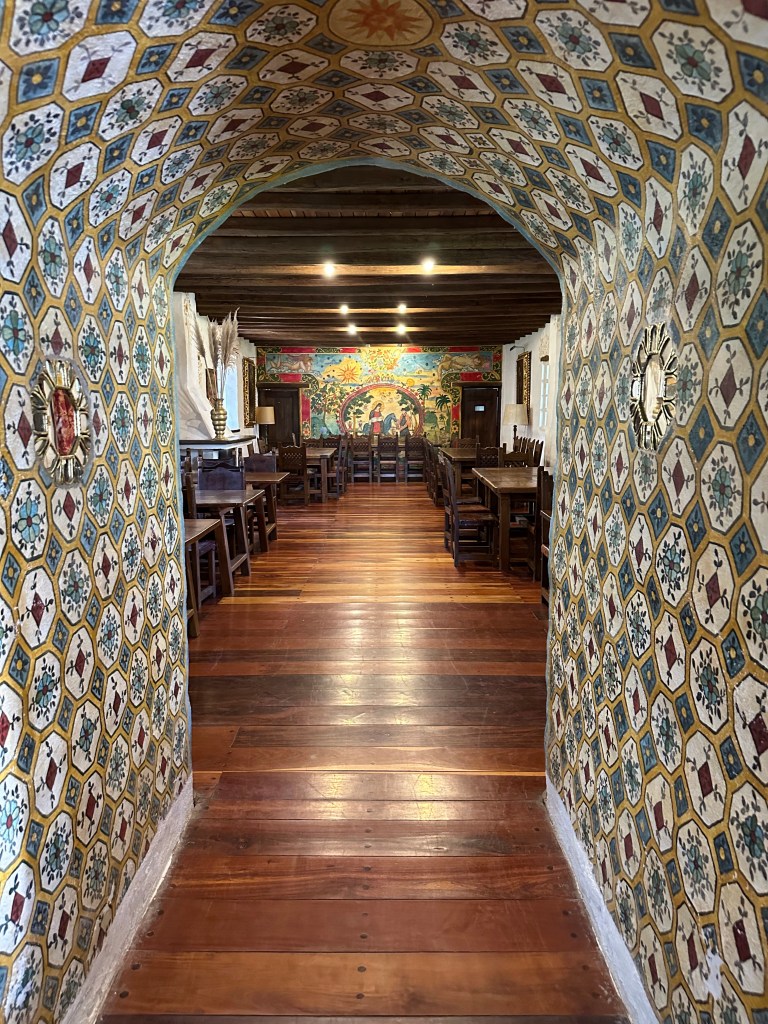
The first hotel we stayed in was the San Jose de Puembo. The hotel’s main house, part of the former Hacienda San José de Puembo, dates back to the 17th century and features fascinating architecture with adobe walls, columns made of capulí, lamps made from wagon wheels and beautiful colonial paintings. They have a huge, modern gym, multiple pools and beautiful gardens, as well as a petting zoo for the kids. They are located directly under the flight path so it did get a little loud, at times!
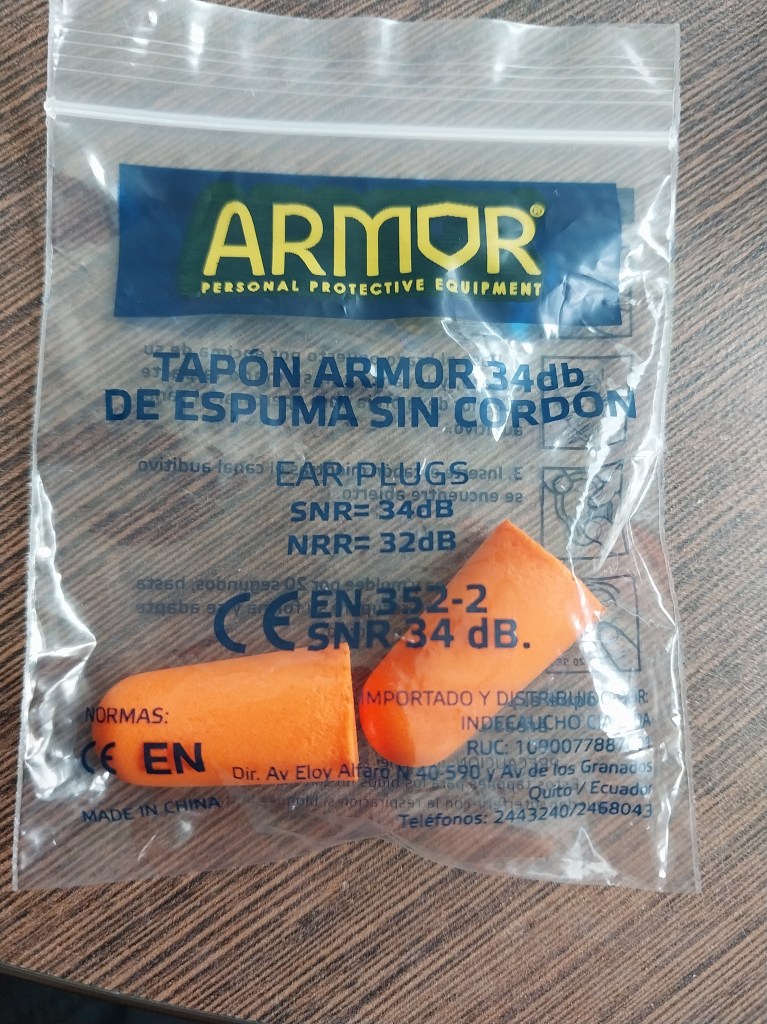
San Jose de PuemboFront entryThe airplanes started coming in around 5:30 in the morning – I was already up so no big deal!Free earplugs in the vanity kit.No wonder they made such a big deal about earplugs and closing your room windows tightly.
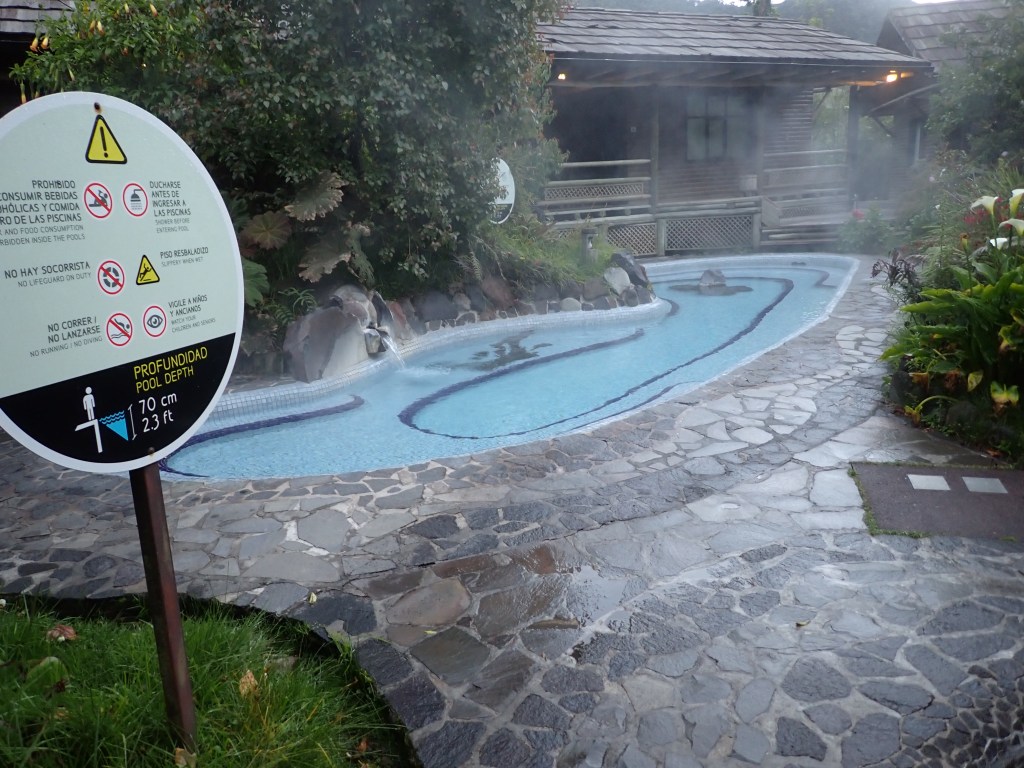
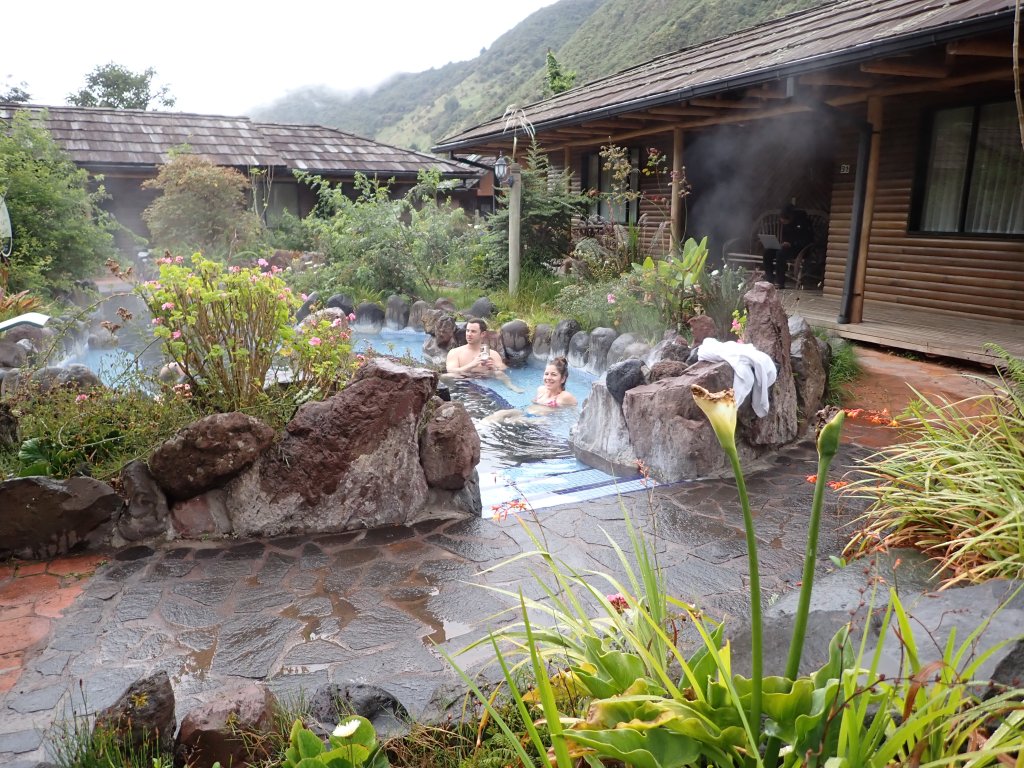
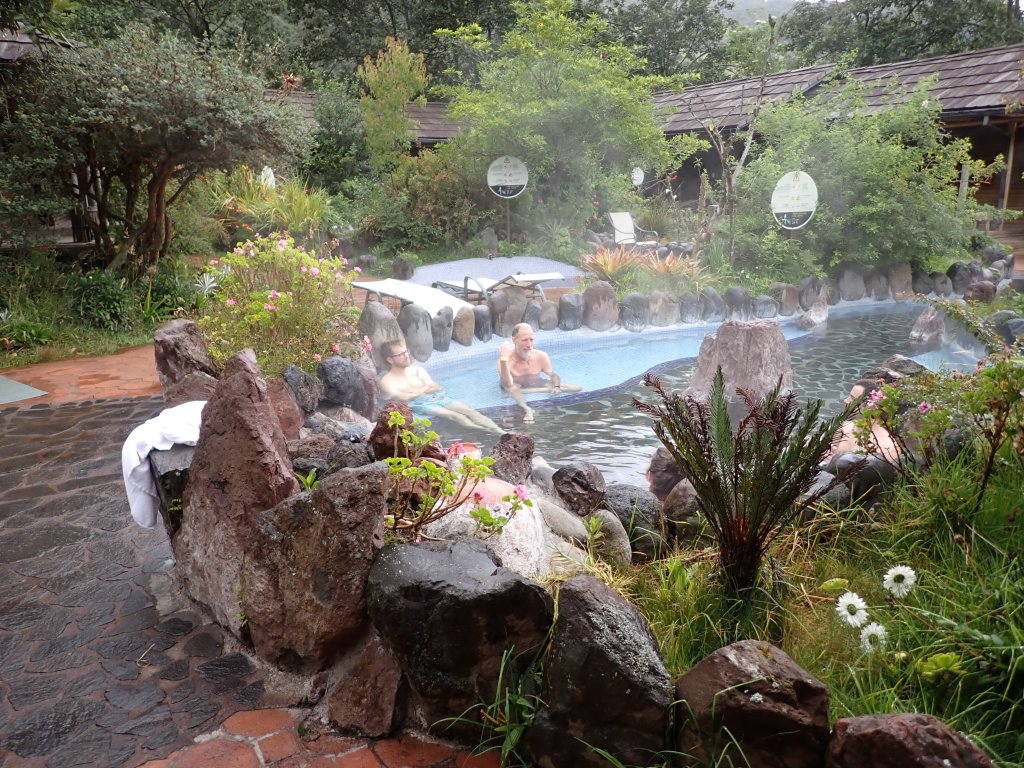
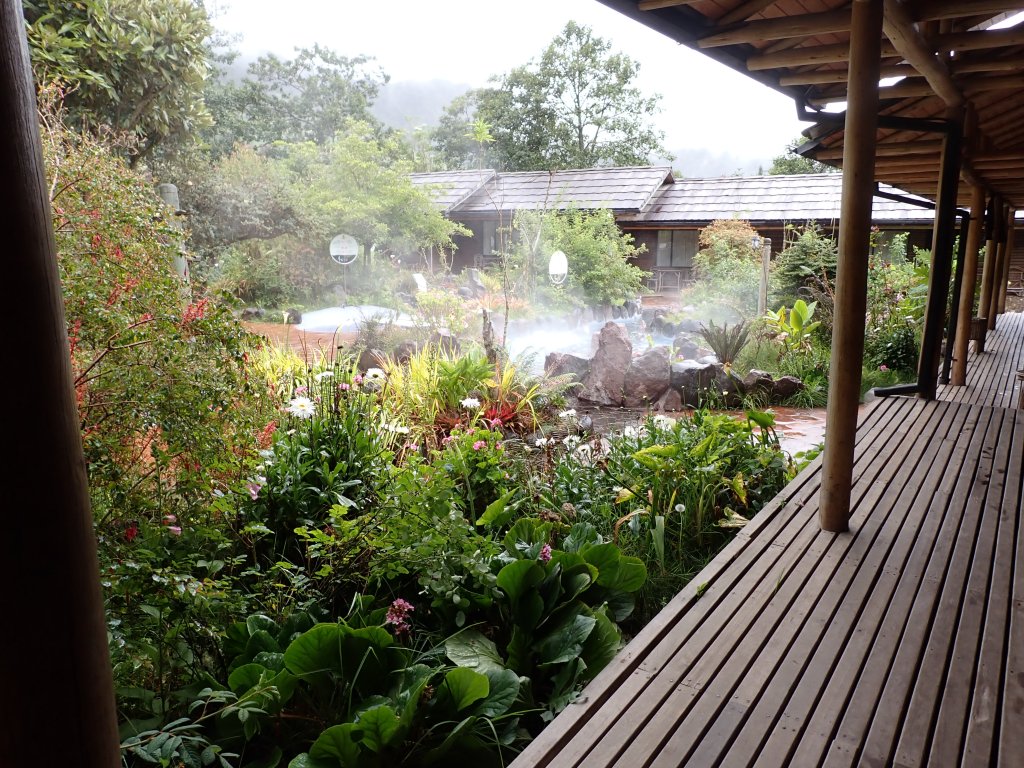
The second hotel we stayed at was a hot springs resort – Termas de Papallacta and there were hot springs right outside the door of the room and the grounds were stunning. We stayed there for two nights – certainly could have stayed there longer!
Early morning at 6:30am – had the pool to myself!Flowers and fruit everywhere.comfortable, even in the drizzle.Enjoying a soak after the Pasochoa acclimatization hike.
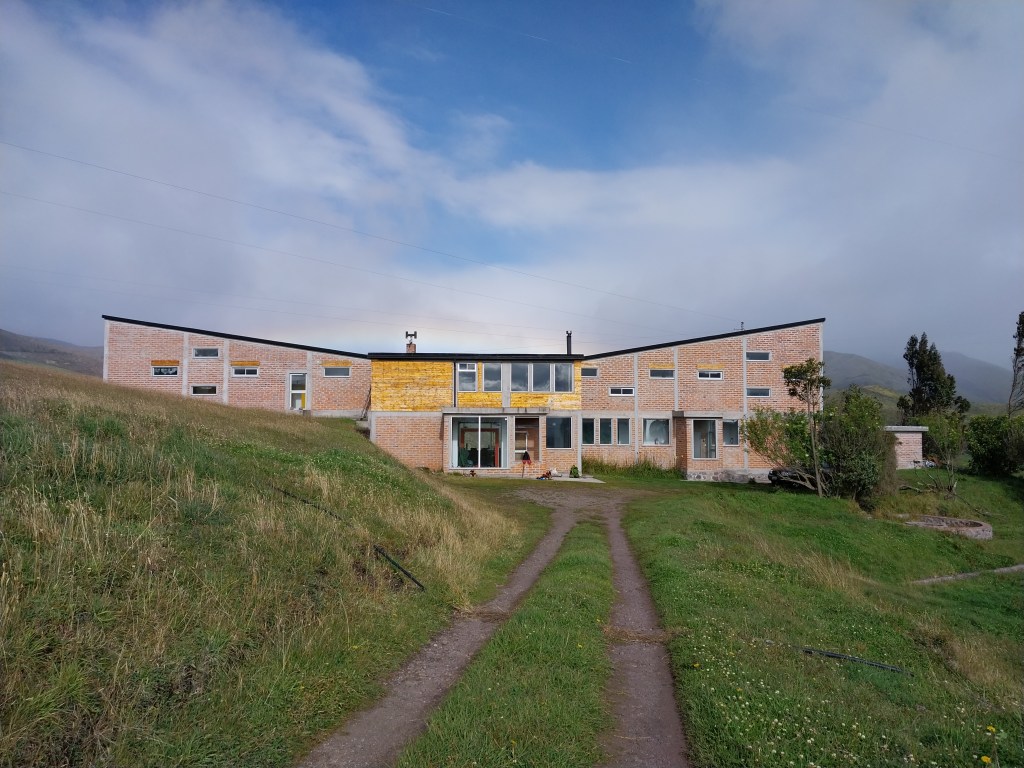
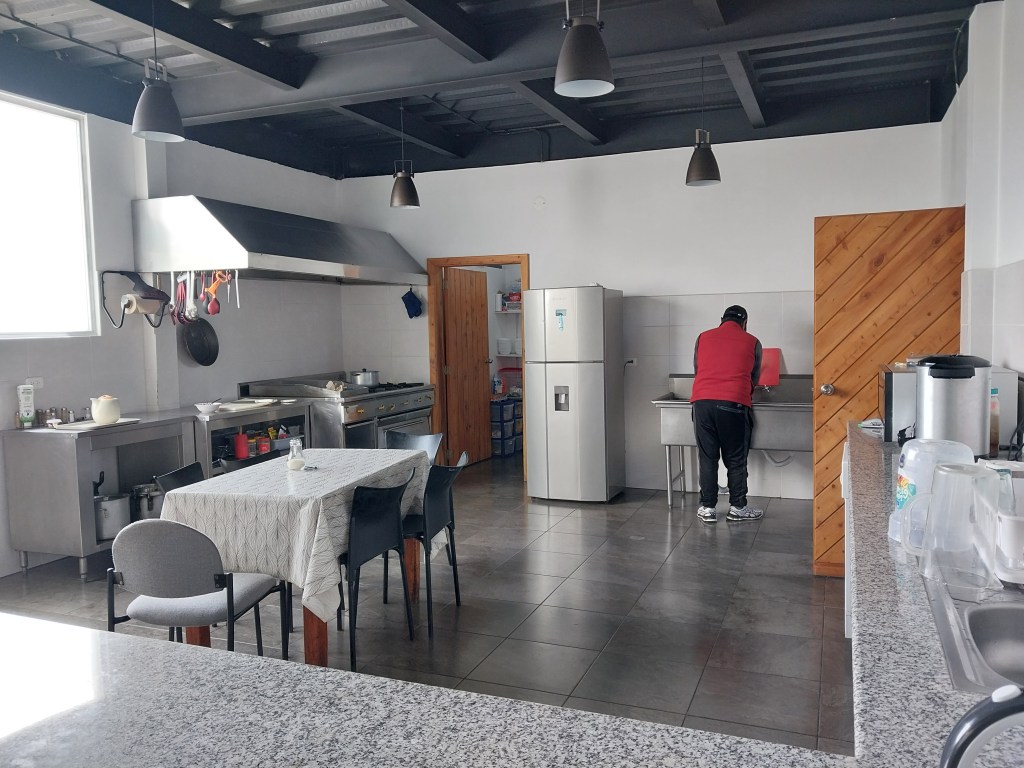
The next lodging was at the Yanacocha Lodge. This was a fairly new lodge with a beautiful, huge kitchen, dining area and a spacious bunk area where we all slept. There were occasional views of Cayambe, our first objective.
The sleeping quarters are on the left hand side.Clean, modern kitchenLounge/Dining areaDining room with massive windows that have a view of Cayambe.First, decent view of Cayambe from the lodge. After many days of rains and storms, we were excited to see the clearing skies.
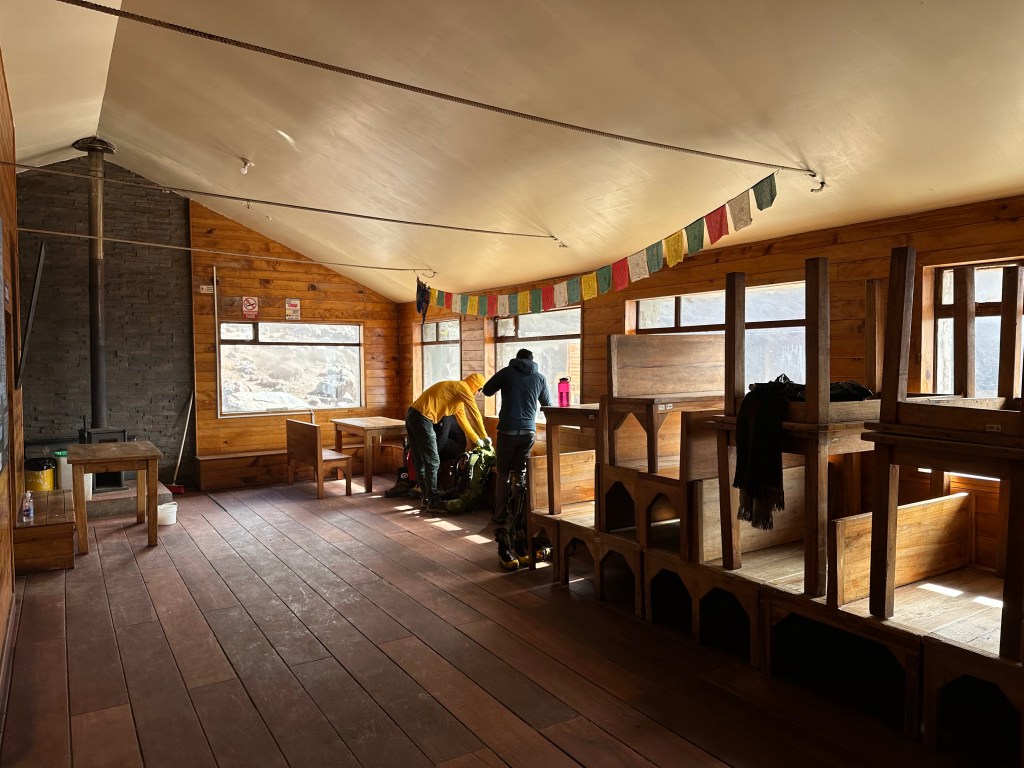
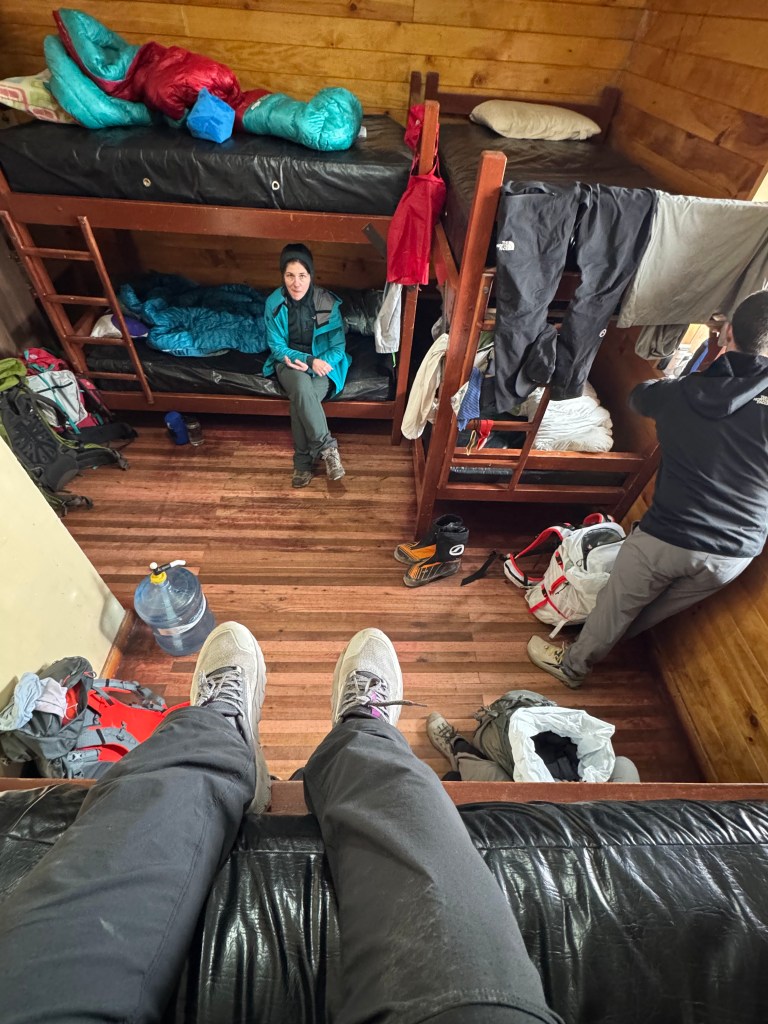
We then moved up to the Cayambe Hut (15,280′) for our summit attempt on Cayambe. Again, we all slept on bunk beds in a “dorm room” type setting but the hut itself was clean and cozy.
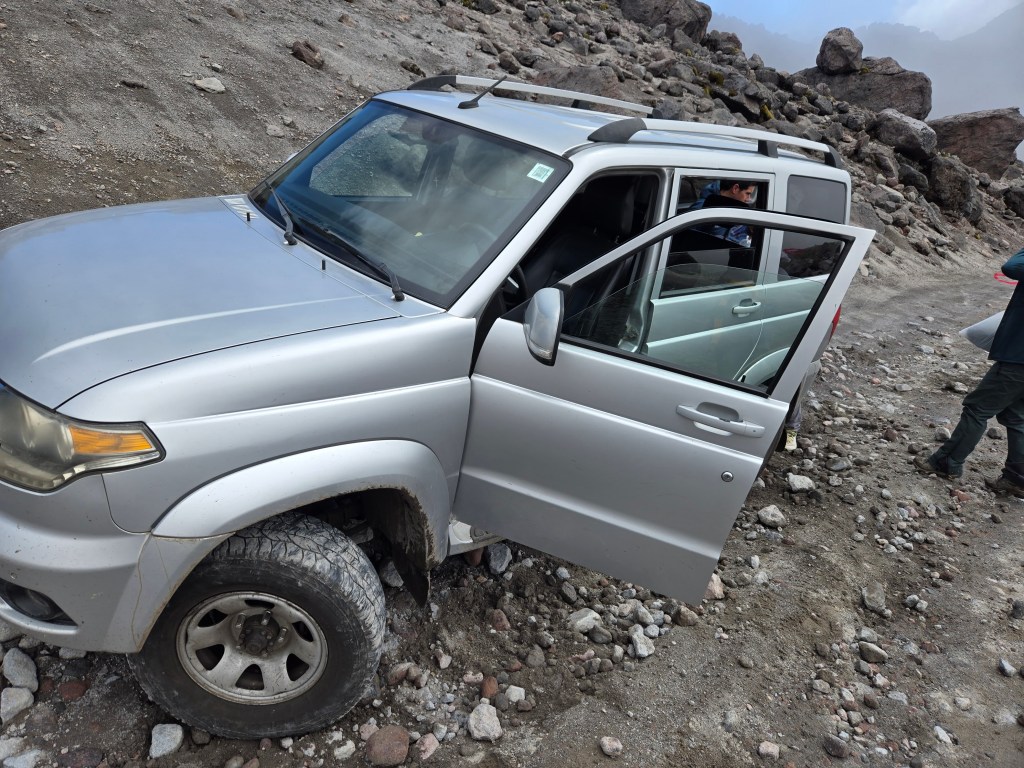
Broken tie rod on one of the vehicles we used to drive to the Cayambe Hut. The road was not passable for our luxury bus!Dining area of the Cayambe HutSleeping quarters in the Cayambe Hut. Once we moved up on the mountains, we stayed in huts/refugios that were similar to the ones I had stayed in when climbing in Bolivia and the Alps.
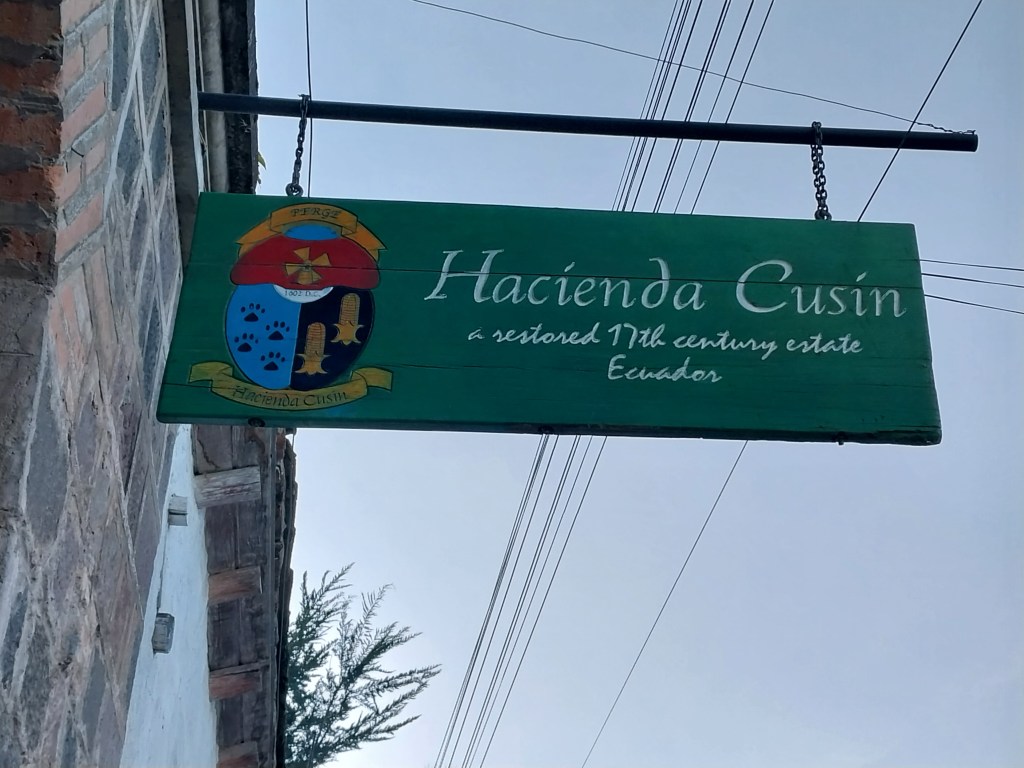
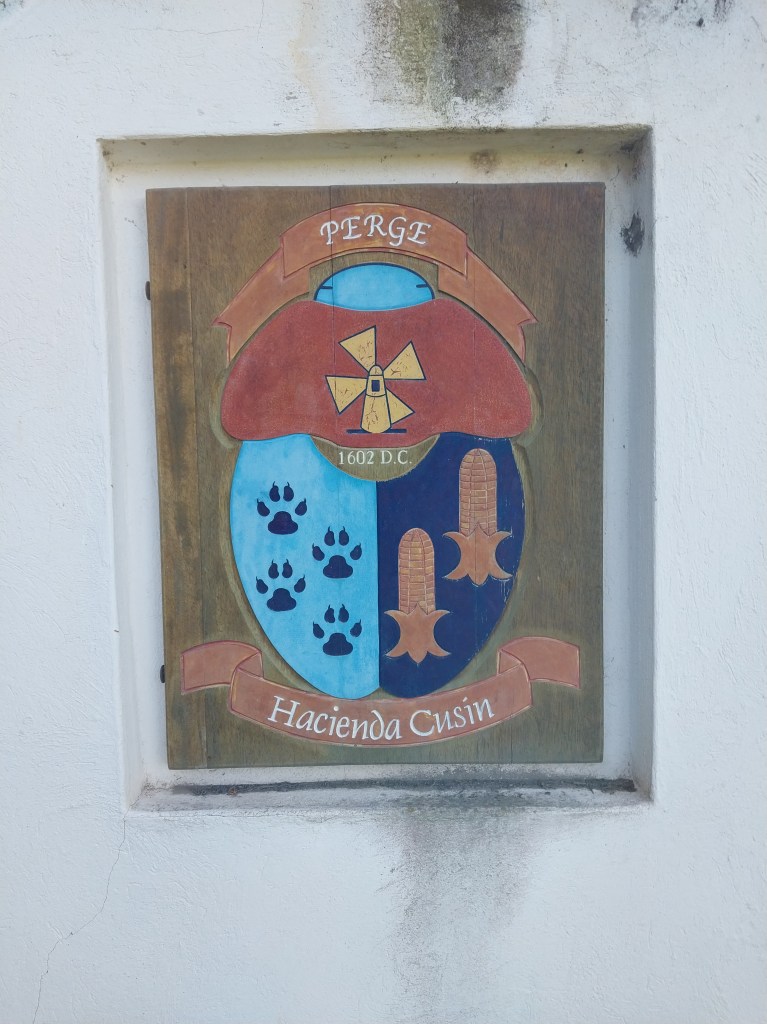
We then stayed in the Hacienda Cusin which was a restored 17th century hacienda near the town of Otovalo. This was a huge property/compound with expansive gardens, stables and is a favorite of David’s.
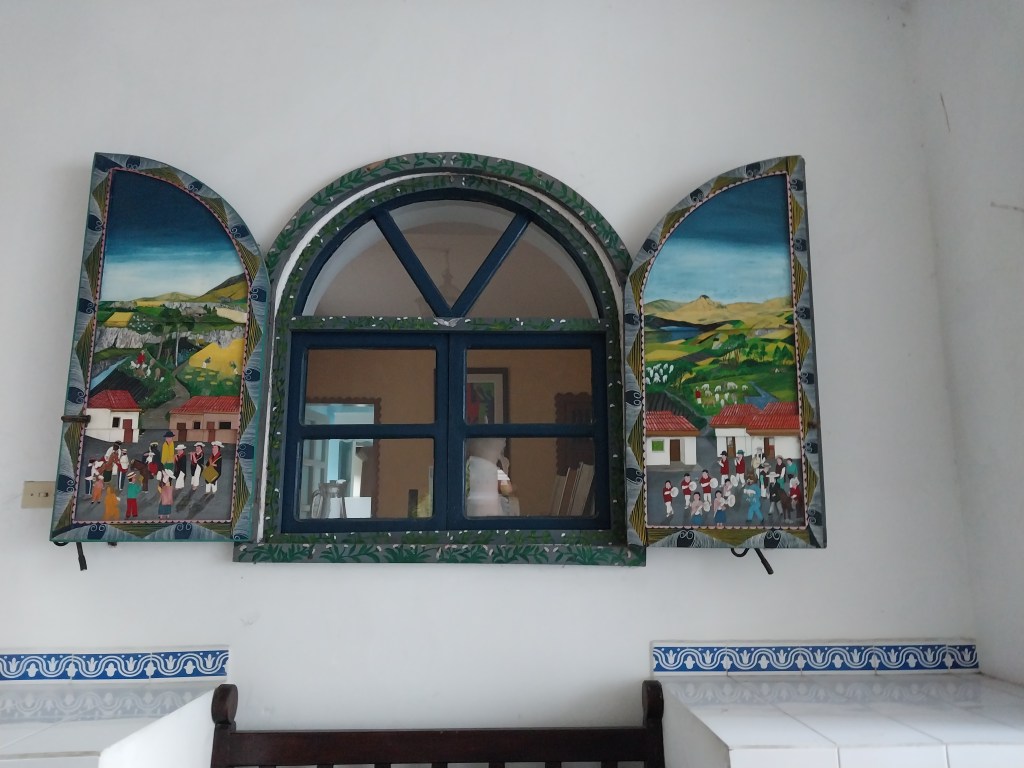
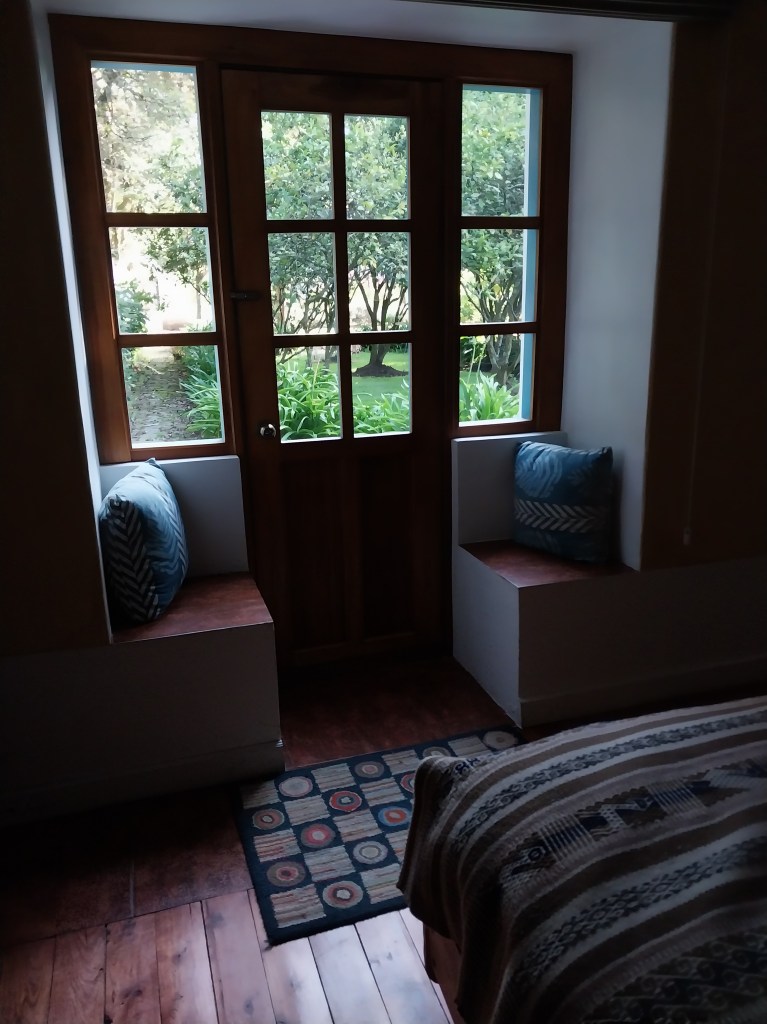
This was a huge, gated estate surrounded with high walls.These were the ornate shutters that were outside my room.Front entrance to my room.This was the fireplace in my room. Lit and roaring when I returned from dinner, as well as a huge hot water bottle in the bed!My room had a little sitting area and it opened to one of the gardens.
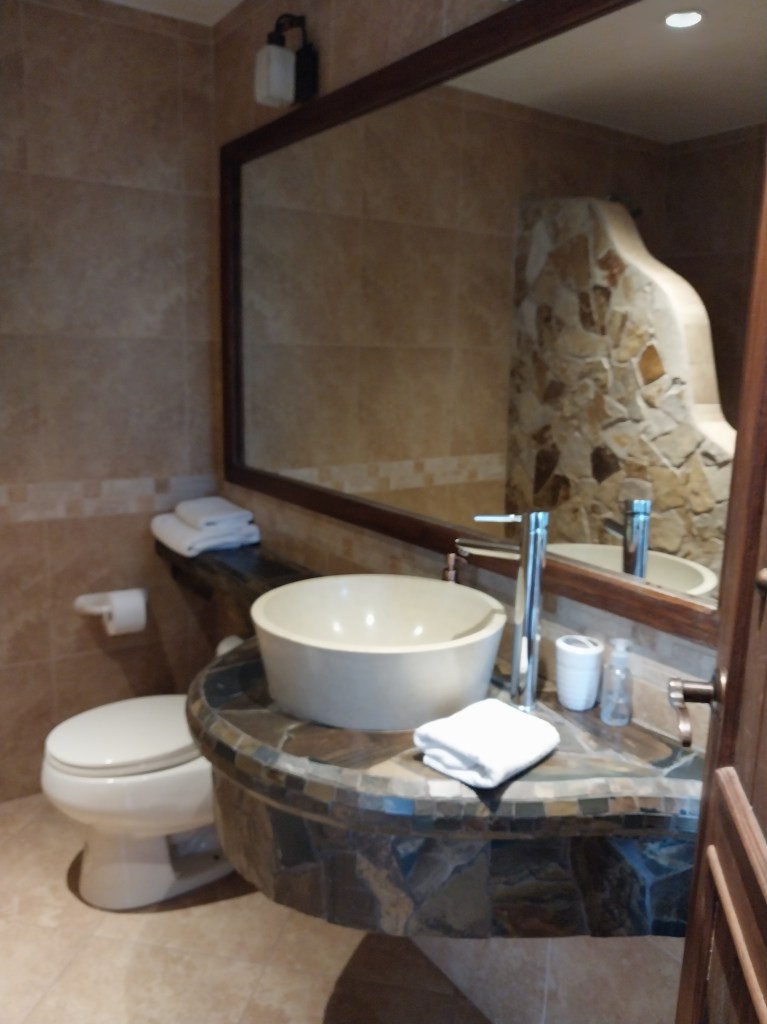
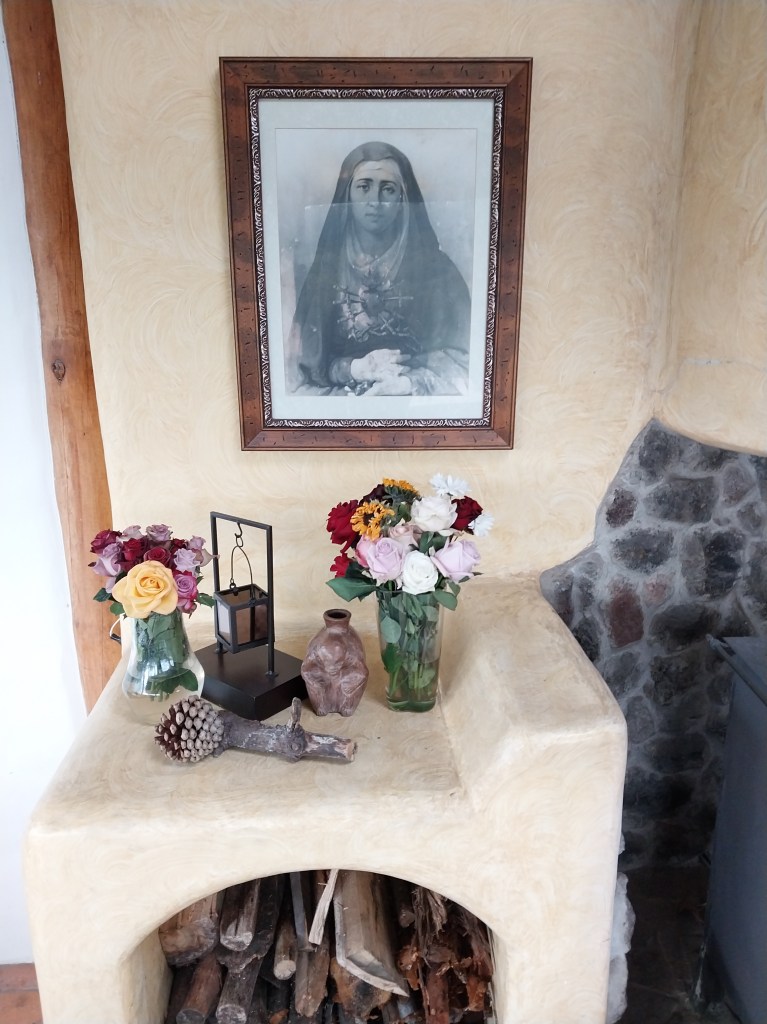
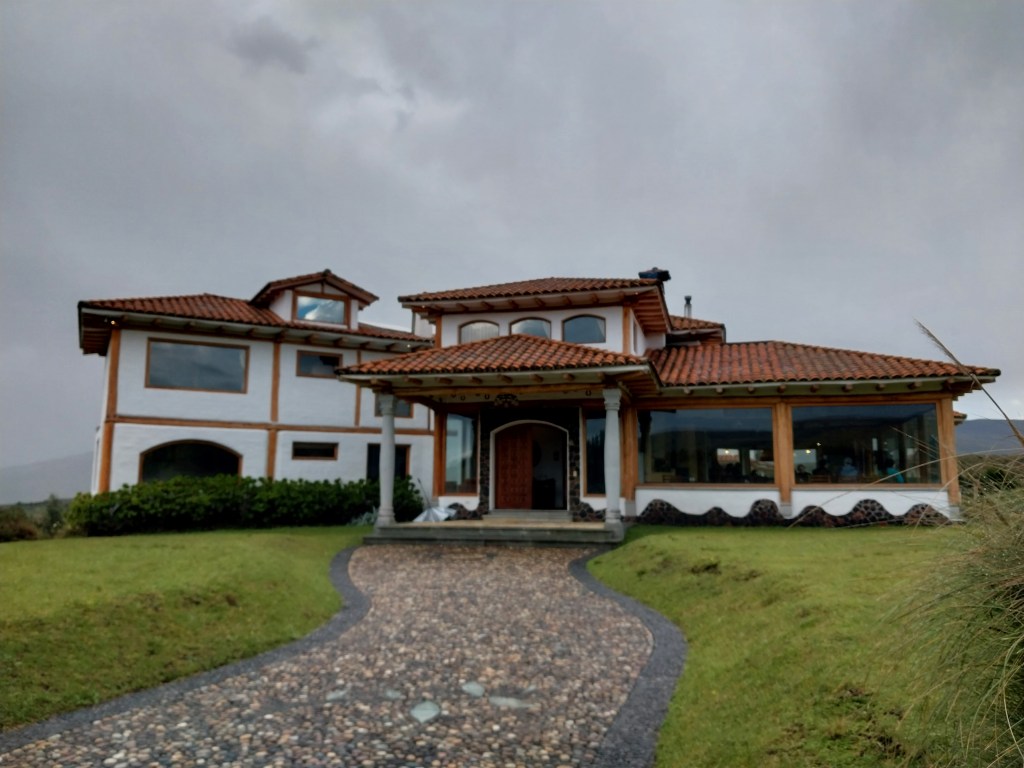
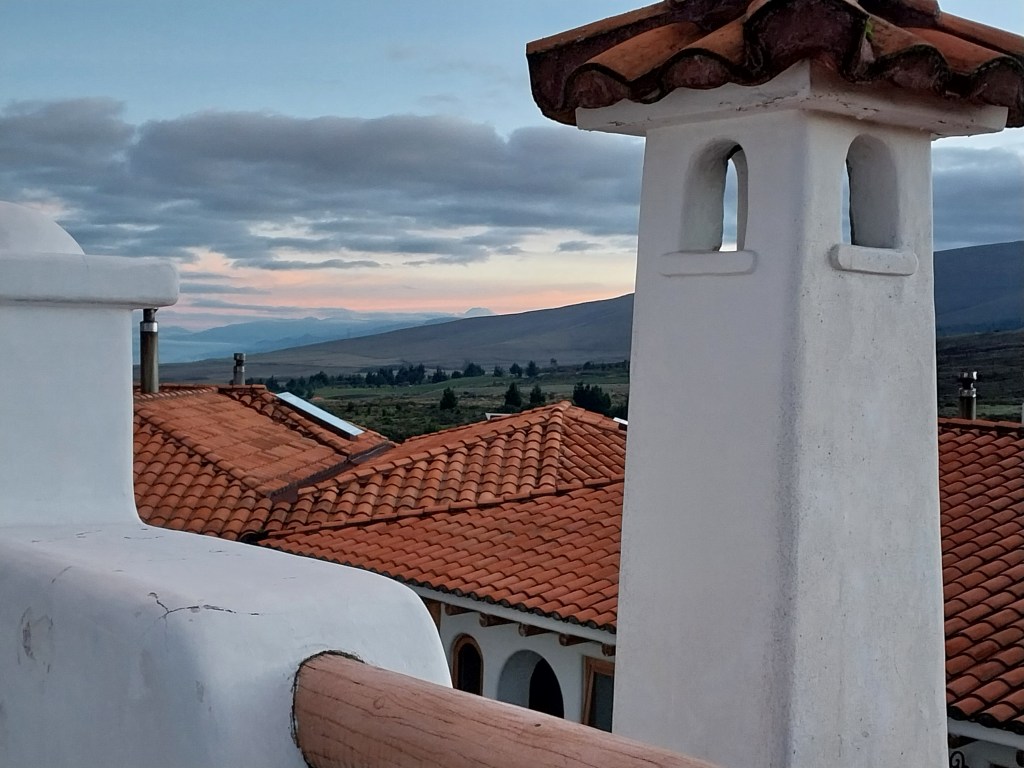
We then drove towards the Cotopaxi region and stayed one night in the Hacienda los Mortinios. Another stunning property!
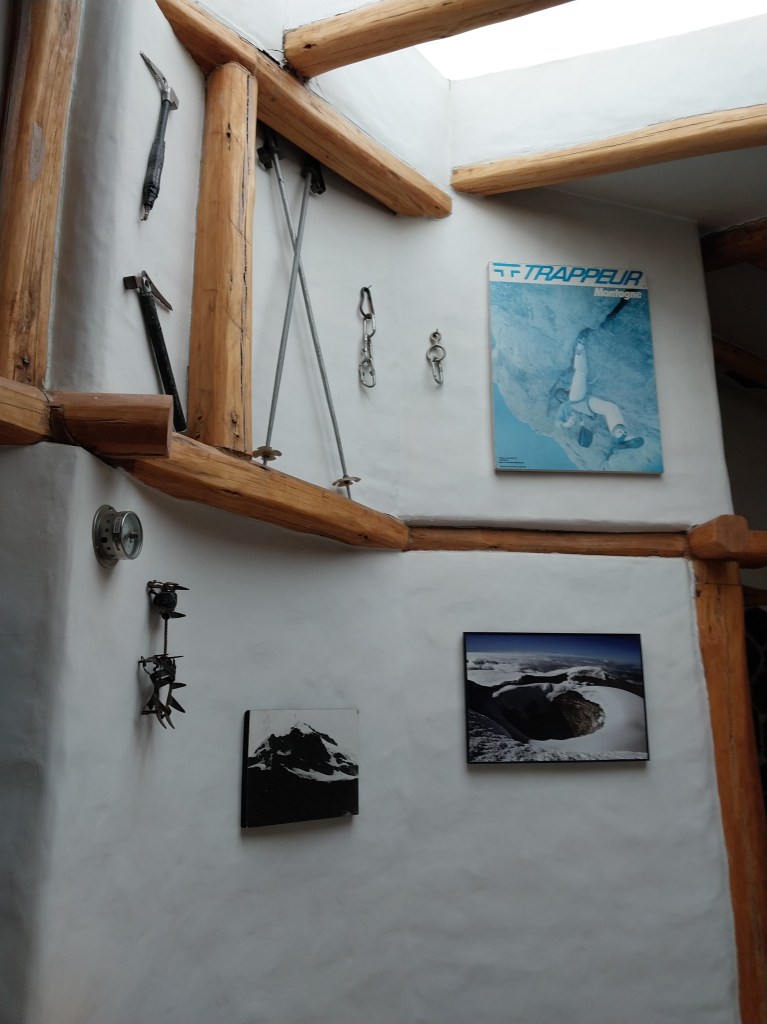
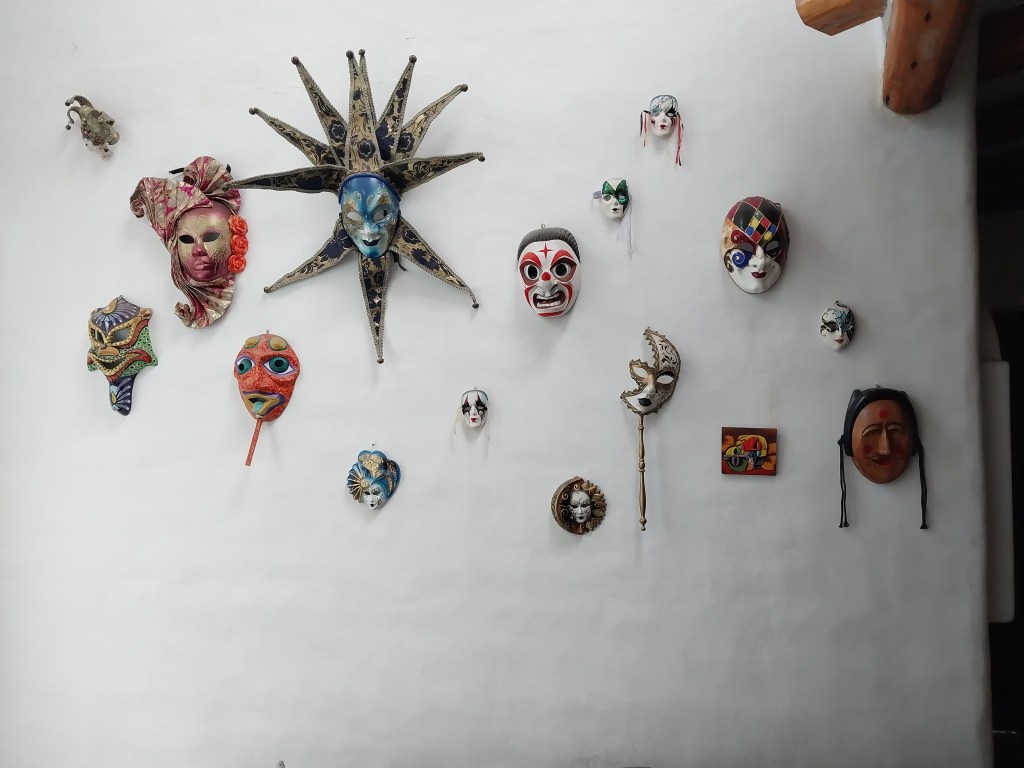
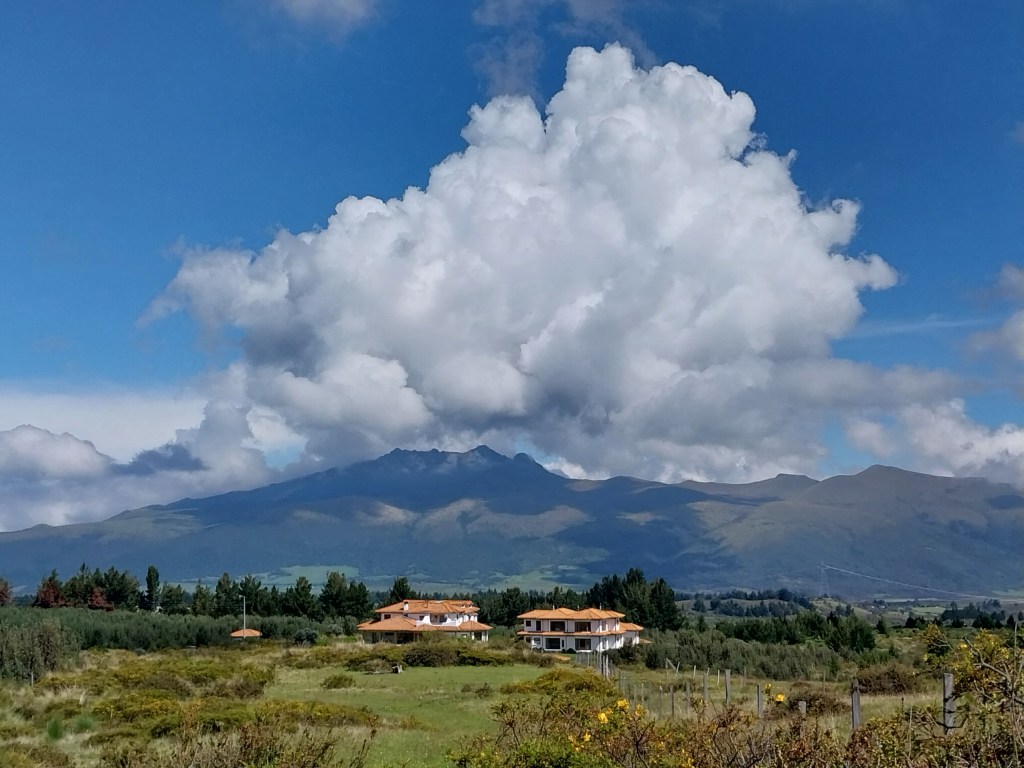
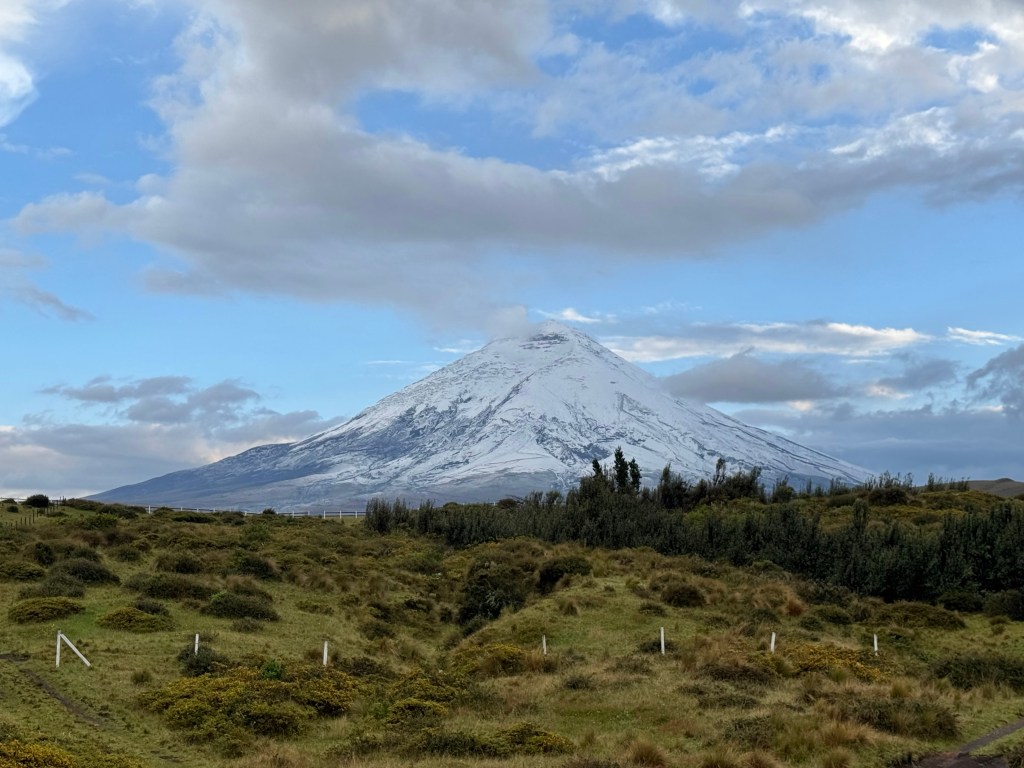
Nice room with huge windows.Beautiful bathroom although my hopes for a hot shower were dashed to pieces! All show, no go!Upstairs climbing display. We saw that a lot of the hotels/resorts we stayed in catered to climbers and trekkers.Never asked the significance of these masks but they were colorful!Sunrise – in the middle of the photo on the horizon, is Cayambe, the volcano that we had climbed two days prior.Hacienda los Mortinios with Pasochoa in the background, which we had climbed as an acclimatization hike.Afternoon showers slowly passed by and we were given a great view of our next objective, Cotopaxi (19,347′.)
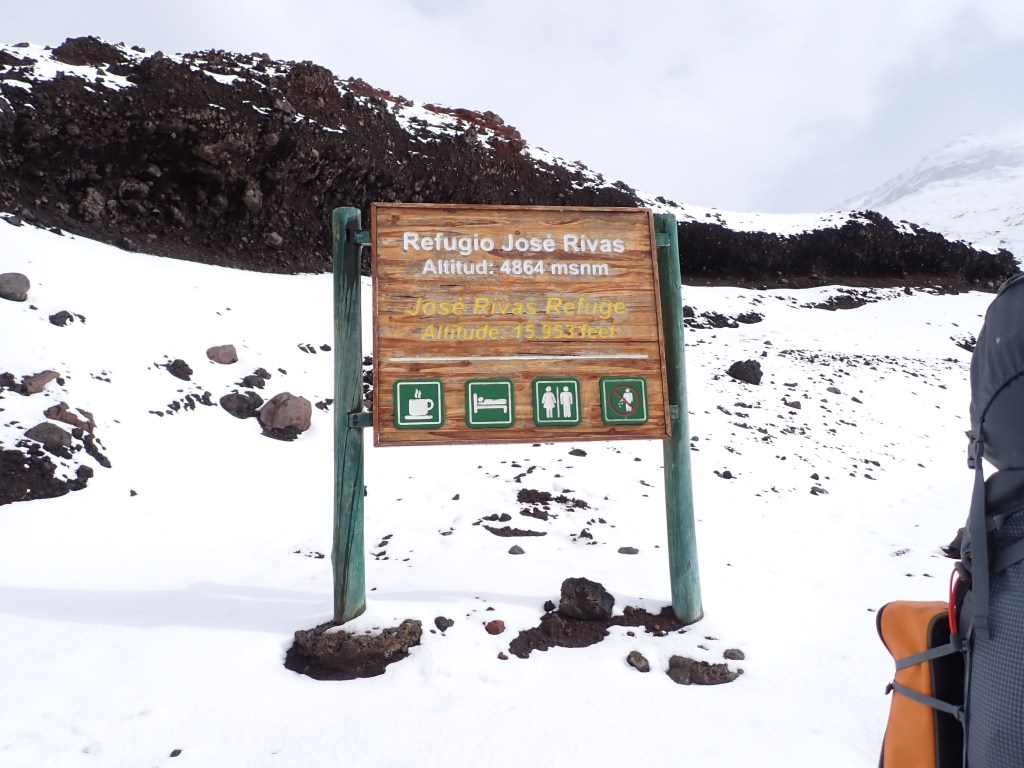
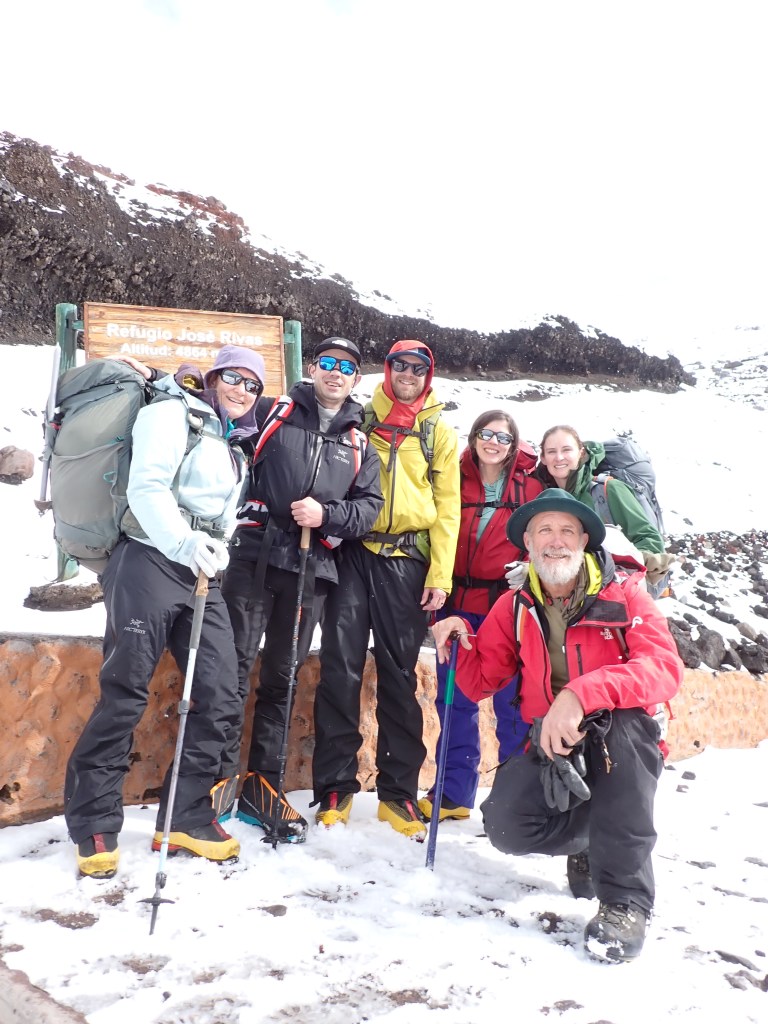
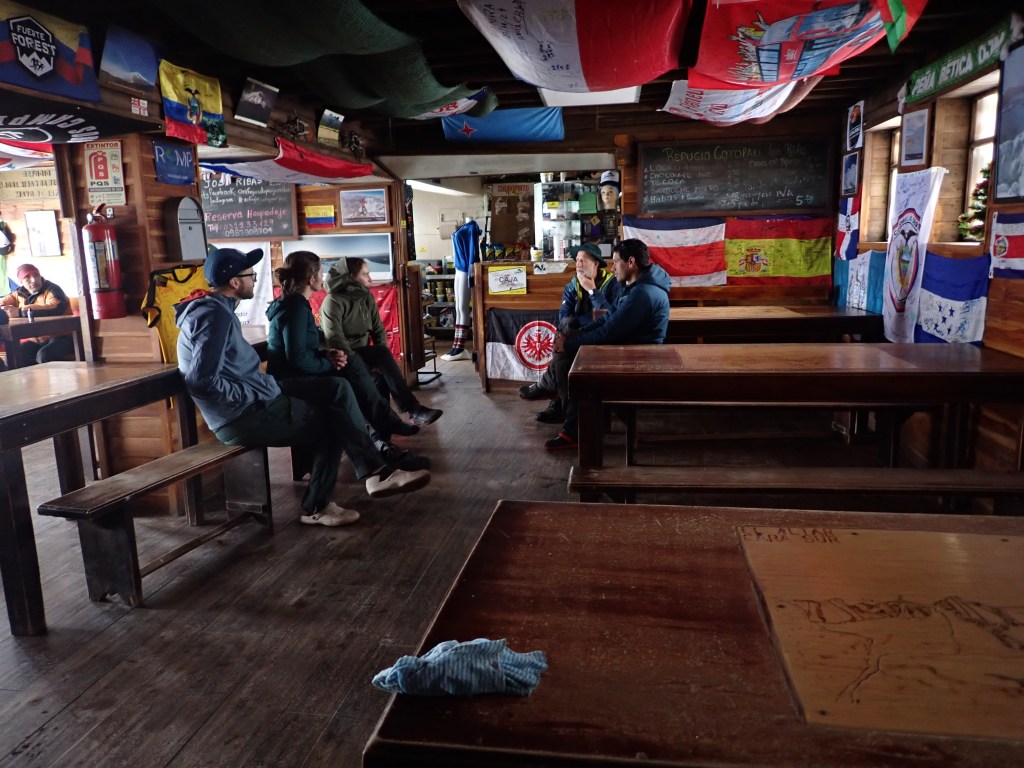
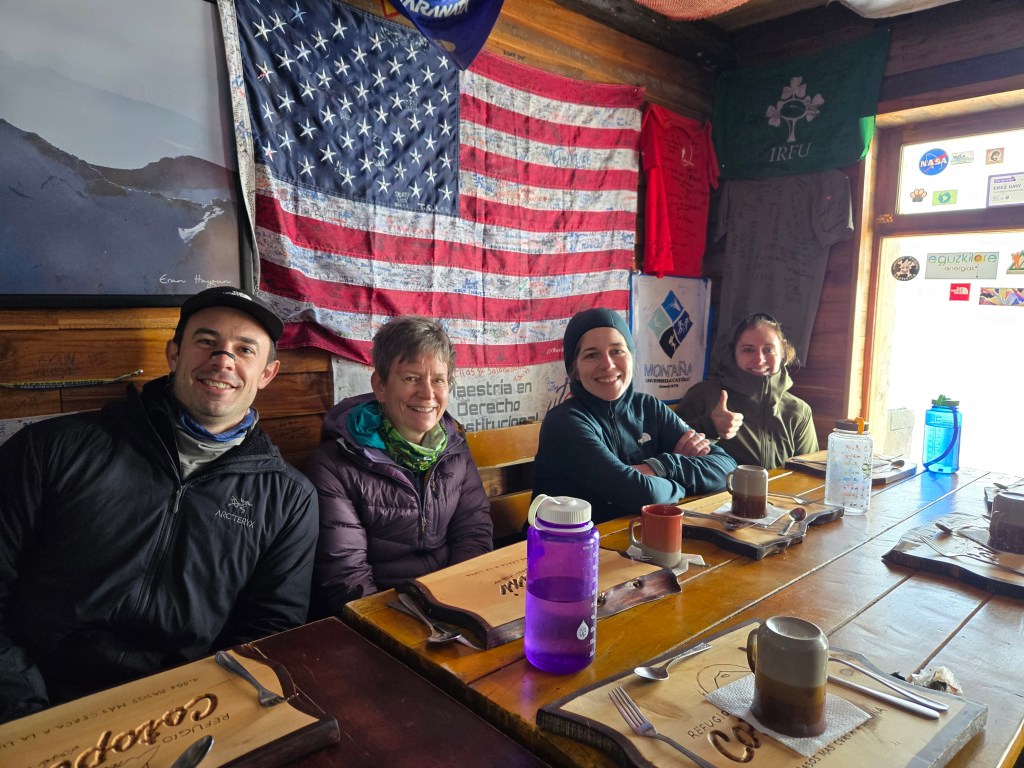
The next day we drove to Cotopaxi National Park and had about an hour hike up to the Jose Rivas Refuge (15,900′) where we again stayed in bunks in preparation for our summit attempt. This, although Day 11 in our itinerary, was the first time that we ended up in a hut where there were other climbers. Sort of loud so was glad I had the earplugs!
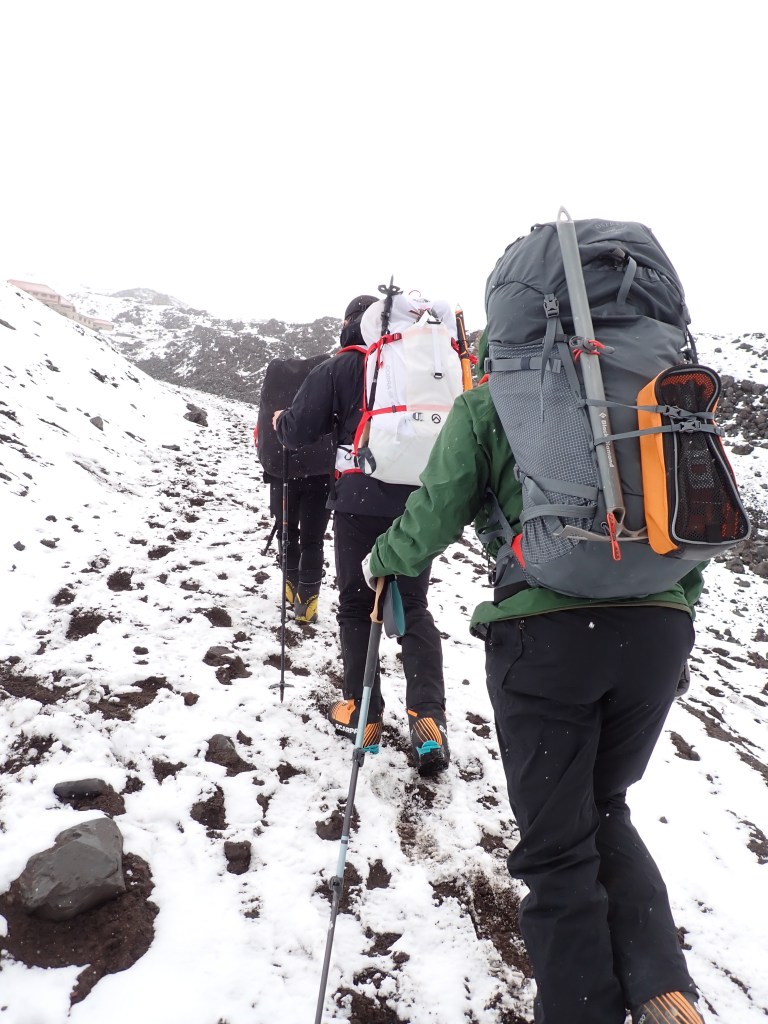
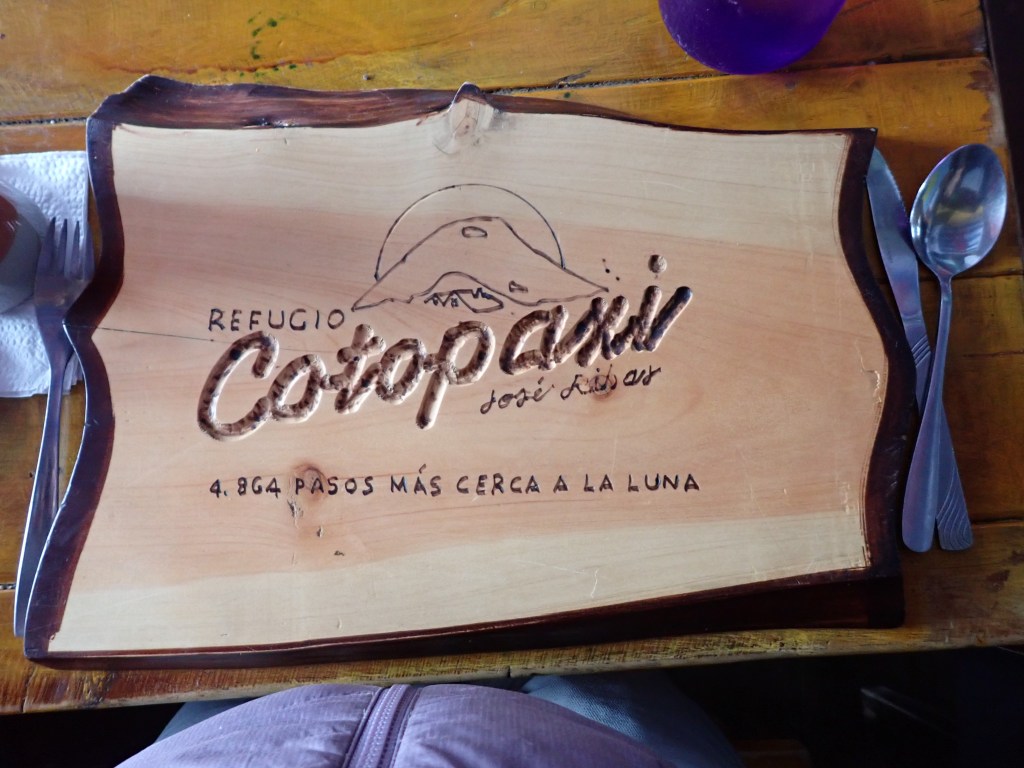
Dropped off at the parking lot – about an hour up to the hut.Hiking up to the Jose Rivas Refugio – it is the tan structure on the upper left – took us about an hour with all of our gear – OOF.Sun was in and out that day – caught glimpses of Cotopaxi but only for a moment.Made it to the hut!Team meetingWooden placemats at every seat!Anxiously awaiting another meal, HAHA!
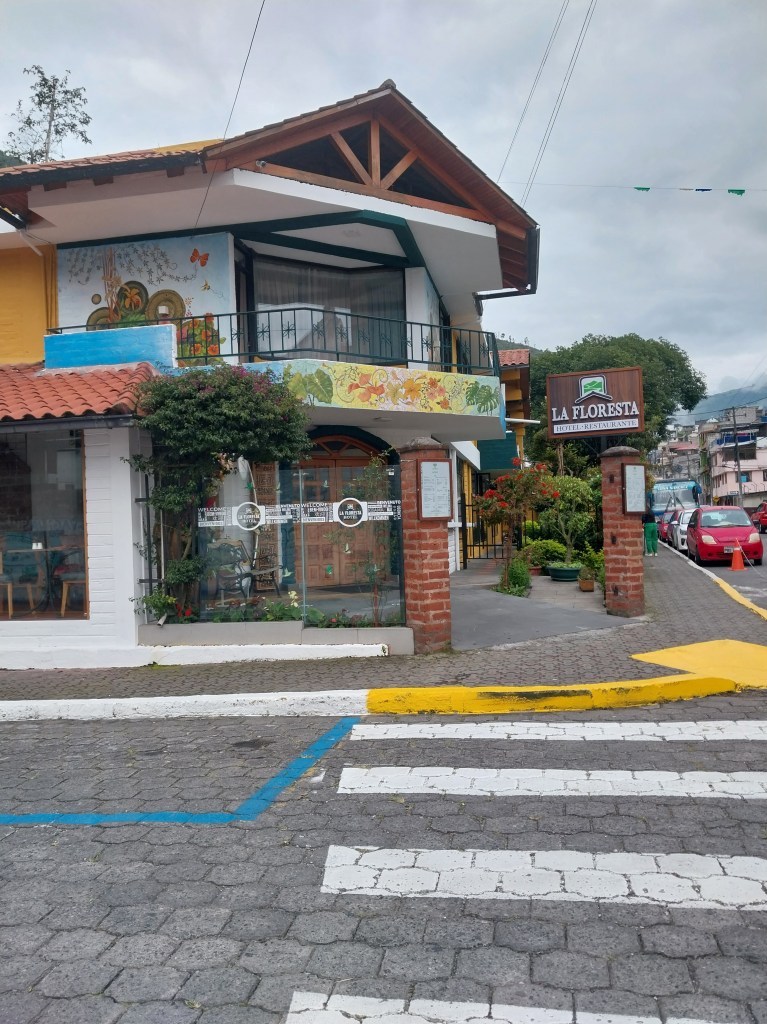
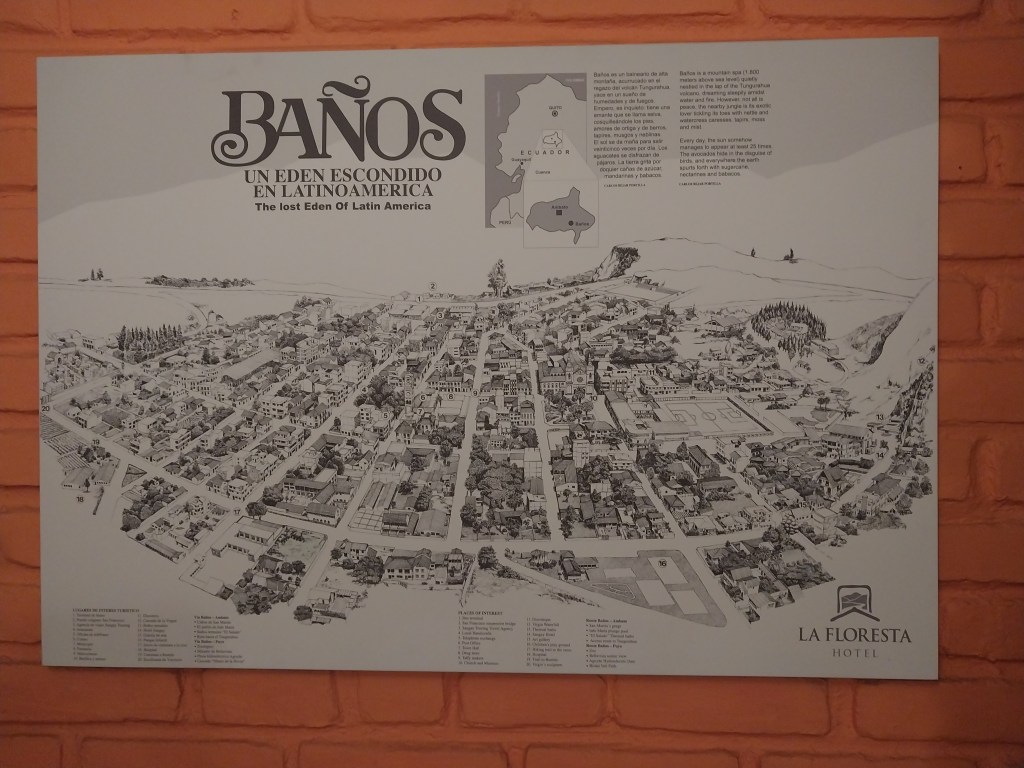
After the Cotopaxi summit, there was a slight change to our itinerary – we ended up going down to the town of Banos at an elevation of approx 6,000′ for two days. This was in an effort to help us replenish our depleted oxygen stores. We stayed at the La Floresta Hotel and enjoyed two days in Banos.
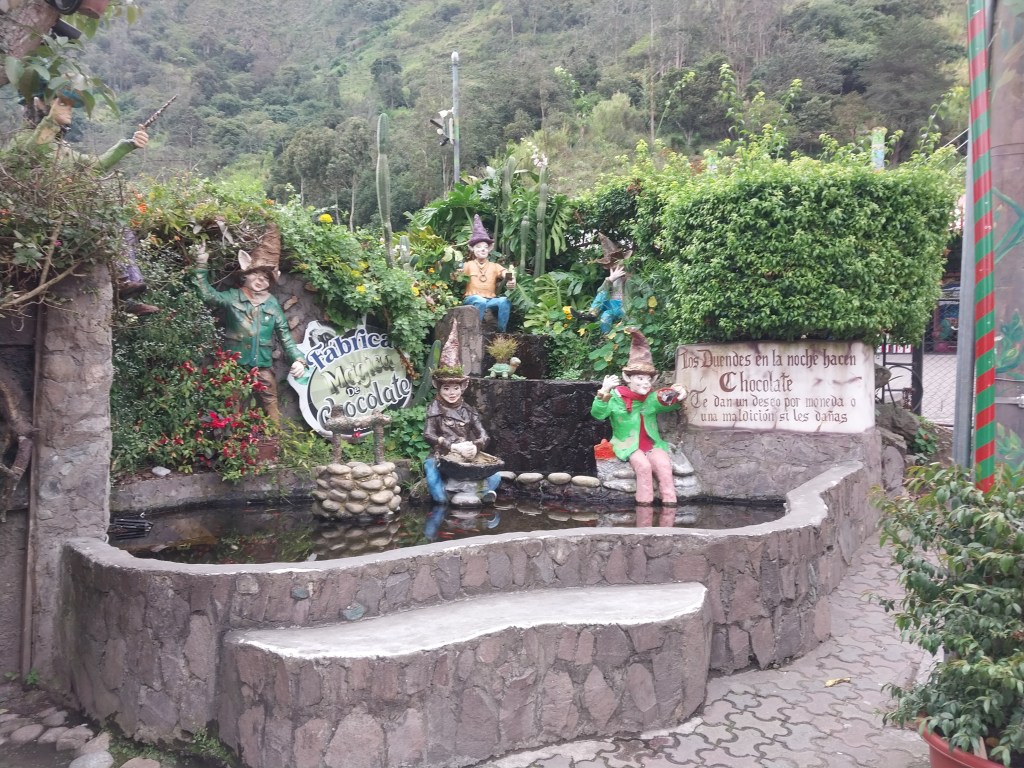
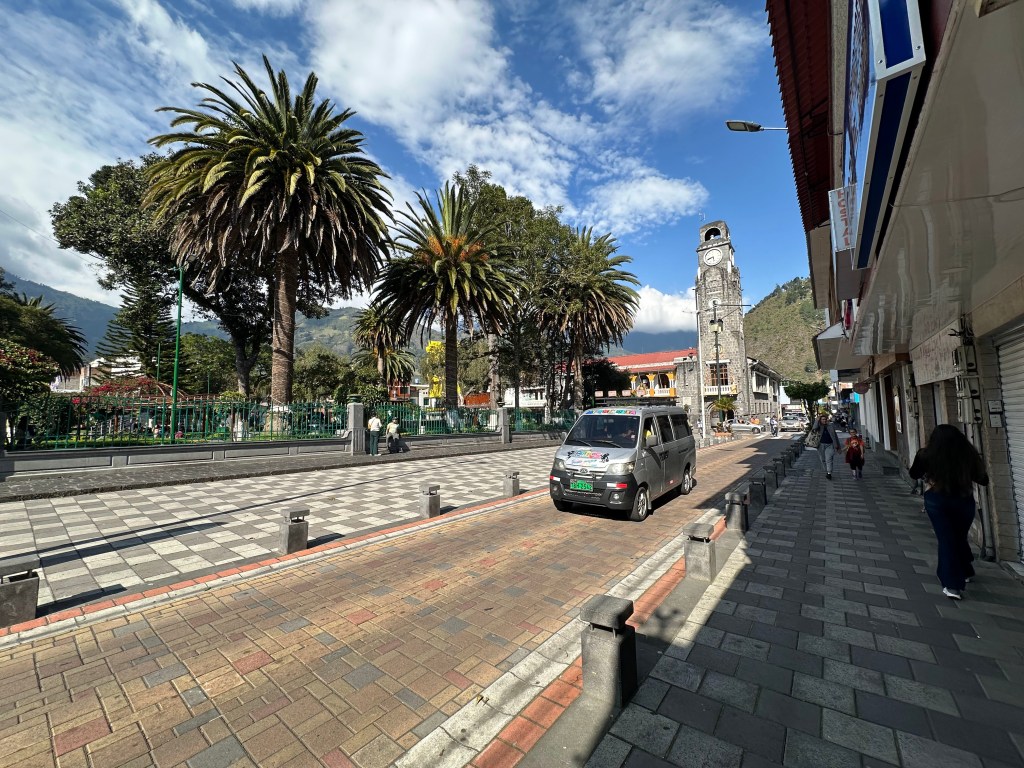
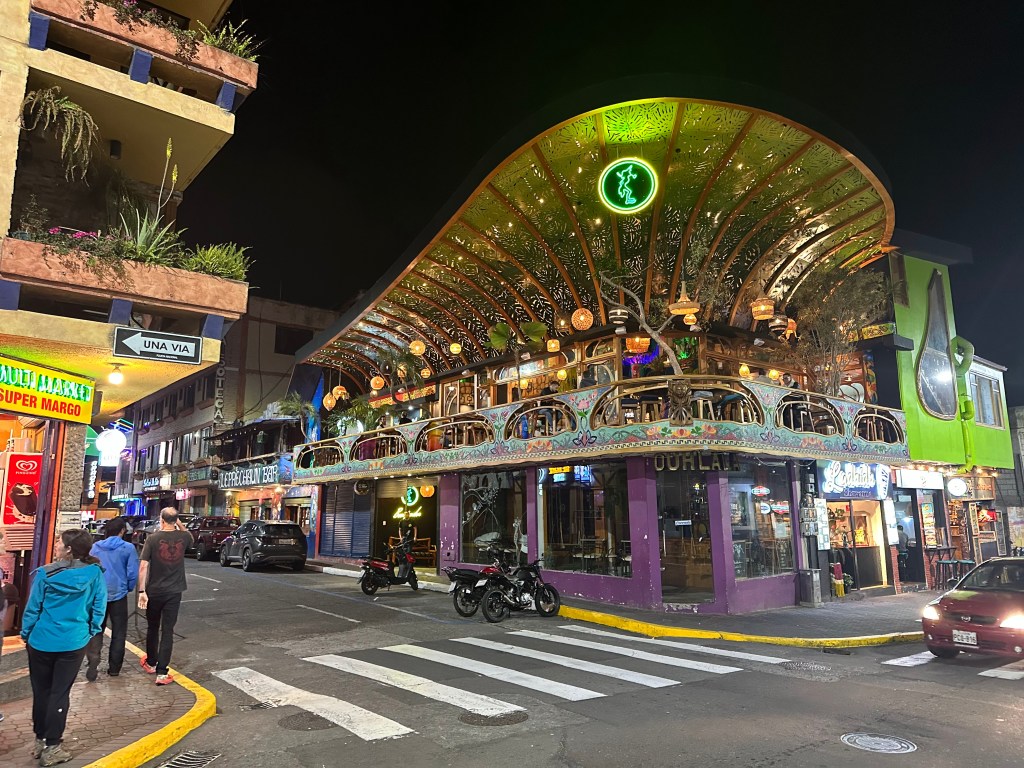
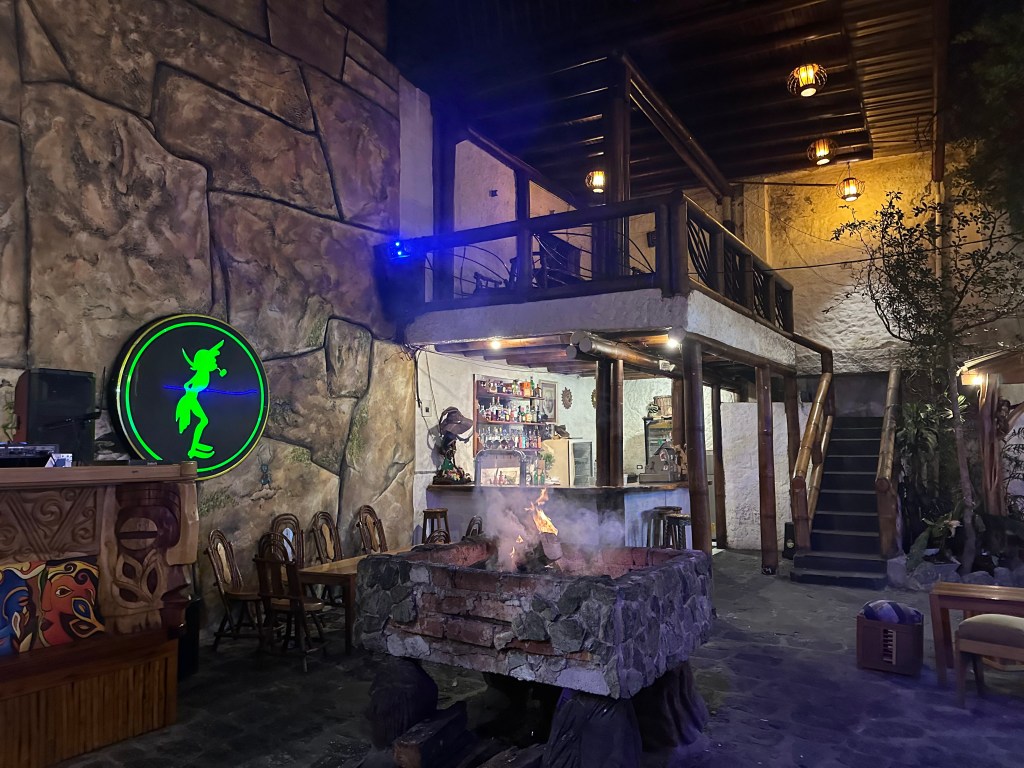
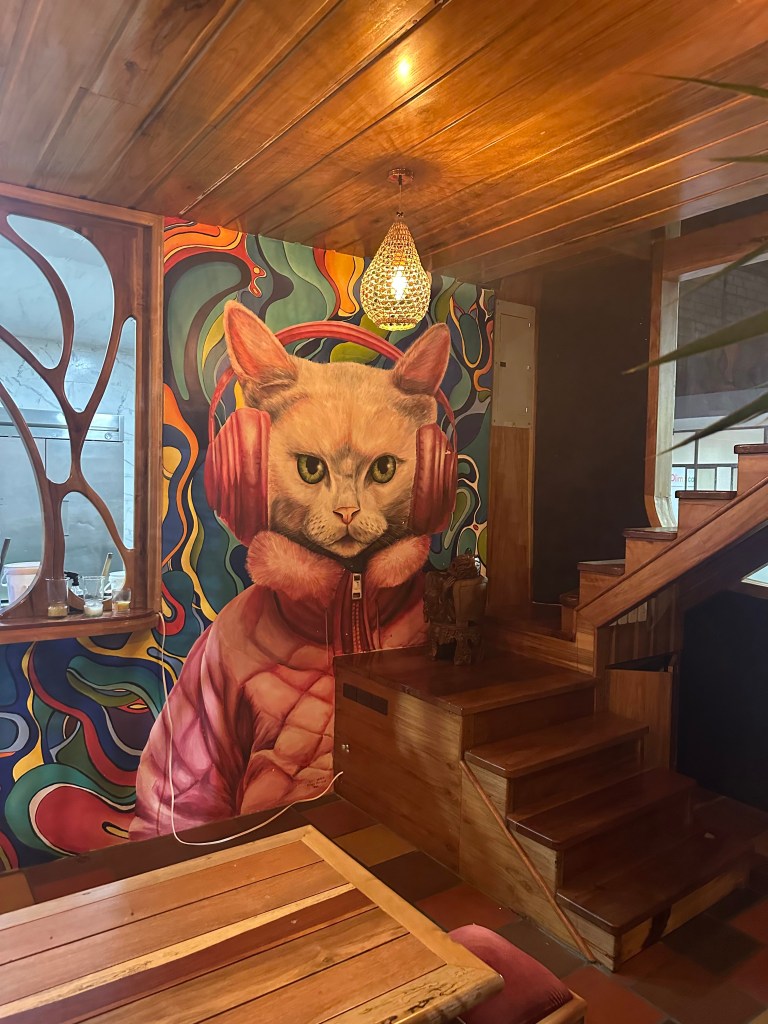
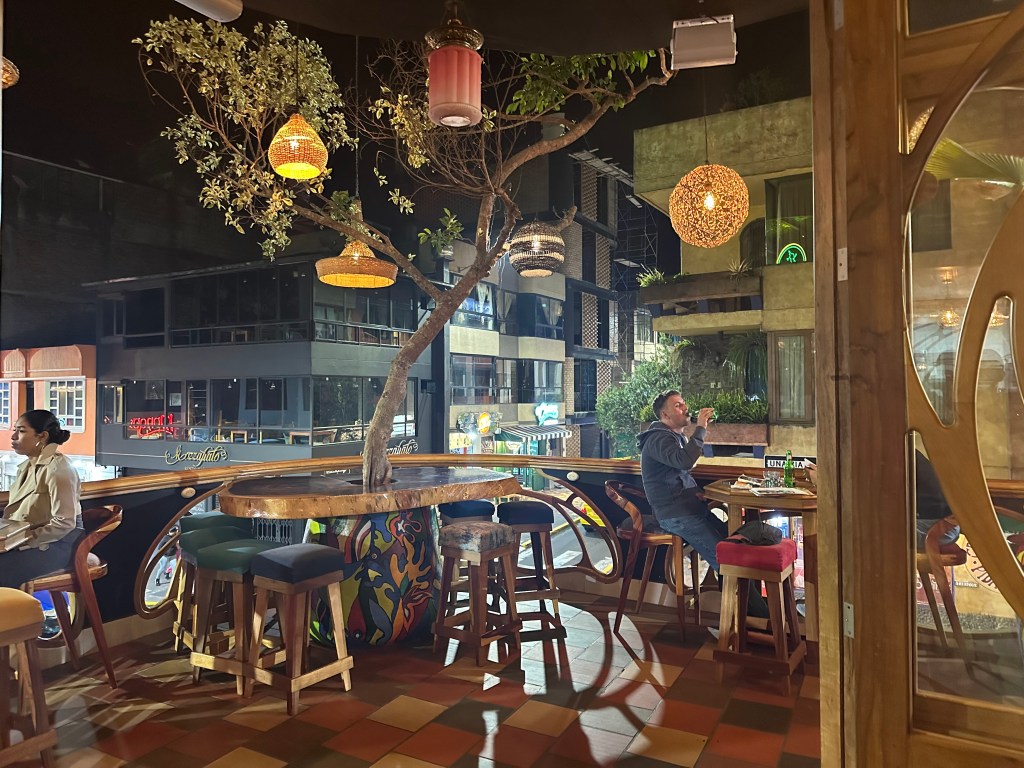
Banos was a town that catered to tourists and families – a lot of amusement park-like attractions, nice downtown area and crazy nightlife.Beautiful courtyard full of fragrant flowers and hummingbirds.Up the hill from the hotel was a chocolate factory. We initially had thought about getting a tour but found out that it was really not much more than a building specifically set up fro Instagram photos.No clue what this says.One of the town squares in BanosThe Leprechaun BarWe just took a stroll through this massive building. Obviously a nightlife staple in Banos. None of us were drinking during this trip (as we were climbing) so there was no much to do here but look!Hello KittyIt looked like a fun place for me to be – maybe 40 years ago!
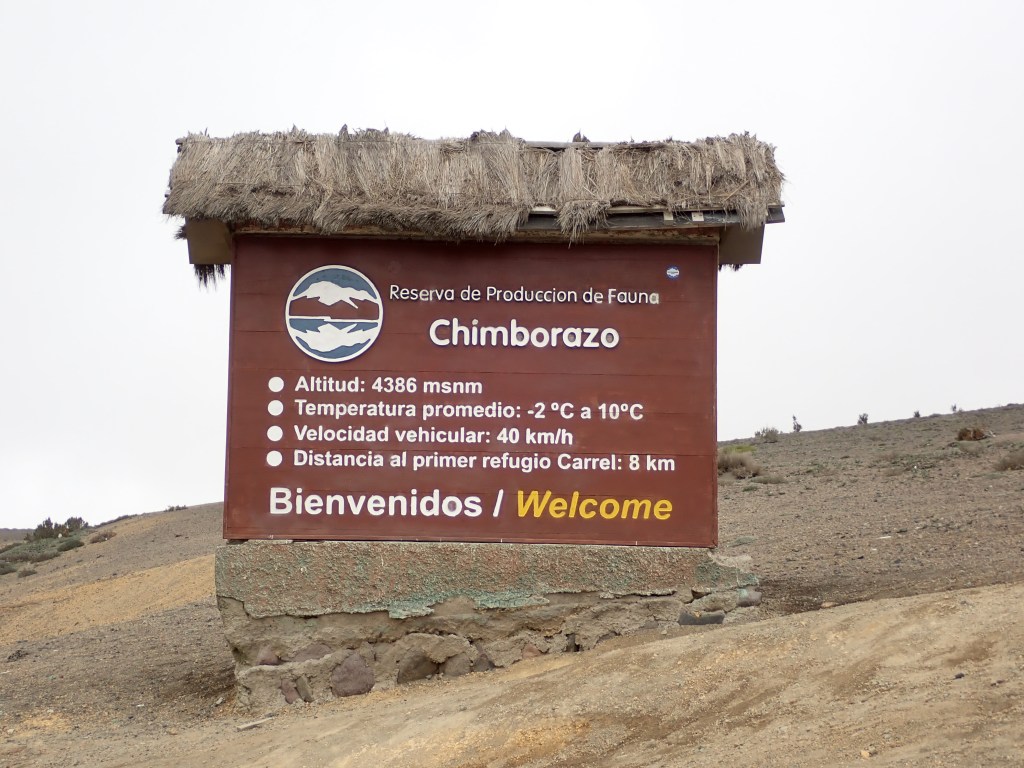
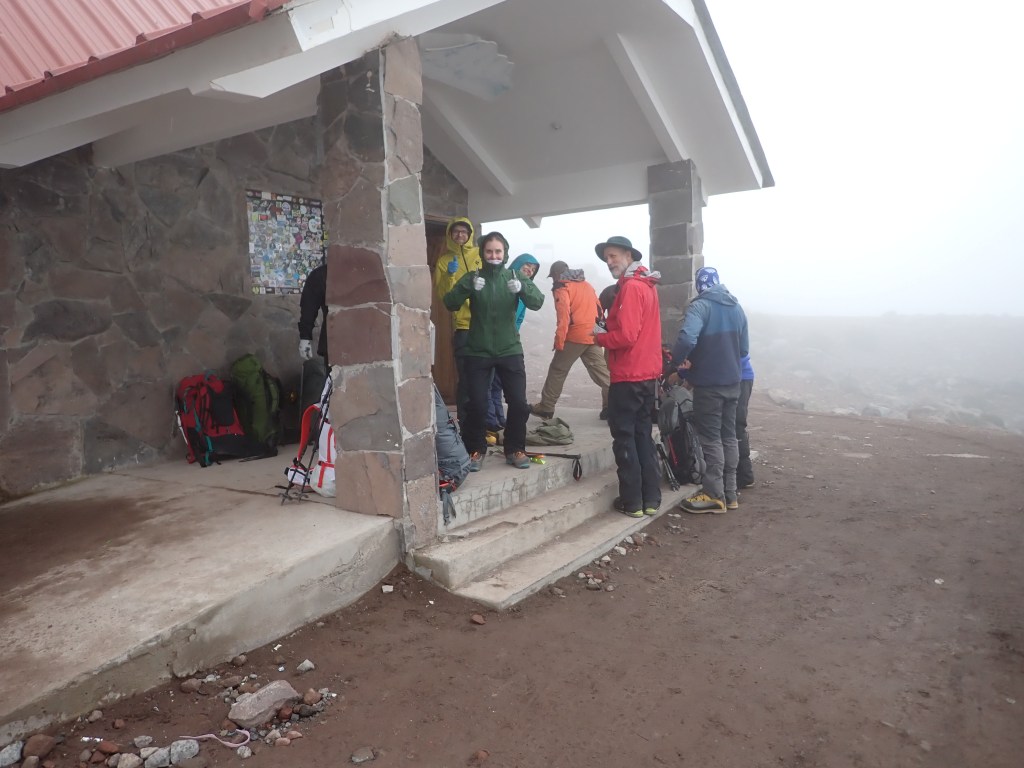
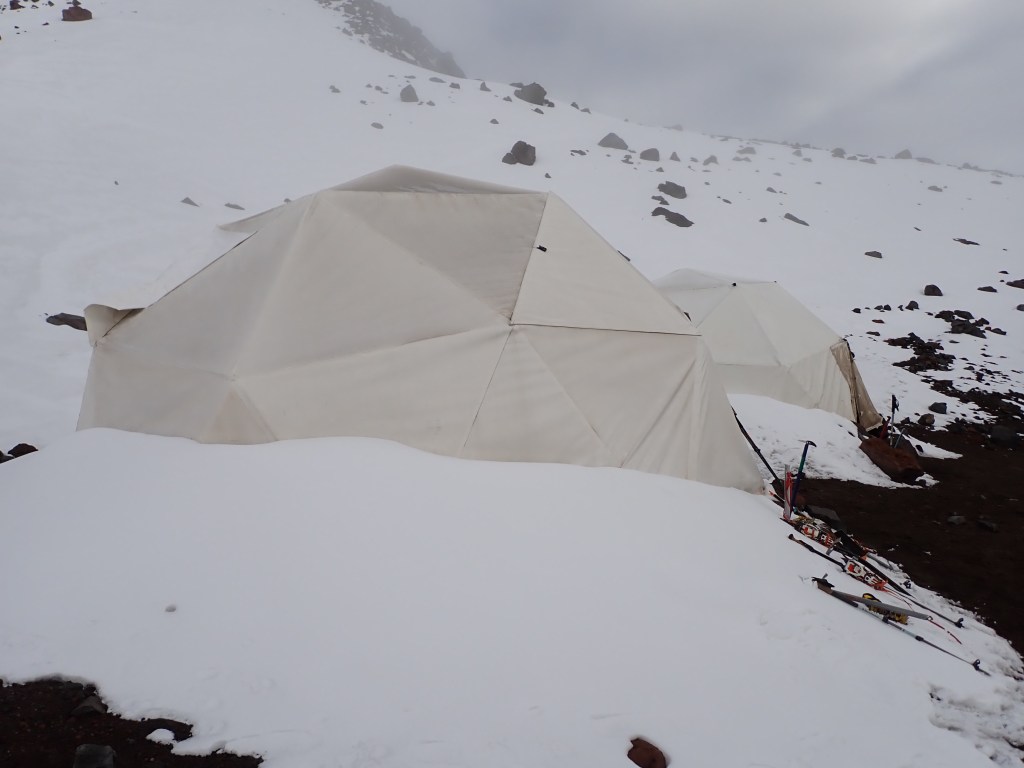
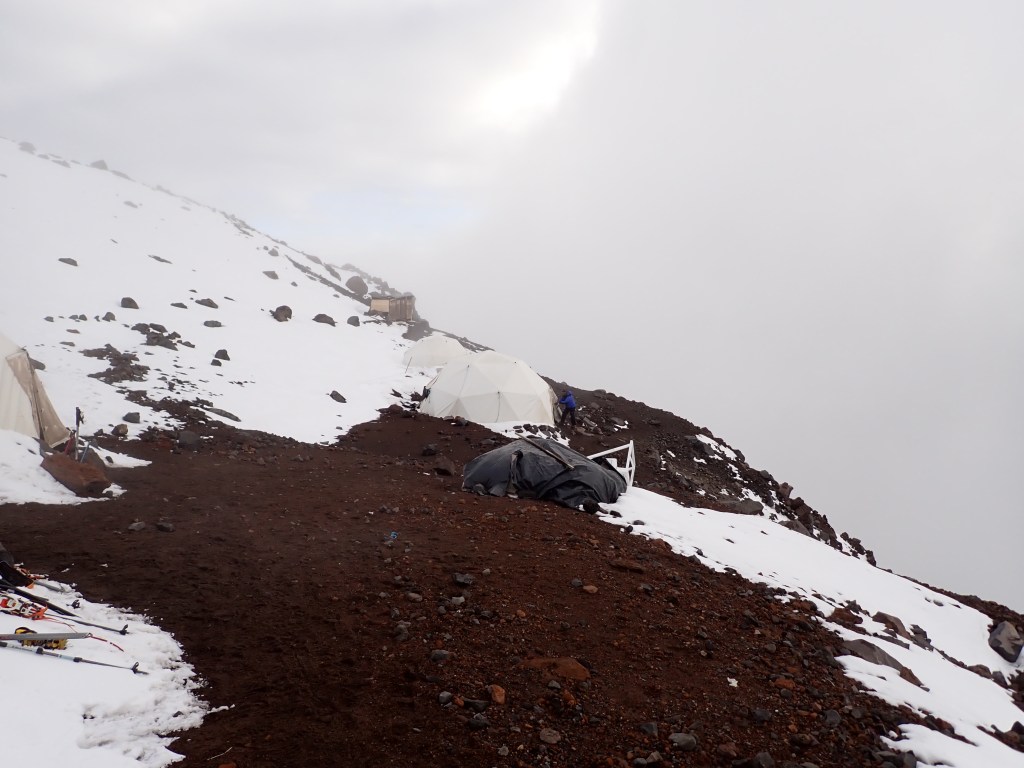
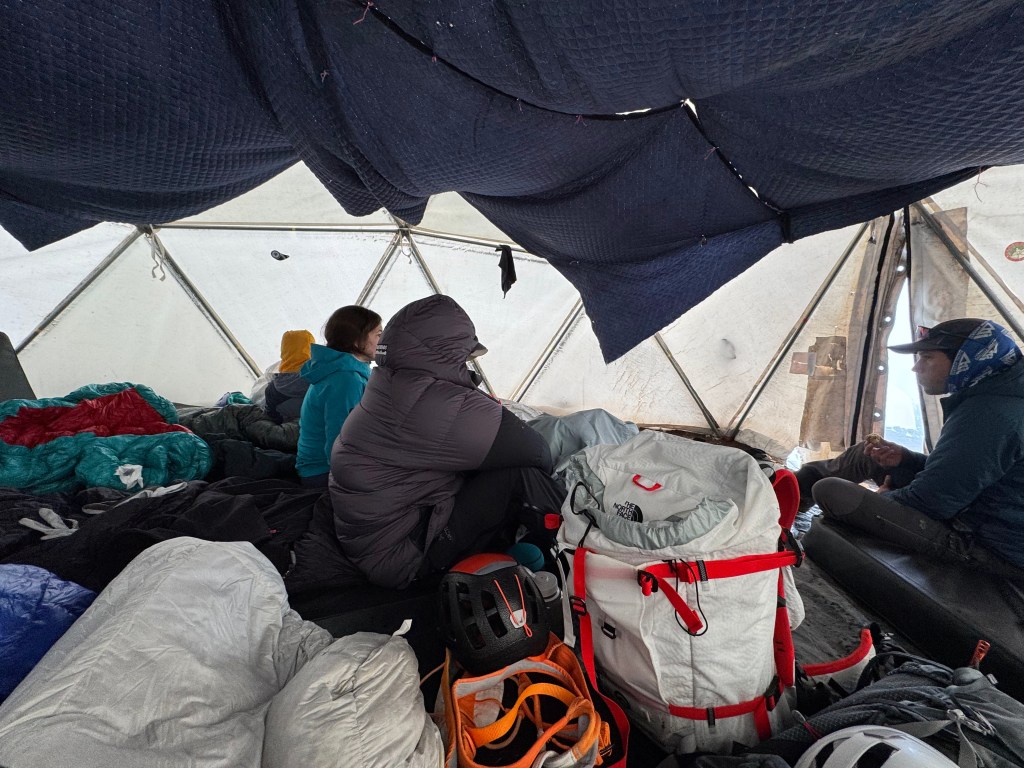
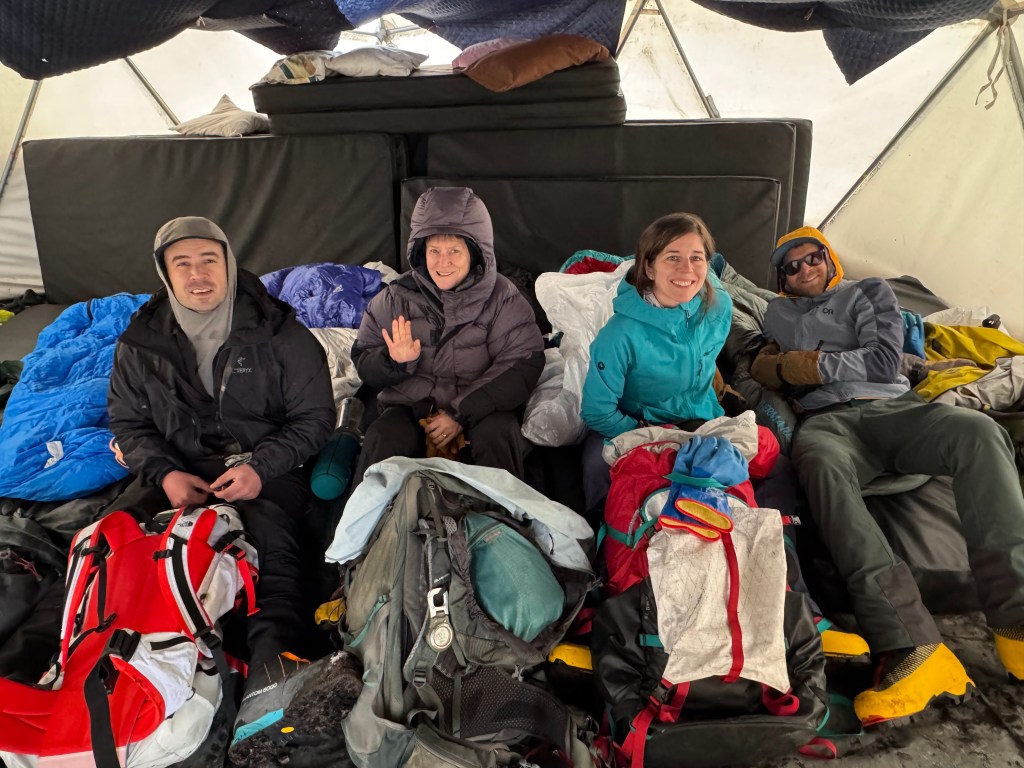
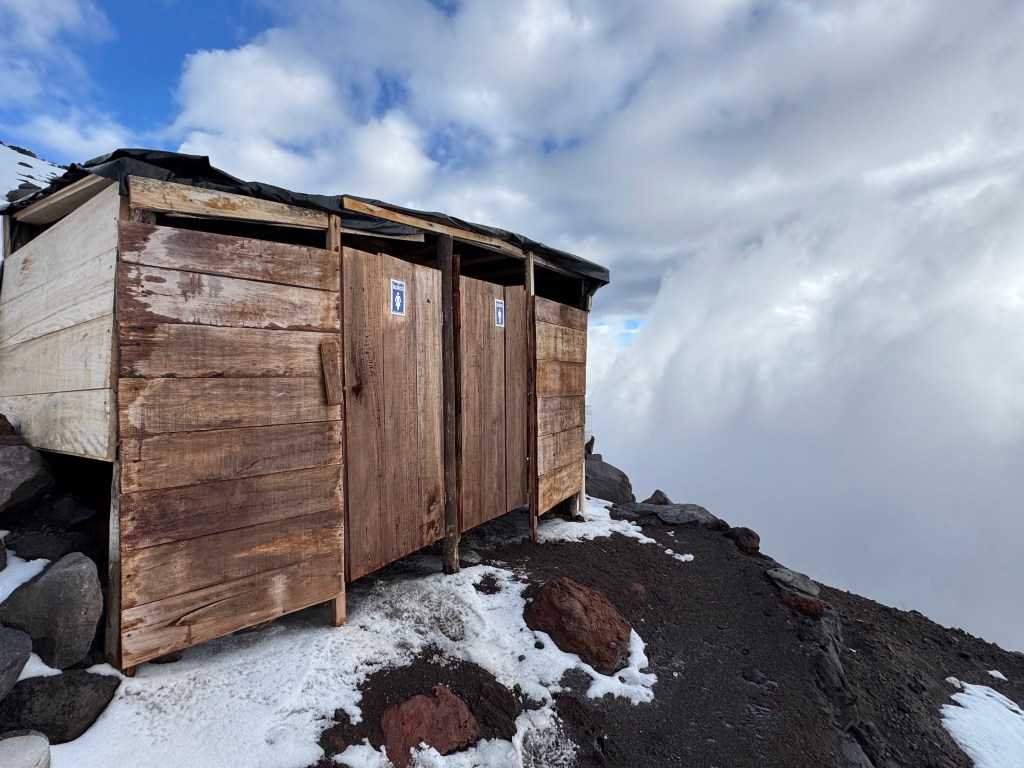
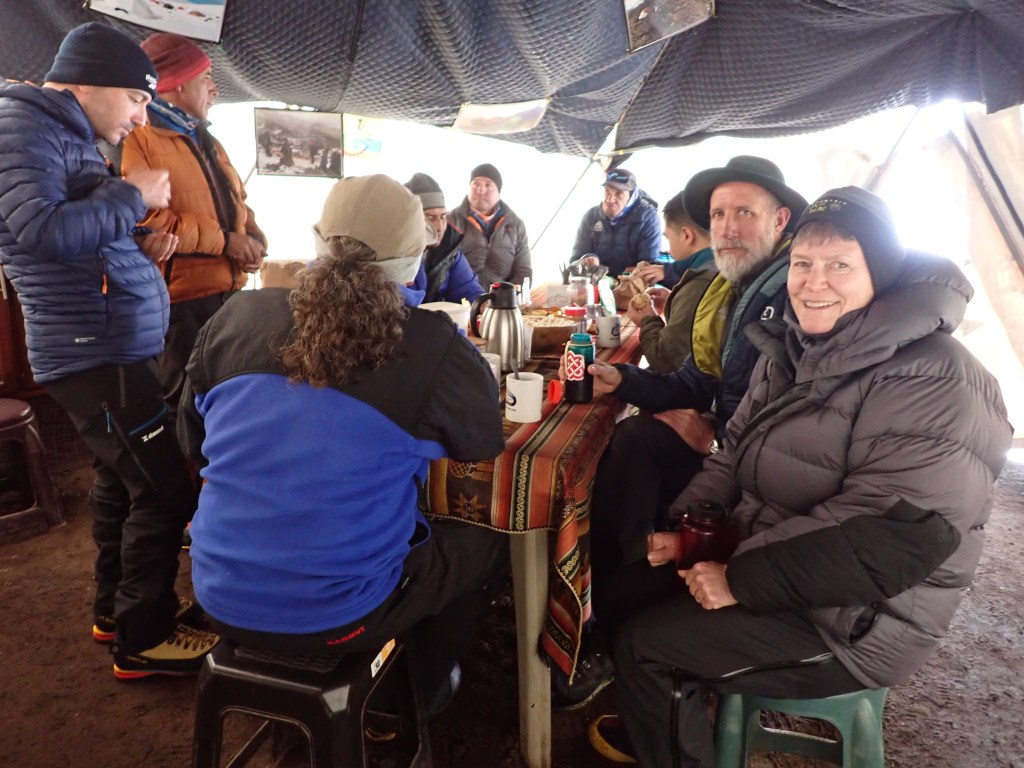
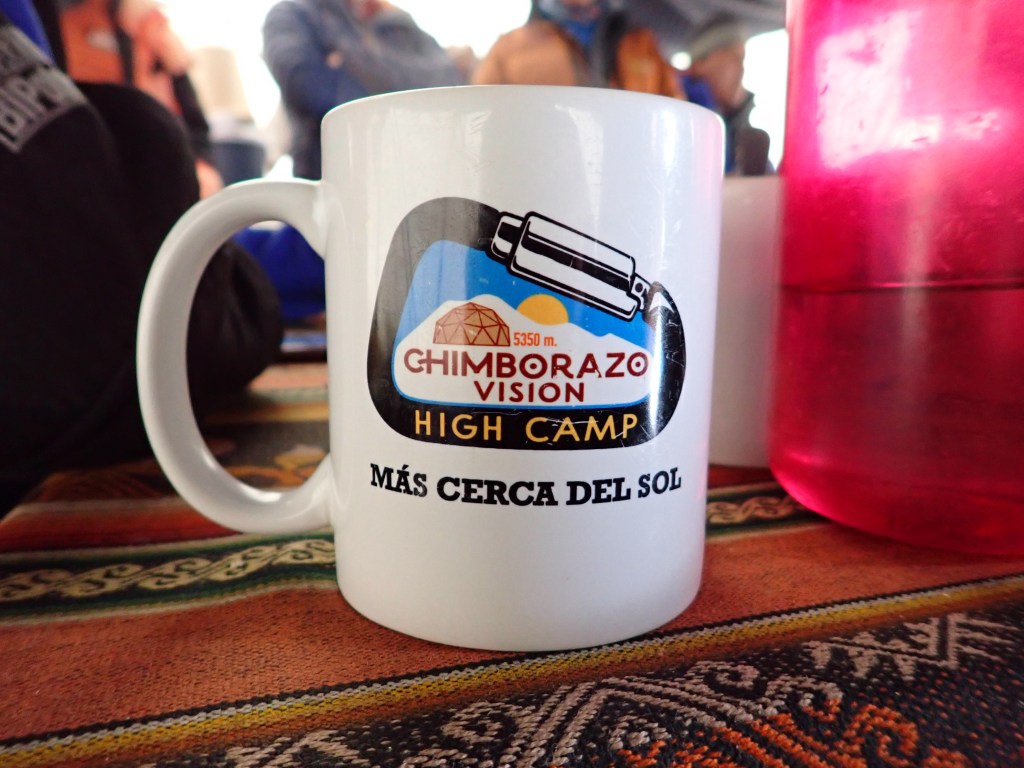
After our brief recuperation at Banos, we headed up to Chimborazo. This time, after being dropped off at the parking lot, we ended up climbing 2 hours and about 2,000′ – again with our full packs to high camp – Stubel High Camp at 17,380′. Probably the most basic of camps, it consisted of several large sleeping tents, a cook tent and a toilet buidling.
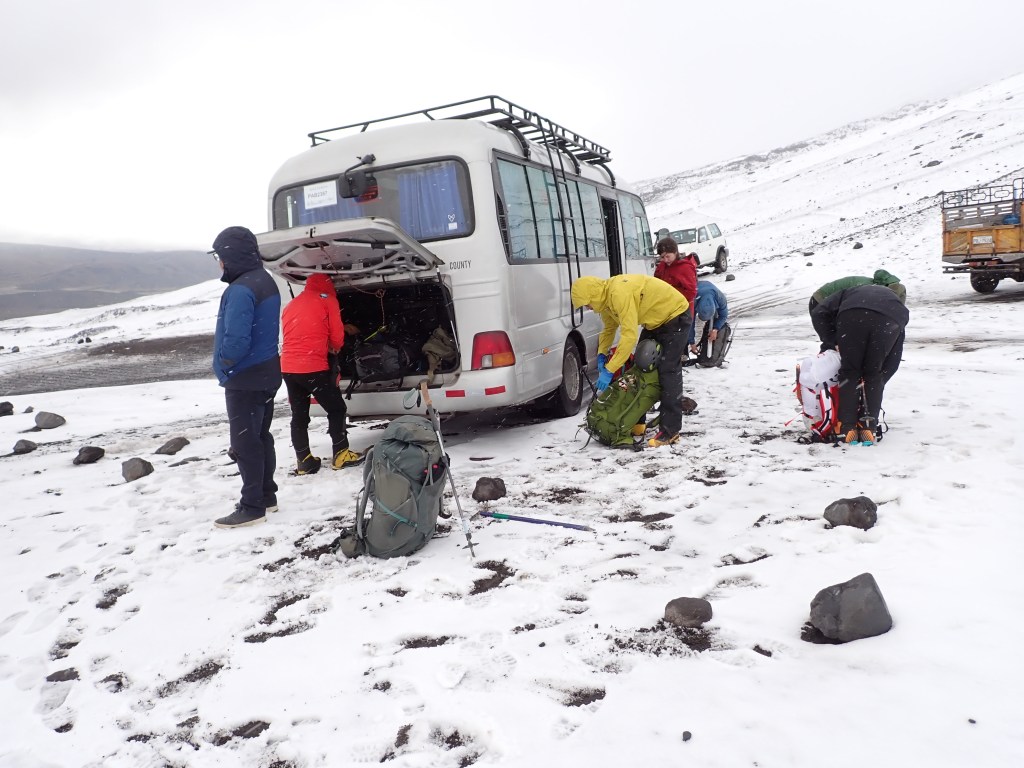
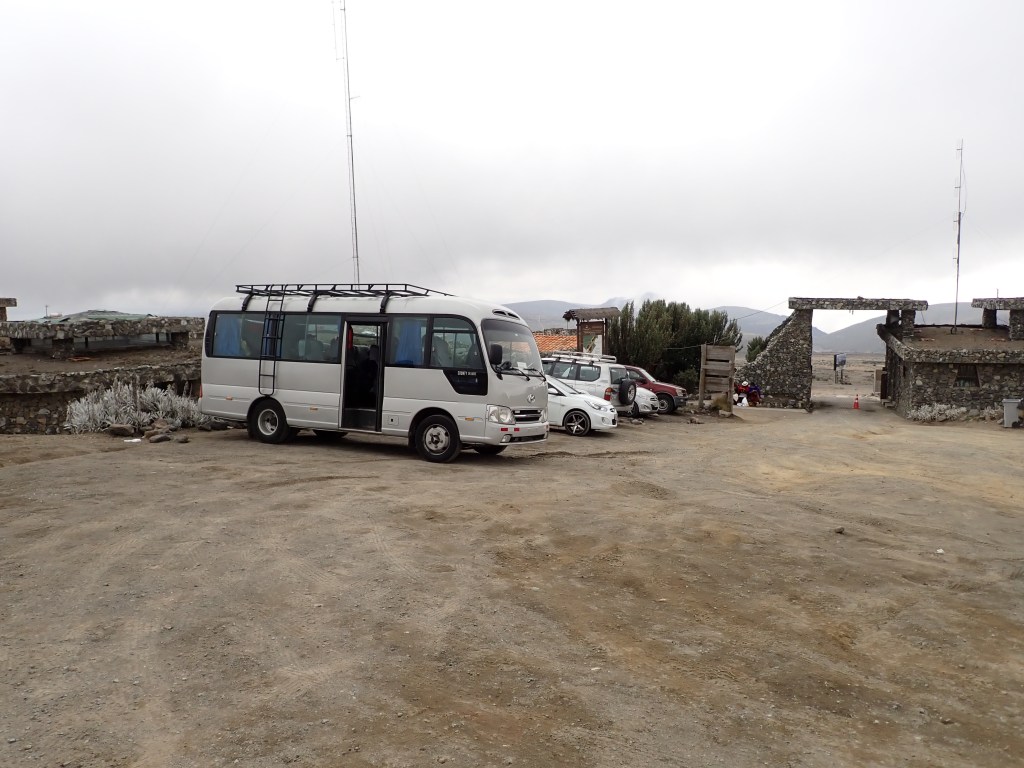
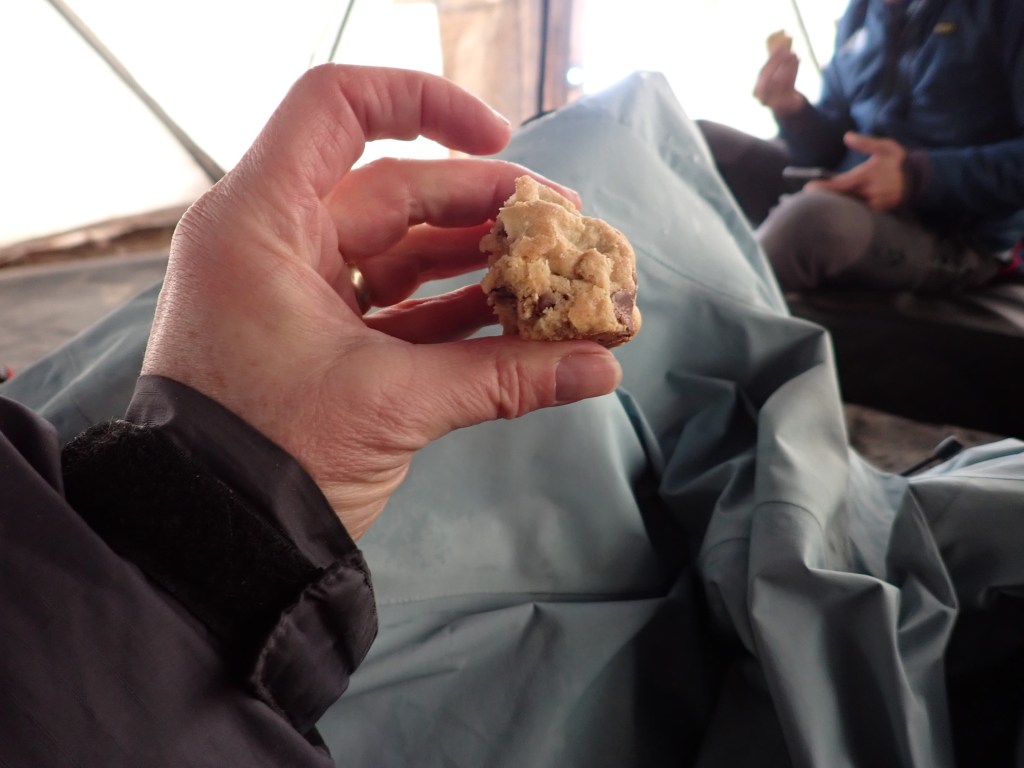
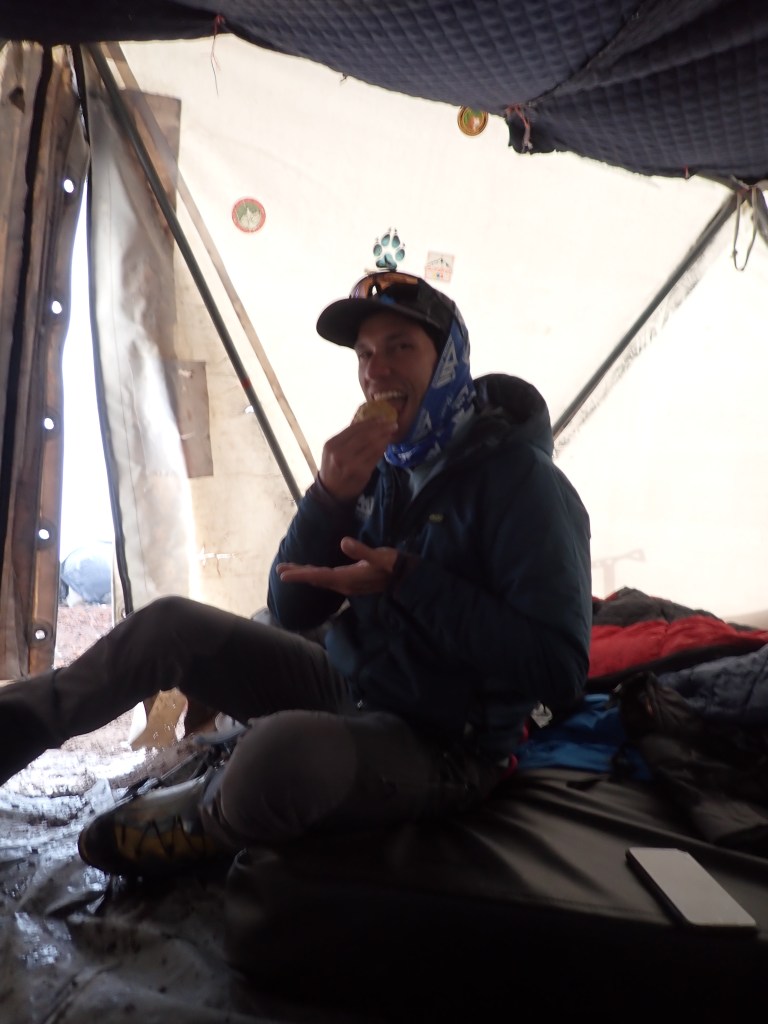
Our bus – checking us in at the main gate.Drop-off spot prior to hiking up to high camp.High Camp sleeping tentClimber heading into the dining tent with the wooden toilet facilities on the ridge above.Cookie time in the sleeping tent!Nice and cozyAll the wood for the restrooms, stoves for cooking, fuel, etc., had to be carried up by porters. No road to this camp!
The last resort that we stayed at before heading back to the San Jose de Puembo was the Abraspungo Hostelry. Another beautiful facility, modern bathroom and a HOT shower – yay!
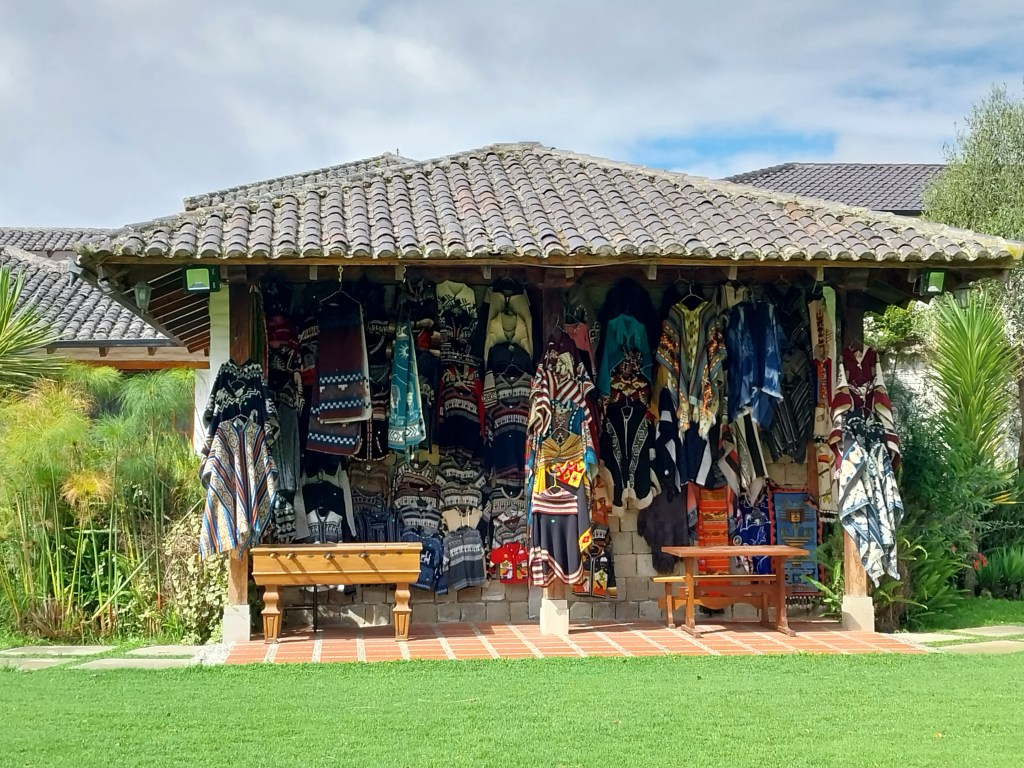
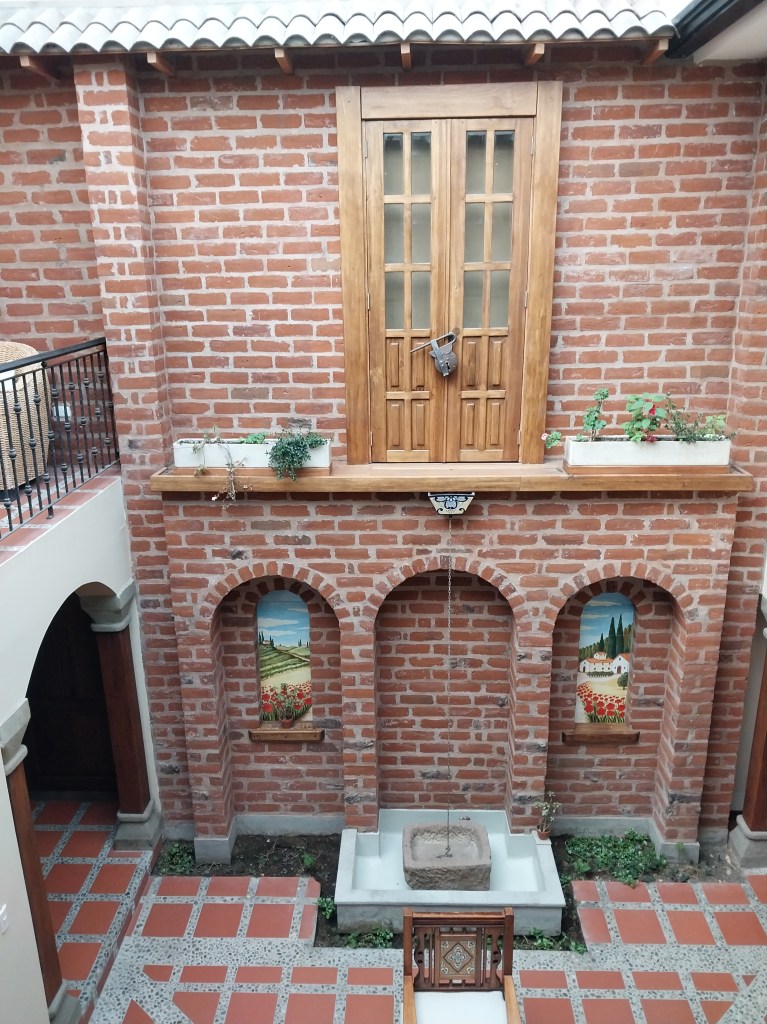
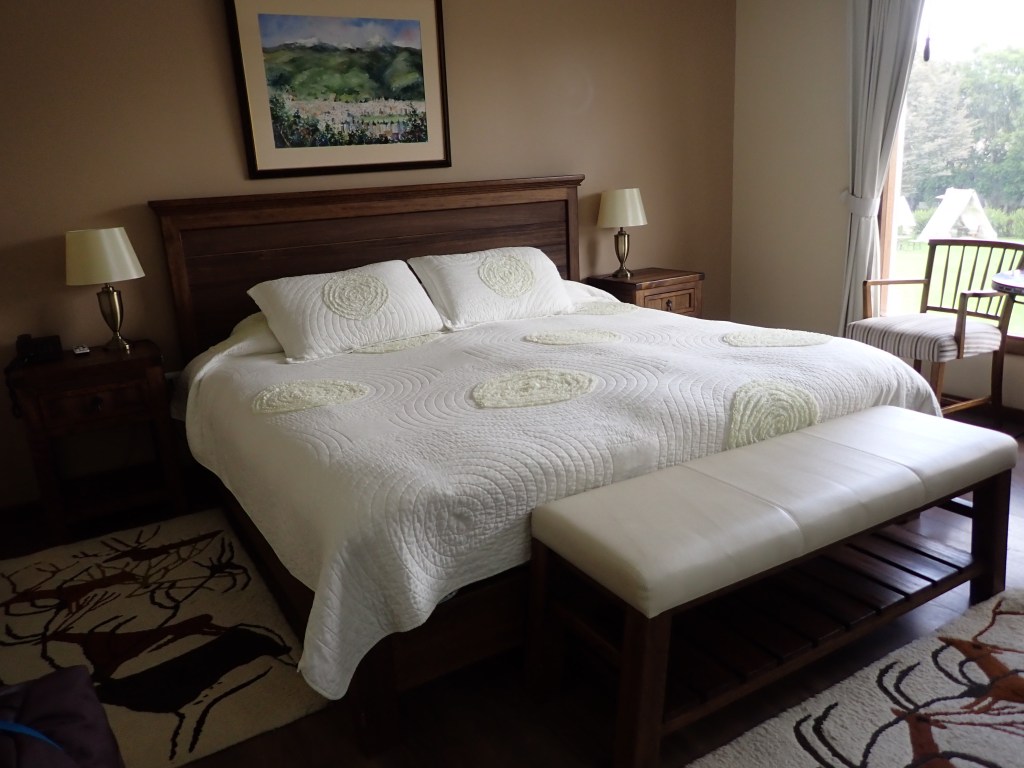
Local handicrafts for sale.Inner courtyard with mock facade.Beautiful room with a great view of the gardens.
One of the great benefits and appeal of the international climbing trips that Alpine Ascents organize is the fact that, although the focus of the trip is the climbing, they add copious amounts of food, historically significant tours, and general immersion in a good part of the local culture. I think we were all expecting that the great food we were able to enjoy in the hotels and restaurants would diminish, the higher we got up the mountains – definitely not the case! We enjoyed multi-course, gourmet meals all the way up to high camp at 17K on Chimborazo. I spent a lot of time taking photos of our food and note that this is probably only 1/3 of my photos!
Most of our meals started with a soup – Locre de Papa is a potato soup, sometimes served with popcorn, that we had a lot of. Other soups included vegetables in broth. Sometimes salads were offered but I was a little leery of lettuce and the water that it was washed in. Our guide seemed to think it was fine but I didn’t want to take any chances. The main courses were generally a choice between fish, chicken or beef. There were two team members that were vegetarian/vegan and they were fairly easily accommodated and their meals looked great. Desserts were plentiful!
All I can say is that no one lost any weight on this trip!
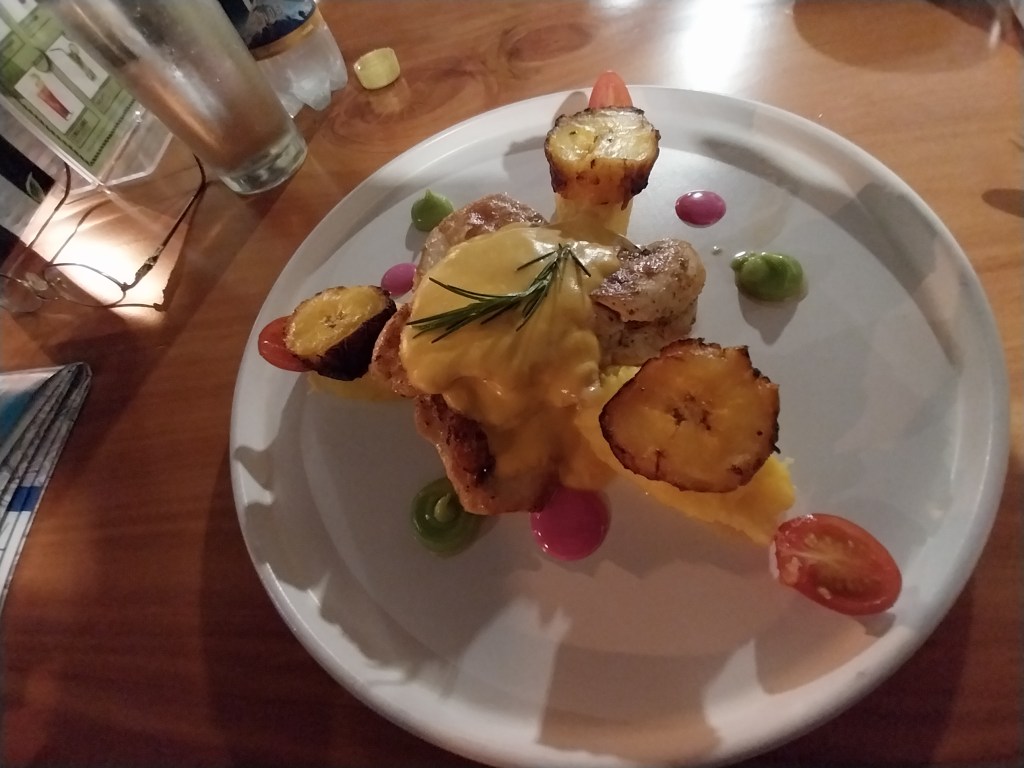
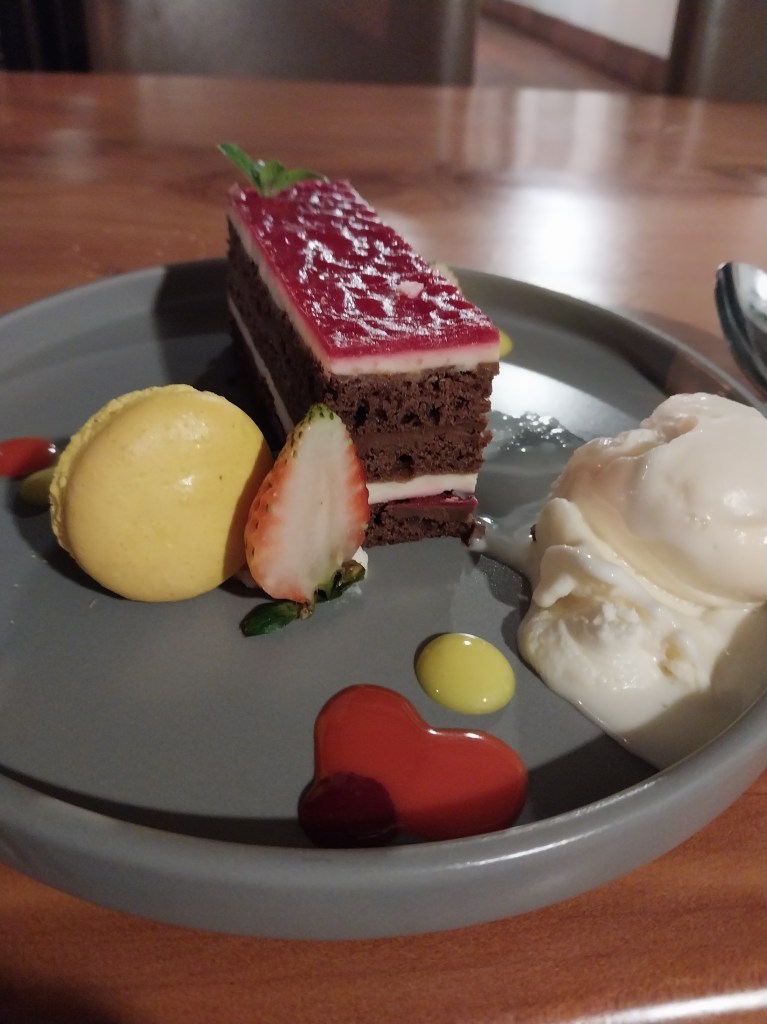
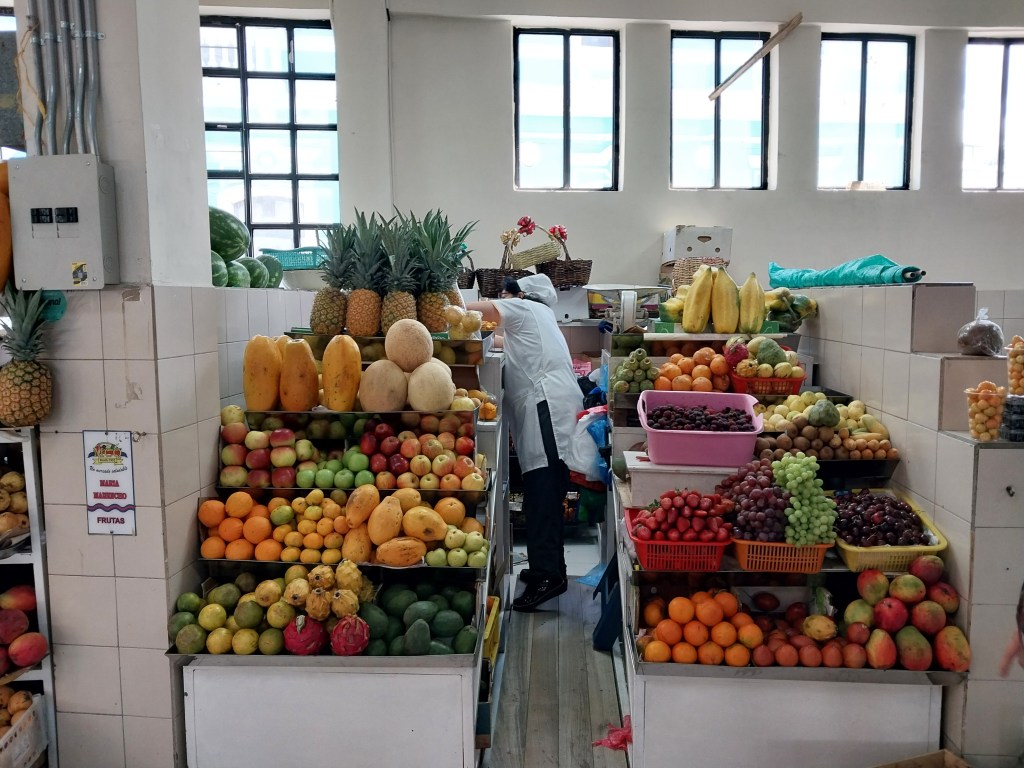
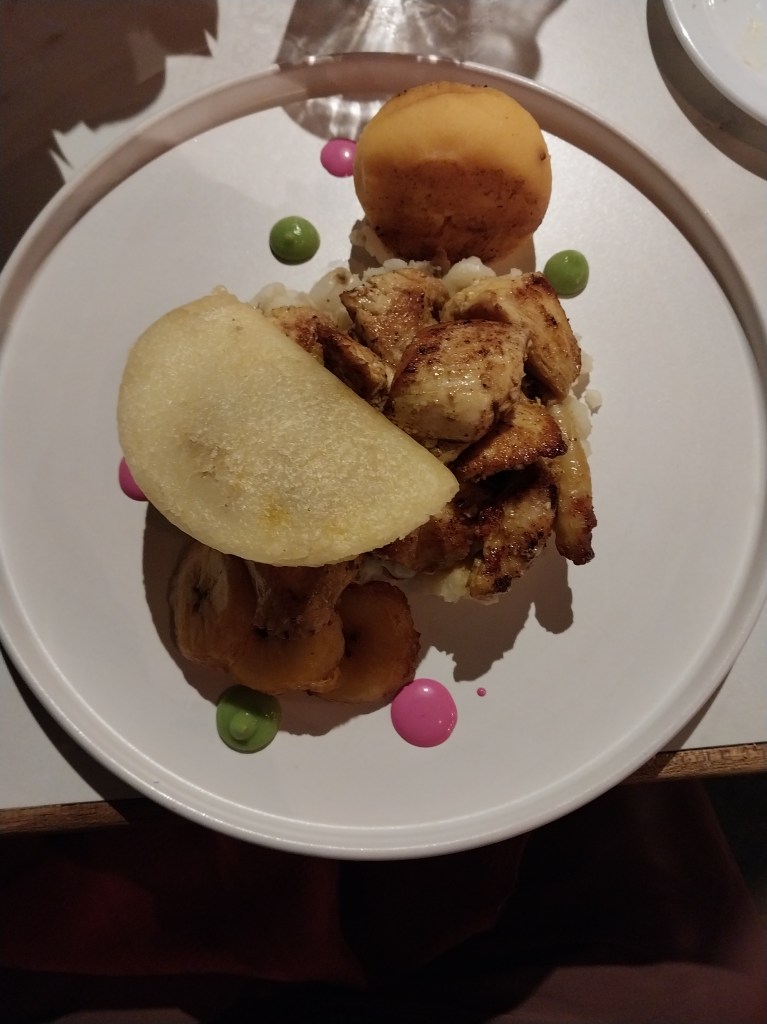
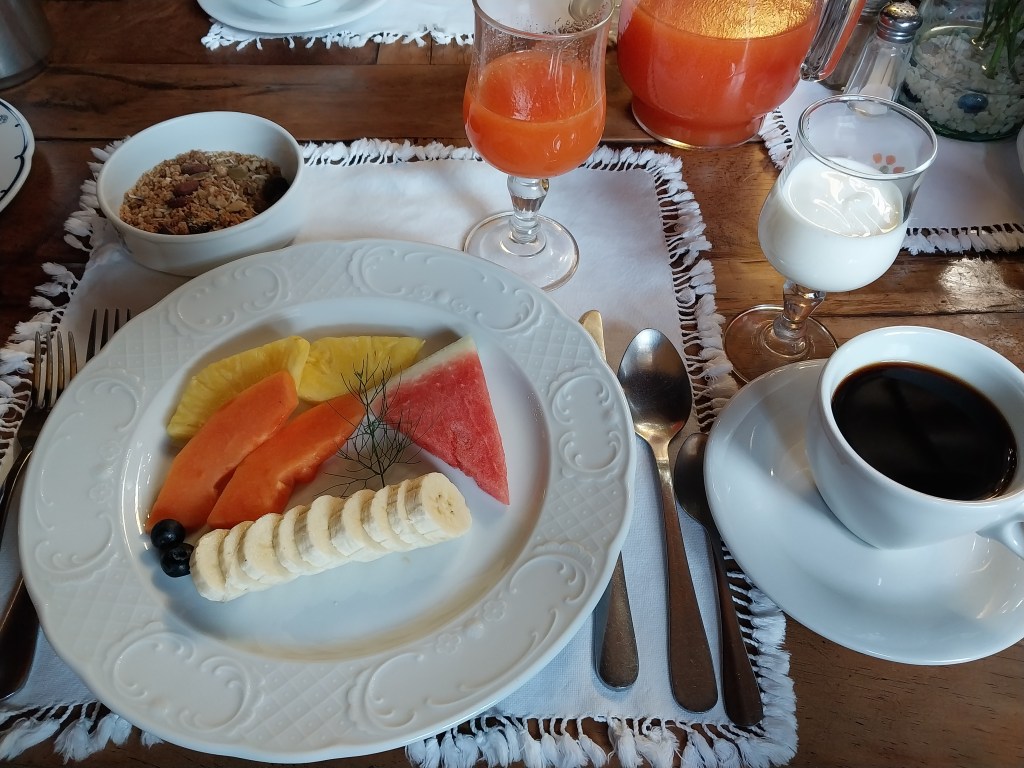
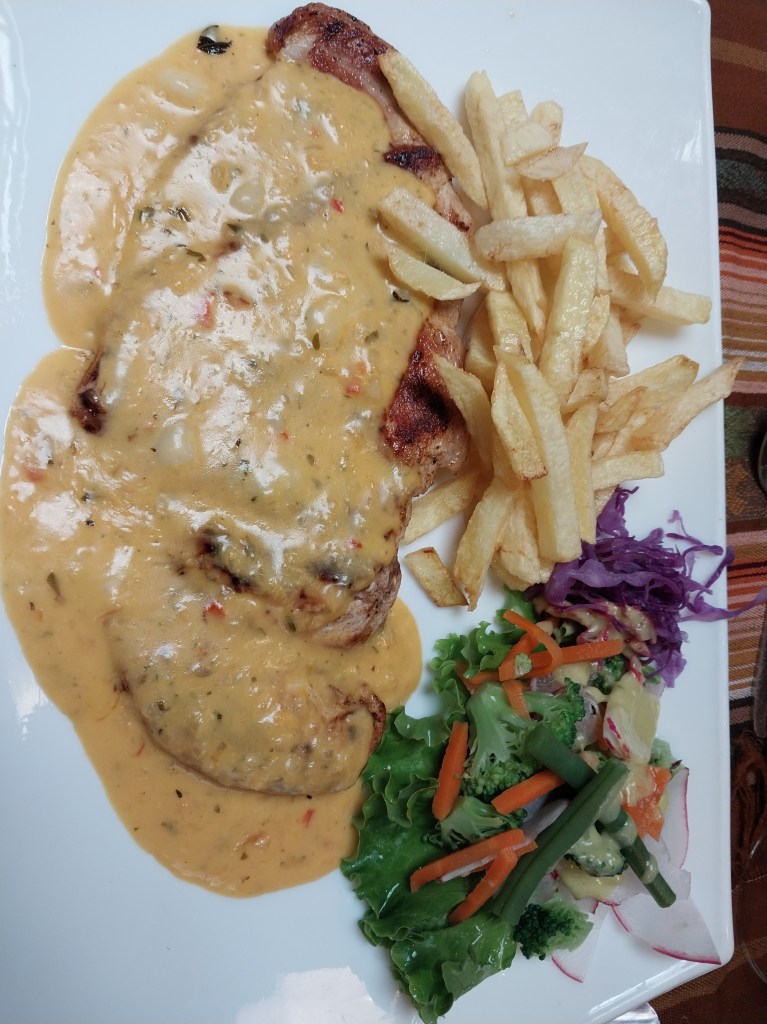
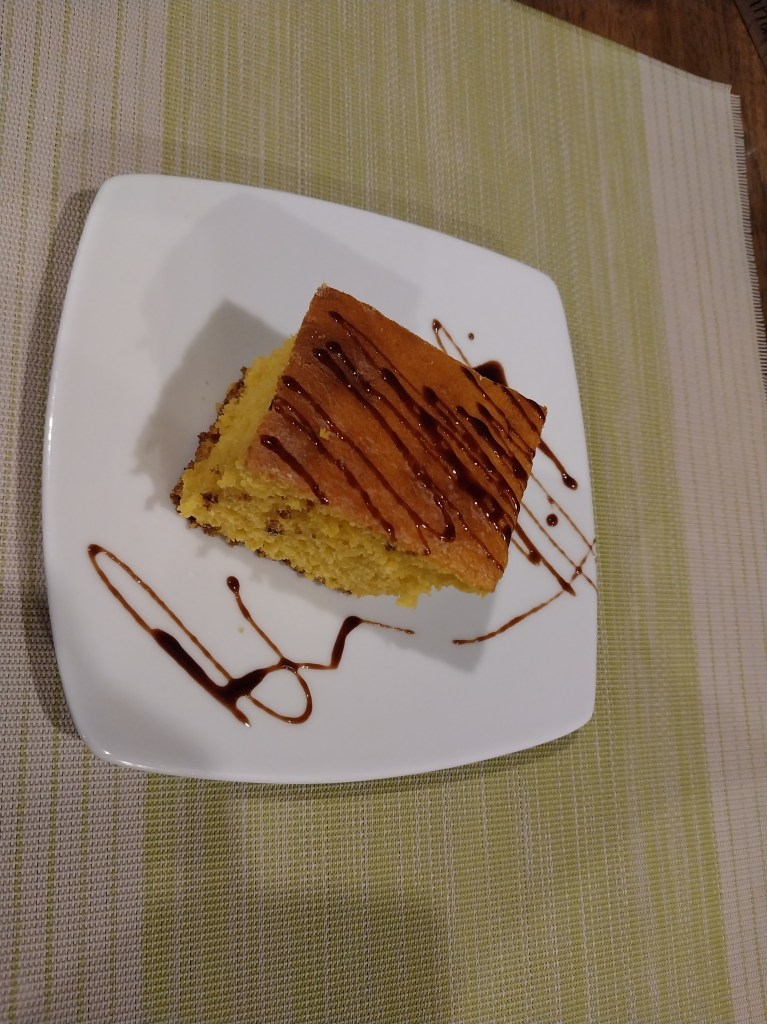
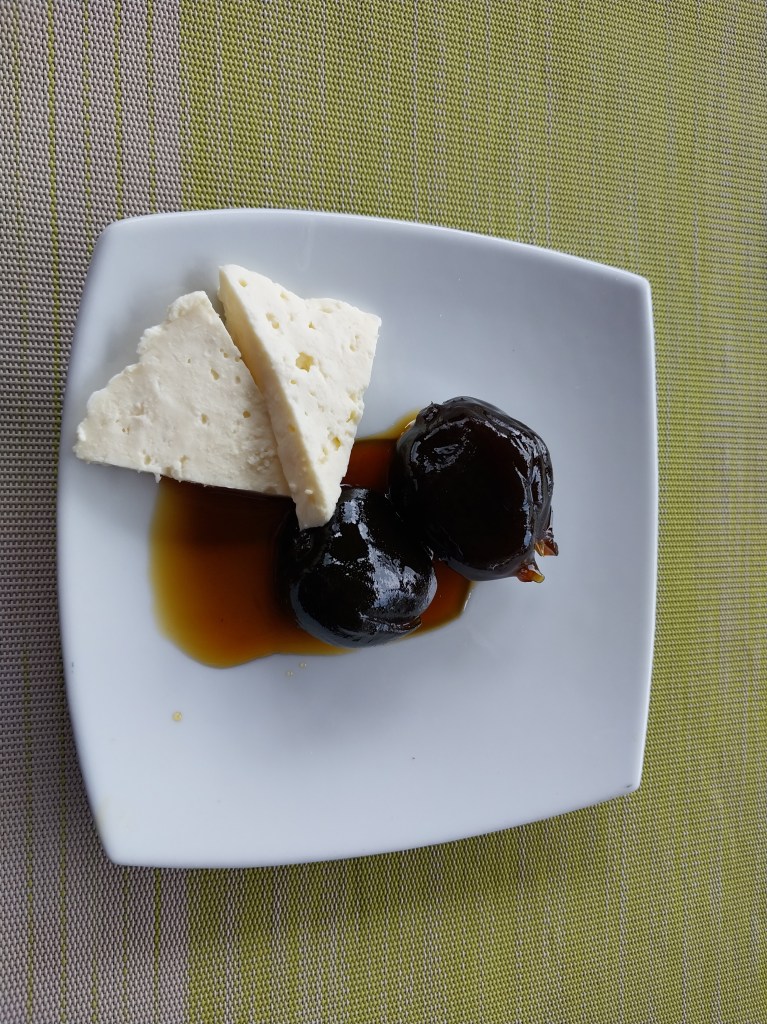
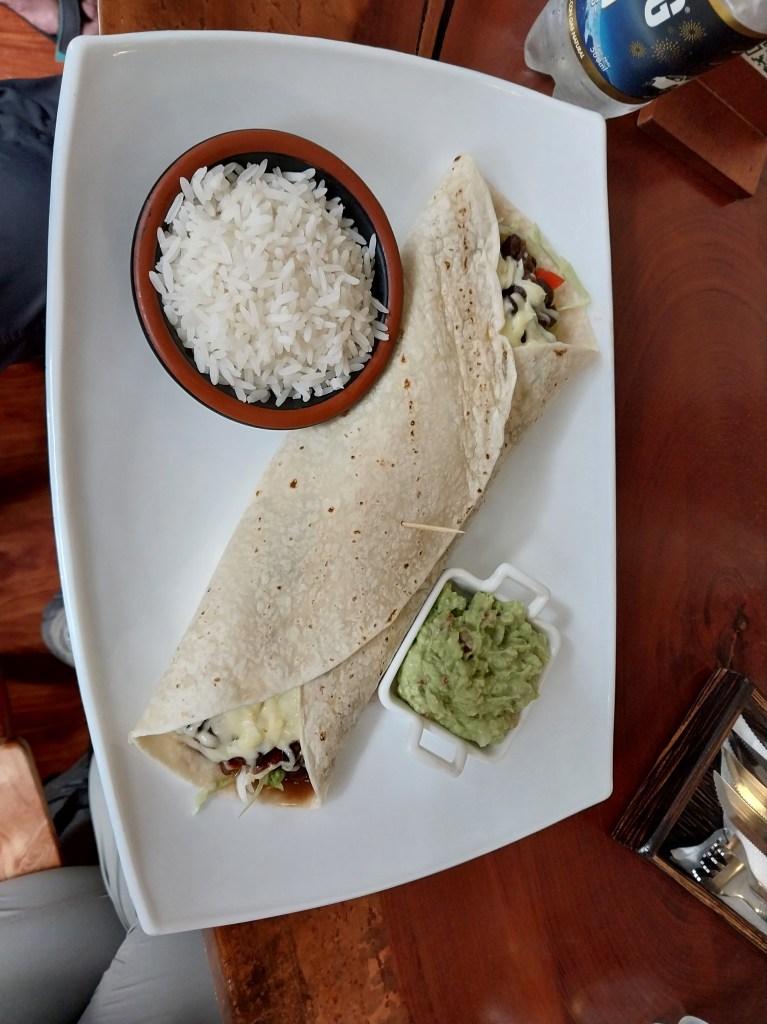
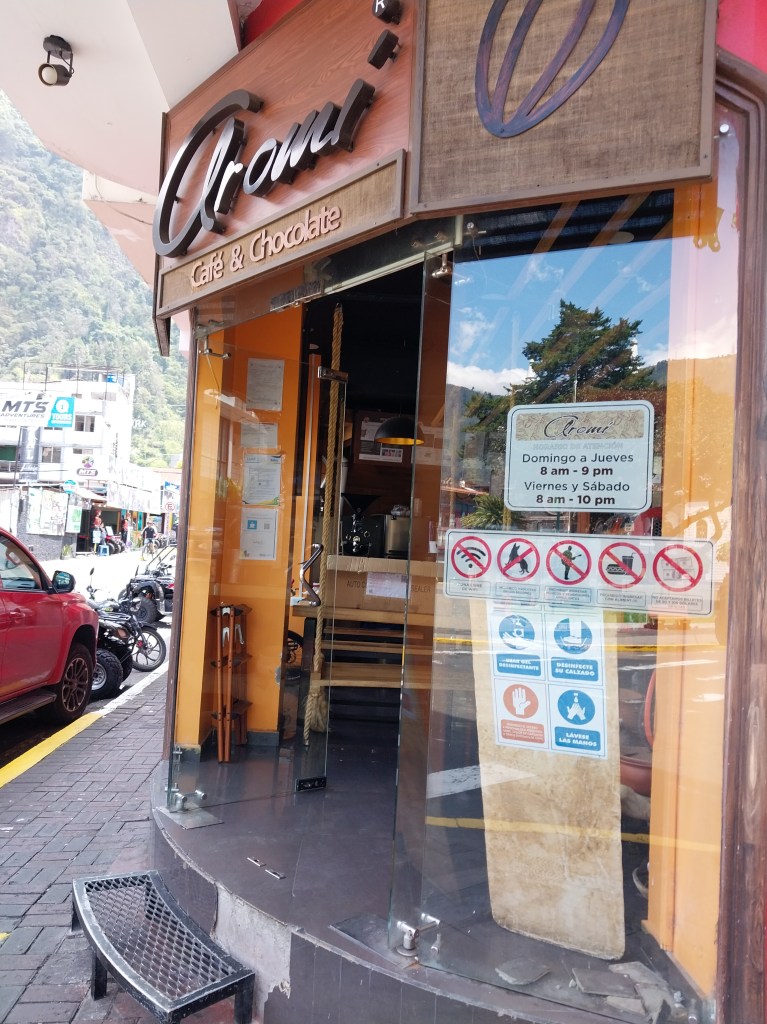
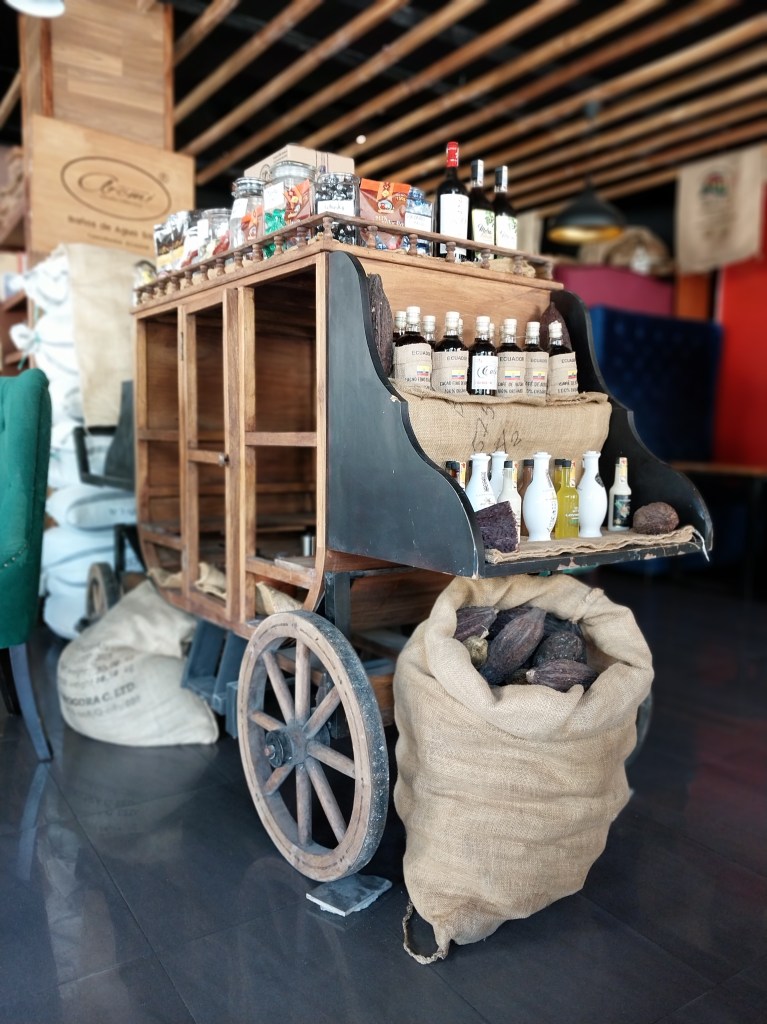
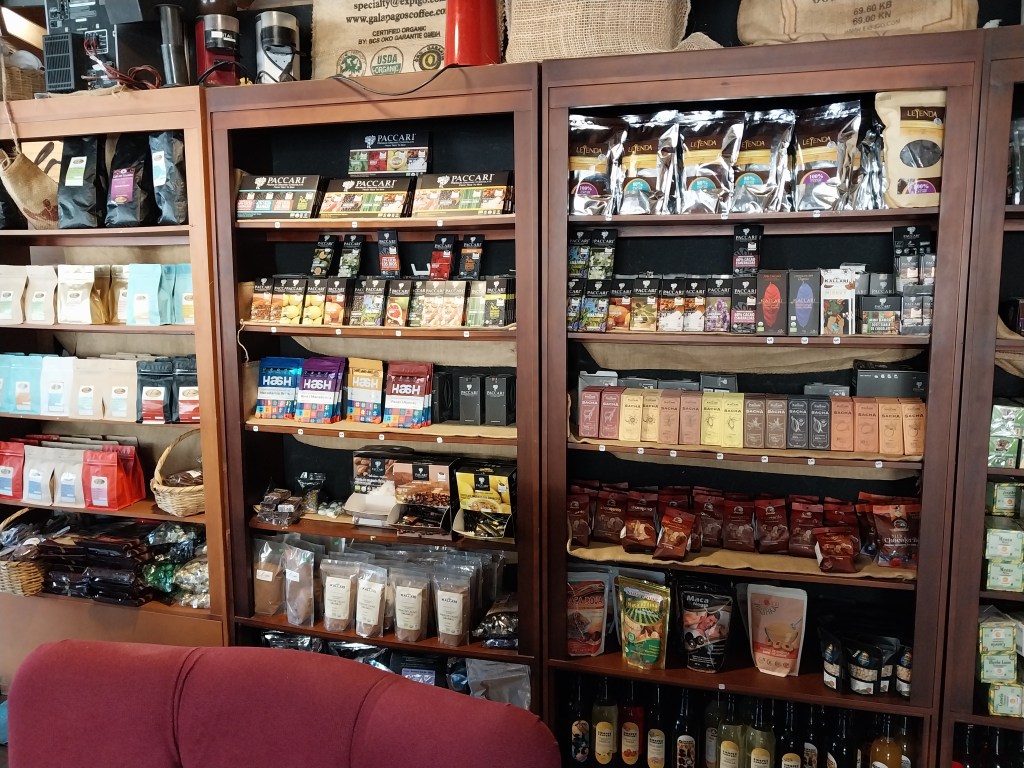
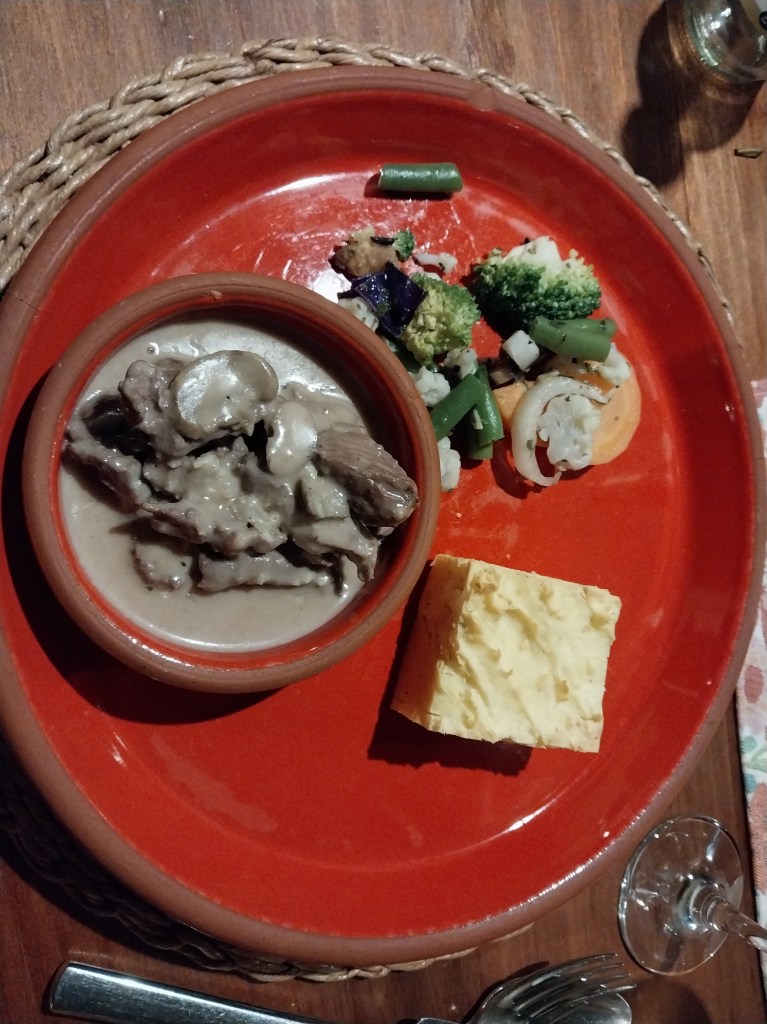
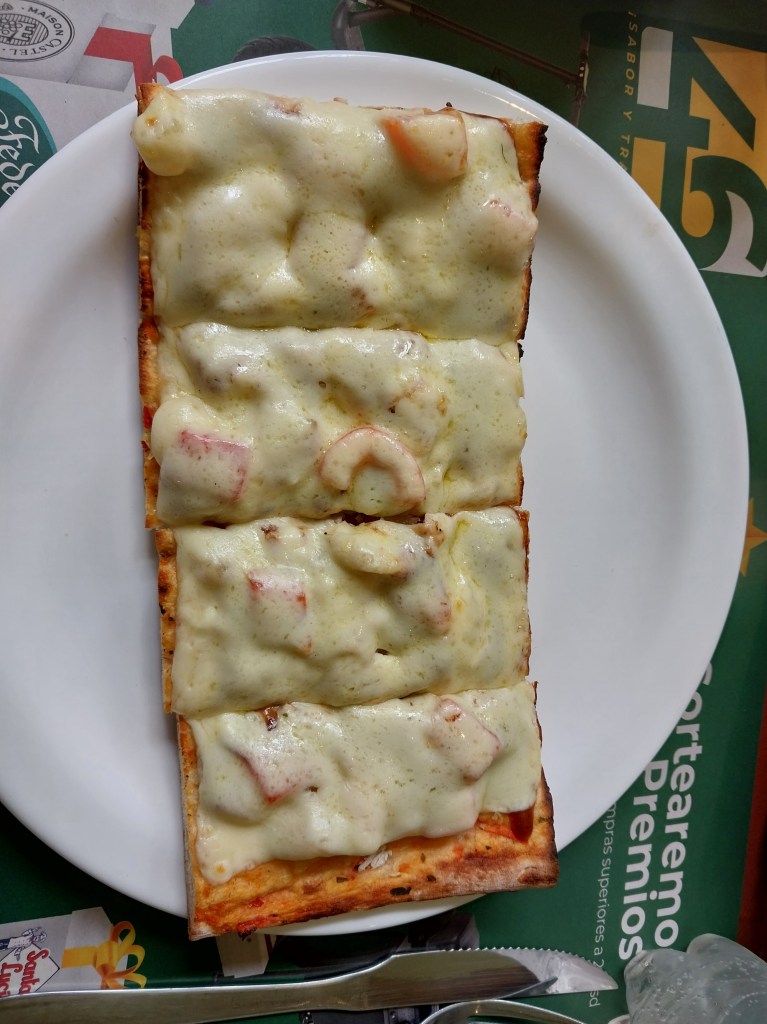
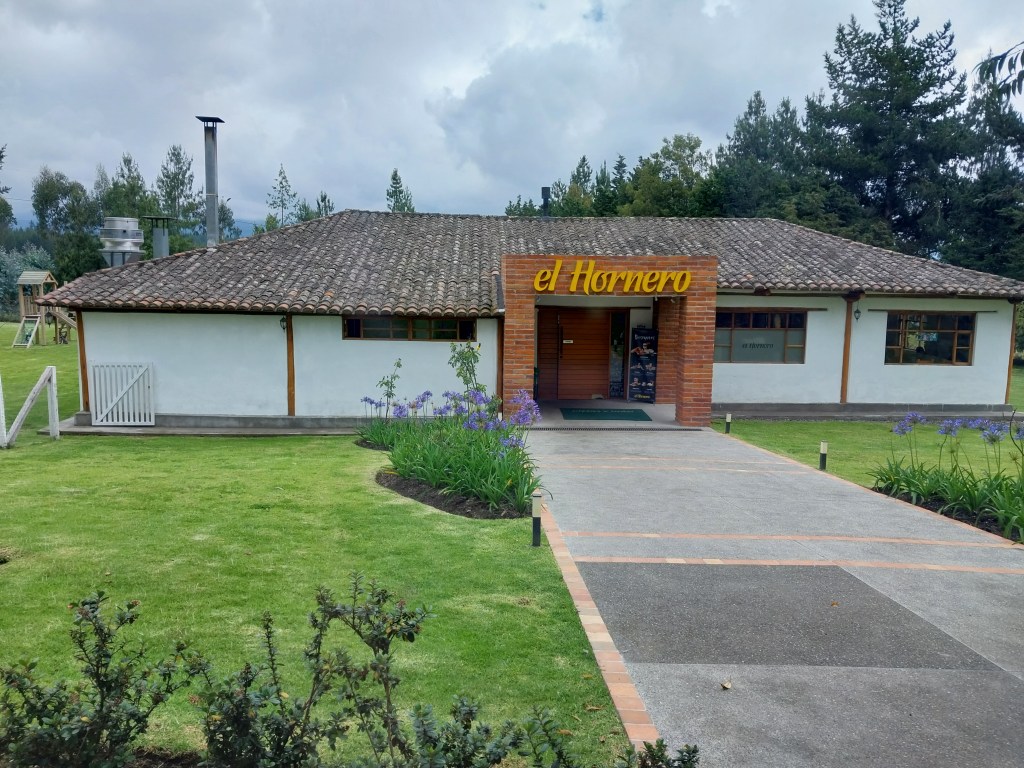
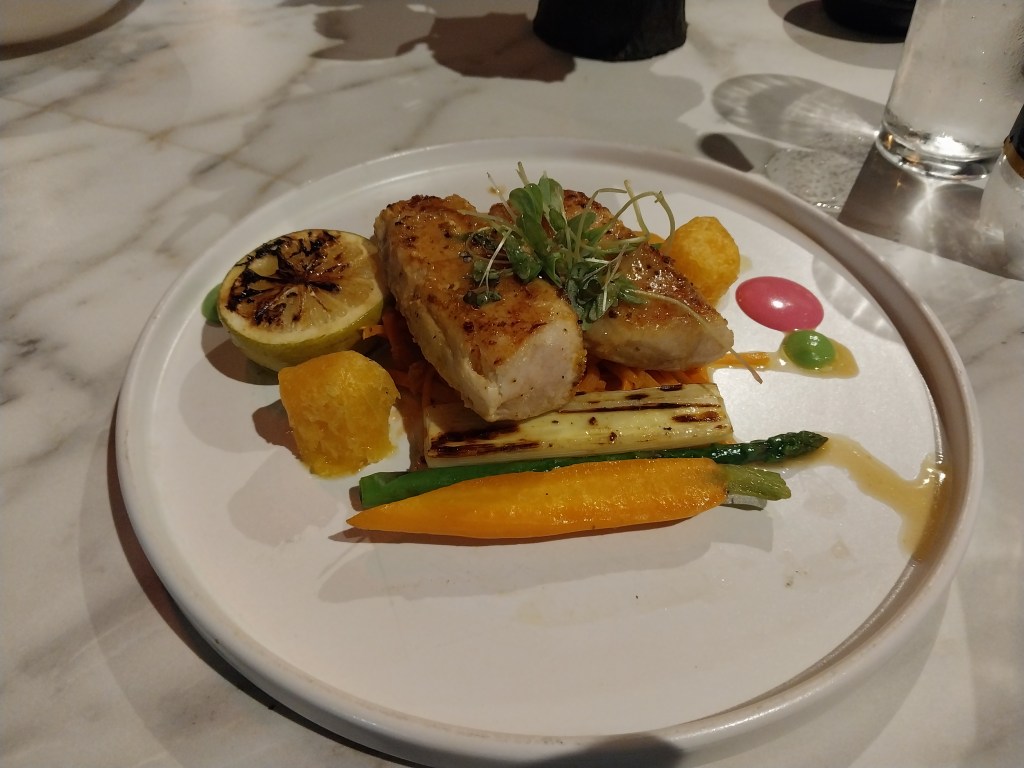
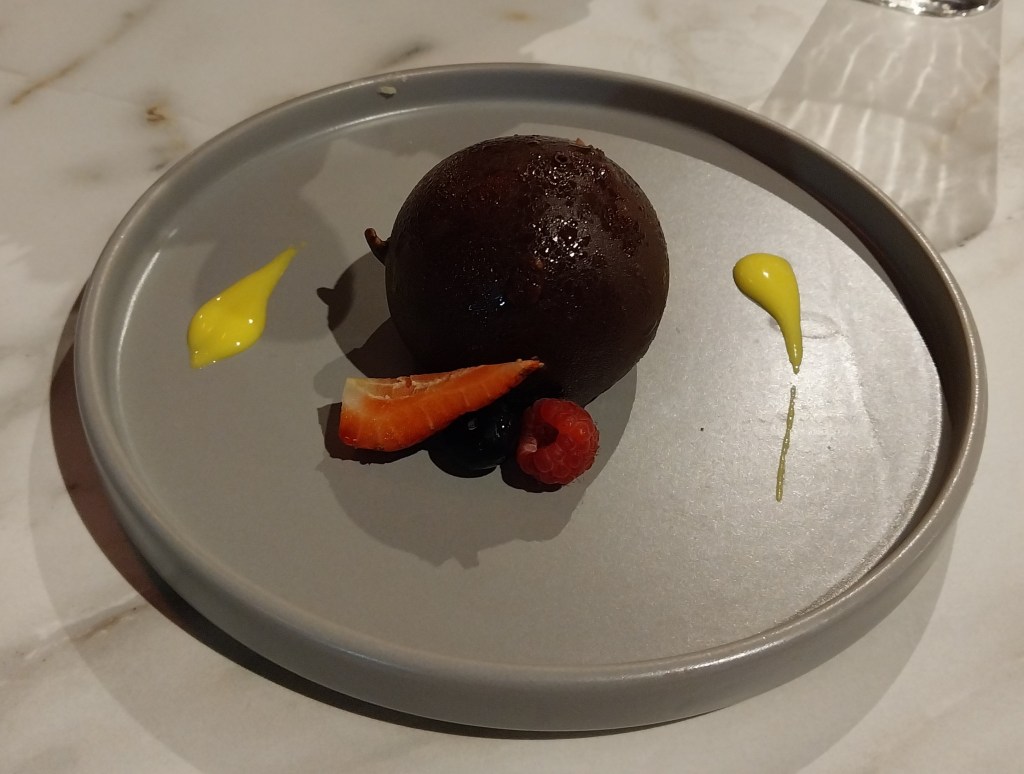
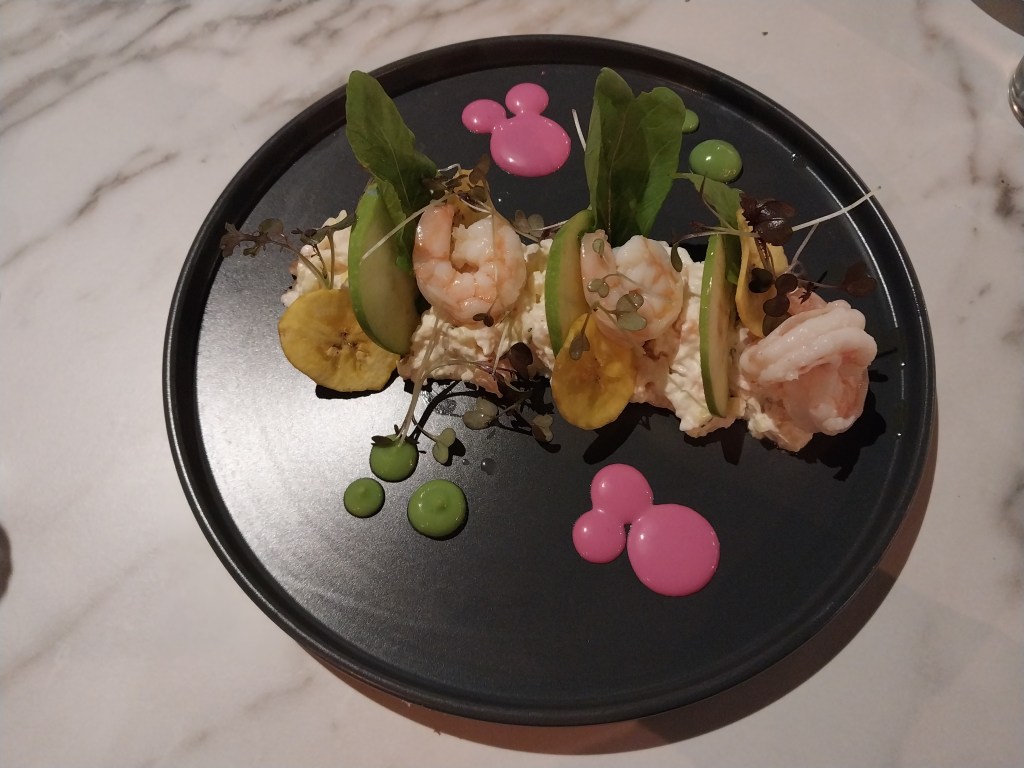
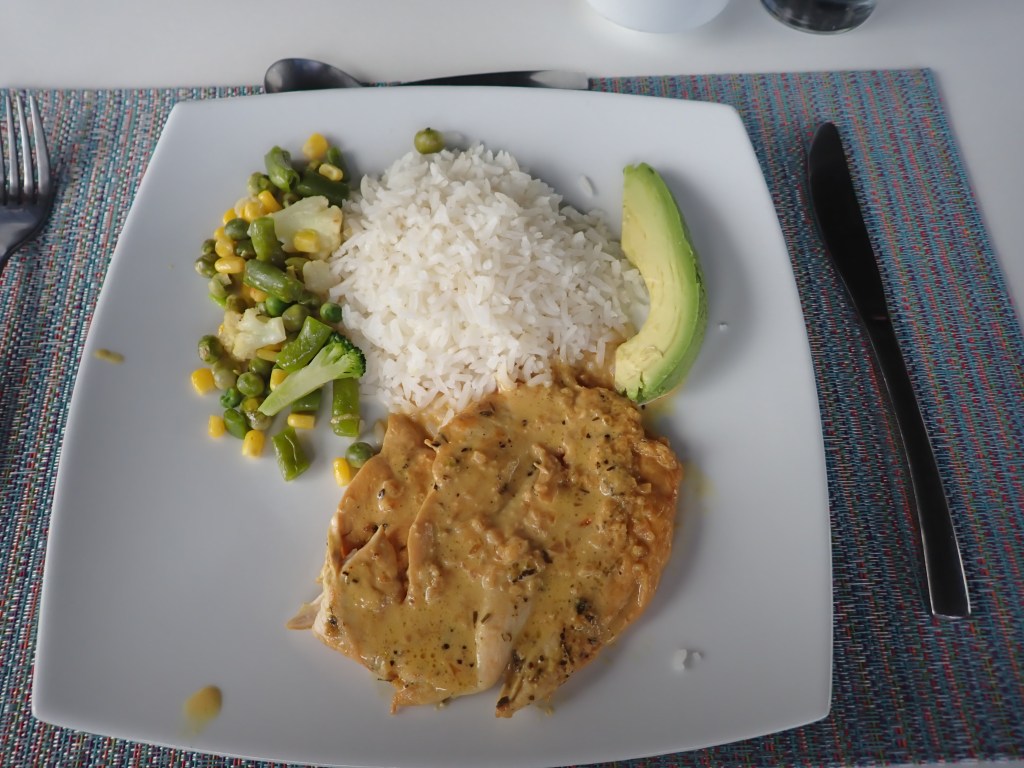
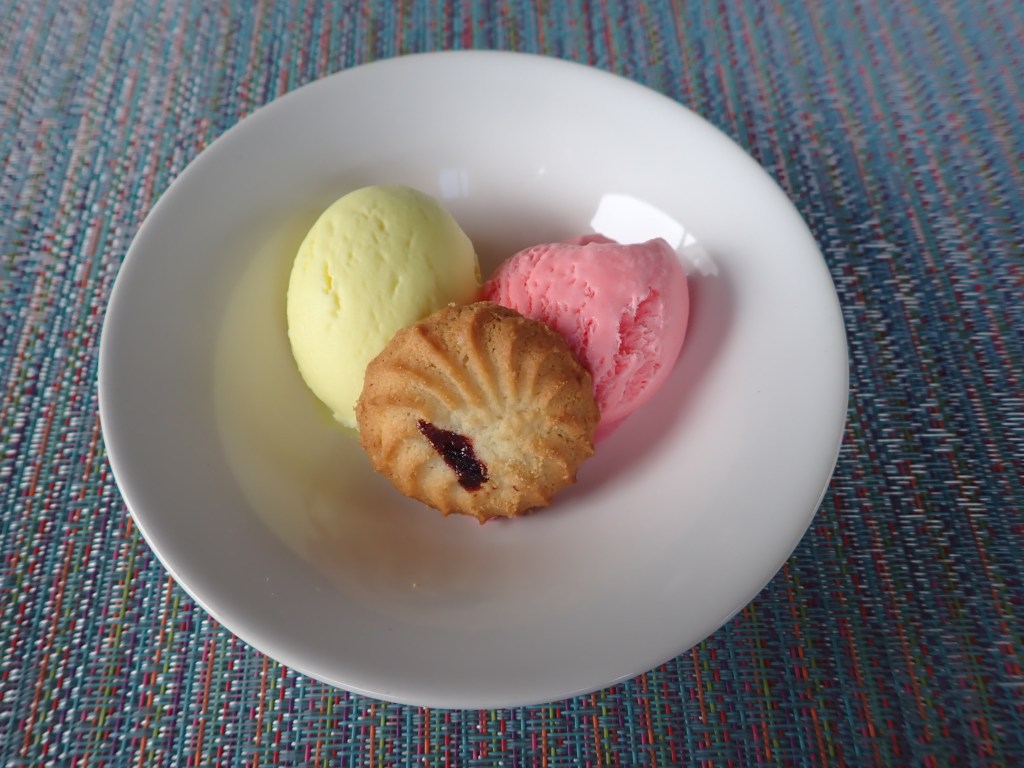
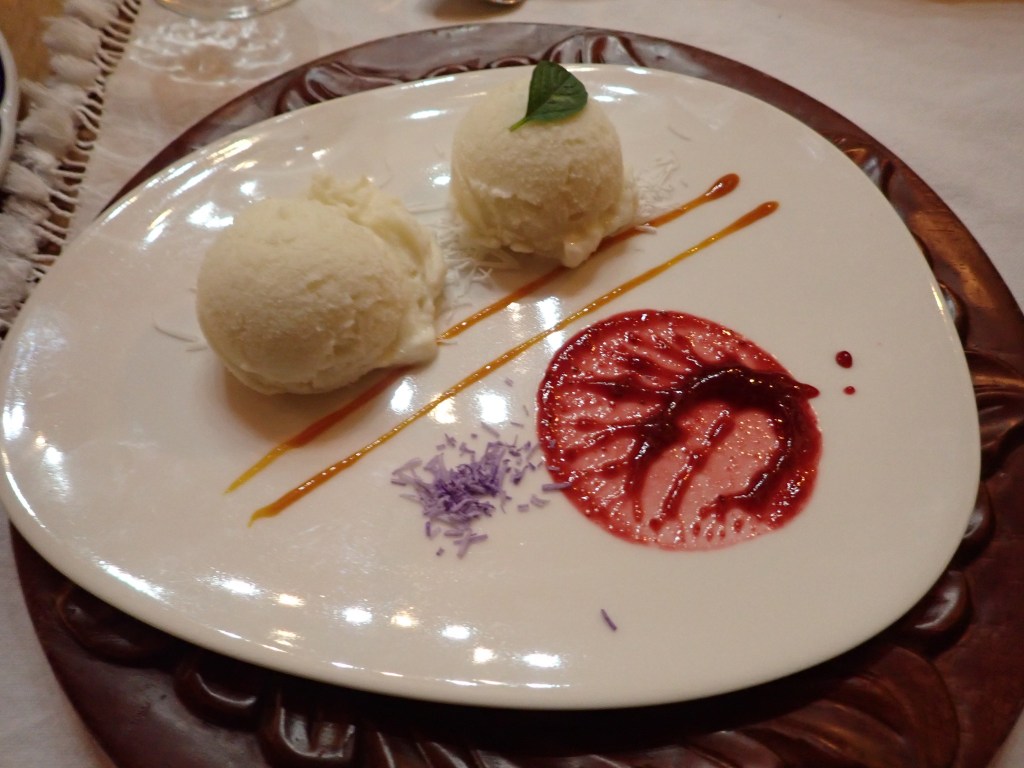
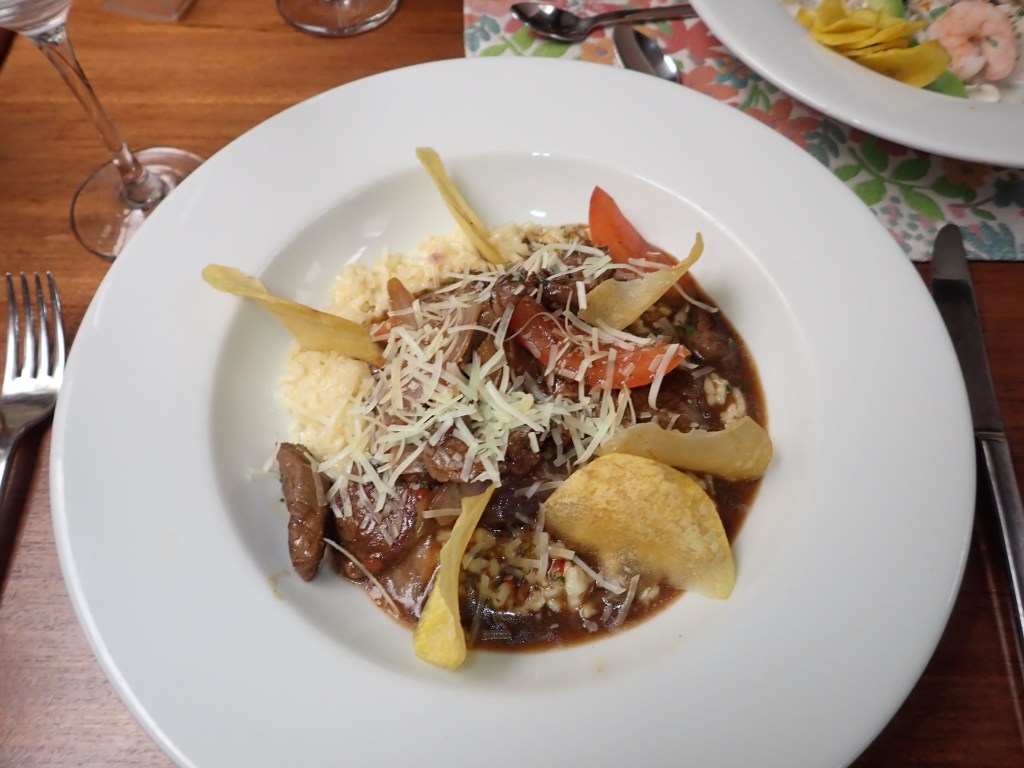
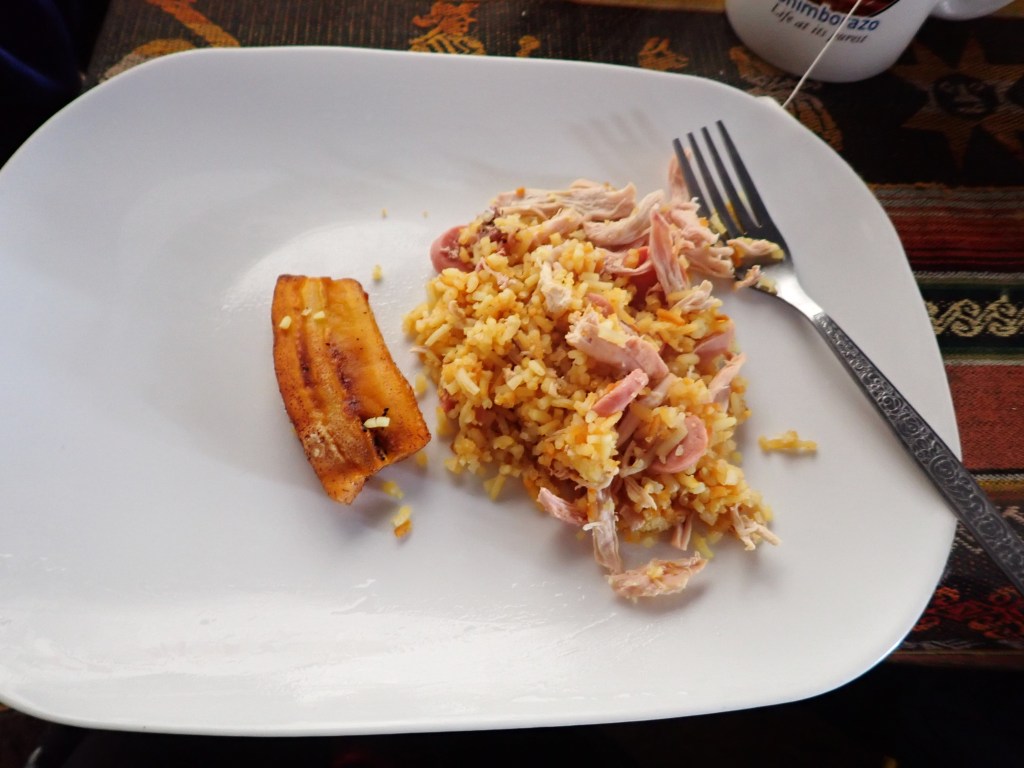
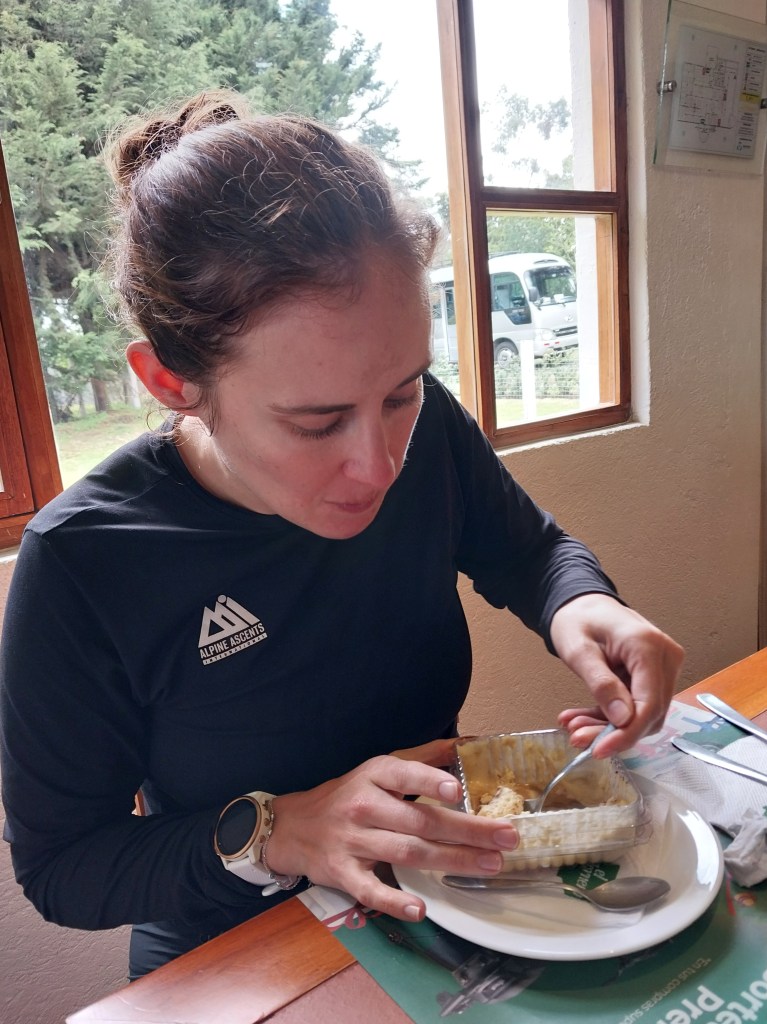
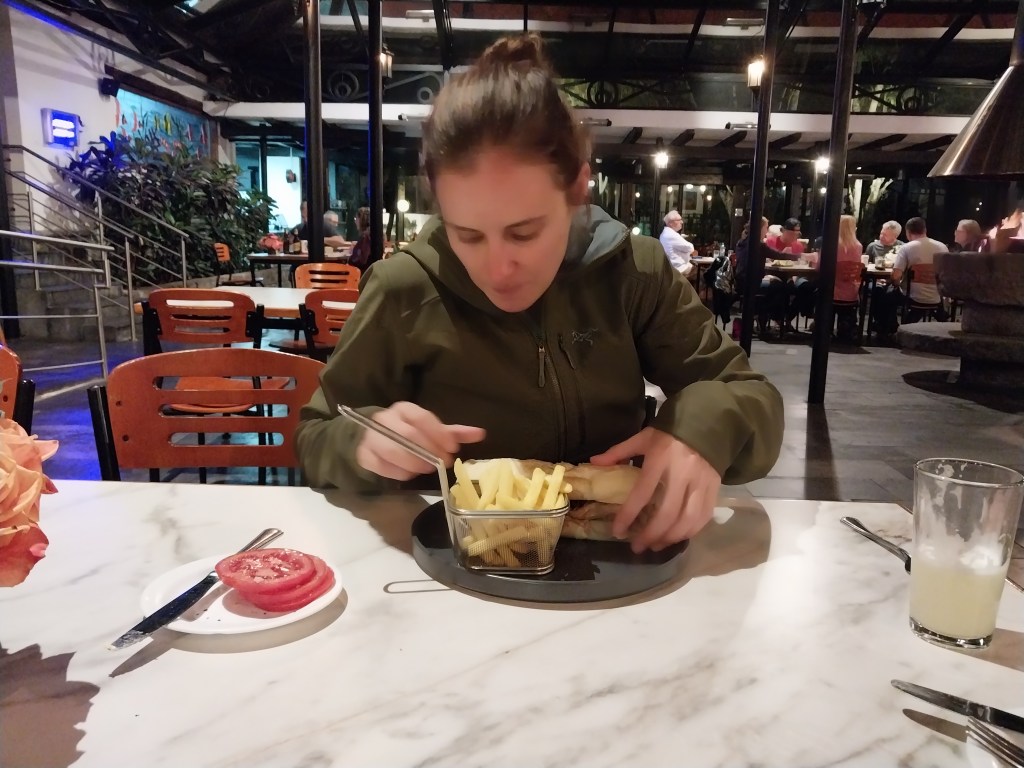
A chicken, plantain and potato dish I had the first night at the San Jose de Puembo resort.It was my birthday so I decided to treat myself to dessert – Chocolate Opera Cake.A local fruit market that we visited on our tour of Quito. We were able to try three different types of passion fruit.Second night at the resort and I had another chicken dish, this time with an added Llampingaucho (potato patty with cheese inside.)A typical breakfast with fresh fruit being the mainstay of just about every breakfast. I did end up with some intestinal “distress” for a pretty significant part of the trip. Me thinks it was the local yogurt and foreign bacterial cultures (the glass is not milk) that did me in.Chicken in Garlic SauceA cornbread-like cake.Figs and fresh cheeseVegetarian BurritoCoffee shop in Banos – you could get a double espresso for $2.00 – Starbucks, take note!Display of extracts and candy.Great selection of roasted beans and chocolate bars. Ecuador is famous for their chocolates so I had to sample some!Beef and mushroom stew with potato soufflé.A “Tropical Chicken” pizza with chicken, barbeque sauce and pineapple – YUM! Hold the Canadian bacon.A local chain that we stopped in for lunch.Fish grilled in plantain leaves.Bask to the first resort I had their Chocolate Bomb dessert (filled with chocolate mousse.)Shrimp and Mango SaladAnother chicken dish – simple yet yummy.Desserts were never far from our minds!Home made ice cream and coconut.Tenderloin and Parmesan risotto.A giant chocolate chip cookie that Alex bought in Banos before the Chimborazo climb.Chimborazo high camp dinner before resting for our summit attempt.The meal consisted of fried plantains and stir fry with chicken and hotdogs! Need that protein.
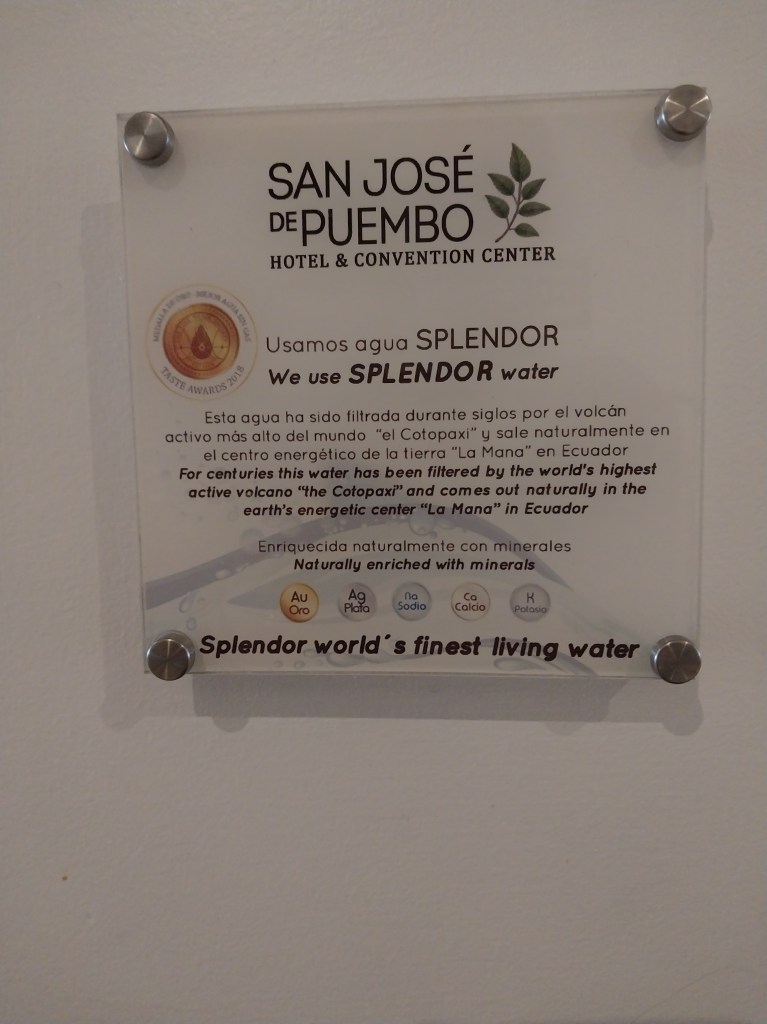
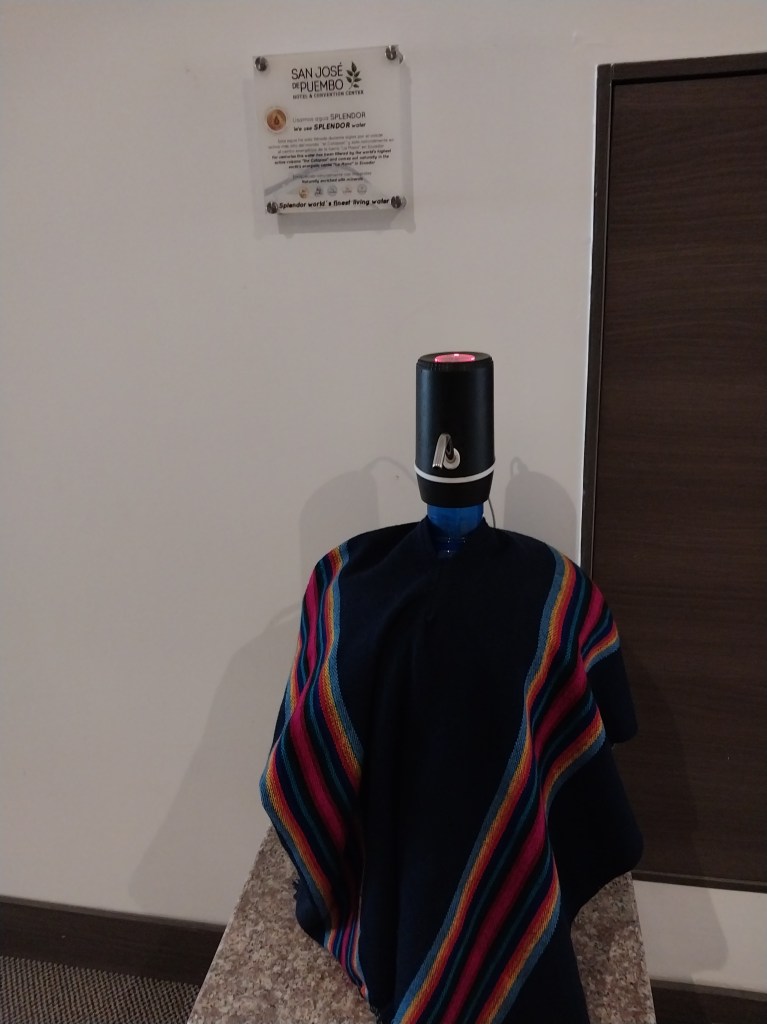
Almost all the hotels and restaurants had ample supplies of bottled water for the Gringos.
Five gallon bottle of purified water with a pump in the top.
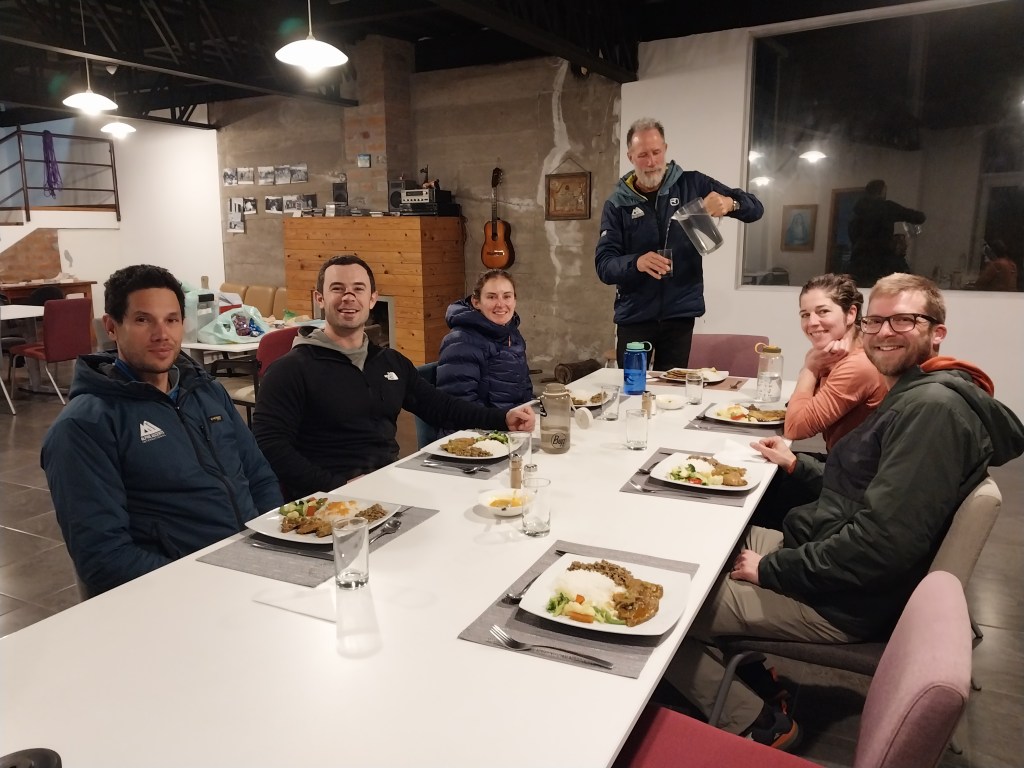
Eating was a full time job and not a spectator sport!
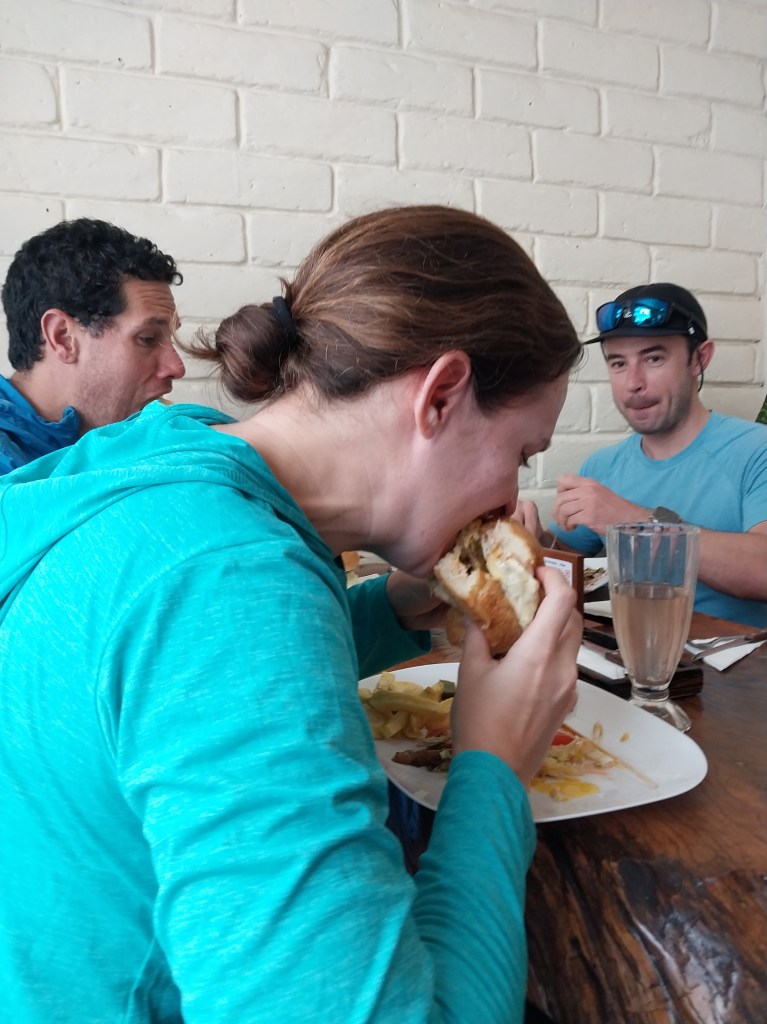
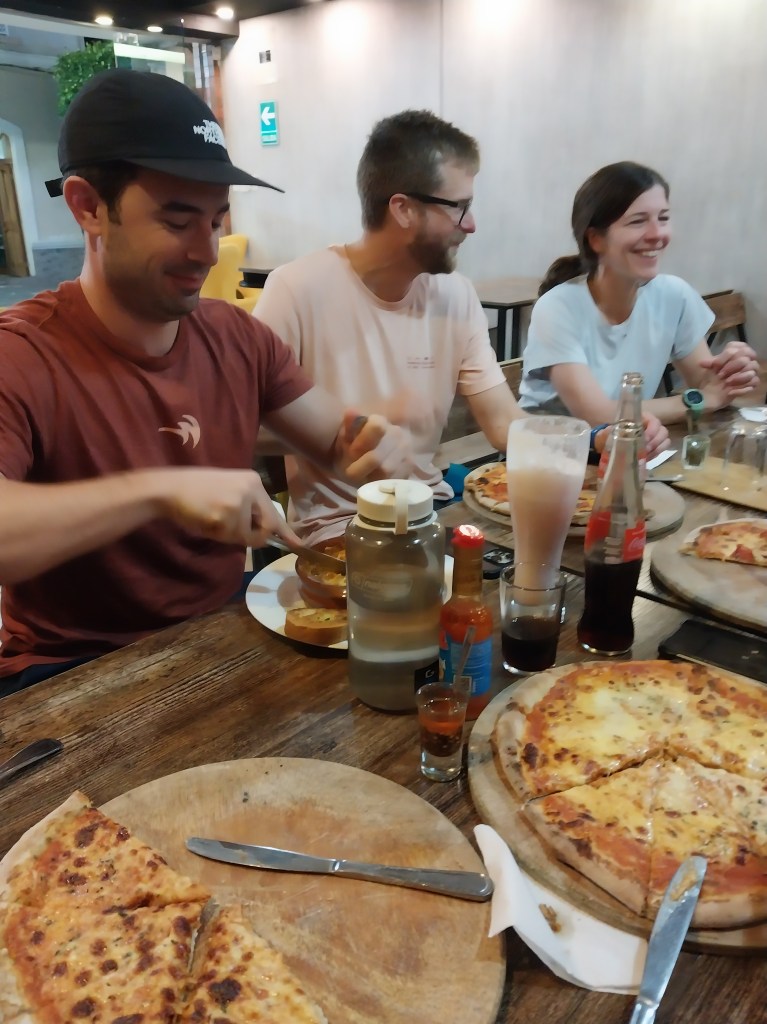
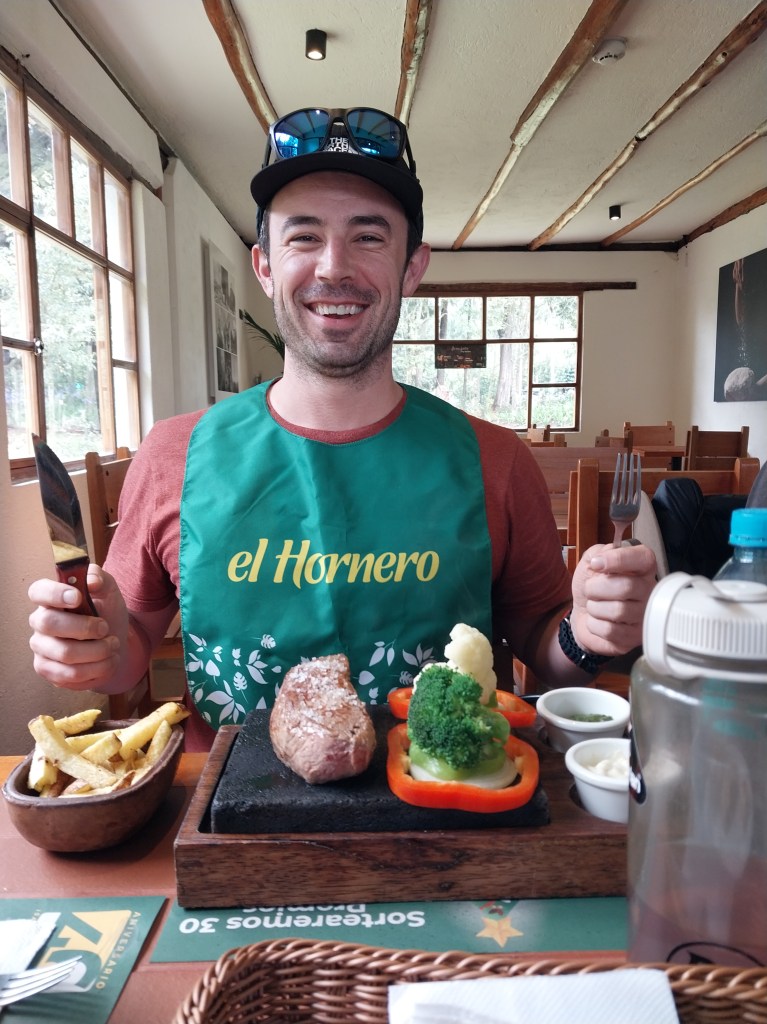
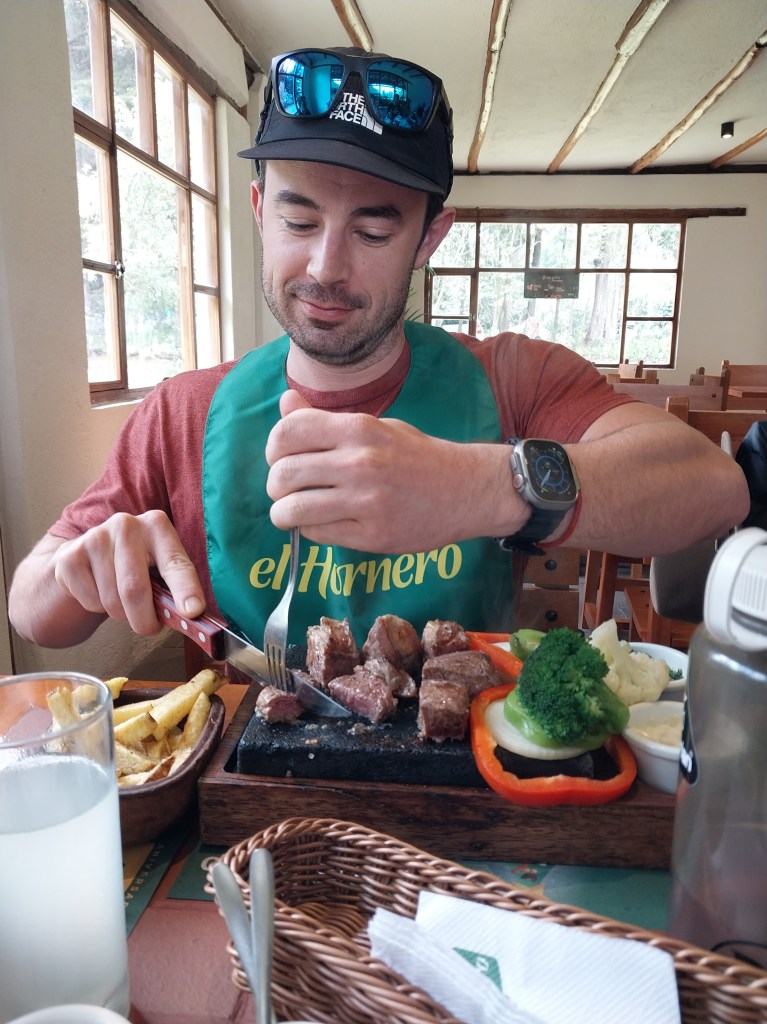
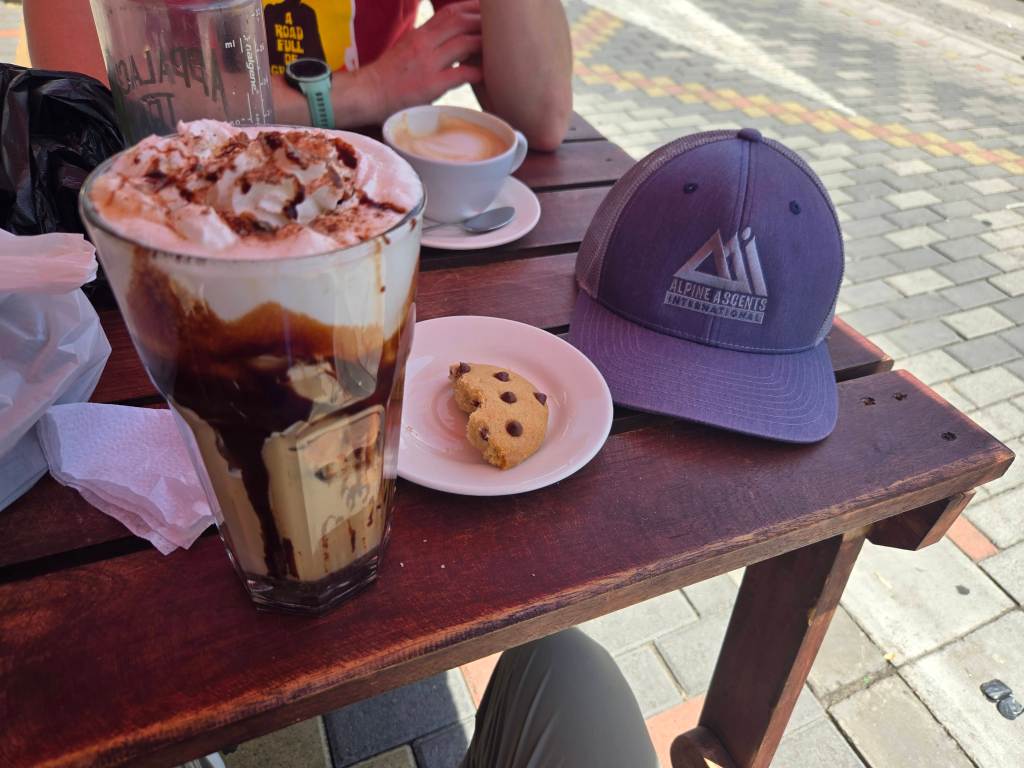
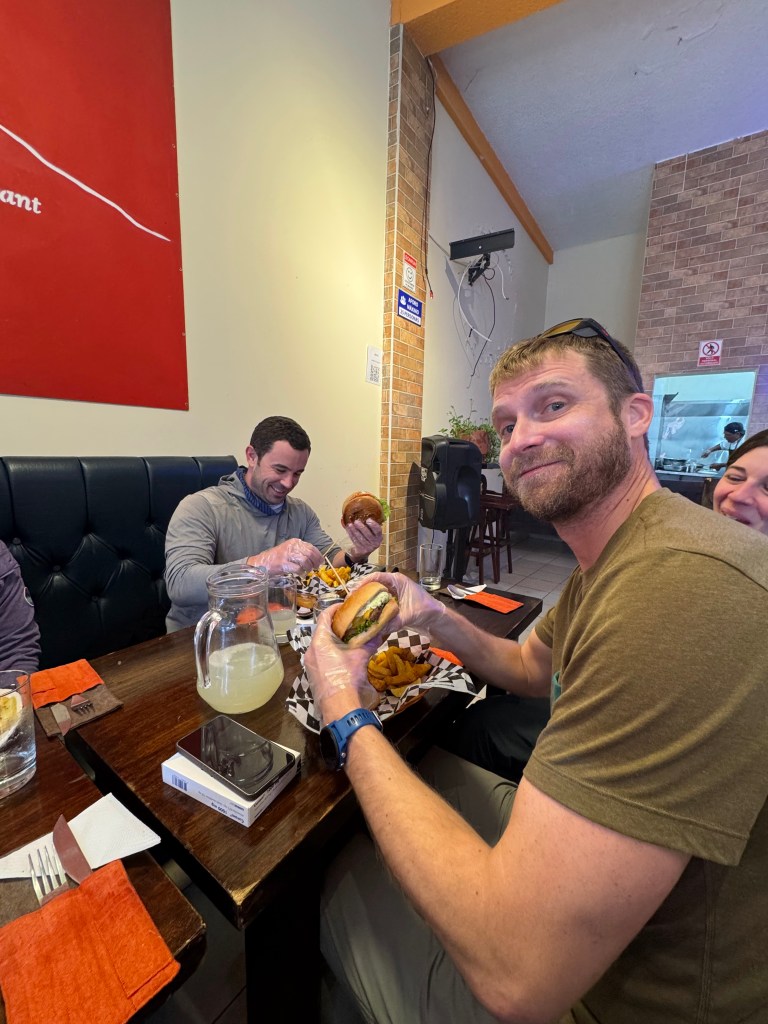
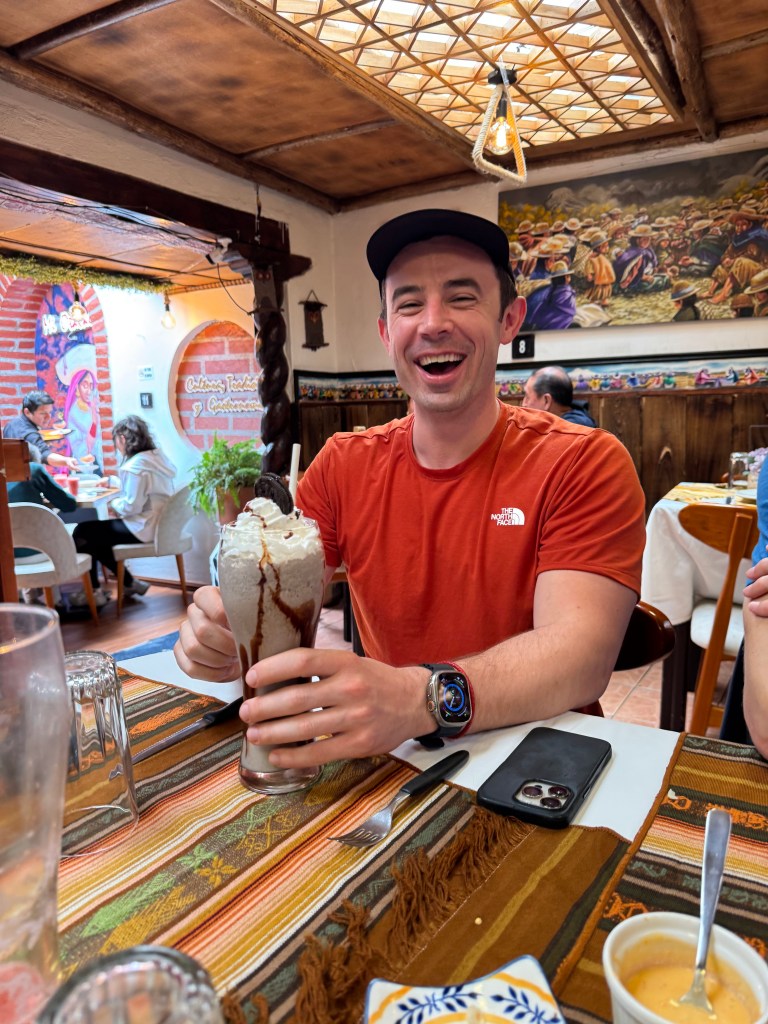
Dinner prior to moving up to high camp on Cayambe.The house of the giant hamburger!Pizza nightSteak served on a sizzling volcanic rock.Aaron said he never cooked at home. Here was his chance!Always room for dessert!More burgers and friesIced mocha and chocolate chip cookie at the Otovalo market.Oreo milkshake!
Last night they predicted less than 0.25 inches of rain. I woke up to 9″ of snow. Joel is out of town this weekend and I am unsuccessful in getting the snowblower working. We haven’t used it this year as we have only previously got sputterings of snow. I need to wait until I hear one of the neighbors out and about to see if they can help me troubleshoot the issue.
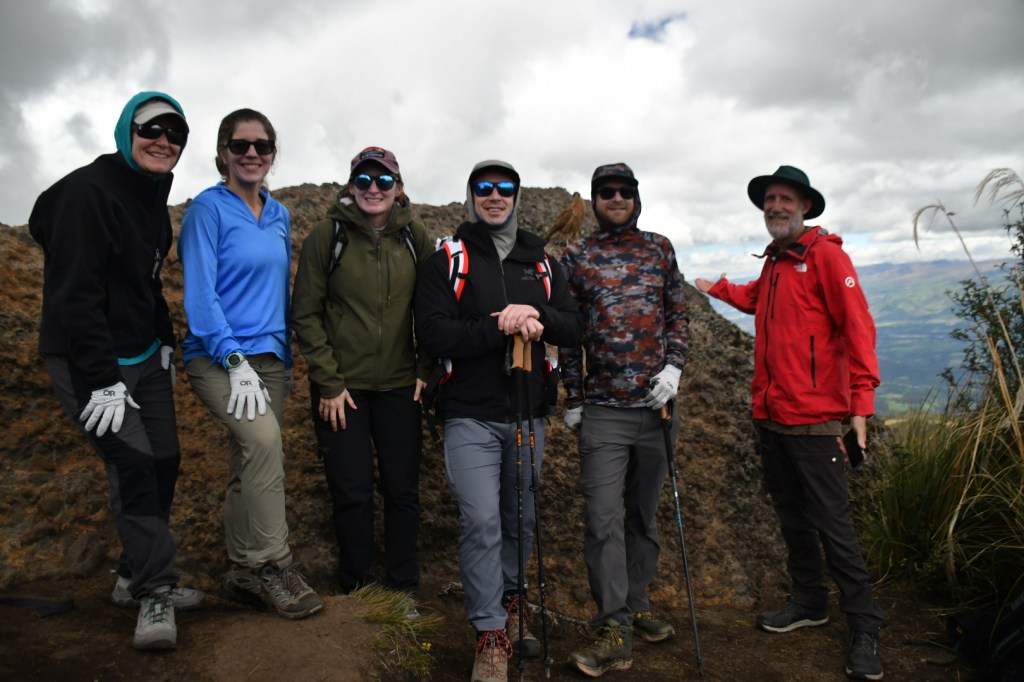
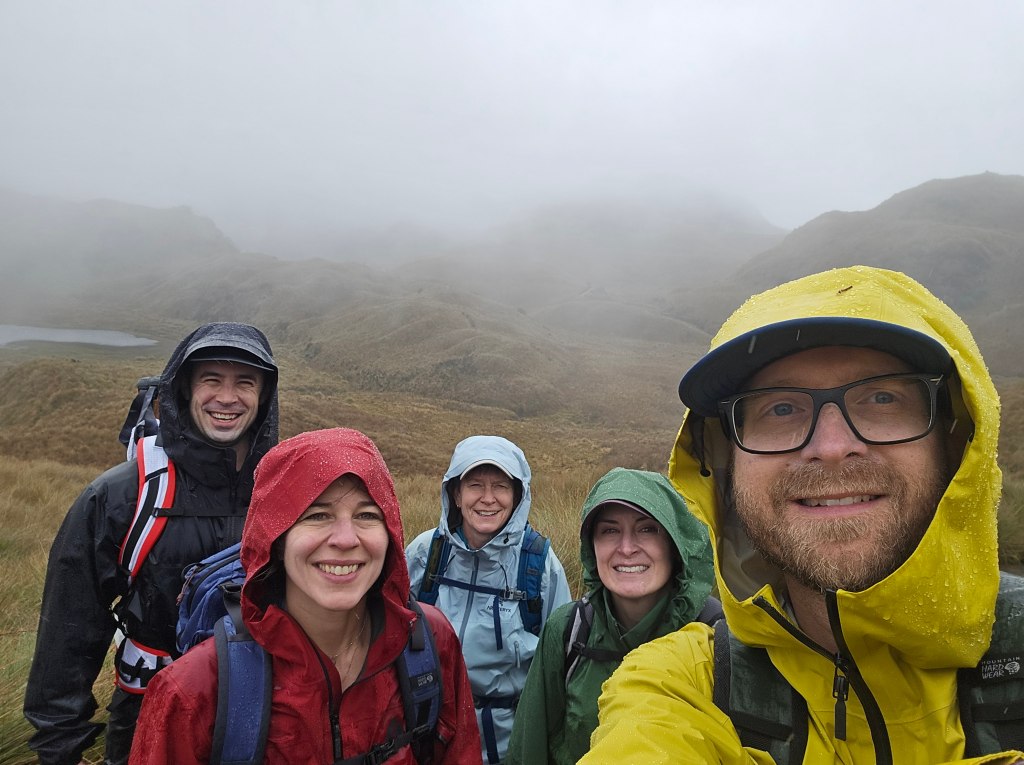
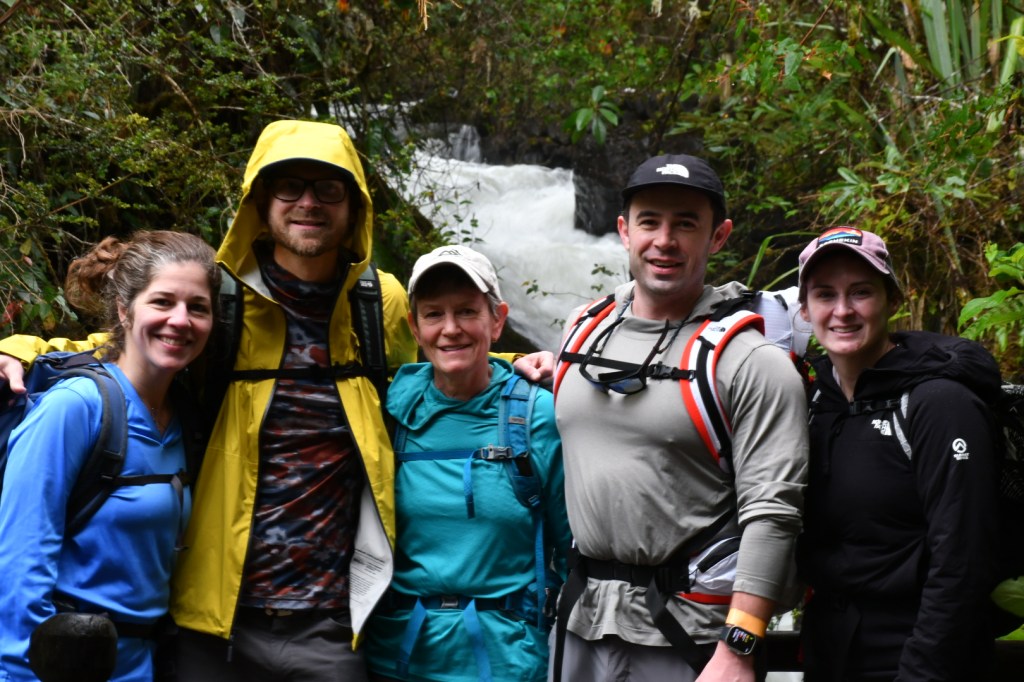
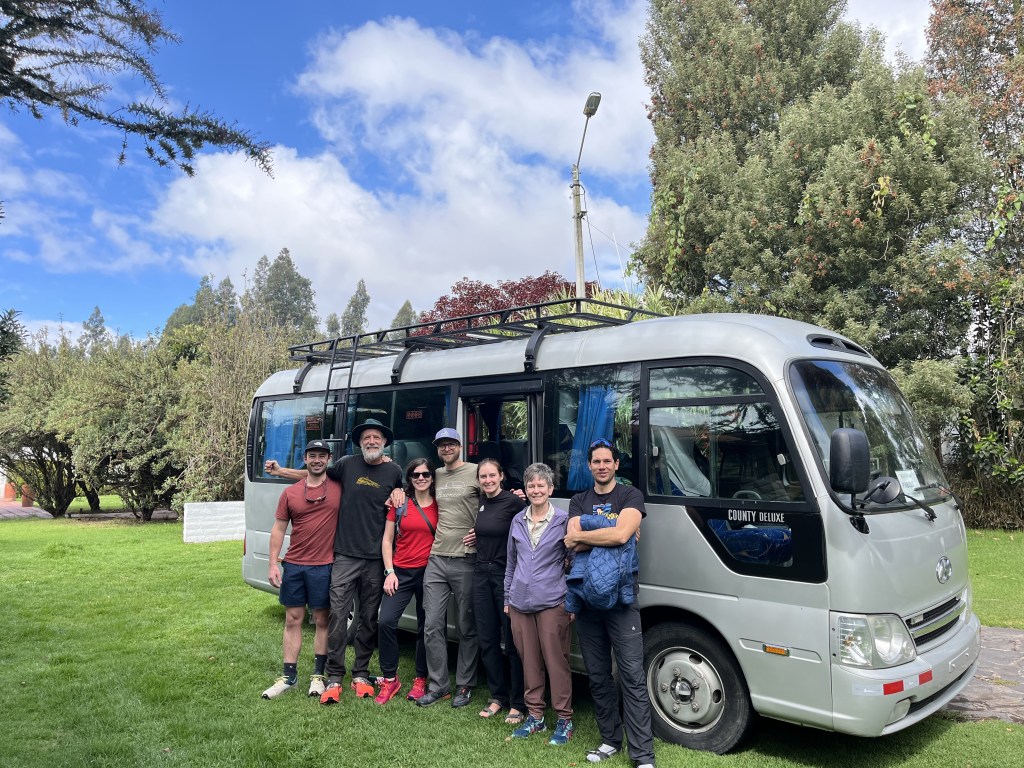
In the meantime, I decided I better get working on the blog. As the trip was quite long (17 days) I will divide the trip photos into groups of interest, instead of doing a day by day chronicle of events. The first most logical seemed to be an introduction of the team. What a great team it was! Everyone was well trained, well equipped, in the right mental state and a joy to be around. This is probably one of the best groups I have ever climbed with! So much fun!
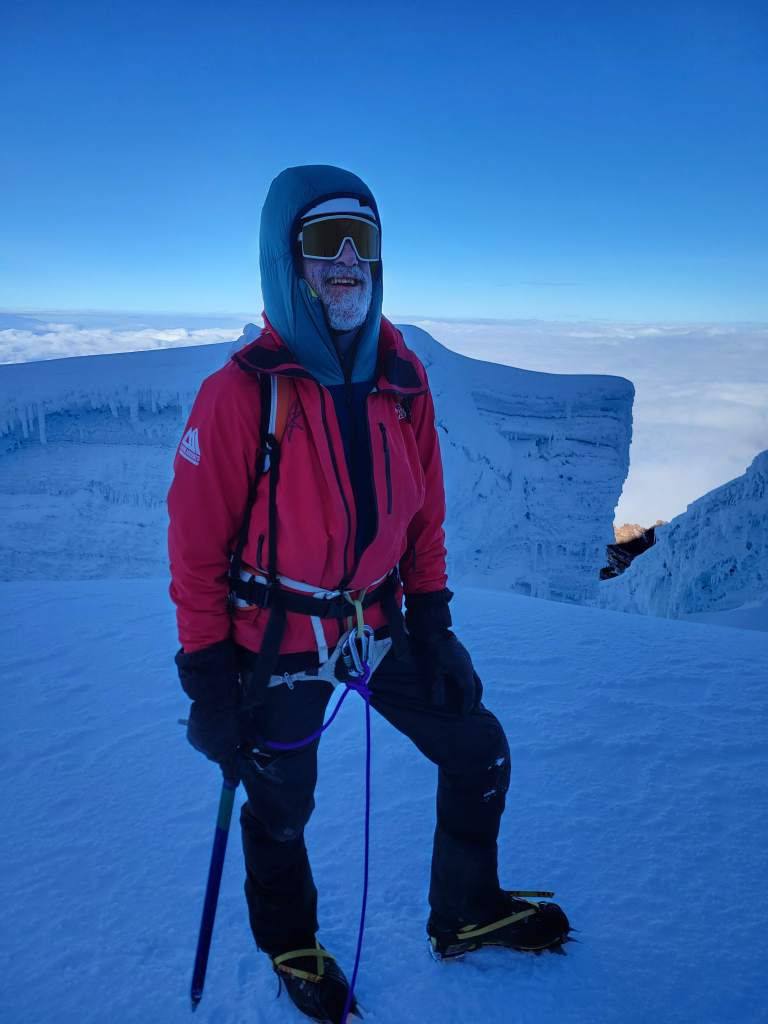
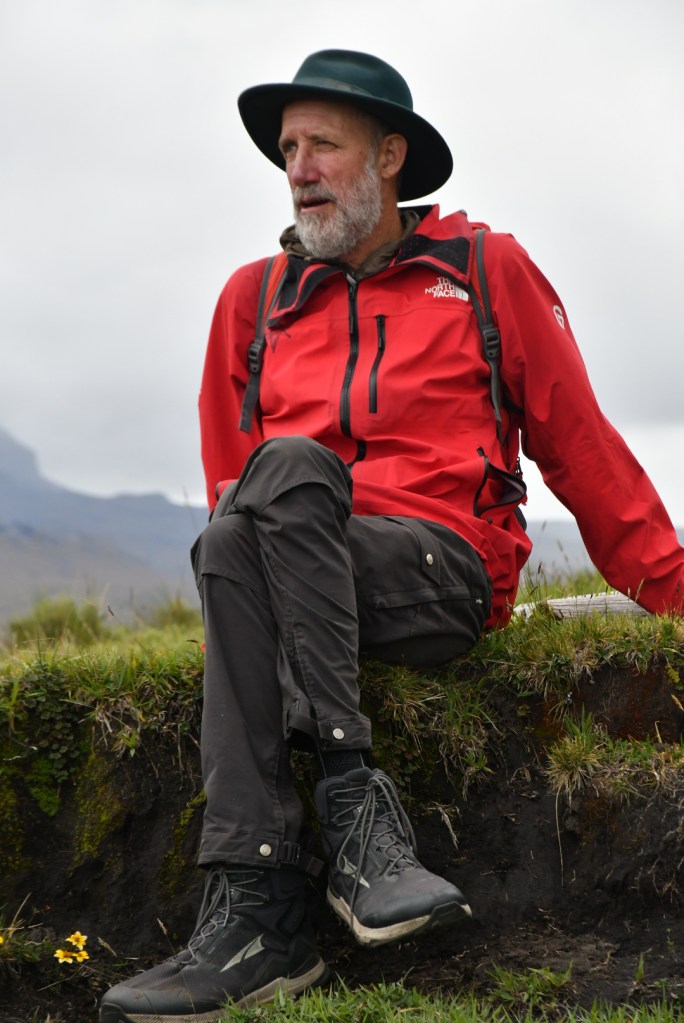
Our guides came from near and far – David was the senior guide and hails from Twisp, WA, where he and his wife live off the grid. His climbing resume is huge – numerous first ascents in the Himalaya, guide for Denali and Aconcagua for many years, climbing ranger on Mt. Rainier for 10+ years, climbing ranger on Denali, teaches Avalanche courses, too many climbing and rescue awards to name, etc.
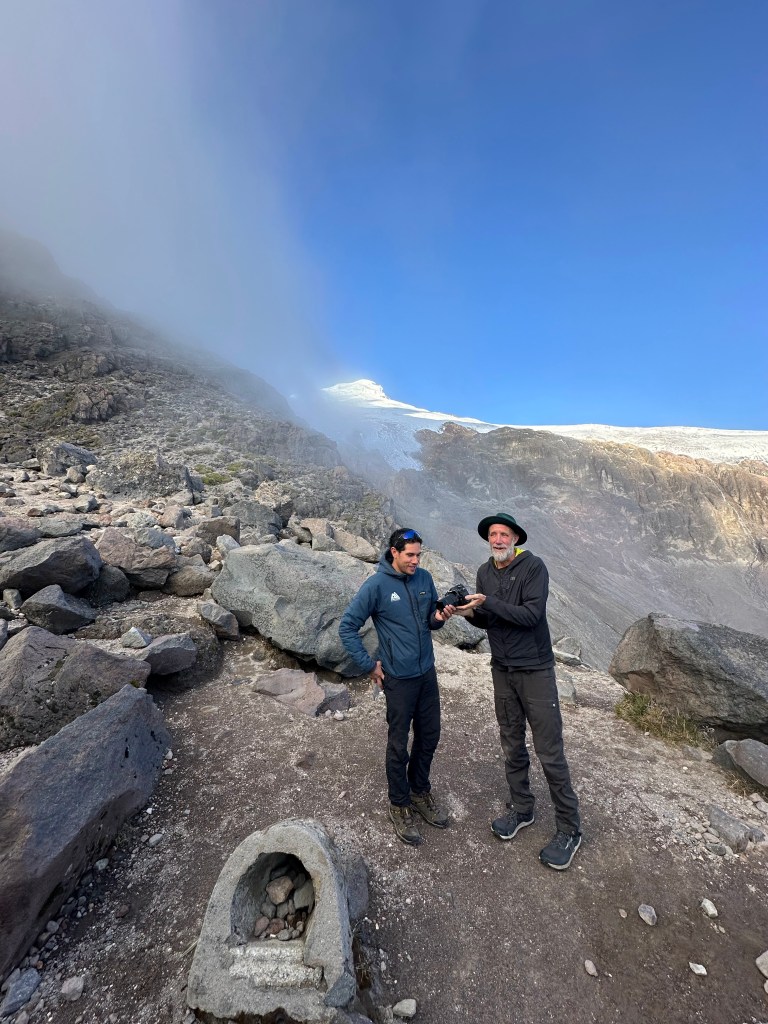
Camilo, our Ecuadorian guide was a great complement – his knowledge of the local mountains, cuisine, history, climbing conditions, etc. made him an invaluable “second” in command.
Never one to miss a meal, Camilo earned the name of human garbage disposal!
Brandi and Ethan are a married couple that hail out of Georgia. They have a lot of great climbs and courses under their belt and also enjoy rock climbing.
Aaron was a fellow “southerner” and lives in North Carolina. Also a lot of mountain and rock climbing in his background, he has Denali in his sights.
Alex is a fellow PNW native – born and raised in Bothell. A strong climber, she also has Denali on her bucket list.
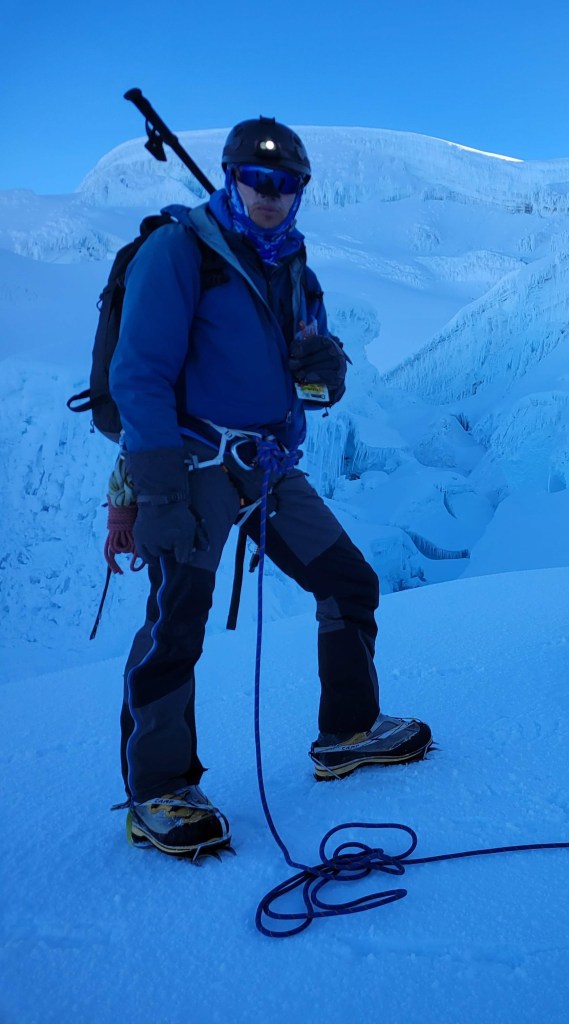
I ended up with a “personal guide” on the actual climbs. He basically lives on the flanks of Chimborazo and was a vital piece of our decision to climb or not climb on the mountains as he knew the routes and weather inside and out. His name is Manuel. Once we were on Chimborazo, we pulled in two more guides so that everyone had their own guide. Their names were Mauricio and Jacob.
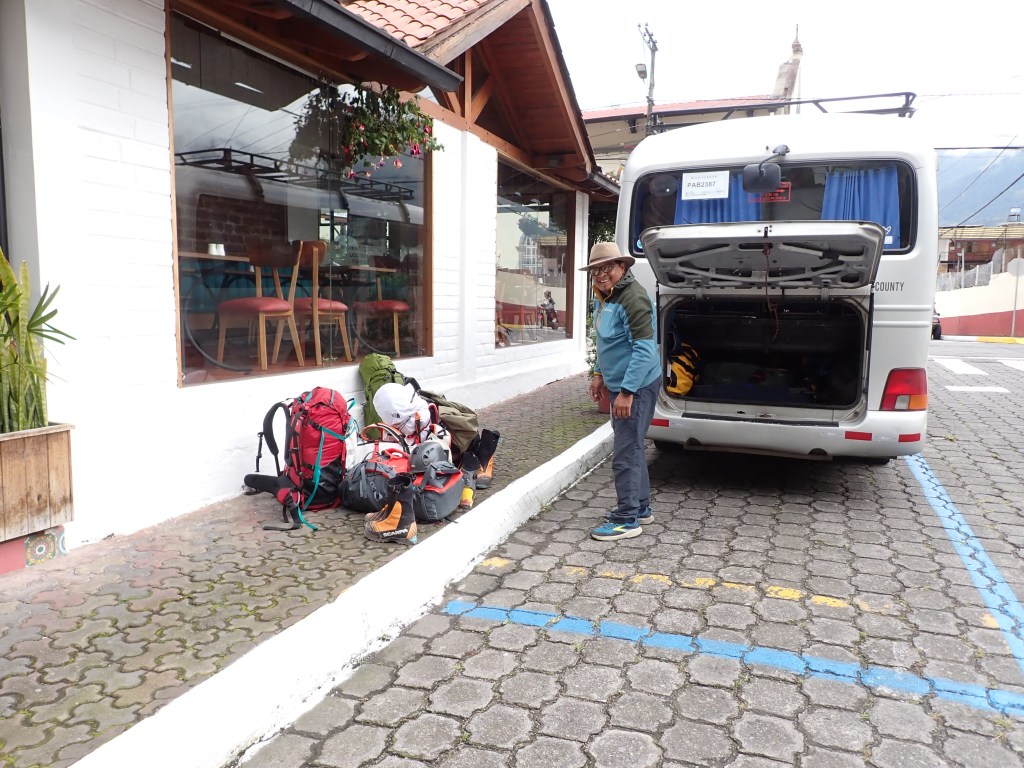
The last member of our little group was Victor, our driver. Again, invaluable in his knowledge of the local restaurants, hotels, sights, etc.
We all had a great time climbing, laughing and eating and eating and eating! More on that later!
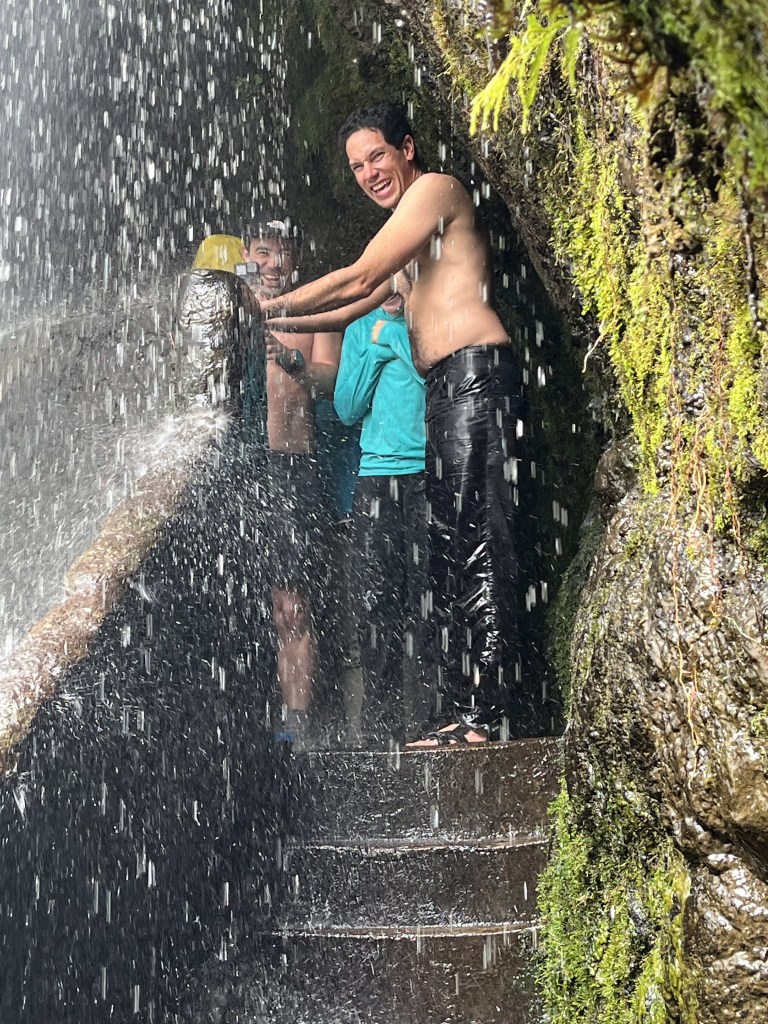
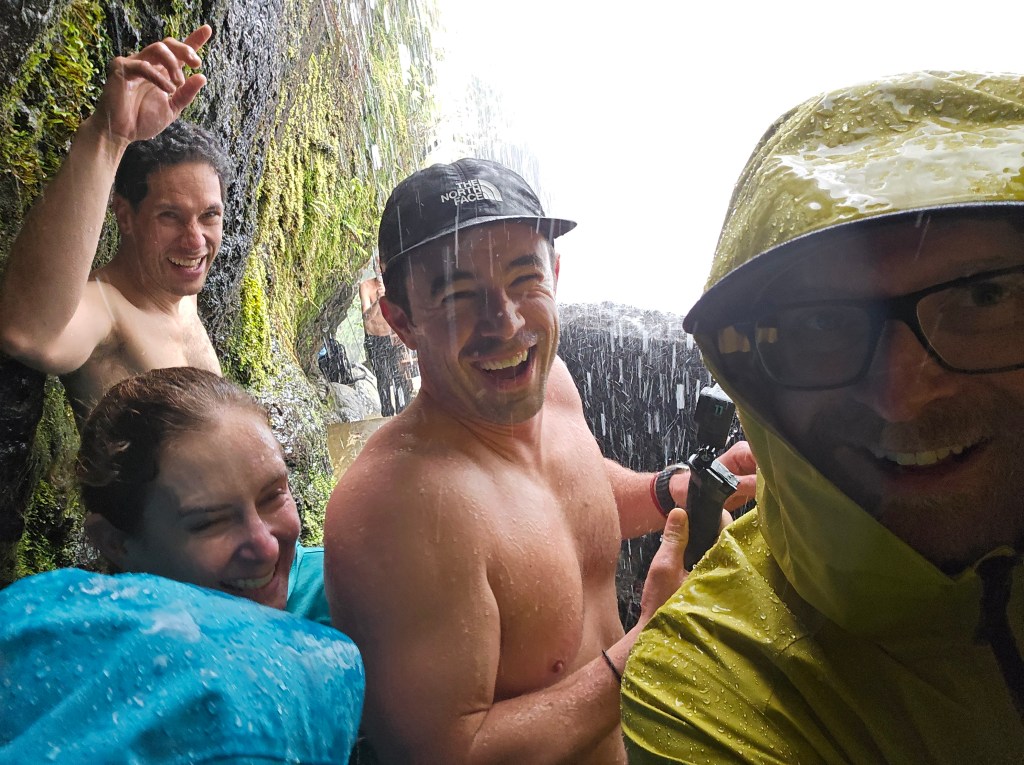
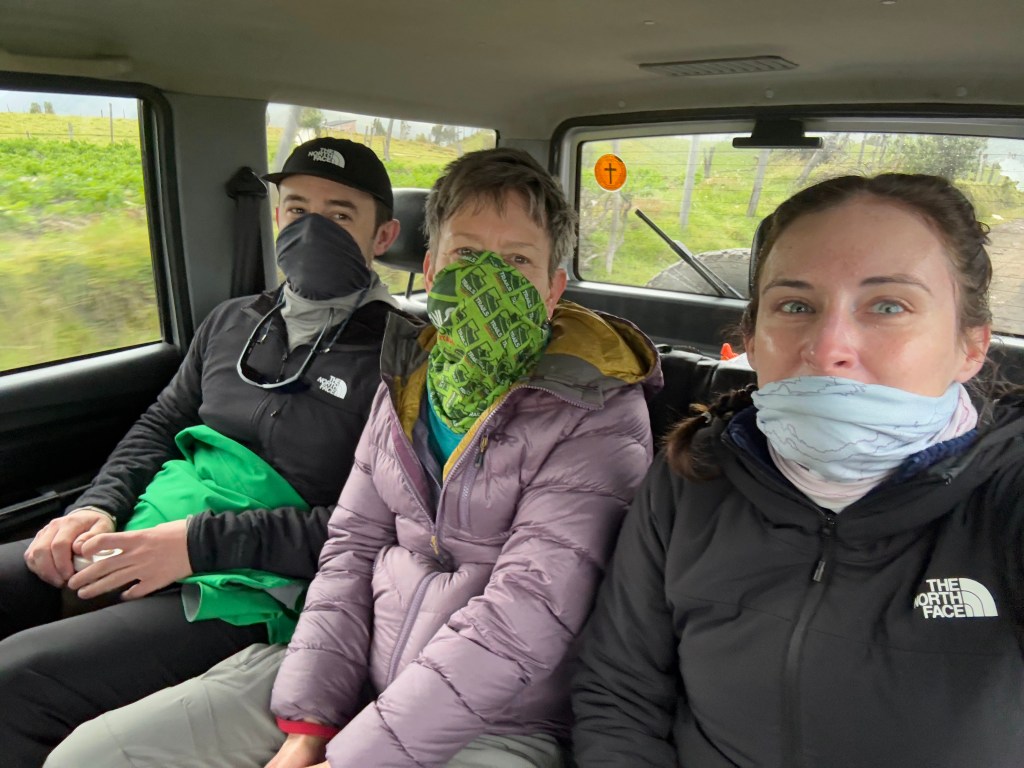
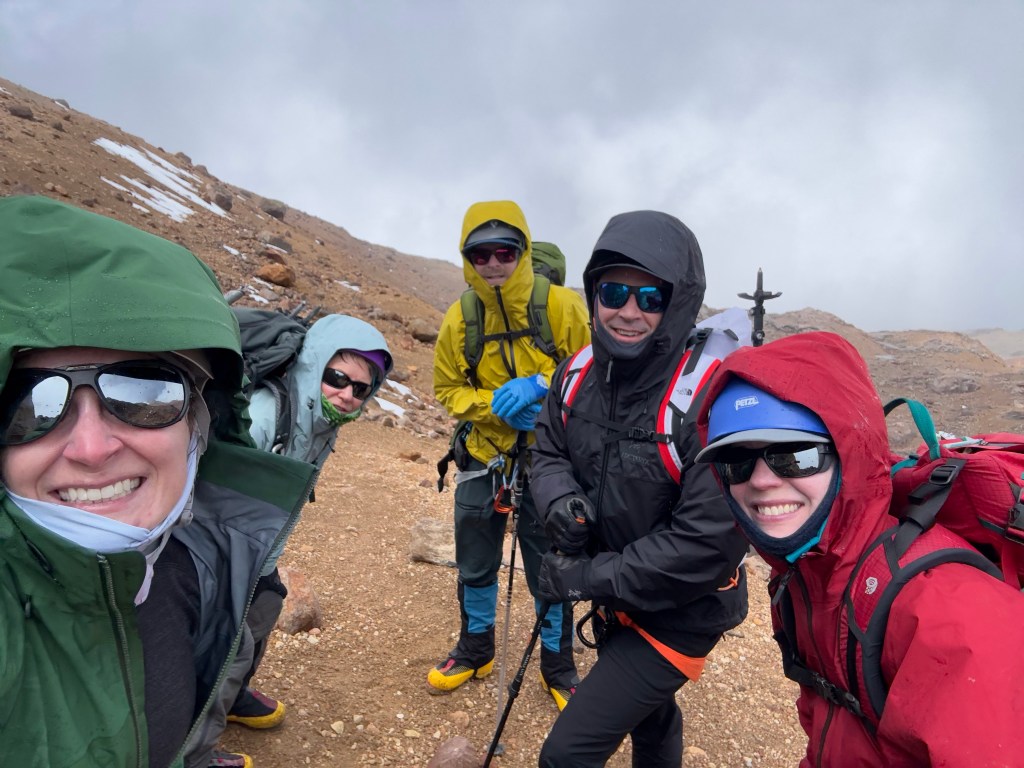
The predicted rains fell on the first few days of our trip. Good raingear was a trip essential! Luckily the storms ceased on the eve of our first summit climb.Pasochoa (13,776′) acclimatization hike. Notice the Caracara that is just over Ethan’s right shoulder.One of the many beautiful waterfalls that we passed by.Finishing out the trip, everyone was still happy and healthy!Camilo has an interest in photography (and a degree in Ecotourism) so he ended up not being in a lot of the photos.Buffs up!First hike on the flanks of Cayambe.
Yes, I am working on the Ecuador trip blog but wanted to insert this gem, first! Joel and I went to see this movie yesterday and it did not disappoint. You youngsters may need to be reeducated about the best rock band in the world – if you have time – go see it!
Wearing my concert t-shirt from the 1977 Led Zeppelin tour when they were at the Kingdome in front of 65,000 fans. Joel said I now need to retire the shirt and put it into storage.
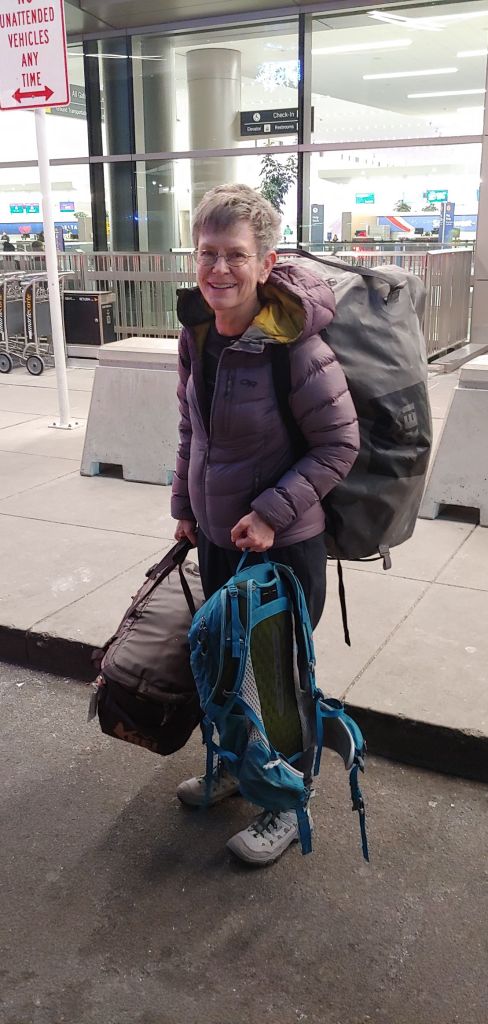
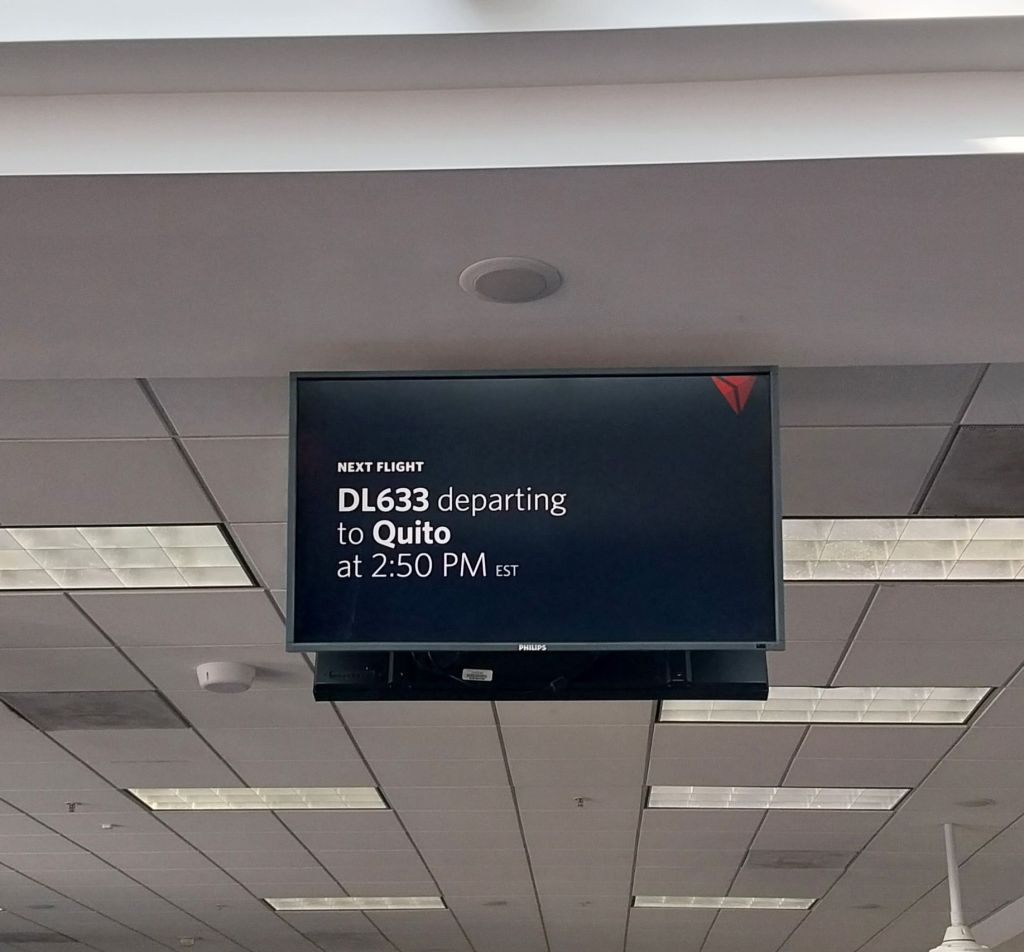
Left Salt Lake last night close to midnight and got into Atlanta around 5am. This will be a long day because the flight to Quito isn’t until 3pm! Lots of wandering around and people watching.
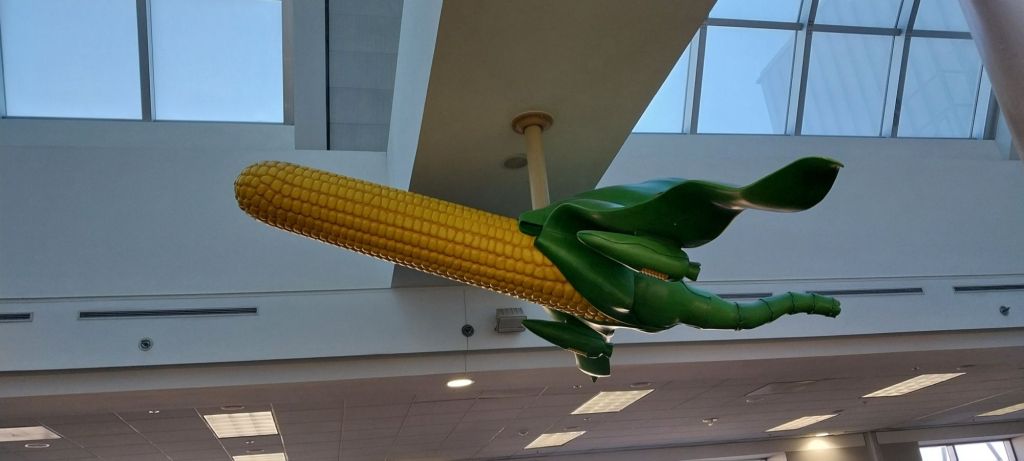
Dropped off at SLC. Rather cheerful for being way past my bedtime!Only 4 more hours, ugh.This is what I have been staring at for the last 2 hours. Not sure of the significance of a flying corn cob.
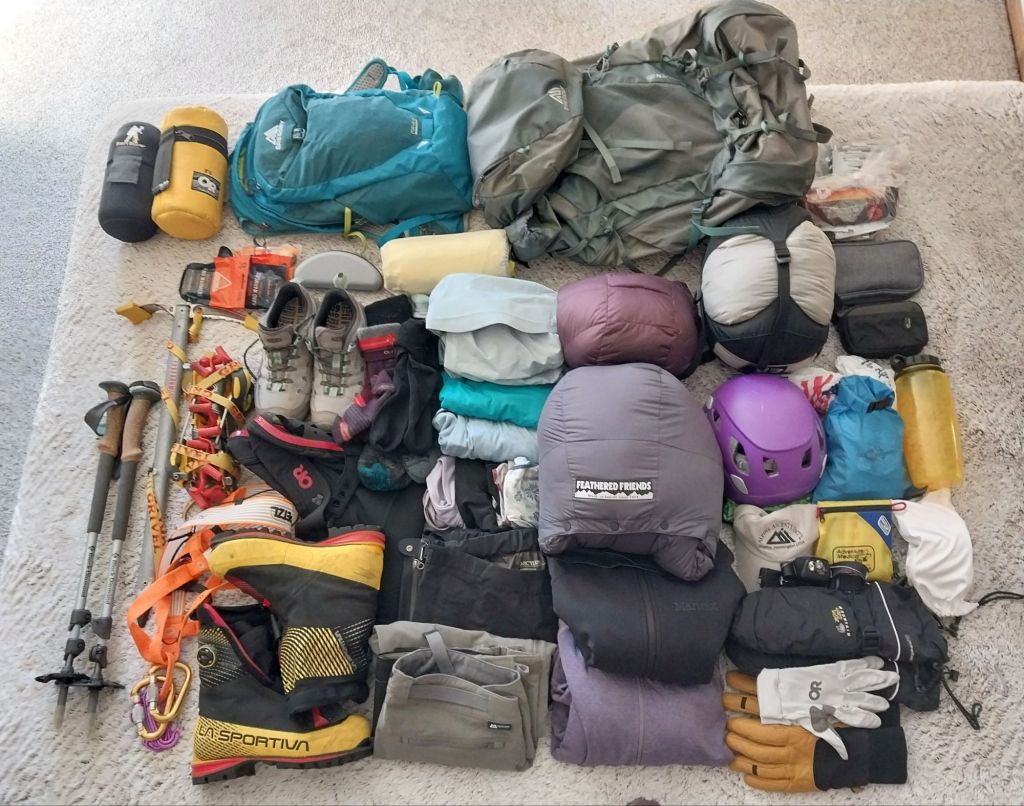
Heading out tonight for the grand Ecuador Adventure. Here’s an idea of the climbing gear I am required to bring. This will all fit into a large duffle for transport through the airport.
Doesn’t include another duffle of tourist clothes and stuff for the in- between days! I think I need to hire a porter!
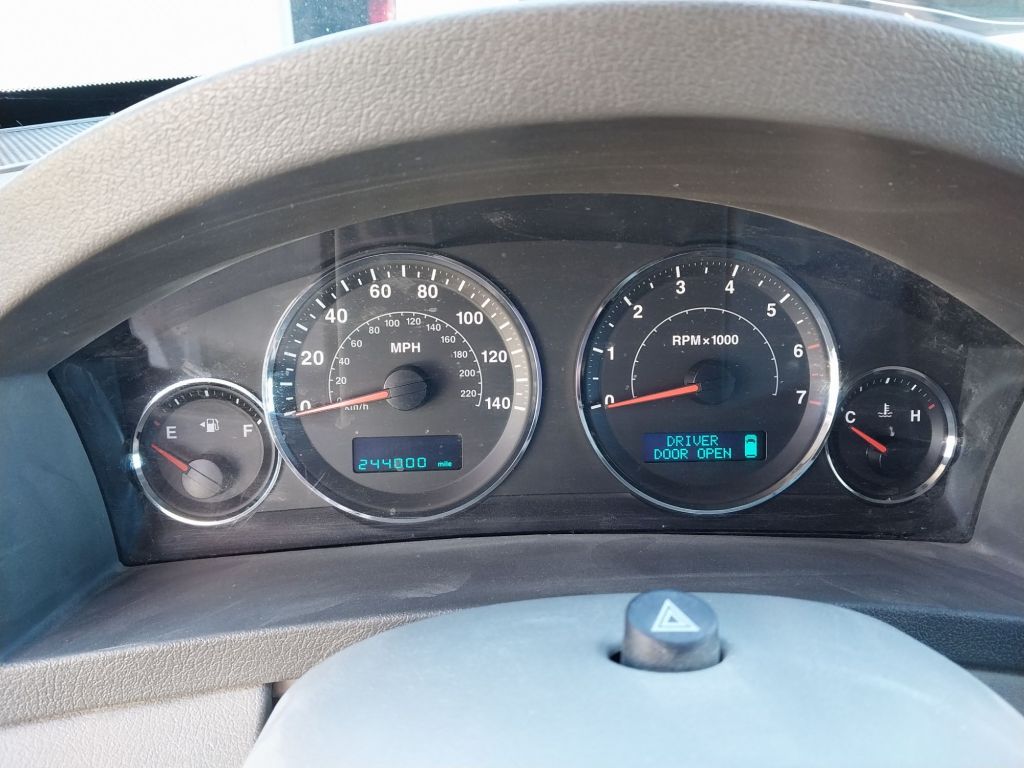
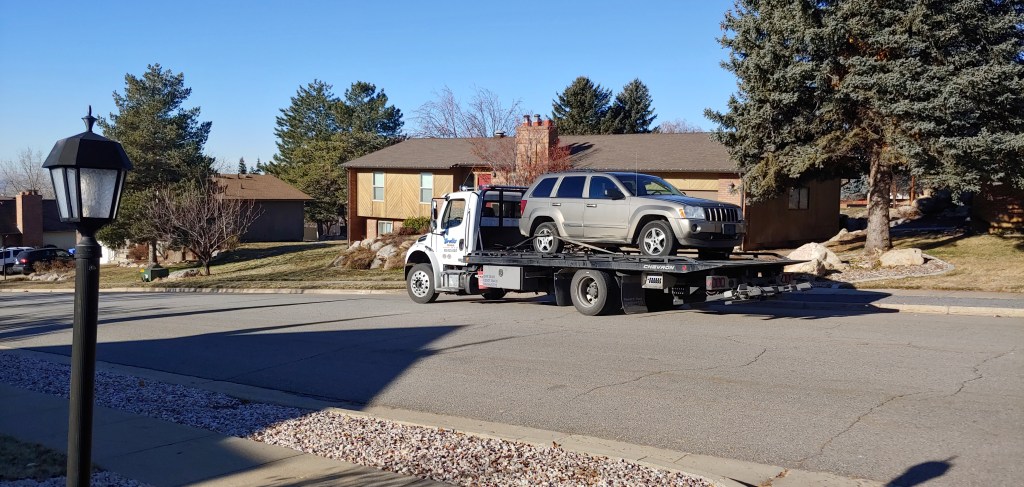
After working hard in the food industry and watching my finances, at age 44, I decided I was old enough to buy a brand new car. That car was a 2006 Jeep Grand Cherokee 65th Anniversary Edition. After 19 years and 240,000 miles (EXACTLY!) it was time to let her go.
Although basically trustworthy over those 19 years, we did have some “adventures,” such as when the alternator died while I was on the Navajo Reservation, the starter died while up at the Boulder Creek cabin and two years ago when Joel took it in for emissions testing …
Joel (laughing) … “Seems like a joke, this emissions testing stuff, do you ever get cars that don’t pass?”
Technician … ” Yes, yours just failed.” $1900 later we had a new exhaust manifold – YAY
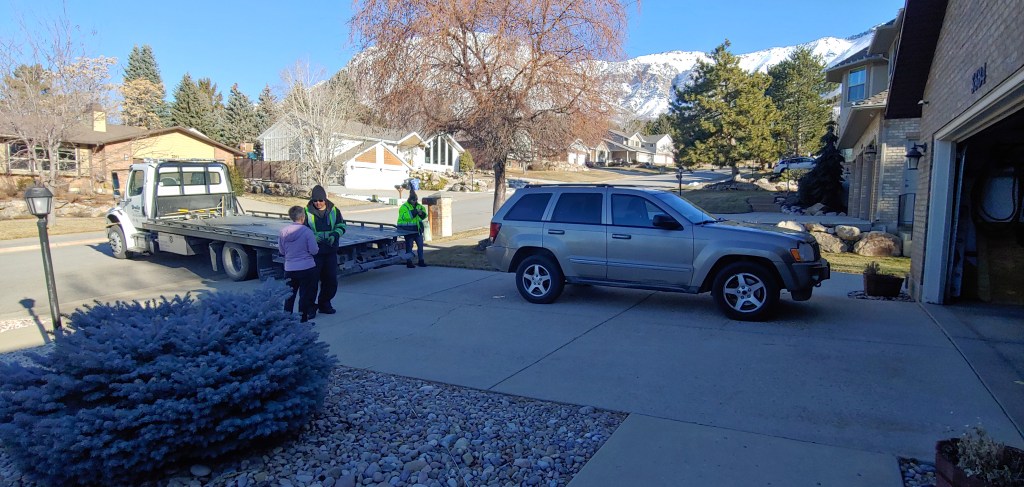
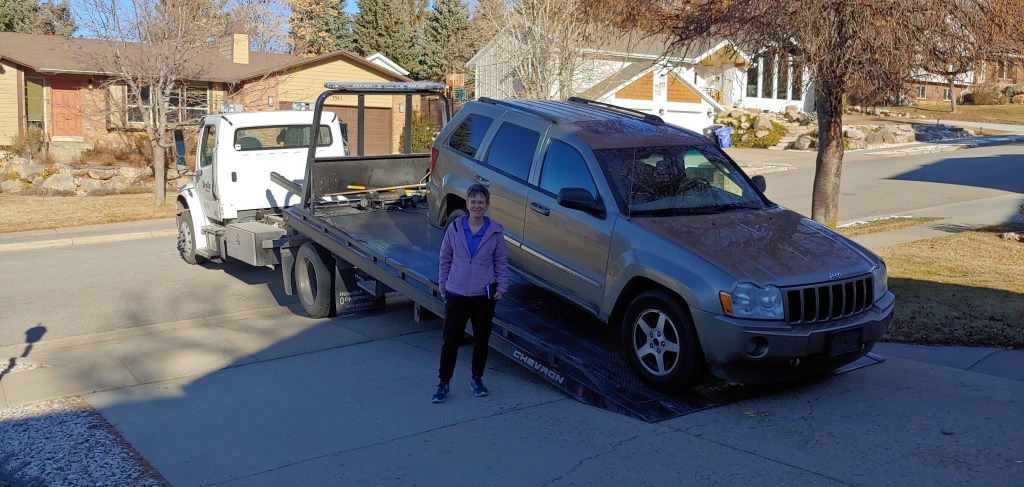
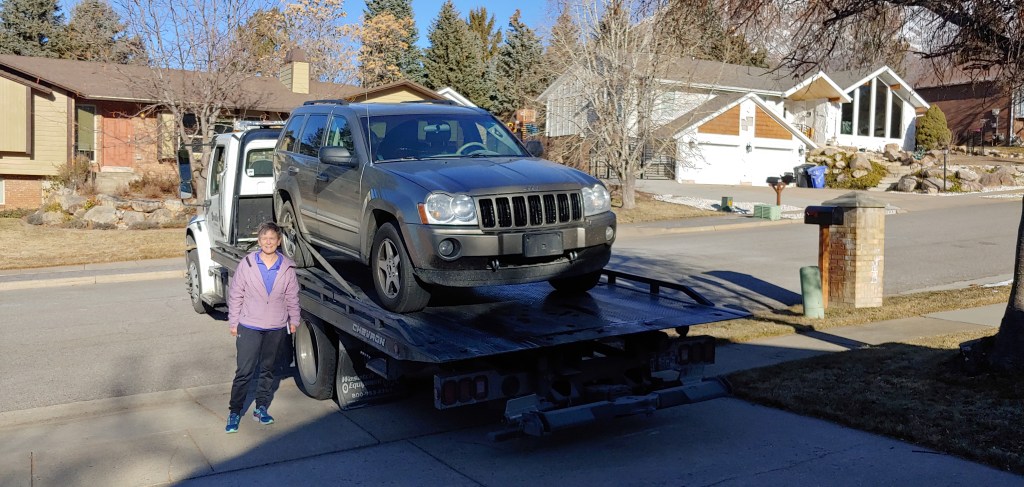
Through a program that WRCNU is enrolled in, a vendor will pick up the vehicle and either sell it at auction, sell it for parts or try to sell it outright to a private party. Although 100% running and zero body damage, due to the miles it will most likely go to auction. Once that happens, the proceeds will be donated to WRCNU. We might have been able to get more out of it by selling it ourselves but this lessens the hassle. All together, with signing up online and arranging the pick-up, it only took about 1/2 hour to do the donation.
For the last few years we have been looking for some type of replacement. Joel was very specific in that it had to accommodate his 51″ shooting bench and he must somehow be able to sleep in the vehicle laying down … don’t ask! We did look at the new Jeeps but they were twice as much as we wanted to spend and they were actually much smaller so his bench would not fit inside.
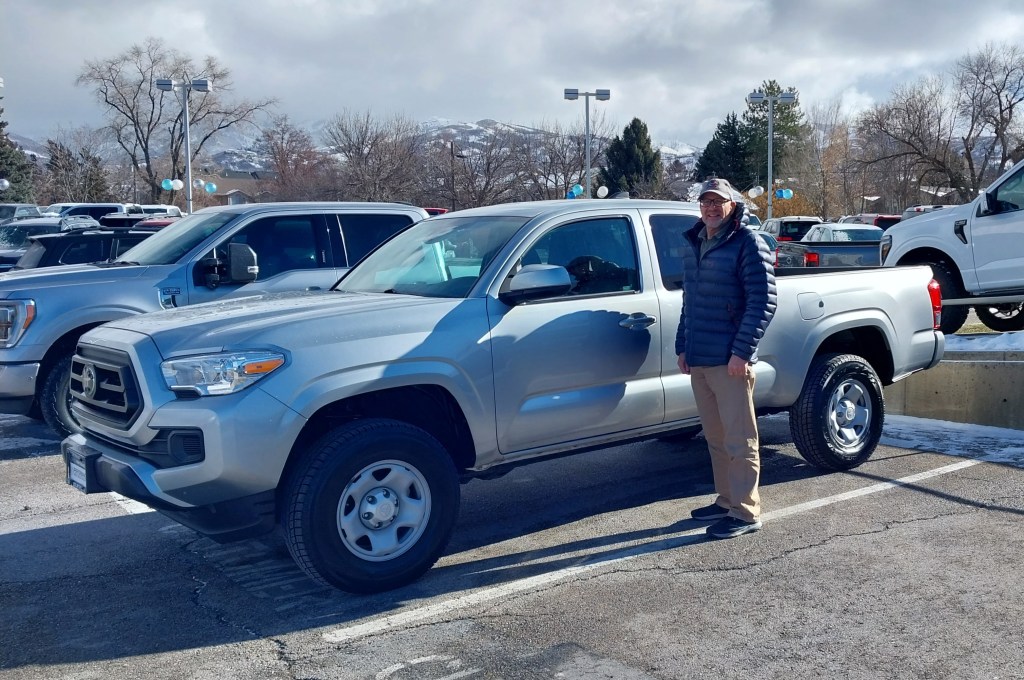
What we found was a used 2023 Toyota Tacoma that has the smaller access/extended cab and a 6′ bed. Anything larger than that wouldn’t fit inside the garage so a lot of measuring took place. I found it online one day after there had sort of been a lull in searching. Apparently these have a very low turnover rate and are hard to find. They discontinued the access/extended cabs in 2025 which meant that anything newer would not fit in the garage.
We also ordered a cap for it which should be completed in about 5 weeks. Everyone seems happy now!

 Joel and Alison's Excellent Adventures